
Key facts
- The AI-powered website builder market is projected to reach $31.5 billion by 2033, growing at a CAGR of 25.80% industry research
- 67.39% of business owners prefer AI-driven website builders for enhancing customer experience and simplifying operations market analysis
- AI-built sites have an average lifespan of only 1-2 years versus 3-5 years for professionally designed websites industry analysis
- Builder.ai went from a $1.5 billion unicorn to Chapter 7 bankruptcy after $450M investment, including $30M from Microsoft industry analysis
- 98% of U.S. small businesses use AI-enabled tools, with 40% utilizing generative AI for content creation market data
- SMEs captured 63% of the AI-powered website builder market share in 2023 due to scalability and cost-effectiveness market analysis
- AI Business Sites includes a built-in jobs module with quote-to-invoice automation, eliminating per-seat fees competitors charge practical guidance
WANT RESULTS LIKE THIS?
Imagine a system doing all of this for your local business — every day, without you.
We build local businesses a custom website with a team of AI behind it: every lead captured and followed up, new content published monthly,customers finding you on Google — live in 7 days.
- 85+ pages at launch
- Every lead followed up, automatically
- Your whole business on one screen
The Wix Promise vs. The Small Business Reality
Wix still feels like the safe default, but the DIY promise starts to fray once the site is live. Owners end up stitching together chat widgets, booking tools, CRM syncs, and content calendars that never get updated.
The market is moving fast toward AI. The AI-powered website builder market is projected to reach USD 31.5 billion by 2033, growing at a CAGR of 25.80% from 2024 to 2033 industry research. Demand is driven by cost-effective, fast deployment for SMEs, with 63% share of the market in 2023 market analysis.
That appetite is real. 67.39% of business owners prefer AI-driven website builders over traditional ones for enhancing customer experience and simplifying operations market analysis. The appeal is speed and automation, not just a prettier editor.
The reality for DIY builders is a stack of bolted-on features. Wix offers flexibility, but owners manage the integrations themselves. Leads slip through voicemail, follow-up is manual, and the content calendar stalls because writing is not the business.
Experts warn about choosing builders for AI hype instead of website capability. Choose the website builder for its website-specific capabilities, not solely based on how well or how much AI is integrated practical guidance. Bolted-on tools create a Frankenstein backend that is harder to maintain and more costly over time.
Longevity is another risk. AI-built sites have an average lifespan of only 1-2 years versus professionally designed websites lasting 3-5 years before significant changes industry analysis. Platform stability matters too. Builder.ai went from a $1.5 billion unicorn to Chapter 7 bankruptcy and liquidation within months after $450M investment industry analysis.
Small businesses feel the gap daily. 98% of U.S. small businesses are using AI-enabled tools, with 40% utilizing generative AI for content creation market data. They want the outcome, not another dashboard to babysit.
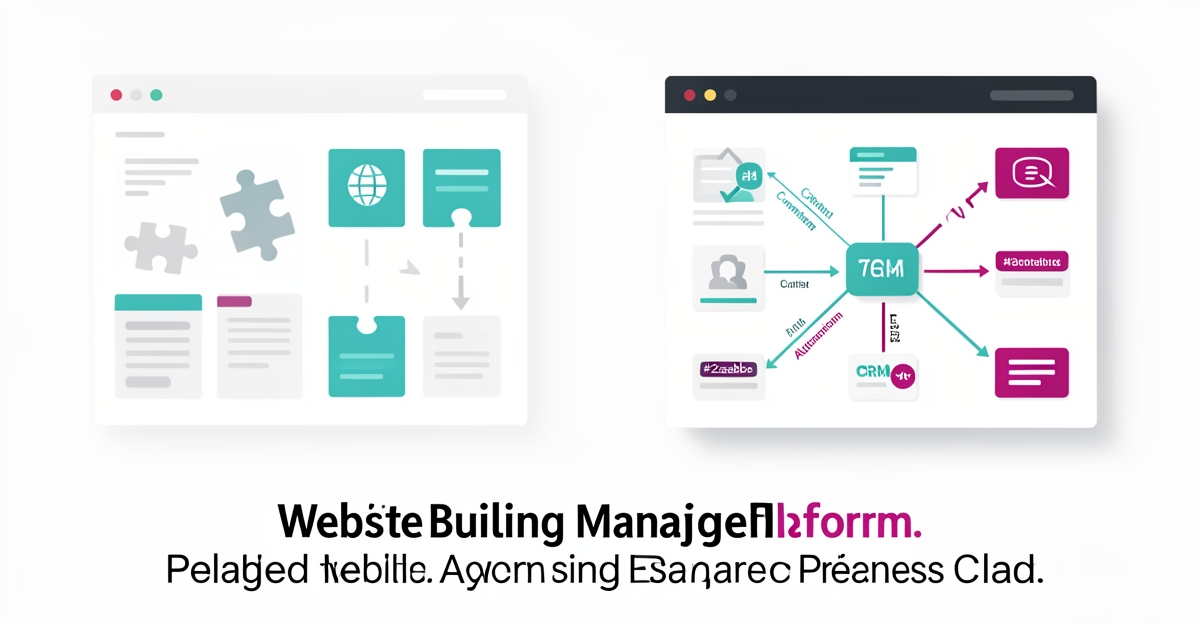
This is where the managed model changes the equation. Instead of assembling a stack, AI Business Sites replaces DIY builders with a done-for-you AI website and ongoing support. The website runs, answers, writes, sells and remembers the business without the owner touching technical tools.
The core problem Wix leaves open is operational. Owners face:
- A lead capture site with no instant follow-up or CRM routing
- Content that never gets written because the owner has no time to prompt and publish
- Multiple subscriptions for chat, booking, invoicing, and SEO that never talk to each other
DIY flexibility sounds empowering until it becomes a part-time job. The promise of control turns into maintenance, missed calls, and a brochure that does not work while you are on the job.
A managed platform shifts the burden from the owner to the system. The site is built, trained, and run, with content published monthly and leads followed automatically. That is the difference between owning a website and running a business presence.
Why AI Builders Are Growing Fast But Failing Fast
AI-powered website builders are expanding rapidly, with the market projected to reach $31.5 billion by 2033, growing at a CAGR of 25.80% as small businesses increasingly turn to AI for faster, simpler site creation. Industry research shows 67.39% of business owners prefer AI-driven builders to enhance customer experience and streamline operations, drawn by promises of instant design and automated content. Yet this surge masks a critical flaw: many AI-only platforms lack the durability needed for real business use.
Sites built entirely by AI often have a lifespan of just 1-2 years before requiring major overhauls, while professionally designed sites typically last 3-5 years before needing significant updates. Expert analysis warns that AI-generated designs frequently sacrifice SEO structure for visual appeal, making them invisible to search engines despite their polished look. Platforms like Lovable and Durable may launch quickly, but their sites rarely sustain traffic or conversions long enough to justify the investment.
Even more troubling is the instability within the AI builder space itself. High-profile failures like Builder.ai — which collapsed into Chapter 7 bankruptcy months after securing $450 million in funding, including a $30 million Microsoft investment — reveal how quickly these platforms can vanish. Industry observers note a pattern of AI-powered builders "pop[ing] up fast, and disappear[ing] even faster," leaving users stranded with broken sites and no migration path. This volatility undermines trust and highlights the risks of relying on tools that prioritize speed over sustainability.
For businesses seeking longevity, the alternative isn’t another DIY AI tool — it’s a managed platform that combines AI efficiency with human oversight. AI Business Sites delivers a done-for-you system where the website is built, monitored, and evolved by a dedicated team, ensuring it remains functional, visible, and aligned with business goals over time. Unlike fleeting AI builders, this approach provides the stability and ongoing support needed for a site to grow alongside the business it serves.
Local business: doing this the old way?
One system replaces the whole pile.
All of it — the website, the follow-up, the content, the leads — built and run for you for $1,497 + $497/mo. Month-to-month, and you own everything.
See what your build includesManaged Done-For-You vs DIY Builders: What Actually Works
DIY builders promise control. The reality is a patchwork of subscriptions, plugins, and time you don’t have. Managed platforms flip that trade-off by running the website and the back office for you.
The market is moving fast. The AI-powered website builder market is projected to reach USD 31.5 billion by 2033, growing at a CAGR of 25.80% from 2024 to 2033 according to industry research. Cloud-based deployment dominates with over 75% market share in 2023, and SMEs captured 63% of market share due to scalability and cost-effectiveness.
That demand is driven by preference, not hype. 67.39% of business owners prefer AI-driven website builders over traditional ones for enhancing customer experience and simplifying operations per market analysis. The problem is longevity and stability. Analysis shows AI-built sites have an average lifespan of only 1-2 years versus professionally designed websites lasting 3-5 years before significant changes or redesign is needed, as noted by practical builder experience.
Wix, Squarespace, Elementor and SiteW each solve different pieces. Wix maintains over 200 million global users with 74.34% of Q1 2023 revenue from builder subscriptions. Squarespace is rated best overall for service-based businesses with professional design and built-in invoicing, scheduling and email marketing under one subscription. Elementor powers 13% of websites worldwide with 22M+ sites built and a new site created every 3 seconds. SiteW emphasizes a done-for-you approach with Waia, multilingual human support and 0% commission on online sales.
The managed model replaces that DIY stack with one operating system. Done-for-you replaces do-it-yourself when the business needs the website to run, not just exist. AI Business Sites builds a custom website with 85+ pages at launch and runs an AI back office with chatbot, CRM, content engine and automations, done for you and live in 7 days.
Where DIY builders stop at publishing, a managed platform closes the operational loop:
- Built-in CRM, jobs, invoicing and scheduling included in the monthly, not bolted on
- 14+ new SEO pieces per month plus daily industry news, maintained by a content engine
- Ongoing support and updates that extend site lifespan beyond the 1-2 year AI-only average
Platform stability matters. Builder.ai went from a $1.5 billion unicorn to Chapter 7 bankruptcy after $450M investment, a warning cited in builder comparisons. Choosing a builder for website-specific capabilities, not just AI integration, is the decision framework experts recommend.
For owners who want control, Elementor and SiteW offer flexibility and support. For owners who want results without a technical project, the managed platform model delivers a website that answers, writes, sells and remembers the business, with the team behind it.
How to Choose the Right Builder for Your Business Type
Choosing the right website builder starts with understanding your business type and what you truly need from a platform. For service-based businesses like contractors, salons, or clinics, the priority is often a seamless quote-to-invoice workflow that reduces admin work. AI Business Sites includes field-service tools like AI-drafted quotes, job scheduling, and automated invoicing — all part of the $497/month managed platform, eliminating the need for per-seat fees or bolted-on add-ons that competitors charge extra for. This integrated approach directly addresses the pain point of managing multiple subscriptions for different functions, a common frustration noted in expert analyses of website builder limitations.
For e-commerce or retail businesses, built-in selling capabilities matter more than design flexibility. Platforms that require third-party plugins for payments, inventory, or booking create complexity and potential failure points. AI Business Sites avoids this by embedding a full commerce engine — supporting products, services, menus, and tickets — with Stripe payments flowing directly to the client’s own account. This contrasts with builders that advertise low base prices but hide essential commerce features behind costly tiers or transaction fees, undermining pricing transparency. Research shows that SMEs, which make up 63% of the AI website builder market, prioritize cost-effectiveness and scalability, making all-in-one managed solutions increasingly attractive.
Local service businesses also benefit from platforms that strengthen local SEO without ongoing manual effort. AI Business Sites launches with 85+ pages — including service and location pages optimized for geographic relevance — and publishes 14+ new SEO pieces monthly, all internally linked to build topical authority. This automated, research-backed content strategy helps overcome the short lifespan (1-2 years) often associated with AI-only builders by ensuring the site evolves with the business and search algorithms. Rather than choosing a builder based on AI features alone, the focus should be on website-specific capabilities: Does it handle your core operations? Does it scale with your needs? And most importantly, does it run reliably so you can focus on serving customers? For many, the answer lies in a done-for-you platform that replaces DIY complexity with ongoing support — exactly what AI Business Sites delivers as a managed AI business operating system. industry research confirms that business owners increasingly prefer AI-driven builders for simplifying operations, with 67.39% citing enhanced customer experience and streamlined workflows as key drivers. market data further shows the SME segment captured a dominant 63% share of the AI-powered website builder market in 2023 due to scalability and cost-effectiveness — reinforcing the demand for platforms that minimize technical overhead while maximizing functionality.
Frequently Asked Questions
Is Wix the best website builder for small businesses?
Are AI website builders better than traditional builders like Wix?
What are the main problems with DIY website builders?
How long do AI-built websites actually last?
What's a better alternative to Wix for service businesses?
Should I choose a website builder based on AI features?
The Real Choice Isn’t About Features—It’s About Freedom
After reviewing the promises and pitfalls of today’s website builders, one truth stands out: small business owners aren’t shopping for more tools—they’re seeking relief from operational drag. Wix and similar DIY platforms offer flexibility, but at the cost of time, as owners juggle plugins, subscriptions, and manual follow-ups that pull focus from serving customers. Meanwhile, AI-only builders tempt with speed but often crumble under their own instability, with sites lasting just 1-2 years and platforms vanishing as quickly as they appear. The smarter path isn’t choosing between flashy features or fleeting trends—it’s opting for a managed solution where the website doesn’t just exist, but actively runs the business: capturing leads, following up, publishing content, and handling quotes and invoices without constant oversight. For owners ready to stop babysitting their site and start growing their business, the next step is simple: see how it works in a no-pressure conversation. Book a free strategy call to explore whether AI Business Sites is the right fit for your goals.
FOR local businesss — BUILT AND RUN BY US
Your website. Your content. Your leads. Your data.
$500 starts your build. Seven days later it's live — chat, booking, follow-up, and your Google presence all set up. Then we run it, every month. You do the work you actually get paid for.