
Key facts
- Etsy reports approximately 8 million active sellers across Etsy, Reverb and Depop according to Mercury analysis.
- Etsy charges $0.20 listing fee plus 6.5% transaction and 3% + $0.25 payment processing per sale per industry research.
- Shopify Basic plan starts at $29 per month with 2.9% + $0.30 payment processing per Mercury comparison.
- RedTrack tracked 1 billion+ conversions in 2025 per vendor data.
- RedTrack tracked $621M+ in revenue value in 2025 per vendor reporting.
- Over 5,000 media buyers use RedTrack at least twice per week in 2025 per vendor usage stats.
- More than 50 AI website builder tools were tested and very few were usable per Zapier expert testing.
WANT RESULTS LIKE THIS?
Imagine a system doing all of this for your local business — every day, without you.
We build local businesses a custom website with a team of AI behind it: every lead captured and followed up, new content published monthly,customers finding you on Google — live in 7 days.
- 85+ pages at launch
- Every lead followed up, automatically
- Your whole business on one screen
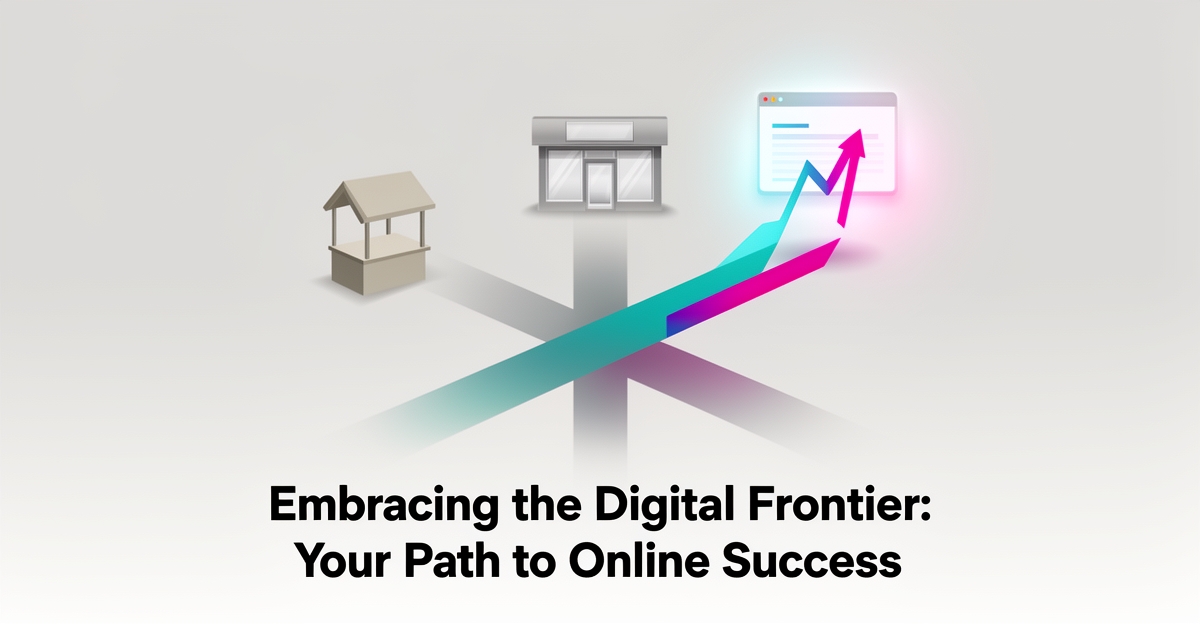
The Real Question: Marketplace or Ownership?
The Real Question: Marketplace or Ownership?
When small business owners ask whether to sell on Etsy or Shopify, they’re often missing the bigger picture. This isn’t really about choosing between two platforms—it’s about deciding what kind of business you want to run. One path keeps you dependent on someone else’s audience and rules; the other puts you in control of your brand, your data, and your future growth. As one analysis put it, “To early founders, weighing the differences between Shopify vs. Etsy often looks like a decision about tools, when it’s really about business models.” industry research
Etsy gives you instant access to millions of shoppers searching for handmade and unique goods, but it also owns the customer relationship. When someone buys from your Etsy shop, they often remember purchasing “on Etsy,” not from your specific brand. That limits your ability to build loyalty, collect email addresses, or encourage repeat purchases directly. In contrast, Shopify lets you own your customer data, run email marketing, and create loyalty programs—turning one-time buyers into repeat customers. The difference isn’t just philosophical; it affects your margins too. Etsy charges listing fees, transaction fees, and payment processing fees on every sale, which can stack up quickly. Shopify’s monthly subscription model often becomes more cost-effective as sales volume grows, especially when you factor in the long-term value of owning your audience. industry research
But even owning a Shopify store isn’t the end of the story. Many entrepreneurs find that managing plugins, updating themes, and driving their own traffic becomes a full-time job. That’s where a custom AI-powered website changes the game. Instead of choosing between marketplace reliance and DIY store management, you get a third option: an owned web presence that runs itself. AI Business Sites builds and manages a custom website with an integrated CRM, chatbot, content engine, and automation tools—all designed to capture leads, follow up automatically, and keep your business visible without constant manual effort. You own everything: the code, the content, the customer data, and the domain. And because the system is built on open-standard React/Next.js, you’re never locked in. expert testing
This approach solves the core tension in the Etsy vs. Shopify debate. You get the brand control and data ownership of Shopify, combined with the hands-off ease that marketplaces promise—but without sacrificing ownership or paying per-sale fees forever. The AI handles content creation, lead follow-up, and customer service, so you can focus on delivering your product or service. It’s not just a website; it’s a self-running business system that scales with you. And unlike pure AI website builders—which often produce generic, unusable results—this model combines AI automation with a solid, custom-built foundation. As one expert noted, “You can't launch a legitimate site without doing some customizing yourself. That's why I'd suggest finding an AI website builder that's backed up by a solid non-AI website builder.” expert testing
Ultimately, the choice isn’t Etsy or Shopify. It’s whether you want to build a business that depends on someone else’s platform—or one that’s truly yours. With a custom AI website, you don’t have to choose between convenience and control. You get both: a site that works for you 24/7, owns its audience, and grows alongside your ambition. That’s not just a better tool—it’s a better business model.
Fees, Setup, and the Tipping Point at 100 Sales
When comparing Etsy and Shopify, the most immediate difference lies in how each platform charges you for selling. Etsy applies a listing fee of $0.20 per item, plus a 6.5% transaction fee and a 3% + $0.25 payment processing fee on every sale — costs that stack with each order and can erode margins as volume increases. In contrast, Shopify uses a predictable monthly subscription model starting at $29/month for its Basic plan, with additional payment processing fees (typically 2.9% + $0.30 per transaction via Shopify Payments), making costs more scalable and easier to forecast as sales grow. According to industry analysis, many sellers find Shopify’s flat monthly fee becomes more advantageous once they surpass early-stage sales volumes, especially when Etsy’s per-sale fees begin to meaningfully impact profitability.
Setup effort also differs significantly between the two. Launching an Etsy shop can be done in minutes — simply create an account, list a few items, and you’re live. Shopify, by comparison, requires several hours to days of setup: choosing a theme, configuring payment gateways, setting up shipping rules, and customizing your storefront to reflect your brand. This trade-off — speed versus control — is central to the decision. Etsy offers instant access to a built-in audience of millions searching for handmade and vintage goods, but limits your ability to stand out; your shop inherits the marketplace’s look and feel, making it harder for customers to remember your brand beyond “I bought it on Etsy.” Shopify gives you full design control, allowing you to build a unique storefront that reinforces brand identity and supports long-term growth.
There’s a clear tipping point around 100 sales where the limitations of marketplace reliance become apparent. Sellers often report shrinking margins due to Etsy’s stacked fees, difficulty differentiating their shop amid thousands of similar listings, and a growing need for tools Etsy doesn’t provide — such as email marketing automation, customer loyalty programs, or advanced analytics. At this stage, many entrepreneurs begin exploring owned storefronts not just for cost efficiency, but to own their customer data, build direct relationships, and implement systems that encourage repeat business. This shift mirrors what AI Business Sites enables: a custom website with an integrated AI chatbot and CRM that captures leads, automates follow-up, and turns your site into an active business system — not just a brochure. For businesses ready to scale beyond marketplace dependence, investing in an owned platform with built-in automation often delivers better long-term value than relying on third-party discovery alone.
The Third Path: An Owned Site That Works While You Sleep
The third path isn’t about choosing between Etsy or Shopify — it’s about building something you own that works while you sleep. A custom AI website with CRM and chatbot gives you brand ownership without the marketplace trade-offs. Expert testing shows that AI website builders alone aren’t enough — they need a solid non-AI backbone to be usable, which is exactly what a managed custom site provides. Vendor data confirms AI chatbots on owned sites handle 24/7 sales and support, with some brands reporting extra revenue of ~$11,000/month from automated conversations. Unlike Etsy, where the platform owns the customer relationship, or Shopify, which still requires you to manage plugins and updates, this approach combines full control with done-for-you automation. You get a site that answers questions, captures leads, and follows up — all while you focus on your craft. It’s not just a storefront. It’s a business system that owns the relationship, the data, and the work behind the scenes. First-party attribution tools like RedTrack show how owned sites let you track revenue down to the creative level — something marketplaces simply can’t offer. This is how you scale without selling your soul to a platform.
Local business: doing this the old way?
One system replaces the whole pile.
All of it — the website, the follow-up, the content, the leads — built and run for you for $1,497 + $497/mo. Month-to-month, and you own everything.
See what your build includesWhy Owning Your Data Wins at Scale
Scale exposes the marketplace trade-off. On Etsy you get discovery fast, but Etsy owns the customer relationship and shoppers remember they bought “on Etsy,” not from your shop. A business model comparison notes that Etsy owners can’t build email lists or loyalty programs directly, while Shopify users own customer data and can run repeat-purchase systems.
That ownership gap becomes revenue. When you control the storefront you capture first-party data at the point of contact, not after a marketplace redirect. A custom AI site with CRM and chatbot keeps every chat, booking, and purchase in one owned system, so follow-up is automatic and attribution stays clean.
Accurate attribution is what makes data valuable. Custom stacks allow order-level revenue attribution down to the creative level and distinguish new versus returning customer revenue by channel. First-party server-side tracking eliminates discrepancies between ad platforms and the store, so marketing spend maps to real sales.
The scale signal is visible in usage. RedTrack reports tracking 1 billion+ conversions in 2025 and $621M+ in revenue value, with over 5,000 media buyers using it at least twice per week. That level of granularity is only possible when you own the data layer.
Marketplace fees also change with volume. Etsy fees stack per sale with listing, transaction and payment fees, while Shopify’s predictable monthly cost often becomes more attractive as sales grow. The comparison frames this as a business model choice about brand control and scalability, not just tools.
Owning your data wins at scale because it enables:
- Email and loyalty programs built on your own list, not a marketplace inbox
- Repeat-purchase revenue tracked to the original channel and creative
- Smarter marketing decisions from clean, server-side attribution
- Long-term brand equity that compounds instead of renting discovery
AI Business Sites builds this as a done-for-you operating system: a custom website plus AI back office with CRM, 24/7 chat and voice, and automations, where the client owns code, content, lead data and domain. The website is the business, not a brochure, and the data stays with the business owner.
With an owned stack you stop paying for attention and start building an asset. First-party data turns traffic into repeat buyers, and accurate attribution turns spend into decisions.
Your Move: A Practical Decision Framework
Etsy gets you in front of buyers fast, with built-in discovery and minimal setup time—often minutes to launch. Shopify gives you brand control and predictable monthly costs that scale better as sales grow. But relying solely on either means trading off between convenience and ownership.
Start by using Etsy to validate demand with low friction. Once you see repeat buyers, migrate them to an owned storefront where you control the customer relationship and can build email lists or loyalty programs. As volume increases, Shopify’s subscription model often becomes more cost-effective than Etsy’s stacked per-sale fees, which can erode margins over time.
For long-term growth, a custom AI website with CRM and chatbot offers a stronger alternative. It combines owned web presence with automation that captures and converts traffic 24/7—answering questions, recommending products, and following up on leads without manual effort. Unlike pure AI builders that often require heavy lifting on content and images, the best approach pairs AI assistance with a mature platform backbone, ensuring legitimacy and performance.
AI Business Sites delivers exactly that: a done-for-you custom website with an AI back office that handles content, CRM, chat, and automations—so you own everything while the system runs the business behind it. Ready to see how it works for your store? Book a free strategy call to discuss your goals and whether this approach fits your next stage of growth.
Frequently Asked Questions
Is Etsy or Shopify cheaper once I start making regular sales?
Do I actually own my customers if I sell on Etsy?
How fast can I get started on Etsy vs Shopify?
Is an AI website builder enough to replace Etsy or Shopify?
Can a chatbot on my own site really drive sales?
Why does owning my data matter at scale?
Your Business, Not Someone Else’s Platform
The real choice isn’t Etsy or Shopify—it’s whether you want to build a business that depends on someone else’s rules or one that’s truly yours. Etsy offers fast access to buyers but keeps you renting attention, while Shopify gives you control but still demands your time to manage plugins, traffic, and updates. The smarter path combines ownership with automation: a custom AI website that captures leads, follows up 24/7, and turns your site into a working business system—without the per-sale fees or constant maintenance. You own the code, the data, the domain, and the customer relationship, all while the AI handles content, chat, and CRM behind the scenes. It’s not just a better tool; it’s a better way to grow. Ready to see how it works for your business? Book a free strategy call to explore whether this approach fits your next stage of growth.
FOR local businesss — BUILT AND RUN BY US
Your website. Your content. Your leads. Your data.
$500 starts your build. Seven days later it's live — chat, booking, follow-up, and your Google presence all set up. Then we run it, every month. You do the work you actually get paid for.