
Key facts
- Wix enables publishing a site in as little as 15 minutes via its AI onboarding according to industry research
- Wix offers over 900 professionally designed templates for website building per expert validation
- Canva Websites is limited to one-page informational sites and lacks support for stores or blogs as noted by industry research
- Hostinger's AI Agent resolves 85% of issues without human intervention per platform documentation
- AI Business Sites launches with 85+ pages live at launch from the master business brief
- Wix's template lock-in requires a full site rebuild to change designs as noted by Levitate.ai
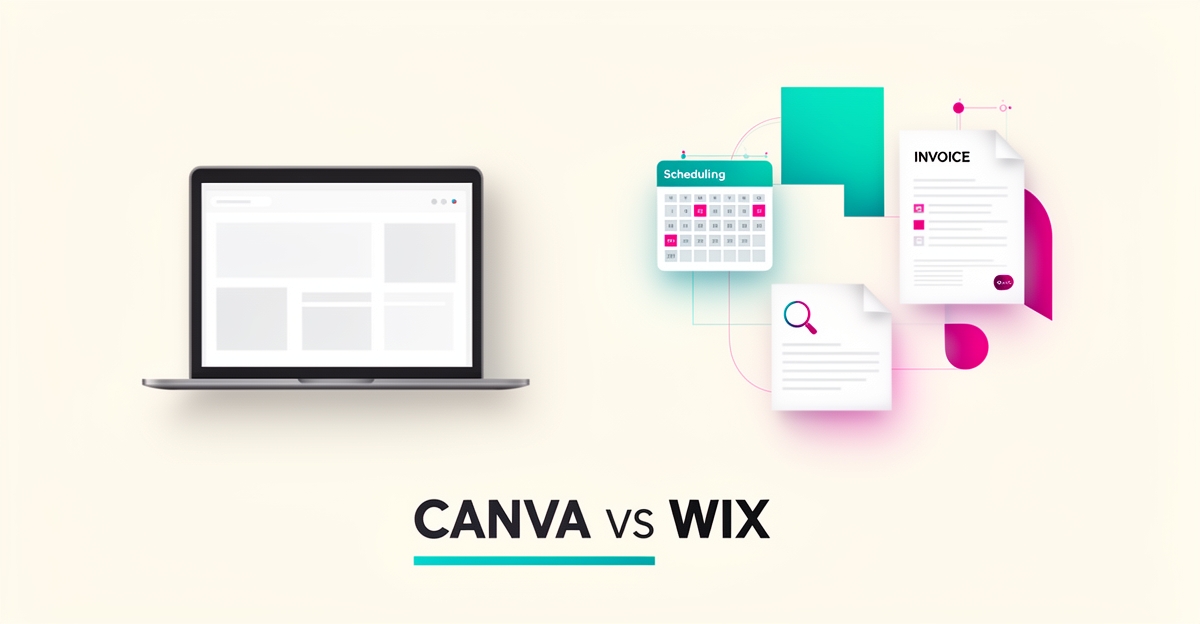
- AI Business Sites includes the Jobs & Estimates module for quoting, scheduling, and invoicing at no extra cost per platform specifications
WANT RESULTS LIKE THIS?
Imagine a system doing all of this for your local business — every day, without you.
We build local businesses a custom website with a team of AI behind it: every lead captured and followed up, new content published monthly,customers finding you on Google — live in 7 days.
- 85+ pages at launch
- Every lead followed up, automatically
- Your whole business on one screen
The Small Business Website Dilemma
The Small Business Website Dilemma
Small business owners often face a critical choice: prioritize design simplicity or invest in real business functionality when building a website. Many turn to DIY platforms like Canva or Wix for their promise of speed and ease, aiming to get online quickly without technical overhead. While these tools lower the barrier to entry, they introduce hidden costs that can undermine long-term growth and operational efficiency.
Wix, for example, offers an AI-assisted onboarding process that allows users to publish a site within 15 minutes by answering simple questions about their business according to industry research. This speed appeals to owners juggling multiple responsibilities who need a live site fast. However, Wix’s template lock-in means changing designs later requires a full site rebuild, limiting flexibility as the business evolves as noted by Levitate.ai. Canva Websites, meanwhile, excels in design accessibility for users intimidated by web creation but is restricted to one-page informational sites, lacking support for stores, blogs, or multi-page structures per expert validation.
The true cost of DIY extends beyond the monthly fee. Owners often underestimate ongoing maintenance — updating plugins, managing security patches, and troubleshooting issues — which consumes time better spent serving customers. More critically, platforms like Wix and Canva lack built-in operational tools essential for service businesses: quoting, scheduling, invoicing, and automated lead follow-up. Without these, owners resort to juggling separate subscriptions or manual processes, increasing complexity and the risk of dropped leads. AI Business Sites addresses this gap by integrating a full field-service module — including AI-drafted quotes, job scheduling, and invoicing — into its managed platform, eliminating the need for disjointed tools while ensuring the website actively runs parts of the business behind the scenes.
Canva Websites vs Wix: What Research Actually Shows
Canva and Wix serve fundamentally different needs when building a website, with research showing clear trade-offs between design simplicity and functional depth. Wix is positioned as the top pick for most small businesses due to its guided, AI-assisted workflow that walks users through building, customizing, and publishing sites with minimal technical burden. According to industry research, Wix’s onboarding AI chatbot asks about business goals, products, and services, then generates a tailored site with AI-written copy and images—enabling users to go from signup to published site in as little as 15 minutes.
In contrast, Canva Websites is designed for users intimidated by traditional website builders, offering a design-first experience focused on responsive, one-page informational sites. While it excels at cross-media remixing—allowing users to adapt website designs into flyers, social media banners, or letterhead within the same interface—it lacks support for stores, blogs, or multi-page structures. This makes it suitable for simple online brochures but inadequate for businesses planning to scale beyond a basic presence.
Wix provides significantly more flexibility for growth, offering over 900 professionally designed templates, drag-and-drop editing, a built-in CMS, e-commerce tools, and header-code support for advanced customization. However, this comes with a trade-off: once a template is selected, it cannot be changed without rebuilding the entire site—a limitation noted in platform comparisons that affects long-term adaptability. For businesses needing integrated operations like quoting, scheduling, or invoicing, neither Wix nor Canva includes these tools natively, highlighting the value of managed AI platforms that bundle website, content, and back-office functions into a single, supported system.
Local business: doing this the old way?
One system replaces the whole pile.
All of it — the website, the follow-up, the content, the leads — built and run for you for $1,497 + $497/mo. Month-to-month, and you own everything.
See what your build includesManaged AI Support vs DIY Builders
The builder choice is really a staffing choice. Are you buying software you have to run, or a system that runs the business for you?
DIY platforms put the operating burden on the owner. Wix is positioned as the overall top pick for most small businesses due to its guided, AI-assisted workflow that clearly walks users through building, customizing, and publishing websites. The AI onboarding chatbot asks about business, products, and goals, then creates an example site with AI-generated copy and images, reducing the technical burden on users. Users can sign up, describe a business, edit the AI-generated site, and publish within 15 minutes. That speed is real, but it still leaves you owning updates, security, and template lock-in.
Canva Websites leans even further into design-first simplicity. It is framed as a simplified tool best suited for users who find website design intimidating, but it is limited to responsive, one-page, informational sites and cannot support stores or blogs. Wix offers a significantly broader template library with 900-plus templates compared to Canva’s smaller, design-focused set, giving Wix an advantage for users needing multi-page or complex site structures. Both require you to stay in the editor.
Managed AI support flips the model from editing to instructing. Hostinger exemplifies a managed AI website support solution with its AI Builder, where users direct the AI to build sites live through prompting, and its Hostinger Agent resolves 85% of issues without human intervention, covering migration, fixing, editing, and site management. Rudys.AI promotes a managed AI model where users manage the site by typing natural language commands in chat, eliminating the need for developer intervention, plugins, updates, or security patches.
The DIY pain shows up over time:
- Plugin updates, security patches, and developer tickets that interrupt work
- Template lock-in on Wix where once a template is selected it cannot be changed without rebuilding the entire site
- Running the website yourself on DIY platforms, requiring time spent in editors you never wanted to learn
A done-for-you AI business operating system removes that loop. Instead of logging in to fix a form or approve a content update, the site is built, hosted, maintained, and improved by a team. AI Business Sites builds and runs the entire AI-powered business presence — website plus AI back office — live in 7 days, with hosting and maintenance included in the monthly fee. The client owns everything and never touches a technical tool.
When the decision is framed as who runs the site, managed AI support versus DIY tools becomes the real comparison. One path gives you fast publishing and design flexibility. The other gives you a website that answers, writes, sells, remembers, and is maintained without you.
What Service Businesses Actually Need
Service businesses need more than a pretty website—they need a system that turns visitors into booked jobs and paid invoices. Yet neither Canva nor Wix includes field-service operations like quoting, scheduling, or invoicing out of the box, forcing owners to cobble together separate tools for each step. Canva Websites is limited to simple, one-page informational sites and cannot support stores, blogs, or complex functionality, making it unsuitable for service-based workflows. Wix, while offering broader templates and e-commerce tools, still requires users to manage the quote-to-invoice loop themselves through third-party apps or manual processes. As research shows, Wix’s AI-assisted onboarding can publish a site in as little as 15 minutes, but it doesn’t automate the operational core of service businesses. This gap leaves owners juggling subscriptions for CRM, scheduling, and payment tools—adding complexity and cost. AI Business Sites closes this loop by including the Jobs & Estimates module in the $497/month managed plan, handling AI-drafted quotes, online approvals, job scheduling, invoicing, and review requests—all without per-seat fees or add-ons. For contractors, cleaners, landscapers, and mobile techs, this means the website doesn’t just look professional—it runs the business behind it. Owners get a custom site with 85+ pages at launch, ongoing SEO content, and a unified AI back office that captures leads, follows up, and keeps the service pipeline moving—so they can focus on the work, not the software.
Frequently Asked Questions
Is Canva or Wix better for building a small business website?
Can I sell products or run a blog on a Canva website?
How much does Wix cost per month?
What is Wix's template lock-in and why does it matter?
Do Wix or Canva include tools for quoting, scheduling, and invoicing customers?
Is there a way to have a website without managing it myself?
Pick the Tool That Lets You Run the Business, Not the Website
Canva and Wix solve different problems. Wix gives you speed and scale with AI-assisted onboarding that can get a site live in as little as 15 minutes according to industry testing, plus templates, e-commerce and a CMS. Canva excels at design-first, one-page brochures and cross-media consistency, but it stops short of stores, blogs or multi-page growth. Both leave service businesses with the same gap: quoting, scheduling, invoicing and follow-up still live in separate tools, and you’re left managing updates, security and template lock-in yourself. If the website is meant to run parts of the business, the real decision is who runs the site. AI Business Sites is built for owners who want a custom site plus an AI back office that captures leads, drafts quotes, books jobs and publishes content without touching an editor. If you’re weighing DIY speed against long-term operations, book a free strategy call to map what a done-for-you system would look like for your business.
FOR local businesss — BUILT AND RUN BY US
Your website. Your content. Your leads. Your data.
$500 starts your build. Seven days later it's live — chat, booking, follow-up, and your Google presence all set up. Then we run it, every month. You do the work you actually get paid for.