
Key facts
- 1 out of 3 callers abandon their inquiry entirely when no one answers the phone according to healthcare research that translates directly to insurance
- AI receptionists can resolve 70% of scheduling calls without human intervention in comparable service environments
- CRM integration with AI solutions reduces manual data entry time by up to 70% per industry analysis
- Smith.ai's spam-blocking filters handle over 20 million unwanted calls annually across their network
- AI receptionists save each agent 20 hours per week — a 50% reduction in time spent on inbound calls according to vendor data
- Consumer wait-time tolerance has dropped sharply in recent years per research on response expectations
- After-hours inquiries vanish — the exact window when people research insurance policies
WANT RESULTS LIKE THIS?
Imagine a system doing all of this for your local business — every day, without you.
We build local businesses a custom website with a team of AI behind it: every lead captured and followed up, new content published monthly,customers finding you on Google — live in 7 days.
- 85+ pages at launch
- Every lead followed up, automatically
- Your whole business on one screen
The Hidden Cost of Missed Calls in Insurance
Every unanswered ring is a policy inquiry that walked away. Insurance brokers lose more than a conversation when the phone goes to voicemail — they lose the lifetime value of a client who needed coverage yesterday. Research shows 1 out of 3 callers give up entirely when their call isn't answered, a statistic from healthcare that translates directly to insurance where timing determines whether a prospect binds a policy or shops elsewhere.
Consumer patience thresholds have collapsed. People expect near-immediate responses, and wait-time tolerance has dropped sharply in recent years. When a broker misses a call during a client meeting or after hours, that lead doesn't wait — they dial the next agency on Google. The financial impact compounds: each missed call represents not just one lost policy, but the referrals and renewals that policy would have generated over years.
- After-hours inquiries vanish — the exact window when people research insurance
- Voicemail greetings convert at a fraction of live answers
- Callback delays of even 30 minutes slash connection rates
- Staff pulled to answer phones can't process applications or service existing clients
- Spam and robocalls consume precious line capacity — over 20 million unwanted calls filtered annually by one major provider
Traditional answering services capture messages but can't qualify leads, check policy details, or book appointments in your calendar. The gap between "message taken" and "deal qualified" is where revenue evaporates. AI voice technology closes that gap by handling routine inquiries, capturing caller details, and syncing every interaction directly to your CRM — so when you return the call, you already know what they need.
Traditional Answering Services vs. AI Voice: The Financial Trade-Off
The math on traditional answering services looks straightforward until you add up the per-minute fees, after-hours surcharges, and the hidden cost of every lead that falls through the cracks because the service can't access your policy management system. Most brokers pay for coverage they don't fully use while still missing the calls that actually convert.
AI receptionists flip that model. Instead of charging by the minute, platforms like the one built into AI Business Sites run on a flat $199 monthly add-on that includes 24/7 call handling, appointment booking, and direct CRM sync — so every inquiry lands in your pipeline with context intact, not scribbled on a message pad. Research shows that 70% of scheduling calls can be resolved without human help, and consumers now expect near-immediate responses with significantly decreased wait-time tolerance.
The hidden costs of traditional services show up in three places:
- Script limitations that force callers into rigid menus, losing the nuance of a policy question or claim inquiry
- CRM disconnects that create manual follow-up work — re-entering data, chasing missing details, and reconciling duplicate leads
- No memory across interactions, so returning clients repeat themselves every time they call
By contrast, an AI voice agent remembers returning callers, qualifies leads against your actual coverage criteria, and pushes structured data straight into your deal pipeline. One vendor notes their AI receptionist saves each agent 20 hours per week — a 50% decrease in time spent on inbound calls — while spam-blocking filters handle over 20 million unwanted calls yearly across their network. For brokers juggling policy renewals, claims questions, and new business inquiries, that difference compounds fast.
Why CRM Integration Is the Real ROI Multiplier
Why CRM Integration Is the Real ROI Multiplier
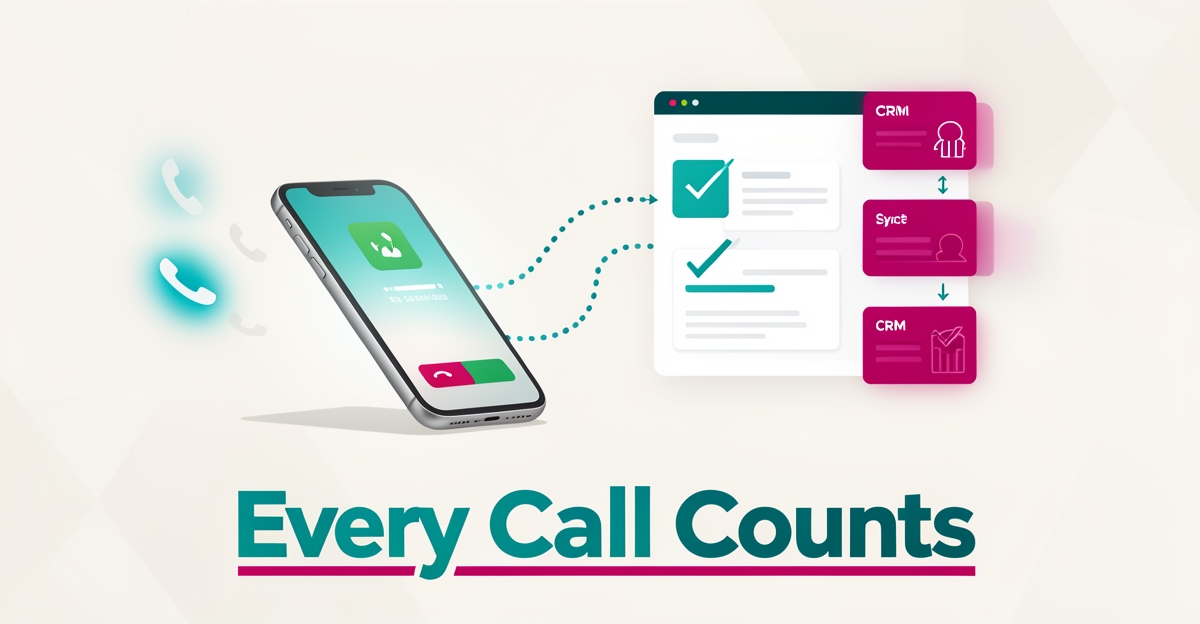
In the quest for operational efficiency, insurance brokers are increasingly turning to AI receptionists to manage influxes of calls and inquiries. However, the true game-changer lies not just in the AI's ability to handle calls, but in its seamless integration with the broker's Customer Relationship Management (CRM) system. This synergy transforms every interaction into a tracked, actionable lead, amplifying ROI in three key ways.
1. Elimination of Double-Entry and Enhanced Accuracy AI receptionists that sync call data, caller intent, and qualification details directly into the CRM eradicate the tedious and error-prone process of double-entry. According to industry analysis, integrating AI solutions with CRM can reduce manual data entry time by up to 70%, freeing staff to focus on high-value tasks.
2. Instant Follow-Up Sequences for Timely Engagement By triggering instant follow-up sequences upon lead capture, brokers can capitalize on the immediacy expected by today’s consumers. Research highlights that consumers expect near-immediate responses, with wait time tolerance significantly decreased in recent years. AI-driven CRM integrations ensure no lead slips through the cracks, converting more inquiries into policy engagements.
3. Comprehensive Lead Tracking for Data-Driven Decisions Every call, whether converted or not, becomes a valuable data point within the CRM. This holistic view enables brokers to:
- Analyze Conversion Rates by source and agent
- Identify Drop-Off Points in the sales funnel
- Personalize Future Engagements based on stored interaction history
As noted in a healthcare study (with inferred relevance to insurance), even a modest reduction in missed engagements can significantly impact revenue, suggesting a potential $200-$300 gain per successfully managed inquiry.
The Bottom Line For insurance brokers, the integration of AI receptionists with CRM is not just a luxury, but a strategic necessity. By streamlining operations, ensuring timely engagement, and providing actionable insights, this integration multiplies the ROI of adopting AI solutions, making it a worthwhile investment for businesses seeking to elevate their customer management and revenue growth.
Local business: doing this the old way?
One system replaces the whole pile.
All of it — the website, the follow-up, the content, the leads — built and run for you for $1,497 + $497/mo. Month-to-month, and you own everything.
See what your build includesCompliance, Complexity, and the Hybrid Safety Net
Insurance brokers operate in a regulatory minefield where a single misstatement about coverage can trigger E&O exposure. AI voice agents excel at capturing routine inquiries — policy effective dates, billing questions, certificate requests — but they cannot interpret policy language or offer licensed advice. The research underscores this boundary: AI handles volume efficiently, yet "AI doesn't replace human expertise, it complements it" in healthcare contexts that mirror insurance's compliance demands.
A hybrid model preserves both speed and compliance. The AI receptionist answers every call instantly, qualifies the request, and either resolves routine items or escalates licensed-advice calls to a human agent with full context — caller details, policy numbers, and the reason for transfer already logged. This eliminates the "hold while I look that up" friction that frustrates clients and burns agent time. Smith.ai notes that effective phone answering services prioritize CRM integration so every interaction lands in one place, and Sonant.ai reports AI receptionists can save agents 20 hours per week on inbound calls — a 50% reduction.
- AI captures and logs every inquiry — no missed calls, no manual entry
- Routine requests (certificates, billing, endorsements) resolve without human touch
- Licensed-advice calls escalate instantly with full context attached
- PII stays in your CRM, not in a third-party call center's notes
- Call recordings and transcripts create an audit trail for compliance reviews
AI Business Sites builds this hybrid logic directly into the website's voice agent: the same system that captures web leads also answers the phone, tags the contact, and routes the deal — so your pipeline stays clean whether the conversation starts on a landing page or a phone line.
How to Decide: A Practical Framework for Brokers
Most brokers don't ignore AI receptionists because they doubt the technology — they hesitate because they can't quantify the payoff. A practical framework turns that uncertainty into a test you can run in 30 days.
Start with your actual numbers. Pull three months of call logs and calculate your missed-call volume during business hours and after 5 p.m. Research shows that 1 out of 3 callers abandon their inquiry entirely when no one answers, a pattern documented in healthcare settings that translates directly to insurance policy questions according to industry research. Next, tag every after-hours voicemail by type: new policy quote, endorsement request, claims question, or renewal. If more than 20% of your monthly volume lands outside standard hours, the ROI case strengthens immediately.
- Map your CRM fields — does your system accept webhook payloads for contact creation, tagging, and deal-stage updates?
- Set a monthly call-volume threshold: brokers handling 200+ inbound calls typically see the clearest break-even within 60 days
- Define "qualified lead" criteria so the AI knows when to book a calendar slot versus when to tag for callback
- Choose a pilot window — four weeks, Monday through Friday, with weekend overflow as a bonus metric
Run the pilot with a hybrid model: let the AI handle greeting, FAQ responses, and data capture, while your team takes over for complex underwriting questions. One vendor reports that 70% of scheduling interactions resolve without human intervention in comparable service environments, suggesting your staff could reclaim significant hours. Track three metrics daily: calls answered live, leads created in your CRM, and appointments booked. At AI Business Sites, we've seen brokers use this exact framework to justify the $199/month AI Receptionist add-on before the pilot even ends — because the data makes the decision for them.
Frequently Asked Questions
How many potential clients do insurance brokers typically lose due to unanswered calls?
What is the primary disadvantage of traditional answering services for insurance brokers?
How much can an AI receptionist save insurance brokers in terms of staff time?
What is the cost structure comparison between traditional answering services and AI receptionists for insurance brokers?
Can AI receptionists fully replace human brokers in handling client inquiries?
How does CRM integration with an AI receptionist impact the ROI for insurance brokers?
FOR local businesss — BUILT AND RUN BY US
Your website. Your content. Your leads. Your data.
$500 starts your build. Seven days later it's live — chat, booking, follow-up, and your Google presence all set up. Then we run it, every month. You do the work you actually get paid for.