
Key facts
- Global e-waste reached 62 million tonnes in 2022 and is projected to surge to 82 million tonnes by 2030 according to the UN Global E-waste Monitor.
- Only 22.3% of 2022 e-waste was properly recycled, with experts predicting a further decline to just 20% by 2030 per UNITAR data.
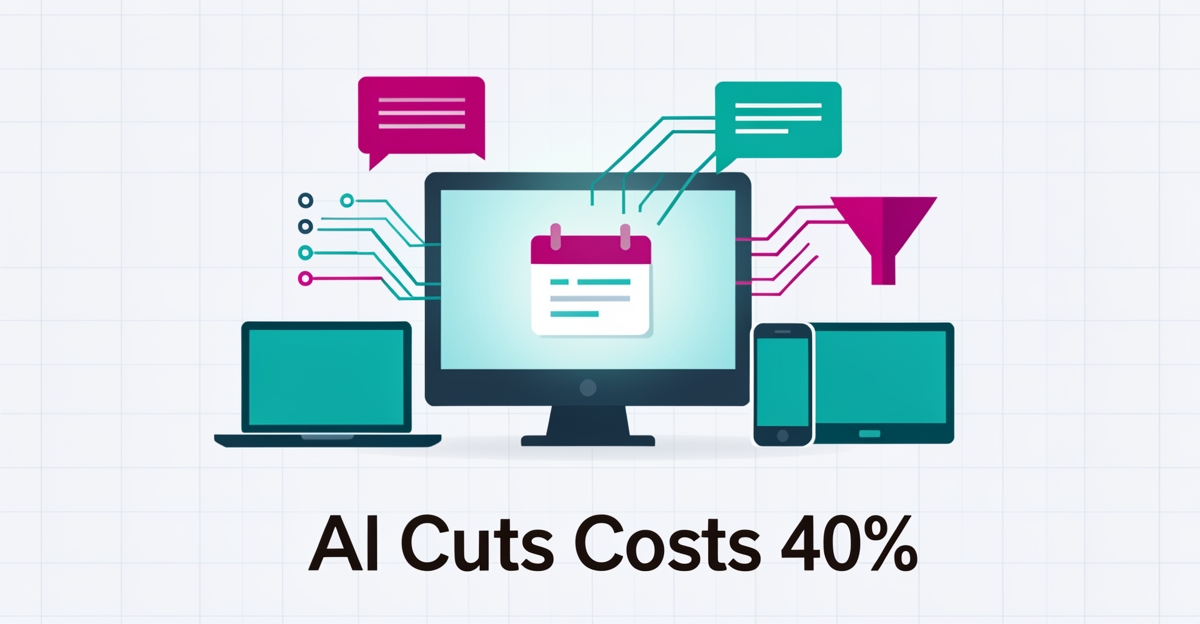
- AI chatbots in waste management cut customer service costs by 25–40% and reduce call volume by 40–60% based on industry implementation data.
- Routine inquiry response times shrink from hours to minutes when AI assistants handle common questions about materials, hours, and fees per waste management AI case studies.
- Facilities using AI report a 60% increase in efficiency and a 35% decrease in worker injuries according to Columbia Climate School research.
- Greyparrot's AI systems track real-time material flows across 100 facilities in 20 countries to power accurate recycling guidance per Business Insider reporting.
- Successful AI assistant deployments follow a 3–6 month phased rollout with offline validation targeting ≥90% accuracy before going live based on recycling industry deployment data.
WANT RESULTS LIKE THIS?
Imagine a system doing all of this for your local business — every day, without you.
We build local businesses a custom website with a team of AI behind it: every lead captured and followed up, new content published monthly,customers finding you on Google — live in 7 days.
- 85+ pages at launch
- Every lead followed up, automatically
- Your whole business on one screen
The Growing Gap Between E-Waste Volume and Customer Support Capacity
The e-waste crisis isn’t just growing—it’s outpacing our ability to manage it. Globally, 62 million tonnes of electronics were discarded in 2022, a staggering amount that’s projected to surge to 82 million tonnes by 2030, yet only 22.3% of that waste was properly recycled in 2022. That rate is slipping, with experts predicting a further decline to just 20% by decade’s end. Meanwhile, most e-waste recyclers still rely on manual phone and email support, a system that buckles under the weight of rising inquiries. The result? Missed leads, frustrated residents, and electronics ending up in landfills instead of the right hands.
The disconnect is stark: public demand for clear disposal guidance is surging, but human bandwidth isn’t keeping pace. Residents regularly call or email with the same questions—What items do you accept? What are your drop-off hours? Do you charge fees?—drowning small teams in repetitive tasks that could be automated. AI chatbots in waste management can slash call volume by 40–60% and cut response times from hours to minutes, freeing up staff for higher-value work. For an e-waste recycler, this means turning a bottleneck into a scalable solution—one that answers questions accurately, day or night, without adding headcount.
The opportunity isn’t just about saving time; it’s about capturing missed opportunities. Every unanswered call or delayed email represents a potential customer lost to competitors or, worse, improper disposal. An AI assistant on your website can handle these routine inquiries instantly, using your own operational data to provide up-to-date answers about accepted materials, fees, and facility hours. Unlike static FAQs, it learns from real interactions and adapts to local concerns, ensuring consistency without the back-and-forth of manual support.
- Answer 24/7 without overtime costs or staff burnout
- Reduce repetitive inquiries by up to 60%, letting your team focus on complex cases
- Turn every website visitor into an engaged lead with instant, personalized responses
- Gather data on the most common questions to refine your services and messaging
- Build trust by providing clear, consistent guidance that reduces improper disposal
The alternative—doing nothing—risks leaving money and materials on the table. For every tonne of e-waste diverted from landfills, recyclers stand to recover valuable metals worth thousands. But without a system to guide the public efficiently, even the most well-intentioned facilities struggle to meet demand. An AI assistant bridges that gap, turning your website into a 24-hour support hub that scales with your business, not against it.
What the Data Shows: AI Chatbots Cut Costs and Response Times in Waste Management
What the Data Shows: AI Chatbots Cut Costs and Response Times in Waste Management
As the world grapples with the escalating e-waste crisis—projected to reach 82 million tonnes by 2030—embracing efficient solutions is paramount. For e-waste recycling businesses, implementing an AI assistant can significantly impact operational efficiency and customer satisfaction. Research in waste management highlights compelling benefits of AI chatbots, which can be directly applied to the e-waste recycling sector.
Key Takeaways from Waste Management AI Implementations:
- Cost Reduction: AI chatbots reduce customer service costs by 25-40% and cut call volume by 40-60% source.
- Response Time Improvement: Routine inquiries, such as those about accepted materials or drop-off hours, see response times shrink from hours to minutes source.
- Operational Efficiency: Facilities using AI report 60% efficiency gains and a 35% decrease in worker injuries source.
Application to E-Waste Recycling Businesses:
An AI assistant, trained on your e-waste recycling business's specifics (accepted materials, hours, fee schedules), can handle the bulk of repetitive customer inquiries instantly and 24/7 without the need for additional staff. This not only aligns with the broader industry trend of leveraging AI for efficiency but also addresses the unique challenge of providing consistent, accurate information to customers about e-waste recycling procedures.
Actionable Insights for E-Waste Recycling Businesses:
- Integrate AI with Real-Time Data: Ensure the AI assistant can provide dynamic, up-to-date information on accepted materials based on current waste stream composition, enhancing customer experience and operational alignment.
- Phased Implementation: Adopt a 3-6 month phased approach with clear KPIs to ensure seamless integration and measure success through metrics like inquiry resolution rates and customer satisfaction.
- Governance and Maintenance: Regularly update and retrain the AI to reflect evolving recycling guidelines and material acceptance criteria, ensuring long-term effectiveness.
By embracing AI assistants, e-waste recycling businesses can not only enhance customer service but also contribute to the broader goal of improving recycling efficiency in the face of a mounting global challenge. As highlighted by industry experts, AI's role in waste management is not just about automation but about creating a more sustainable and responsive recycling ecosystem.
Making It Work: Integration With Real-Time Facility Data and Local Rules
Your AI assistant shouldn’t just recite yesterday’s rules—it needs to speak with your facility’s pulse. Greyparrot’s AI systems already track real-time material flows across 100 facilities in 20 countries, turning raw facility data into answers that don’t just sound smart but are accurate. When a customer asks what’s accepted today, the AI should pull the exact list from your sorting line—not a static FAQ that’s months out of date. The same goes for drop-off windows, fee schedules, or wait times; customers trust current answers, not guesses.
This real-time connection isn’t optional—it’s the difference between a chatbot that earns trust and one that erodes it. Without live data, your AI becomes just another generic script that frustrates callers by giving the wrong advice. Clients who’ve deployed AI assistants tied to operational systems report 40–60% fewer calls for routine questions—a direct measure of how much friction disappears when answers are precise the first time.
- Pull material acceptance lists directly from your sorting data feed to avoid out-of-date guidance
- Sync fee schedules from your billing system so the AI quotes today’s rates—not yesterday’s
- Feed live wait-time estimates to prevent customers from showing up during peak hours
- Update local recycling rules automatically as new municipal mandates take effect
At AI Business Sites, we’ve built websites that do more than sit idle—they become your frontline team by connecting customer-facing AI to the systems that actually run your business. When your assistant accesses real-time facility data, it stops guessing and starts solving.
Local business: doing this the old way?
One system replaces the whole pile.
All of it — the website, the follow-up, the content, the leads — built and run for you for $1,497 + $497/mo. Month-to-month, and you own everything.
See what your build includesA Phased Rollout Plan: From Pilot to Full Deployment in 3–6 Months
Rolling out an AI assistant doesn't mean flipping a switch and hoping for the best. Successful deployments in recycling follow a structured path — pilot scoping, data collection, offline validation, live pilot with human oversight, then gradual scaling — typically over 3–6 months with clear KPIs like inquiry resolution accuracy, response time reduction, and customer satisfaction scores.
Start by defining a narrow pilot scope: the 10–15 most common questions your team fields about accepted materials, drop-off hours, and fee schedules. Feed the assistant real chat logs, emails, and call transcripts from the past 90 days so it learns your actual customer language, not generic scripts. Run offline validation against a held-out test set — aim for ≥90% accuracy on material acceptance and ≥95% on hours/fees before going live. According to industry deployment data, this phased approach reduces rollout risk and keeps the timeline to 3–6 months for small operations.
- Week 1–2: Pilot scoping and data collection from real interactions
- Week 3–4: Offline validation against held-out test cases
- Week 5–8: Live pilot with human oversight on every response
- Month 3–6: Gradual scaling as accuracy thresholds hold
Governance keeps the system honest after launch. Schedule monthly retraining cycles using new conversation data, quarterly data quality audits, and immediate updates whenever local guidelines or accepted materials change — e-waste streams shift seasonally and with policy updates. Research shows AI systems require ongoing data training and personnel oversight to remain effective as waste streams evolve. AI Business Sites builds this governance rhythm into the platform so your assistant stays current without adding administrative burden.
The Business Case: One System That Answers Customers, Captures Leads, and Feeds Operations
An AI assistant isn’t just a smart chat window—it’s the only system your e-waste recycling business needs to turn every customer question into a captured lead, a tagged opportunity, and a predictable next step. While you’re busy handling drop-offs and processing fees, this assistant quietly answers “Can you take a CRT monitor?” at 2 a.m., routes urgent battery inquiries to your hazardous-waste team, and updates your CRM without a single keystroke. Unlike a standard live-chat tool or after-hours service, it learns from every real conversation and adapts to the materials your facility actually accepts today—so your answers stay accurate even as policies change.
Companies in waste management cut customer-service costs by 25–40% after deploying AI chatbots, while trimming call volume 40–60% and slashing response times from hours to minutes. Instead of stitching together a chat widget, a third-shift answering service, and a stack of PDF forms, you consolidate everything into a single workflow that tags each inquiry by material type and urgency, then hands off qualified leads to your sales pipeline automatically. Every interaction—web chat, voice call, or form fill—lands in one place with the right follow-up already drafted, reviewed, and scheduled.
- No more missed opportunities. The assistant captures drop-off requests from late-night phone calls and instant chats alike, turning potential drop-offs into booked appointments.
- It replaces four separate tools: a live-chat platform, an answering service, a lead-capture form, and manual CRM entry—shrinking your stack and your monthly bills.
- Behind the scenes, it builds a living knowledge base from every real conversation, so your answers improve without extra training or spreadsheets.
That memory works for repeat visitors too. A returning caller who asks about printer-ink cartridges one week can pick up where they left off the next, while the system auto-tags “toner” inquiries for your bulk-collection program. The same assistant can also funnel hazardous-waste leads straight to your compliance workflow, ensuring paperwork and fees are handled before the customer ever leaves the chat. Over time, the assistant’s accuracy rises, your team’s response time stays fast, and your website becomes a 24/7 lead machine that feeds itself—without adding another tool to the pile.
Frequently Asked Questions
How much can an AI assistant actually reduce our customer service costs and call volume for e-waste recycling?
Will an AI assistant give outdated information about what we accept or our current drop-off hours?
How long does it take to implement an AI assistant for our e-waste recycling business, and what’s involved?
Can the AI assistant help us capture more leads and reduce missed opportunities from after-hours inquiries?
Is ongoing maintenance required for the AI assistant, and how much effort will it take from our team?
What kind of return on investment can we expect from adding an AI assistant to our e-waste recycling website?
Turn Your Website Into a 24/7 Recycling Guide That Grows With You
Investing in an AI assistant for your e-waste recycling business isn’t just about automating answers—it’s about turning every website visit into a chance to educate, engage, and convert. As e-waste volumes climb toward 82 million tonnes by 2030 and recycling rates threaten to dip below 20%, the businesses that thrive will be the ones that make responsible disposal effortless for their communities. An AI assistant trained on your real facility data handles routine questions 24/7, cuts response times from hours to minutes, and frees your team to focus on what matters—processing materials, building relationships, and scaling sustainably. With proven reductions in call volume and customer service costs, plus the ability to capture leads and improve data accuracy over time, this isn’t just a support tool—it’s a force multiplier for your mission. Start small: audit your most frequent customer questions, then explore how AI Business Sites can build a custom website with an integrated assistant that learns from your operations and grows with your business. When your site works as hard as you do, every click brings you closer to a cleaner future.
FOR local businesss — BUILT AND RUN BY US
Your website. Your content. Your leads. Your data.
$500 starts your build. Seven days later it's live — chat, booking, follow-up, and your Google presence all set up. Then we run it, every month. You do the work you actually get paid for.