
Key facts
- Rogers Behavioral Health increased their admit rate by 3x through Clinical AI according to case studies
- Living Well Consortium increased capacity and reduced clinician workloads with AI support based on clinical implementations
- AI chatbots can manage high-volume patient check-ins using tone-sensitive language for timely support as demonstrated in mental health clinics
- Human oversight ensures AI flags uncertain responses for clinician review in balanced implementations per clinical protocol guidelines
- Regular feedback loops where therapists audit AI interactions help refine system knowledge base for ongoing improvement
- AI Business Sites platforms enable AI voice agents to answer calls and capture leads without hold music through integrated communication tools
- Clinics using AI for routine follow-ups free therapists to focus on complex, emotionally demanding cases optimizing resource allocation
WANT RESULTS LIKE THIS?
Imagine a system doing all of this for your local business — every day, without you.
We build local businesses a custom website with a team of AI behind it: every lead captured and followed up, new content published monthly,customers finding you on Google — live in 7 days.
- 85+ pages at launch
- Every lead followed up, automatically
- Your whole business on one screen
The Human Touch Challenge in Mental Health Follow-Ups
The Human Touch Challenge in Mental Health Follow-Ups
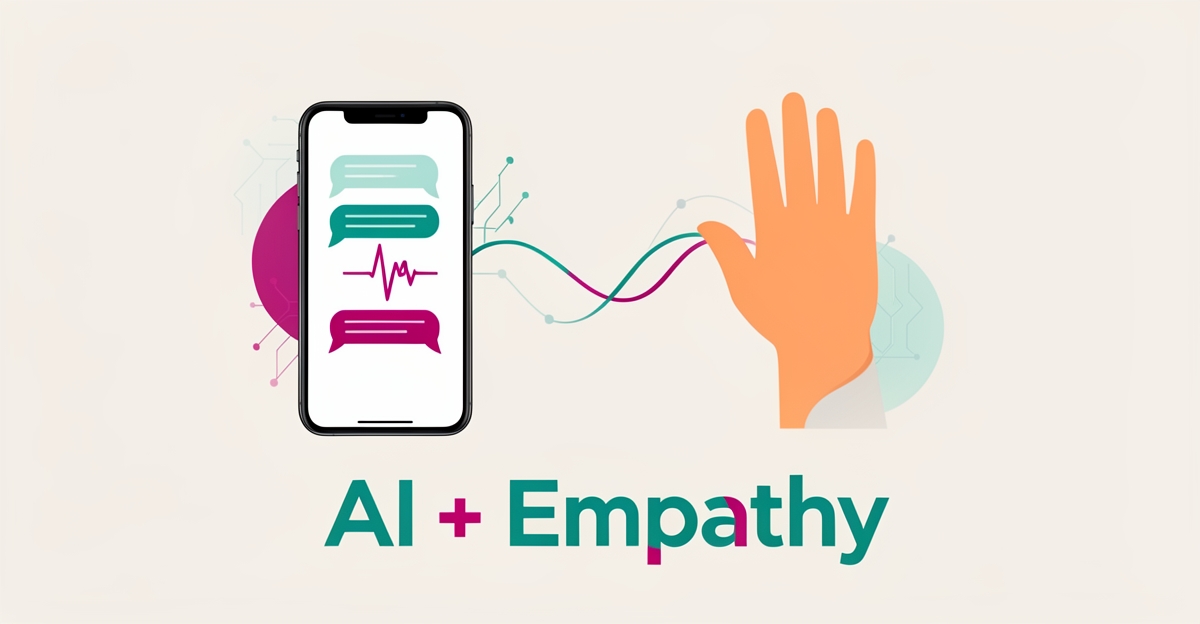
Mental health clinics face a poignant dilemma: how to maintain compassionate, timely follow-ups with patients while navigating limited resources. The emotional well-being of patients hinges on consistent, empathetic support, yet the workload often overwhelms human clinicians. Recent studies highlight the growing adoption of AI in mental health to address this challenge, but the question remains: can AI truly support compassionate care without replacing human empathy?
Research indicates a positive trend towards AI integration, with clinics like Rogers Behavioral Health increasing their admit rate by 3x through clinical AI source. Similarly, Living Well Consortium and other UK-based initiatives have seen improved access and reduced clinician workloads with AI support. However, these successes are tempered by the lack of detailed statistics on patient satisfaction and long-term outcomes.
Balancing Efficiency with Empathy: Key Considerations
- Scalability vs. Sensitivity: AI excels at handling voluminous follow-ups efficiently, but sensitive patient interactions require a human touch. Clinics must ensure AI tools are designed to augment, not replace, clinician-patient relationships.
- Transparency and Trust: Patients must be informed about AI's role in their care to maintain trust. A future-dated NAM announcement (though not directly relevant to follow-ups) hints at the broader ethical discussions around AI in mental health source.
- Human Oversight: Implementing AI for initial follow-ups or routine check-ins can free clinicians to focus on complex, emotionally demanding cases, ensuring patients receive the right level of care at the right time.
Striking a Balance
For mental health clinics considering AI for patient follow-ups:
- Start with AI for Routine Interactions: Use AI for scheduling, medication reminders, or basic check-ins, reserving human clinicians for deeper, emotionally charged conversations.
- Ensure Seamless Handoffs: Implement systems where AI identifies the need for human intervention, ensuring smooth transitions for patients.
- Monitor Patient Satisfaction: Regularly collect feedback to adjust the balance between AI and human interactions, prioritizing patient comfort and care quality.
AI Business Sites, in developing solutions for small businesses, including those in healthcare, underscores the importance of technology that supports, rather than supplants, human connection. For mental health clinics, this means leveraging AI to streamline workflows while preserving the empathetic core of patient care.
As the mental health sector continues to evolve with AI, the path forward lies in embracing technology as a tool to enhance, not diminish, the human touch in patient follow-ups. By doing so, clinics can address the challenge of maintaining compassionate care amidst resource constraints, ultimately leading to better patient outcomes.
AI-Powered Solutions for Enhanced Patient Care
AI-Powered Solutions for Enhanced Patient Care
In the realm of mental health clinics, embracing AI for patient follow-ups is not just a trend, but a strategic move towards enhanced, scalable support. Rogers Behavioral Health, for instance, has harnessed AI to increase its admit rate by threefold, showcasing the potential for clinical efficiency (Source: Limbic AI Case Studies). Similarly, Living Well Consortium and other initiatives like NHS Bradford and Craven District Talking Therapies highlight how AI can boost capacity and reduce clinician workloads, though detailed metrics often remain underreported.
- Efficiency and Scalability: AI chatbots can manage a high volume of patient check-ins using tone-sensitive language, ensuring timely support without overwhelming human resources.
- Consistency in Care: Automated follow-ups guarantee that no patient is overlooked, with AI systems remembering patient interactions to build on previous conversations.
- Human Oversight for Empathy: While AI excels in data-driven support, human clinicians remain crucial for providing empathetic, personalized care, especially in sensitive mental health contexts.
The success of AI integration in mental health, as seen in various case studies, lies in its balanced implementation. AI Business Sites, through its platform, illustrates how technology can enhance business operations—such as automated lead follow-ups and personalized responses—without replacing human interaction. For mental health clinics, this translates to leveraging AI for initial check-ins and data collection, while ensuring human clinicians are at the forefront of decision-making and empathetic support.
- Adopt with Caution: Integrate AI to enhance efficiency, but maintain human clinicians for empathetic care, as highlighted by the positive yet cautious adoption in case studies like Limbic AI's initiatives.
- Seek Detailed Insights: Procure full case studies for informed decisions, given the current lack of detailed statistics in available overviews.
- Diversify Research Sources: Supplement with independent or academic research to balance potential biases from company-published case studies.
By embracing AI in a manner that complements, rather than replaces, human care, mental health clinics can navigate the delicate balance between technological efficiency and compassionate patient support, ultimately enhancing the quality of care provided.
Local business: doing this the old way?
One system replaces the whole pile.
All of it — the website, the follow-up, the content, the leads — built and run for you for $1,497 + $497/mo. Month-to-month, and you own everything.
See what your build includesImplementing AI with a Human-Centric Approach
The most effective AI implementations in mental health don't replace human judgment — they create space for it. Clinics that approach integration as a partnership between technology and clinical expertise see the strongest outcomes, with AI handling routine check-ins while therapists focus on complex therapeutic work.
- Start with a clear clinical protocol defining which follow-ups AI handles and which require human contact
- Train the system on your clinic's specific tone, terminology, and crisis escalation pathways
- Set confidence thresholds so the AI flags uncertain responses for clinician review
- Build feedback loops where therapists regularly audit AI interactions and refine the knowledge base
- Measure both efficiency gains and patient experience metrics from day one
Real-world deployments show this balanced approach works. Rogers Behavioral Health increased their admit rate 3x through Clinical AI while maintaining clinician oversight of every patient interaction. The Living Well Consortium similarly expanded capacity and reduced administrative workloads without compromising care quality. These results come from treating AI as a clinical tool that extends therapist reach — not a substitute for therapeutic relationship.
AI Business Sites applies this same human-centric philosophy to its AI chatbots, which use tone-sensitive language to check in on patient well-being while preserving the essential human connection at the heart of mental health care. The platform's design ensures clinicians stay in control, reviewing and approving AI-drafted communications before they reach patients, with configurable autonomy levels that match each clinic's comfort and compliance requirements.
Success ultimately depends on viewing implementation as an ongoing clinical process, not a one-time technical deployment. Clinics that schedule regular reviews of AI performance, patient feedback, and clinical outcomes — adjusting protocols as they learn — build systems that genuinely support both their staff and the people they serve.
Frequently Asked Questions
Can AI actually handle mental health follow-ups without feeling cold or robotic?
Will using AI for patient check-ins replace my clinicians?
Is there any proof that AI actually improves clinic performance?
How do I make sure a patient doesn't get stuck talking to a bot during a crisis?
What is the best way to start integrating AI into a mental health practice?
Where Technology Meets Compassion
The evidence is clear: AI can meaningfully extend the reach of mental health clinicians without eroding the empathy that defines quality care. Rogers Behavioral Health's 3x increase in admit rates demonstrates what's possible when technology handles routine follow-ups, scheduling, and initial check-ins — freeing therapists to focus on the complex, deeply human work that no algorithm can replicate. The clinics seeing the strongest results share a common approach: they treat AI as a clinical tool that operates within carefully defined boundaries, with human oversight at every critical junction. For mental health practices weighing this decision, the path forward isn't about choosing between efficiency and compassion. It's about designing workflows where each amplifies the other. Start by identifying which follow-ups are routine enough to automate and which demand a clinician's presence from the first message. Build in feedback loops from day one. And remember that the goal isn't to do more with less — it's to ensure every patient receives the right level of care at the right time. If your clinic is ready to explore how a website that handles patient communication automatically could support that balance, AI Business Sites builds custom sites with AI assistants designed for exactly this kind of thoughtful, human-first integration.
FOR local businesss — BUILT AND RUN BY US
Your website. Your content. Your leads. Your data.
$500 starts your build. Seven days later it's live — chat, booking, follow-up, and your Google presence all set up. Then we run it, every month. You do the work you actually get paid for.