
Key facts
- The global animal feed market is projected to double from $605.3 billion in 2025 to $1.22 trillion by 2035 at a 7.3% CAGR according to Future Market Insights.
- Direct sales channels hold 34.7% of the animal feed distribution market, favored by large-scale farms for logistical control and pricing transparency per Future Market Insights.
- Contract manufacturing is the fastest-growing end-user segment in the animal feed market, signaling a shift toward outsourced production per Precedence Research.
- Premixes dominate feed delivery with 53.2% market share, highlighting demand for specialized nutrient blends per Precedence Research.
- Asia-Pacific leads regional growth at 8.5% CAGR, outpacing North America's 6.2% and the global 7.3% average per Future Market Insights.
- Plant-based ingredients account for 68.2% of feed inputs, but corn and soybean meal price volatility remains a major supply chain challenge per Future Market Insights.
- Feed buyers can lose up to 15% of projected savings to hidden costs from unclear pricing structures, per Fidar Feed's 2023 analysis according to Fidar Feed.
WANT RESULTS LIKE THIS?
Imagine a system doing all of this for your local business — every day, without you.
We build local businesses a custom website with a team of AI behind it: every lead captured and followed up, new content published monthly,customers finding you on Google — live in 7 days.
- 85+ pages at launch
- Every lead followed up, automatically
- Your whole business on one screen
The Growing Complexity of Feed Supply Decisions
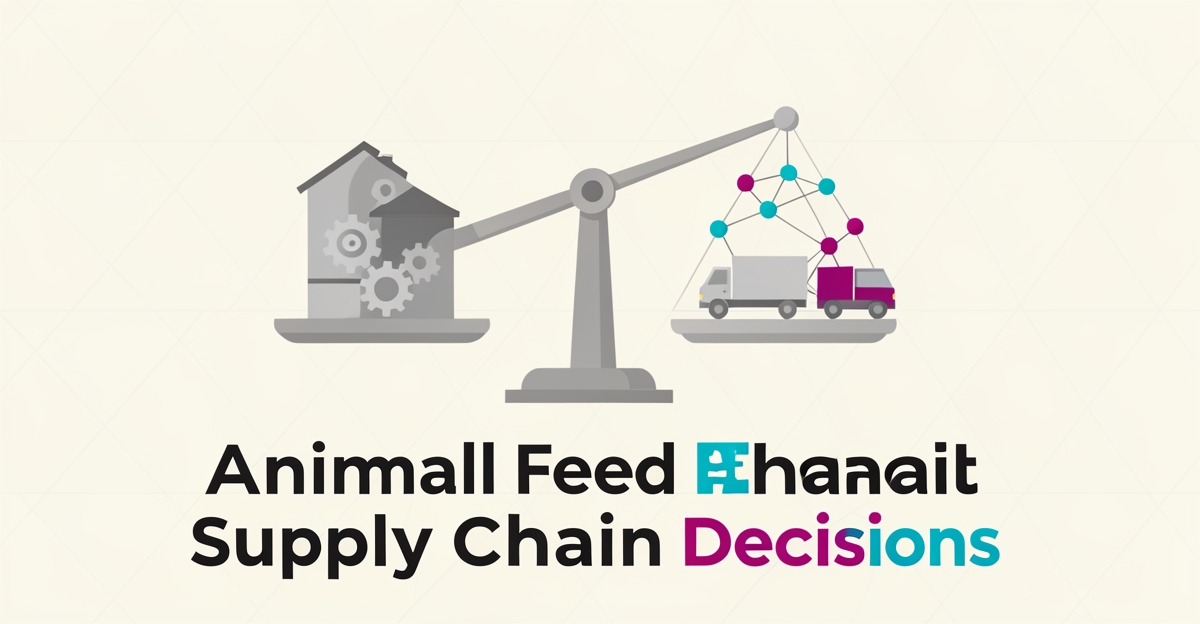
The animal feed industry is expanding at an unprecedented pace, with the global market projected to grow from $605.3 billion in 2025 to $1.22 trillion by 2035, reflecting a compound annual growth rate of 7.3%. This surge is fueled by rising demand for high-quality livestock nutrition and sustainable farming practices across key regions. For feed suppliers, this growth amplifies the stakes of choosing between in-house production and third-party outsourcing, a decision now shaped by competing pressures that extend far beyond simple cost calculations.
Direct sales channels currently hold 34.7% of the market share, favored by large-scale operations for their consistency, transparent pricing, and logistical control. At the same time, contract manufacturing is identified as the fastest-growing end-user segment, signaling a clear industry shift toward outsourced models for cost efficiency. This duality creates a strategic tension: suppliers must weigh the advantages of control and transparency against the potential savings and scalability of third-party partnerships.
Today’s feed suppliers face mounting complexity from multiple fronts. Volatile prices for core ingredients like corn and soybean meal continue to disrupt budgeting and forecasting, while antibiotic-reduction mandates in regions such as the U.S. and Germany are forcing reformulation efforts. Simultaneously, the rising demand for precision nutrition — tailored feed blends optimized for species, life stage, and productivity goals — requires advanced formulation capabilities that many in-house operations struggle to maintain. These pressures are not isolated; they intersect to make supply chain resilience a critical factor in supplier evaluation.
- Ensuring reliable delivery timelines despite ingredient shortages or geopolitical disruptions
- Maintaining full visibility into total costs, including hidden fees for transportation, storage, and compliance
- Adapting formulations to meet antibiotic-free and sustainability standards without sacrificing performance
- Leveraging data-driven tools to monitor supplier performance and optimize feed delivery in real time
- Balancing regional strategies, as high-growth markets like Asia-Pacific may favor outsourcing while North American operations prioritize control
In this environment, the choice between in-house and third-party feed supply is no longer just about operational preference — it’s a strategic decision impacting long-term profitability, compliance readiness, and market responsiveness. Suppliers who can navigate these tensions with clarity and data-backed insight will be best positioned to thrive in a rapidly evolving industry. The AI Business Sites platform supports this complexity by enabling real-time tracking of supplier performance and costs, offering feed businesses a clearer path to informed, profitable decisions.
What the Data Reveals About Delivery Reliability and Cost Transparency
What the Data Reveals About Delivery Reliability and Cost Transparency
As the global animal feed market is projected to reach $1.22 trillion by 2035 with a 7.3% CAGR source, feed suppliers face critical decisions on in-house vs. third-party supply models. When evaluating these options, delivery reliability and cost transparency emerge as pivotal factors.
- In-House Models offer logistical control and technical support, preferred by large-scale farms for "consistent supply contracts" source. This control enables more reliable delivery timelines, crucial for operations requiring high daily feed intake.
-
Third-Party Models require rigorous vetting of logistics networks and disruption protocols. Suppliers in high-growth regions like Asia-Pacific (with an 8.5% CAGR) may prioritize cost efficiency over control, but must ensure their contractors maintain reliable delivery standards source.
-
Unusually low prices from third-party suppliers often signal quality or reliability risks source. Fidar Feed’s checklist warns against inconsistent pricing and hidden fees (e.g., taxes, transportation, storage), emphasizing the need for itemized quotes.
-
Total Cost of Ownership (TCO) analysis is crucial, considering not just the base price but also bulk discounts, return policies, and taxes. For example, a supplier might offer a lower base price but charge exorbitant transportation fees, negating initial savings.
-
Audit Third-Party Logistics: Ensure suppliers have backup sourcing and emergency delivery options to mitigate disruptions.
- Demand Full Transparency: Compare TCO over 12–24 months, not just upfront pricing, to uncover hidden costs.
- Leverage Technology: Platforms like AI Business Sites can track supplier performance and costs in real time, streamlining decision-making source.
By prioritizing delivery reliability and cost transparency, feed suppliers can make informed decisions that balance control, cost, and long-term sustainability in a rapidly evolving market.
Word Count: 499
Customization, Certifications, and the Precision Nutrition Advantage
Regulatory pressures like the FDA’s antibiotic mandates and Germany’s Initiative Tierwohl are pushing feed suppliers to rethink their supply models. For in-house operations, this means developing species-specific formulation capabilities to comply with evolving standards while maintaining competitiveness. These operations also need third-party certifications—such as GMP, ISO, and veterinary approvals—to meet market demands for quality and traceability. Meanwhile, third-party suppliers must differentiate themselves by offering custom formulations, nutritional consulting, and emergency delivery to attract producers who prioritize flexibility and rapid response.
The 53.2% market share held by premixes underscores the growing demand for specialized nutrient blends, which serve as a key differentiator for suppliers. As precision nutrition platforms gain traction, feed producers face increasing pressure to deliver data-driven, tailored solutions that align with regulatory and performance expectations. This shift is reshaping supplier requirements, making it essential for in-house teams to invest in advanced capabilities while third-party partners must prove their adaptability through value-added services.
For feed suppliers navigating this landscape, real-time performance tracking and cost analysis can provide clarity. The AI Business Sites platform helps businesses monitor supplier reliability, pricing transparency, and long-term savings—critical factors when comparing in-house and third-party models. By leveraging such tools, producers can make informed decisions that balance control, compliance, and cost efficiency in an increasingly complex market.
Local business: doing this the old way?
One system replaces the whole pile.
All of it — the website, the follow-up, the content, the leads — built and run for you for $1,497 + $497/mo. Month-to-month, and you own everything.
See what your build includesUsing Technology to Track Performance and Profitability in Real Time
In today’s fast-moving feed industry, real-time visibility into supplier performance and cost trends is no longer optional—it’s essential for maintaining profitability and resilience. The AI Business Sites platform provides feed suppliers with a centralized system to monitor delivery performance, cost fluctuations, and inventory levels across in-house, third-party, or hybrid supply models, replacing fragmented spreadsheets and manual tracking with automated, actionable insights. This operational backbone enables proactive supply chain management, allowing businesses to anticipate disruptions, optimize purchasing decisions, and maintain consistent feed quality without constant oversight.
By leveraging real-time data monitoring and AI-driven analytics, suppliers can identify trends in delivery timeliness, defect rates, and pricing volatility as they emerge—critical advantages in a market where ingredient costs like corn and soybean meal remain a significant restraint on profitability. For example, the platform can flag recurring delays from a third-party supplier or highlight cost savings opportunities from bulk purchasing adjustments, helping suppliers shift from reactive firefighting to strategic planning. This capability is especially valuable given that direct sales channels—favored for their logistical control and pricing transparency—account for 34.7% of distribution in the animal feed market, while contract manufacturing continues to grow as the fastest-growing end-user segment, reflecting a dual demand for both control and cost efficiency.
The platform’s automation features further reduce manual effort by continuously tracking key performance indicators such as on-time delivery rates, total cost of ownership, and inventory turnover, generating alerts only when intervention is truly needed. This aligns with expert insights emphasizing the importance of supply chain resilience and formulation control in gaining a competitive edge, particularly as precision nutrition and sustainability mandates reshape supplier expectations. Whether managing internal production or evaluating external partners, feed suppliers gain a unified view of performance that supports smarter, faster decisions—turning data into a strategic asset rather than a back-office burden. With the AI Business Sites platform, the focus shifts from merely tracking supplies to actively optimizing the entire supply chain for long-term savings and reliability.
A Regionalized Framework for Making the Call
A regionalized approach sharpens feed supply decisions by aligning strategy with market growth patterns. In North America, where the animal feed market is expanding at a 6.2% CAGR, direct sales models are favored for their ability to maintain tight control over formulation, pricing transparency, and customer relationships—critical when managing large-scale livestock operations that depend on consistent, high-quality feed delivery. The need for real-time technical support and logistical oversight amplifies this preference, as livestock producers prioritize reliability over cost arbitrage in mature markets.
Across Asia-Pacific and China, where growth outpaces the global average at 8.5% and 7.9% CAGR respectively, contract manufacturing emerges as a cost-efficient alternative—but only when paired with rigorous supplier audits. Rising demand in these regions often outstrips local production capacity, making third-party partnerships essential for scaling without heavy capital investment. However, the lack of standardized quality controls in some markets demands strict certification reviews (e.g., GMP, ISO) to mitigate risks tied to ingredient sourcing and feed consistency.
Evaluate your operation against five core criteria to determine the right fit:
- Supply chain resilience: Assess delivery timelines, backup sourcing plans, and disruption protocols—especially critical in volatile grain markets where ingredient availability can shift rapidly.
- Total cost transparency: Compare not just base pricing but hidden fees, bulk discounts, and long-term savings potential. A 2023 report from Fidar Feed found that feed buyers losing up to 15% of projected savings to unexpected costs due to unclear pricing structures.
- Customization depth: Does your supplier offer species-specific formulations, antibiotic-free options, or tailored nutrient blends to meet regulatory and performance demands?
- Technology integration: Evaluate whether your model supports real-time inventory tracking, automated ration balancing, and data-driven feed adjustments to reduce waste and improve efficiency.
- Regional fit: Align your strategy with local market dynamics—direct control in North America, cost-efficient outsourcing in high-growth Asia-Pacific regions.
While the choice hinges on your operational scale and growth trajectory, AI Business Sites platforms can close the gap by monitoring supplier performance and cost trends in real time. This visibility turns a regional strategy into an actionable plan, ensuring every feed decision supports long-term profitability without sacrificing control or quality.
Frequently Asked Questions
What are the main factors feed suppliers should consider when choosing between in-house and third-party feed production?
How can feed suppliers avoid hidden costs when working with third-party feed manufacturers?
Is in-house feed production better for compliance with antibiotic-free and sustainability regulations?
Does outsourcing feed production mean sacrificing quality or delivery reliability?
How can technology help feed suppliers decide between in-house and third-party models?
Should feed suppliers in North America prioritize in-house production over outsourcing?
Future-Proof Your Feed Supply: Balancing Control, Cost, and Compliance for Long-Term Success
As the global animal feed market hurtles toward a $1.22 trillion valuation by 2035, feed suppliers face a strategic inflection point: choosing between in-house production’s control and third-party outsourcing’s cost efficiency. The data couldn’t be clearer—delivery reliability and total cost transparency now separate industry leaders from laggards, with hidden fees alone eroding up to 15% of projected savings. Meanwhile, precision nutrition demands and antibiotic-reduction mandates are reshaping formulation requirements, forcing suppliers to either invest in advanced capabilities or partner with agile third-party specialists. The choice isn’t just operational; it’s existential, impacting compliance readiness, market responsiveness, and long-term profitability. For producers in North America’s mature markets, direct sales models offer the logistical control and technical support essential for large-scale operations, while Asia-Pacific’s rapid 8.5% growth favors cost-efficient contract manufacturing—provided suppliers rigorously vet logistics networks and certifications. The AI Business Sites platform bridges this divide by providing real-time supplier performance tracking and cost analysis, turning complex data into actionable insights that protect margins and ensure consistent feed quality. In a market where ingredient volatility and regulatory pressures define success, the smartest suppliers won’t just choose a model—they’ll optimize it.
FOR local businesss — BUILT AND RUN BY US
Your website. Your content. Your leads. Your data.
$500 starts your build. Seven days later it's live — chat, booking, follow-up, and your Google presence all set up. Then we run it, every month. You do the work you actually get paid for.