
Key facts
- 75% of consumers visit a business's website before contacting them according to industry research.
- 29% of US small businesses lack websites due to cost and technical barriers as reported by Snapps.ai.
- The global cleaning services market is projected to reach $859.20 billion by 2034, growing at 7.5% annually per ServiceAutopilot.
- AI-driven automation can boost labor productivity by 0.1 to 0.6% annually through 2040 according to ThoughtSpot.
- Over 25% of US consumers discover local businesses online, emphasizing the necessity of a well-maintained site per Snapps.ai research.
- In-house website development can cost $1,000–$10,000 upfront, plus $300–$800/month for essential tools as estimated by Snapps.ai.
WANT RESULTS LIKE THIS?
Imagine a system doing all of this for your local business — every day, without you.
We build local businesses a custom website with a team of AI behind it: every lead captured and followed up, new content published monthly,customers finding you on Google — live in 7 days.
- 85+ pages at launch
- Every lead followed up, automatically
- Your whole business on one screen
The Digital Experience Gap Costing You Dumpster Cleaning Jobs
Your phone buzzes with a new lead at 8:47 PM. By the time you see it tomorrow morning, that prospect has already booked with a competitor who answered instantly.
This isn't hypothetical — it's the new baseline. Residential and commercial clients now expect the same digital convenience they get everywhere else: online estimates, instant replies, digital approvals, appointment reminders, and online payments. According to industry research, 75% of consumers visit a business's website before contacting them, yet 29% of small businesses still lack a website due to cost and technical barriers.
- Missed leads who never hear back fast enough
- Slower response times that signal disorganization
- Clients who choose competitors with smoother digital experiences
- Administrative hours lost to manual follow-up and scheduling
The cleaning industry is feeling this pressure acutely. Service industry data shows clients compare cleaning services to digital-first experiences — they want easy online estimate requests, prompt responses, digital quotes and approvals, appointment reminders, and online payment options. Even satisfied clients leave when scheduling, communication, or billing becomes unnecessarily difficult.
The global cleaning services market is projected to reach $859.20 billion by 2034, growing at 7.5% annually. That growth brings more competition, not less — making digital differentiation essential for dumpster cleaning businesses trying to stand out.
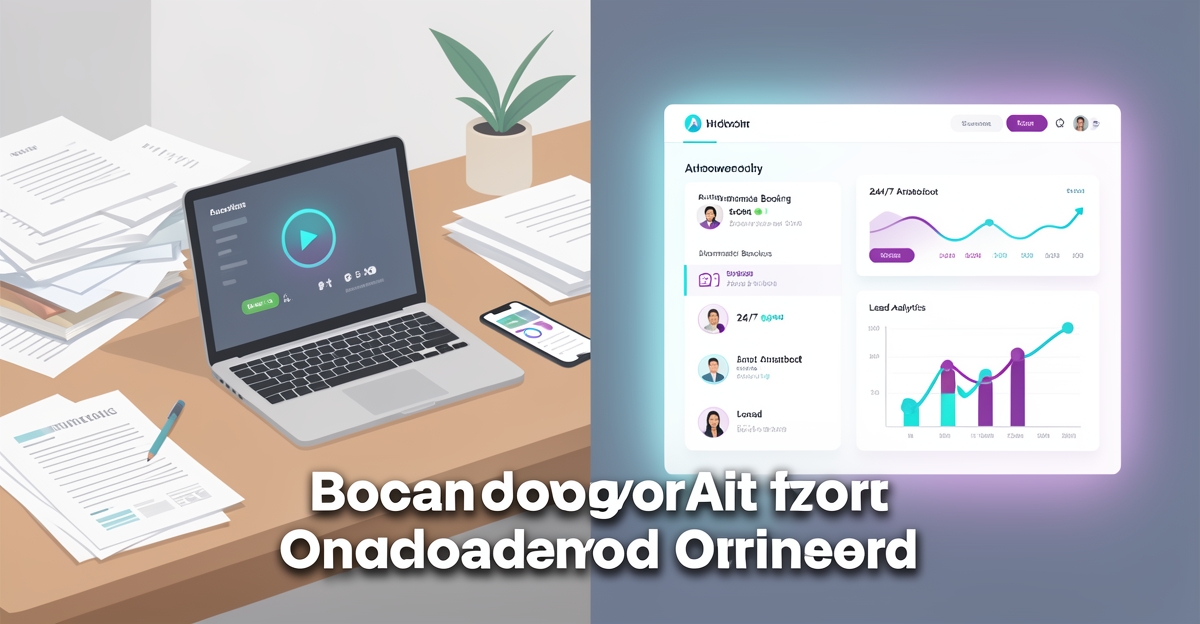
AI Business Sites builds websites that close this gap from day one. Your site captures leads 24/7, sends instant personalized responses, handles booking and approvals, and follows up automatically — so you never lose a job because your digital experience couldn't keep up.
What In-House Development Actually Costs in Time, Money, and Maintenance
What In-House Development Actually Costs in Time, Money, and Maintenance
Building a website in-house for your dumpster cleaning business, whether by hiring a freelancer/agency ($1,000–$10,000 upfront) or managing it internally, is just the tip of the iceberg. The true costs lie in the ongoing, often overlooked expenses and efforts required to keep the site effective.
Hidden Costs Uncovered
- Hosting and Security Updates: Beyond initial development, hosting can cost $100-$500 monthly, and security updates require constant vigilance to prevent vulnerabilities.
- Plugin Maintenance and Updates: Each additional feature (lead capture forms, booking integration, email automation) typically requires separate tools and subscriptions, adding $50-$200 monthly per tool.
- Content Creation and SEO: Producing SEO-optimized content monthly can cost $1,000-$3,000 if outsourced, and effective SEO work demands continuous investment.
The Time and Expertise Trap
Research highlights that most small businesses, like those in the cleaning industry, underestimate the technical expertise and time needed to maintain a lead-generating website alongside daily operations (Source: Snapps.ai). For a dumpster cleaning business, this means diverting resources away from core services.
Key Statistics Illuminating the Challenge
- 29% of US small businesses lack websites due to cost and technical barriers (Source: Snapps.ai), indicating the hurdle in-house development poses.
- Over 25% of consumers discover local businesses online, and 75% visit the website before the physical location (Source: Snapps.ai), emphasizing the necessity of a well-maintained site.
- AI-driven automation can boost labor productivity by 0.1 to 0.6% annually through 2040 (Source: ThoughtSpot), suggesting smart platforms can alleviate maintenance burdens.
The Smart Platform Advantage
In contrast, a smart, AI-powered website platform for your dumpster cleaning business incorporates these costs into a predictable monthly fee, typically around $800 (as seen with AI Business Sites), covering:
- Hosting and maintenance
- Ongoing AI-generated content tailored for local SEO
- Integrated lead capture, automated follow-up, and booking systems
This approach not only streamlines expenses but also ensures your website is a proactive tool for growth, rather than a reactive cost center.
By understanding the full spectrum of in-house development costs, dumpster cleaning businesses can make informed decisions that align with their operational capacities and growth strategies.
How Smart Platforms Deliver Lead Capture, Booking, and Follow-Up Out of the Box
Most dumpster cleaning businesses know the frustration of watching potential customers slip away—not because they couldn’t deliver the service, but because their website couldn’t respond to a late-night inquiry, follow up with a personalized quote by morning, or schedule a pickup without a phone call. In a sector where clients now expect digital-first experiences—from instant estimates to digital quotes and automated reminders—delayed responses mean lost jobs and lost revenue. Industry research confirms that even satisfied customers will switch providers if scheduling, communication, or billing becomes unnecessarily complicated, underscoring how critical responsive digital tools are to retention and growth.
Smart platforms close these gaps instantly by delivering a complete system out of the box. Instead of patching together separate tools for chat, CRM, email, and scheduling, these platforms consolidate everything into one workflow that operates 24/7. Visitors get answers at 2 a.m. through an AI assistant that books jobs without human intervention, while every new lead receives a personalized email response within seconds. Behind the scenes, automated sequences nurture prospects who aren’t ready to book, tagging leads based on behavior and triggering follow-ups only when a human review is needed. This eliminates the “black hole” where leads disappear—something that plagues 29% of small businesses that lack websites entirely due to cost or technical barriers.
- AI chat that answers common service questions and books jobs around the clock, even when your team is offline
- Instant, personalized email responses to every lead—no more waiting until morning to reply
- Automated follow-up sequences that keep prospects engaged without manual work
- Integrated scheduling that turns estimates into bookings with a single click
- Ongoing SEO content generation that keeps your site ranking for local searches
The result isn’t just faster responses—it’s a website that runs your business while you focus on the work that matters. With consolidation comes predictability: one monthly fee replaces the scattered costs of a website agency, a CRM, an email tool, a content writer, and scheduling software, all of which would otherwise add up to thousands per year. For dumpster cleaning businesses in a $481.75 billion market racing toward $859.20 billion by 2034, a platform that handles lead capture, booking, and follow-up automatically isn’t just a time-saver—it’s a competitive edge.
Local business: doing this the old way?
One system replaces the whole pile.
All of it — the website, the follow-up, the content, the leads — built and run for you for $1,497 + $497/mo. Month-to-month, and you own everything.
See what your build includesTotal Cost of Ownership: 12-Month Comparison for a Dumpster Cleaning Business
For a dumpster cleaning business, the true cost of a website extends far beyond the initial build—it includes ongoing maintenance, tool subscriptions, and the hidden time investment required to keep everything running. When comparing in-house development to a smart platform like AI Business Sites, the difference becomes clear: one path brings unpredictable project sprawl, while the other delivers predictable operational cost from day one.
Building a website in-house typically requires an upfront investment of $1,000–$10,000 for development, depending on complexity and whether you hire freelancers or attempt it yourself according to industry research. Beyond that, you’ll need to budget $300–$800 per month for essential tool subscriptions—covering hosting, a CRM, email marketing, scheduling, and basic analytics. Add to that 10–20 hours each month for maintenance, updates, troubleshooting, and content management, which translates to significant opportunity cost for a small business owner already juggling operations.
In contrast, AI Business Sites offers a smart platform alternative with a $2,500 setup fee and a flat $800/month all-inclusive fee. This includes hosting, maintenance, AI-generated content (14+ pieces per month), a full CRM, automation tools, Google Business Profile setup, and optional AI voice agent integration—all designed to run without requiring technical oversight based on platform specifications. With 85+ pages live within 30 days, businesses gain immediate digital presence and lead capture capabilities without the delays or scope creep common in custom builds.
The decision ultimately hinges on cost predictability versus control. In-house development may appeal to those needing deep customization, but it carries the risk of ballooning expenses and technical debt over time. A smart platform eliminates guesswork by bundling website functionality with business automation—turning what would otherwise be 8–10 separate subscriptions into one cohesive system. For a dumpster cleaning business focused on growth, that means less time managing tools and more time serving customers, with a website that actively works to generate leads, follow up on inquiries, and keep the calendar full—without constant intervention.
Decision Framework: When to Build vs. When to Buy for Your Operation
A dumpster cleaning business doesn’t just compete with other dumpster services—it competes with the digital expectations of today’s customers. More than 75% of consumers visit a business’s website before stepping foot inside, and over 25% discover local services online first, making your website more than a digital brochure—it’s your first impression and your lead machine. Yet 29% of U.S. small businesses still don’t have a website, often due to cost or technical hurdles, leaving them invisible to a growing digital-first audience.
So how do you decide whether to build your website in-house or use a smart platform that runs itself? The answer hinges on three core realities: your team’s technical capacity, your need for speed, and your budget for iteration.
Start with technical staff. In-house development requires a dedicated developer or team not just to build, but to maintain, update, and scale. Without this, custom workflows quickly become technical debt. A smart platform, on the other hand, handles updates, hosting, and integrations automatically—so you can focus on servicing dumpsters, not debugging code.
Next, consider time-to-market. The cleaning industry is under pressure to digitalize fast. Clients now expect instant estimate requests, digital quotes, appointment reminders, and seamless follow-ups. A smart platform delivers these features out of the box, often launching dozens of SEO-optimized pages in under 30 days. In-house development would take months just to reach parity, and even then, you’d still need to build the automation and CRM integrations yourself.
Finally, evaluate cost and scalability. In-house isn’t just expensive upfront—it’s a 12+ month commitment to iteration, with unpredictable maintenance costs. A smart platform offers predictable monthly pricing, includes ongoing content generation and SEO maintenance, and scales as you grow. That’s critical in a $481 billion global market growing at 7.5% annually, where digital differentiation is no longer optional.
So, the choice comes down to this:
- Only build in-house if you have a dedicated tech team, unique workflows no platform supports, and the runway to iterate for over a year.
- Choose a smart platform if you need leads this quarter, lack technical expertise, want predictable costs, and need a lead-to-job workflow that’s already wired—estimate to booking to follow-up to review request.
Before you hire a developer or spin up a CMS, ask yourself: Do you want to manage a website—or do you want a website that helps manage your business?
Frequently Asked Questions
Why do dumpster cleaning businesses lose leads, and how can they prevent it?
What are the hidden costs of in-house website development for a small business?
How does a smart website platform reduce administrative burdens for dumpster cleaning services?
What is the projected growth of the global cleaning services market, and why is digital differentiation crucial?
How does the total cost of ownership compare between in-house development and a smart platform for a 12-month period?
When should a dumpster cleaning business opt for in-house development versus a smart website platform?
Your Website Should Work as Hard as You Do
The digital gap isn’t just about having a website—it’s about having one that works for your dumpster cleaning business around the clock. As we’ve seen, in-house development often leads to unpredictable costs, technical overhead, and delayed time-to-market, while a smart platform delivers lead capture, automated follow-up, booking, and SEO-optimized content out of the box—all for a predictable monthly fee. In a market projected to reach $859.20 billion by 2034, where 75% of consumers visit a business’s website before contacting them, the real competitive advantage goes to those who let their website handle the busywork. If you’re ready to stop losing leads to slow responses and start running a business that scales with less friction, explore how AI Business Sites builds websites that run themselves—so you can focus on what you do best: serving your customers. Learn more about closing the digital experience gap and take the first step toward a website that works while you work.
FOR local businesss — BUILT AND RUN BY US
Your website. Your content. Your leads. Your data.
$500 starts your build. Seven days later it's live — chat, booking, follow-up, and your Google presence all set up. Then we run it, every month. You do the work you actually get paid for.