
Key facts
- Rebuild contractors lose prospects by being slow to reply—most businesses miss leads simply due to delayed follow-ups according to industry research.
- Digital change orders stall 40% longer in email threads compared to automated workflows, directly delaying project timelines Construction Executive found.
- Fragmented in-house systems cause cost variance of 9% and forecast variance of 6–7%, which shrink to 3–4% and 2–3% with integrated dashboards per real-time data.
- Outsourcing digital workflows delivers a 20% average cost savings and 50–67% lower cost variance for rebuild contractors ibml reports.
- 70% of businesses are now evaluating outsourced digital mailroom operations, reflecting a shift toward plug-and-play automation industry surveys show.
- Poor data management alone costs the global construction industry $1.85 trillion annually, driven by missed follow-ups and stale information Access Group analysis shows.
- Rebuild contractors using in-house digital tools typically see 15% productivity gains but face adoption barriers due to high workforce turnover and fragmented projects industry data confirms.
WANT RESULTS LIKE THIS?
Imagine a system doing all of this for your local business — every day, without you.
We build local businesses a custom website with a team of AI behind it: every lead captured and followed up, new content published monthly,customers finding you on Google — live in 7 days.
- 85+ pages at launch
- Every lead followed up, automatically
- Your whole business on one screen
The Hidden Cost of Managing Digital Operations Yourself
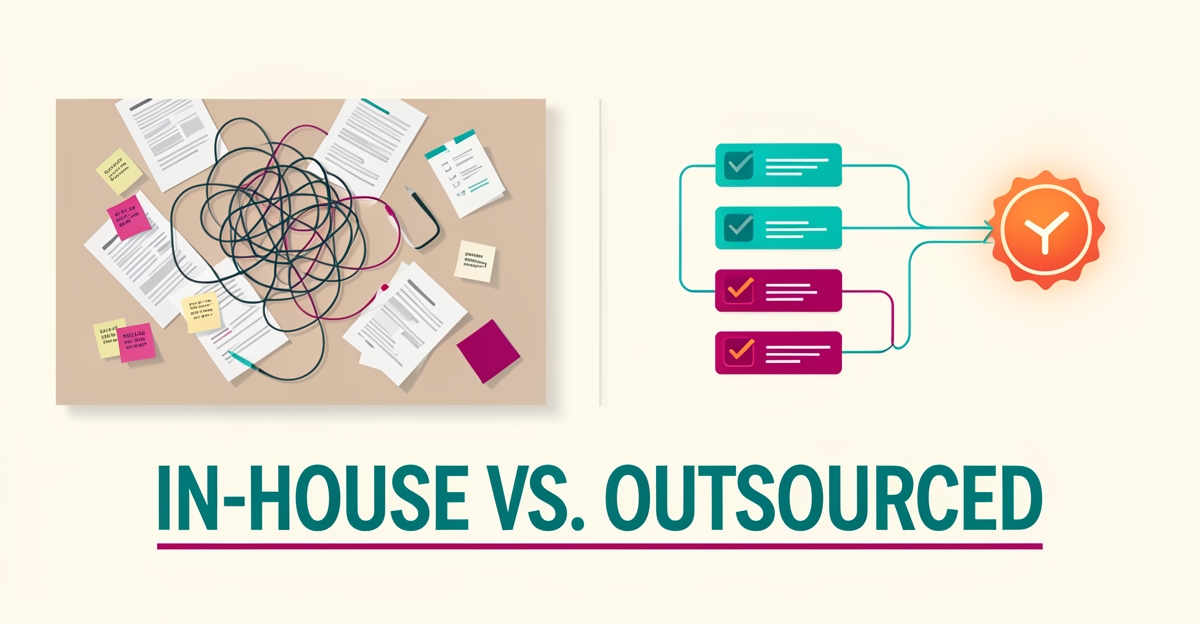
Most rebuild contractors didn't start their business to chase emails at 9 p.m. or wonder whether a homeowner approved that change order. Yet that's exactly where digital operations drag you when every lead, job update, and client message lives in a different tool — or worse, in your head.
The research bears this out. Poor data management alone costs the global construction industry $1.85 trillion annually, a figure that reflects countless missed follow-ups, delayed approvals, and decisions made on stale information. Contractors using fragmented, in-house systems typically see cost variance around 9% and forecast variance of 6–7% — numbers that shrink to 3–4% and 2–3% respectively when real-time, integrated dashboards connect labor, materials, and change orders in one view.
- Leads go cold while you're on a job site — most businesses lose prospects simply by being slow to reply
- Change orders stall in email threads, dragging out approval cycles by 40% compared to automated workflows
- Job tracking lives in spreadsheets, whiteboards, or memory — none of which surface bottlenecks before they become overruns
- Customer communication fragments across text, email, and phone calls with no central record
These aren't abstract inefficiencies. They're the daily friction that turns a 12-hour day into a 14-hour one. The Access Group notes that digital transformation can deliver 15% productivity gains and 6% cost reductions — but only if adoption is consistent, which is notoriously difficult in construction given high workforce turnover and fragmented projects. That's the in-house trap: the tools exist, but the bandwidth to implement and maintain them doesn't.
Outsourced platforms sidestep this by delivering integrated workflows — CRM, automated email sequences, AI-powered lead response, project tracking, and approval portals — without the implementation burden. ibml reports that 70% of businesses are now considering outsourcing digital mailroom operations alone, reflecting a broader shift toward plug-and-play automation. For rebuild contractors, the math is straightforward: 20% typical cost savings, immediate forecast accuracy improvements, and a system that handles the busywork while you focus on the rebuild.
Why Outsourcing Digital Workflows Wins for Most Rebuild Contractors
Rebuilding a home is already a complex project—juggling permits, contractors, and timelines leaves little room for chasing lost emails or stalled approvals. Yet for too many contractors, digital workflows become another full-time job: manually logging leads, drafting follow-ups, and tracking change orders across spreadsheets and inboxes. The research shows this scattered approach isn’t just inefficient—it’s costing you money and clients. Contractors who outsource their digital operations cut costs by 20% on average, slash cost variance by 50–67%, and move change orders through approvals 40% faster—all while gaining instant access to integrated CRM, AI-driven follow-ups, and real-time project tracking. That’s time back in your day to focus on what matters: rebuilding, not chasing leads.
The biggest mistake rebuild contractors make is treating digital workflows like a side project rather than the backbone of their business. A Construction Executive analysis found that companies using integrated dashboards reduced cost variance from 9% to just 3–4%, proving that real-time oversight isn’t optional—it’s profitable. Yet when contractors try to build these systems in-house, they hit a wall: steep upfront costs for software and training, a 6–12 month ramp-up before workflows even function, and the constant risk of breakdowns from human error or staff turnover. Outsourced platforms eliminate that risk entirely.
- No capital expenditure — Pay-as-you-go models shift costs from hardware and licenses to predictable monthly fees.
- Immediate integration — AI assistants, CRM, and project tools work together from day one, not after months of custom coding.
- Reduced cost variance — 50–67% lower variance means fewer surprises on job estimates and tighter cash flow.
- Faster approvals — Change orders move through digital pipelines 40% quicker, keeping projects on schedule and clients satisfied.
- Built-in compliance & security — Encryption, access controls, and disaster recovery at a scale most small contractors couldn’t afford alone.
For rebuild contractors, the choice isn’t between “digital” and “manual”—it’s between building systems yourself with high risk and slow ROI, or letting a platform run them for you with proven results. The data doesn’t just support outsourcing—it demands it. The only exception? Contractors with dedicated IT teams and existing CRM infrastructures already in place. Everyone else? Your website should be handling the busywork so you can focus on the rebuild.
What a Modern Outsourced Platform Actually Replaces
Most rebuild contractors cobble together eight to ten separate tools — a website builder here, a CRM there, plus email automation, scheduling, project boards, a newsletter platform, and document software — then spend evenings duct-taping them together. The result is a fragile stack where leads slip through cracks, job updates live in three different places, and no single view tells you what's actually happening.
Research shows that integrated dashboards connecting labor hours, material costs, and change orders reduce cost variance from roughly 9% down to 3–4% and improve forecast accuracy from 6–7% to 2–3% — but only when the data actually lives in one system. Construction Executive found that digital change management also cuts approval-cycle duration by 40%, directly improving cash flow. Those gains vanish when your CRM doesn't talk to your project board and your email tool doesn't know a deal just closed.
A modern outsourced platform replaces that entire stack with a single workflow the contractor doesn't have to manage:
- Lead capture from web forms, phone calls, chat, and bookings — all funneling into one inbox with instant, personalized auto-responses
- Visual automation that tags leads, moves deals through stages, sends follow-ups, and alerts you only when human judgment is needed
- Job tracking with Kanban boards, checklists, file sharing, and client-facing approval portals — no login required for clients
- Two-way email conversations tracked per contact and per deal, with AI drafting replies using your actual business knowledge
- Real-time analytics (privacy-first) plus automated weekly reports with AI-generated recommendations
The consolidation pays off immediately. Industry data shows businesses typically save 20% versus in-house operations, and 70% of companies are now evaluating outsourced workflow automation for exactly this reason. For a rebuild contractor, that means your website doesn't just sit there — it answers customers, follows up on leads, tracks jobs, sends newsletters, generates proposals, and surfaces the insights you'd otherwise miss, all while you're on site.
Local business: doing this the old way?
One system replaces the whole pile.
All of it — the website, the follow-up, the content, the leads — built and run for you for $1,497 + $497/mo. Month-to-month, and you own everything.
See what your build includesWhen In-House Makes Sense—and How to Test It Safely
Most rebuild contractors don't have a dedicated IT team, a mature tool stack, or the budget to absorb six months of trial and error. Research shows that in-house digital operations deliver 15% productivity gains and 6% cost reductions only when adoption is consistent — a tall order in an industry defined by fragmented projects and high workforce turnover.
If you do meet those narrow conditions, a controlled pilot is the safest way to test the waters. Start by automating a single workflow — lead follow-ups are the highest-impact starting point — and measure results over three to six months. Track lead response time and follow-up completion rate as your north-star metrics. Expand only when the data shows improvement.
- Automate one workflow first (e.g., instant, personalized lead response)
- Measure lead response time — target under one hour
- Track follow-up completion rate — aim for 90%+
- Expand to job tracking or approvals only after metrics improve
For contractors without those internal resources, outsourcing digital operations to an all-in-one platform eliminates upfront capital expenditure and shifts costs to a predictable monthly model. Typical businesses save 20% versus in-house operations while gaining immediate access to integrated CRM, automated email sequences, AI assistants, and project management — without the adoption barriers that derail internal builds.
Decision Checklist: 5 Questions to Choose the Right Approach
Here’s your polished section:
Outsourcing your rebuild contractor’s digital operations isn’t just a time-saver—it’s a strategic advantage. Most rebuild contractors don’t have the bandwidth to juggle CRM setup, email sequences, and project tracking while also managing jobs on-site. The research shows that outsourced platforms cut cost variance by 50–67% and improve forecast accuracy by the same margin, delivering immediate efficiency gains without the guesswork of in-house builds.
Before you commit to building or buying, run this 5-minute checklist. Each question forces you to confront the trade-offs between control, cost, and scalability—so you can decide today whether outsourcing is the right call for your rebuild operations.
- Do you have a dedicated IT or operations team? In-house digital workflows require 6–12 months of trial and error to justify their ROI. Without a team to manage tools, training, and maintenance, you risk fragmented adoption and wasted investment.
- Can your current tools scale with growth? Fragmented projects and high workforce turnover make in-house consistency difficult to maintain, according to industry data.
- What’s your tolerance for upfront costs? Outsourcing shifts expenses to a predictable, pay-as-you-go model—typically saving 20% compared to in-house operations, per outsourcing specialists.
- Do you need real-time oversight across multiple locations? Enterprise-level platforms unify labor hours, material costs, and change orders into a single dashboard, reducing cost variance from ~9% to 3–4% and approval-cycle times by 40%. Construction executives report these gains, but only if the system integrates everything.
- Can your website handle the busywork? Platforms like the one behind AI Business Sites automate lead follow-ups, job tracking, and customer communication—so you’re not chasing emails or missed calls while trying to rebuild. Built-in CRM and AI assistants turn your website into a 24/7 operations hub, with no extra software to manage.
If you answered “no” to most of these, outsourcing is likely your fastest path to consistency and scalability. If you’re still unsure, start with a pilot program for one workflow (like lead follow-ups) and measure results in 3–6 months. The research leaves little room for doubt: outsourced automation delivers the efficiency rebuild contractors need today—without the overhead of building it themselves.
Frequently Asked Questions
How much time do rebuild contractors waste managing digital operations in-house?
What’s the cost difference between in-house and outsourced digital operations?
Can outsourcing digital workflows really improve my job profitability?
Isn’t outsourcing just another software subscription I have to manage?
What if I don’t have an IT team to manage these systems?
How do I know if outsourcing is right for my business size?
Key Takeaways
{ "title": "Rebuild Smarter: The Clear Path for Contractors", "content": "In the high-stakes world of rebuild contracting, the choice between managing digital operations in-house or outsourcing it is clear: outsourcing wins for most. By leveraging an all-in-one automation platform like AI Busine
FOR local businesss — BUILT AND RUN BY US
Your website. Your content. Your leads. Your data.
$500 starts your build. Seven days later it's live — chat, booking, follow-up, and your Google presence all set up. Then we run it, every month. You do the work you actually get paid for.