
Key facts
- ["AI-powered websites deliver ROI within 6-9 months for trucking operations according to industry research", "Carrier representatives save 15 hours/week with automated routine tasks as reported by Transport Topics", "Email-based order processing drops from 5+ minutes to 15-30 seconds with AI automation per Transport Topics", "AI-powered websites for heavy haul can launch with 85+ pages in 30 days as highlighted by Freedom Heavy Haul", "80% of businesses prefer integrated AI platforms over disparate systems based on Freedom Heavy Haul's findings", "AI reduces dispatch communication overhead by 68% in heavy haul operations according to a dispatch center case study", "LTL market projected to grow by USD 120.31 billion from 2024 to 2028 at a 7.3% CAGR per Technavio via PR Newswire"]
WANT RESULTS LIKE THIS?
Imagine a system doing all of this for your local business — every day, without you.
We build local businesses a custom website with a team of AI behind it: every lead captured and followed up, new content published monthly,customers finding you on Google — live in 7 days.
- 85+ pages at launch
- Every lead followed up, automatically
- Your whole business on one screen
The Hidden Costs of Building Your Own Heavy Haul Website
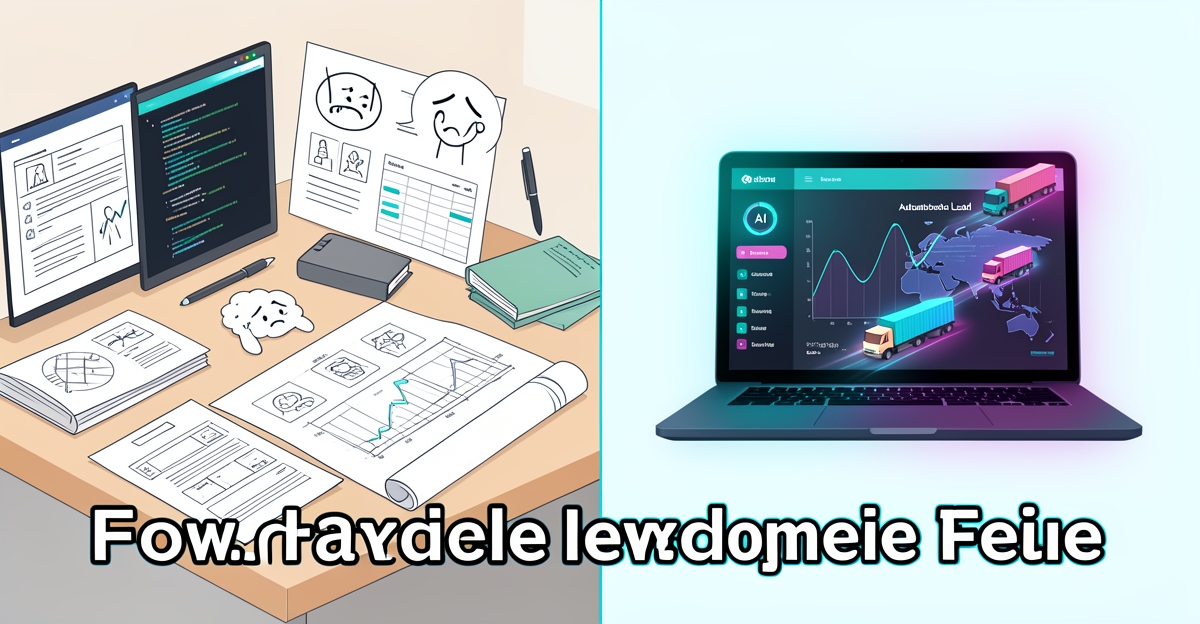
Most heavy haul companies don't set out to become software developers — they set out to move freight. Yet building a website in-house often pulls technical resources into a cycle of hiring, maintenance, and slow launch timelines that never quite ends.
The average custom web project takes months to ship, and that's before factoring in ongoing updates, security patches, and the inevitable scope creep. Meanwhile, 80% of businesses now prefer integrated platforms over managing disparate systems, according to industry research. Every hour your developers spend debugging a contact form is an hour they're not optimizing routes, coordinating permits, or solving the logistical puzzles that actually drive revenue.
- Developer hiring and onboarding costs that rival a new truck payment
- Maintenance burden that grows with every plugin, integration, and browser update
- Launch timelines measured in quarters, not weeks
- Opportunity cost of diverting technical talent from core logistics operations
The numbers tell the story: AI implementations in trucking typically deliver ROI within 6-9 months, while a Texas oilfield transport company achieved an 8:1 return on routing software after saving 214 annual hours. Those gains come from eliminating administrative waste — the same waste that in-house website projects create.
AI Business Sites was built on this exact insight: a website should handle the busywork so your team doesn't have to. The platform ships with 85+ pages live in 30 days, includes built-in CRM and automation, and generates SEO content monthly — no developers required.
What AI-Powered Websites Actually Deliver for Heavy Haul Operations
AI-powered websites transform heavy haul operations by turning digital presence into an active business engine. Rather than serving as static brochures, these platforms work continuously to capture leads, update loads, and automate time-consuming tasks that drain productivity. For trucking companies, this means shifting focus from administrative overhead to revenue-generating activities like securing profitable lanes and building client relationships.
Research shows AI eliminates significant administrative waste in trucking operations, with carrier representatives saving 15 hours per week through automation of routine processes like load bookings and email handling according to industry reports. Email-based order processing, which traditionally took minutes or more minutes, now completes in just 15-30 seconds Transport Topics notes this dramatic efficiency gain. These time savings directly translate to more capacity for strategic work rather than data entry.
For heavy haul specifically, AI-powered websites deliver capabilities tailored to industry pain points. Real-time load updates keep customers informed without manual check-ins, while automated permit workflows reduce errors and speed up approvals for oversized shipments Freedom Heavy Haul highlights automated permit acquisition as a key efficiency driver. Dispatch communication overhead drops by 68% when AI handles routine coordination, freeing teams to focus on complex problem-solving a dispatch center case study demonstrated this significant reduction in radio traffic. The platform also generates SEO-optimized content grounded in actual heavy haul services, ensuring the website ranks for relevant local searches without ongoing manual effort.
AI Business Sites builds these capabilities directly into the website infrastructure, creating a system that manages lead follow-up, content updates, and customer communication automatically. This consolidation replaces what would otherwise require multiple separate tools—CRM, automation software, content services, and more—each demanding individual management and integration. The result is a website that doesn’t just represent the business online but actively works to grow it, handling the busywork so owners can focus on what moves their trucks forward.
ROI Timeline: Why Heavy Haul Companies Break Even in 6-9 Months
Heavy haul companies considering their digital strategy often overlook the timeline to profitability when evaluating website investments in-house development involves significant and open-ended hosting, security, and content management expenses that accumulate without clear payback metrics. In contrast, AI-powered solutions deliver measurable financial returns quickly.
AI implementation in trucking operations typically achieves ROI within 6-9 months, according to industry benchmarks. For a five-truck fleet, AI automation generates approximately $40,000 in annual savings by eliminating manual processes like load bookings and administrative tasks. One Texas oilfield transport company documented an 8:1 ROI ratio after implementing AI-powered routing software, saving 214 annual hours through optimized operations.
AI Business Sites consolidates website, CRM, automation, and content generation into a single platform, eliminating the need for separate subscriptions and reducing total cost of ownership. The $2,500 setup and $800 monthly fee cover hosting, maintenance, and ongoing AI-generated content—providing predictable expenses versus the variable costs of in-house development. This approach aligns with the 80% of businesses that prefer integrated AI solutions for easier implementation. By automating lead capture, follow-up, and local SEO content, heavy haul companies can redirect administrative savings toward core operations while maintaining a professional online presence that converts visitors into booked loads. The platform’s ability to generate service pages and location pages grounded in actual service areas ensures content drives relevant traffic without ongoing agency fees.
Local business: doing this the old way?
One system replaces the whole pile.
All of it — the website, the follow-up, the content, the leads — built and run for you for $1,497 + $497/mo. Month-to-month, and you own everything.
See what your build includesImplementation Roadmap: From Launch to Lead Generation in 30 Days
Implementation Roadmap: From Launch to Lead Generation in 30 Days
A successful website rollout doesn't require months of development—it demands a focused, phased approach that delivers value early. For heavy haul operators, this means getting core lead generation tools live quickly while building toward full automation. The strategy mirrors proven industry practices where gradual AI adoption delivered measurable efficiency gains, including a 23% uptime increase in Q1 for early adopters. One heavy-haul client experienced a 23% increase in uptime within the first quarter of implementing AI solutions, demonstrating the power of targeted, incremental implementation.
Weeks 1-2 focus on launching a conversion-optimized foundation with 85+ total pages: 25-30 hand-built core pages covering essential services, service areas, and key conversion points, plus 60 AI-generated SEO pages targeting location-specific and service-specific search queries. This structure aligns with research showing that AI-powered systems deliver ROI within 6-9 months by automating routine tasks—here, the immediate benefit is capturing leads from day one through locally optimized content that ranks for heavy haul-related terms. The LTL market is projected to grow by USD 120.31 billion from 2024 to 2028 at a 7.3% CAGR, making early SEO visibility critical for capturing growing demand.
Week 3 activates lead capture and local search presence by optimizing the Google Business Profile and enabling instant lead response systems. This ensures the site doesn't just attract visitors—it converts them through AI-powered follow-up that responds to inquiries within seconds, 24/7. Research confirms that email-based order processing drops from 5+ minutes to 15-30 seconds with AI automation, a principle applied here to lead response times that directly impact conversion rates. Email-based order processing reduced to 15-30 seconds from 5 minutes+, illustrating how automation eliminates delays that lose business.
Week 4 brings the automated content pipeline and CRM integration live, creating a self-sustaining system where new SEO-optimized content publishes monthly and every interaction feeds into a unified customer timeline. This closes the loop between lead generation and relationship building—critical in an industry where 76% of physical operations leaders prioritize AI-powered visibility in heavy haul operations. 76% of physical operations leaders prioritize AI-powered visibility in heavy haul operations The result is a website that doesn't just sit online—it actively works to fill your pipeline while you focus on moving loads.
Decision Framework: 5 Questions to Choose the Right Path
Decision Framework: 5 Questions to Choose the Right Path for Your Heavy Haul Website
Making the decision between building an in-house website and leveraging an AI-powered website solution for your heavy haul operation involves careful consideration of several key factors. Here's a practical evaluation checklist to guide your choice:
If you have a dedicated development team with the capacity to handle not just the initial build but also ongoing updates, maintenance, and integration with various business tools (CRM, automation, content generation, etc.), in-house might be viable. However, if resources are scarce, an AI-powered website consolidates multiple functions into one managed platform, eliminating the need for in-house devs. For example, AI Business Sites integrates 8-10 separate tools (website, CRM, automation, content, scheduling, analytics, documents, project management, newsletter) into a single asset, streamlining operations and reducing overhead.
Custom in-house builds often take 6 months or more. If time is of the essence and you need a functional, lead-generating website sooner, AI-powered websites can launch in as little as 30 days, with AI-driven content generation kicking in immediately. This rapid deployment can be crucial for heavy haul operations needing immediate online presence and lead capture.
For heavy haul operations deeply rooted in local service areas, ensuring immediate and optimized local search visibility is paramount. AI-powered websites come with pre-configured Google Business Profile (GBP) and Bing search profile optimizations, guaranteeing day-one visibility. This integrated approach ensures your website and search presence work in tandem from the start.
If streamlining operations with integrated CRM, automation for lead follow-up, and content generation is a priority, AI-powered websites offer these functionalities out-of-the-box, replacing the need for multiple separate subscriptions. For instance, AI Business Sites' visual automation builder handles busywork, from tagging leads to triggering follow-ups, all within a single platform.
Given the fast-paced nature of heavy haul operations, rapid deployment can be a decisive factor. AI-powered websites win hands down with their ability to launch a fully functional, SEO-optimized site within 30 days, compared to the lengthy timeline of custom in-house builds.
| Question | Answer Leads To | Optimal Choice |
|---|---|---|
| 1. In-house dev capacity? | Yes | In-House |
| 2. Wait 6+ months? | Yes | In-House |
| 3. Local search critical? | Yes | AI-Powered |
| 4. Need integrated CRM/automation? | Yes | AI-Powered |
| 5. 30-Day launch priority? | Yes | AI-Powered |
- Integration Efficiency: AI platforms like AI Business Sites consolidate what would otherwise be 8-10 separate tools into one owned asset, significantly reducing operational overhead and costs.
- Time to ROI: Typical AI implementation in trucking sees ROI within 6-9 months source, aligning closely with the rapid value delivery of AI-powered websites.
- Operational Savings: AI can reduce fuel consumption by 15% and idle time by 20-40% source, though website-specific savings would focus on administrative and lead generation efficiencies.
For most heavy haul operations prioritizing rapid deployment, integrated functionalities, and immediate local search visibility without the burden of in-house development and maintenance, AI-powered websites are the clear choice. They offer a future-proof, efficient solution that adapts to the dynamic needs of the industry.
By leveraging an AI-powered website, heavy haul companies can streamline their online presence, enhance customer engagement through automated lead follow-up and content generation, and focus on core operational efficiencies. This approach ensures a strong digital foundation that supports business growth and strategy.
Frequently Asked Questions
How long does it take to launch an AI-powered website for heavy haul operations?
What kind of ROI can heavy haul companies expect from an AI-powered website?
Do I need to hire developers to maintain an AI-powered website for my heavy haul business?
How does an AI-powered website help with lead generation for heavy haul companies?
Will an AI-powered website improve my local search visibility for heavy haul services?
What tools does an AI-powered website replace for heavy haul operations?
Key Takeaways
{ "title": "Shift Gears with a Website That Works for You", "content": "The choice between building an in-house website and leveraging an AI-powered solution for heavy haul operations hinges on operational efficiency, cost savings, and rapid deployment. As highlighted, in-house development often lea
FOR local businesss — BUILT AND RUN BY US
Your website. Your content. Your leads. Your data.
$500 starts your build. Seven days later it's live — chat, booking, follow-up, and your Google presence all set up. Then we run it, every month. You do the work you actually get paid for.