
Key facts
- AI reduces event planning time by up to 30% according to Airtable research
- AI-powered websites improve attendee satisfaction by 20% per Market.us report
- 70% of event planners now use AI in some capacity based on Market.us research
- The events industry is projected to reach $1.07 trillion by 2029 per Yahoo Finance
- AI in event management market will grow to $14.2 billion by 2033 at 22.9% CAGR per Market.us
- 69.1% of the market prefers cloud-based deployment for flexibility according to Market.us
- SMEs in event management software are expected to grow at 13.3% CAGR per MarketsandMarkets
WANT RESULTS LIKE THIS?
Imagine a system doing all of this for your local business — every day, without you.
We build local businesses a custom website with a team of AI behind it: every lead captured and followed up, new content published monthly,customers finding you on Google — live in 7 days.
- 85+ pages at launch
- Every lead followed up, automatically
- Your whole business on one screen
Why Small Event Teams Are Drowning in Website Work
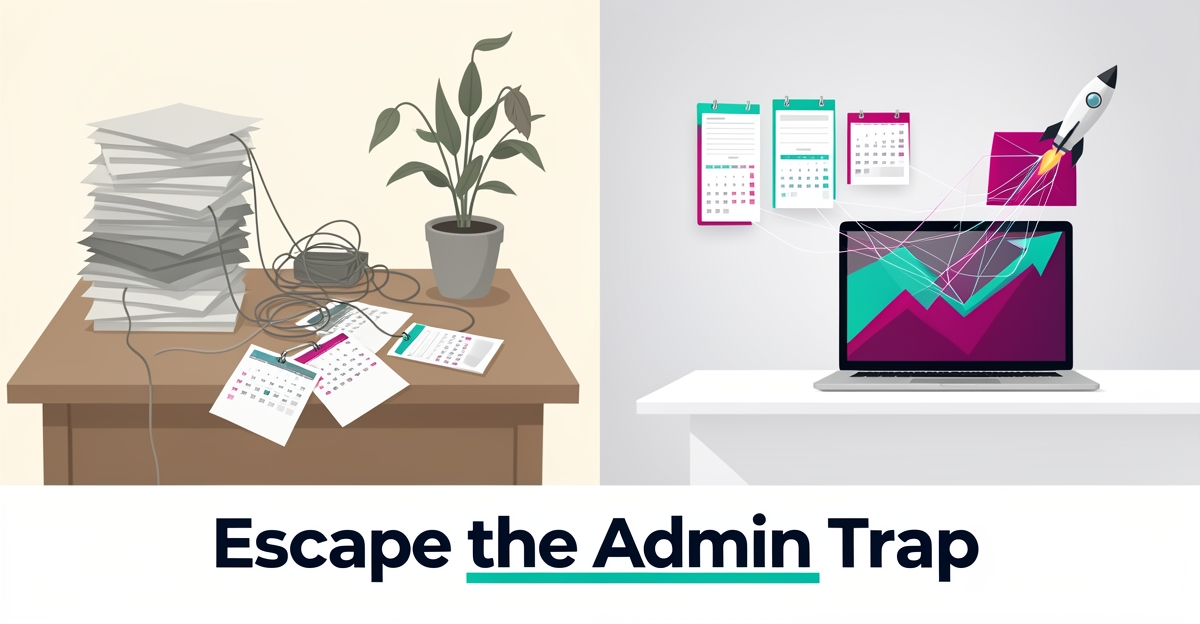
Small event teams don't lose clients because they lack creativity — they lose them because admin work eats the week. Research from Airtable shows planners spend 30% more time on administrative tasks than on strategy, leaving client relationships to simmer on the back burner. Every content update, lead form tweak, SEO audit, and tool integration pulls focus away from the work that actually grows the business.
- Content updates stall when the only person who knows the CMS is on-site at an event
- Lead capture forms break silently between the website, the CRM, and the email platform
- SEO slips because nobody has time to research keywords, write posts, and fix broken links
- Tool integrations demand constant maintenance as APIs change and subscriptions renew
The industry isn't waiting. Market research shows 70% of event planners now use AI in some capacity, while in-house teams stay stuck in manual workflows. The data is clear: AI cuts planning time by up to 30% and lifts attendee satisfaction by 20%. Meanwhile, the events market itself is surging toward USD 1.07 trillion in growth by 2029, and cloud-first platforms are becoming the standard for teams that need to move fast.
AI Business Sites sees this pattern daily — small teams drowning in website work that should be running itself. The website isn't a marketing brochure; it's the engine that captures leads, follows up automatically, publishes fresh content, and keeps the calendar full without the planner lifting a finger.
What the Data Says About AI-Powered Event Websites
What the Data Says About AI-Powered Event Websites
In the rapidly evolving events industry, AI-driven solutions are redefining the landscape. Recent market research underscores the compelling case for small event planning teams to adopt AI-powered websites, highlighting significant efficiency gains, improved attendee satisfaction, and alignment with broader market trends.
According to industry research, AI can reduce event planning time by up to 30% (as seen in Airtable's event attendee research) and boost attendee satisfaction by 20% (Market.us report on AI in event management). These statistics are not merely indicative of a trend but reflective of a shift towards more streamlined, tech-integrated event planning processes.
- Cloud Dominance: A whopping 69.1% of the market prefers cloud-based deployment for its flexibility and scalability (Market.us), making cloud-first strategies a no-brainer for small teams seeking agility.
- Event Planning Leads AI Adoption: With a 34.8% market share, event planning is the leading use case for AI in the industry, solidifying its position as a frontline beneficiary of AI integration (Market.us).
- SME Growth: SMEs are anticipated to grow at the highest CAGR of 13.3% in the event management software market (MarketsandMarkets), indicating a fertile ground for AI-powered solutions tailored to smaller teams.
- Efficiency First: Leverage AI to cut planning time by up to 30% and enhance attendee satisfaction by 20%, as evidenced by Airtable and Market.us research.
- Cloud-First Strategy: Align with the 69.1% market majority by opting for cloud-based solutions for scalability and flexibility.
- Integrate Seamlessly: Ensure your AI platform works in tandem with existing CRMs, marketing tools, and software for a unified operational flow.
The data unequivocally positions AI-powered event websites not as a fleeting trend, but as the new baseline for competitive small teams. By embracing these solutions, teams can transition from mere event planners to strategic experience architects, leveraging technology to amplify the human touch that AI alone cannot replicate, as highlighted by Swapcard's insights on AI in events.
As the events industry marches towards a USD 1.07 trillion market size by 2029 (Yahoo Finance), the adoption of AI-powered websites is less of a choice and more of a strategic imperative for small teams aiming to stay ahead of the curve.
In-House vs. AI Platform: The Real Trade-offs for Small Teams
For small event planning teams, the choice between building a website in-house and adopting an AI-powered platform isn't just about technology—it's about where to focus limited time and resources. In-house development often means high upfront costs, ongoing technical debt, and juggling eight or more separate subscriptions for CRM, automation, content, and project management. This fragmentation slows content velocity and pulls planners away from client-facing work.
AI-powered platforms, by contrast, consolidate these functions into one owned website. Teams using such systems report reducing planning time by up to 30% and improving attendee satisfaction by 20% through automation and consistent engagement. With 85+ pages live within 30 days and ongoing AI-generated content, planners shift from administrative tasks to becoming strategic experience architects—designing meaningful events while the website handles follow-ups, content, and lead management. Human-in-the-loop safety ensures quality control without sacrificing efficiency.
Local business: doing this the old way?
One system replaces the whole pile.
All of it — the website, the follow-up, the content, the leads — built and run for you for $1,497 + $497/mo. Month-to-month, and you own everything.
See what your build includesHow to Switch Without Losing Control or Clients
Switching your event planning website doesn't have to mean starting over or losing momentum. The key is moving in stages that each solve a clear business problem — starting with the foundation that's already included at launch.
Begin with your Google Business Profile and search setup. These are configured from day one so you appear in local results and Maps immediately, not weeks later. According to industry research, 69.1% of the market prefers cloud-based deployment for flexibility and scalability — your search presence works the same way, accessible and managed from anywhere without technical overhead.
Next, migrate lead capture and follow-up first. This stops the leakage that costs most small teams the most money. Studies show AI reduces planning time by up to 30%, and instant, personalized responses to every inquiry — whether from a web form, phone call, or chat — are where that time savings starts. Every lead lands in one system with automatic follow-up sequences that run without you lifting a finger.
- Faster response to every inquiry, day or night
- Consistent follow-up that never forgets a lead
- Fewer tools to manage — CRM, automation, and scheduling in one place
- More time for clients instead of admin
Then layer in the AI content engine for SEO pages and newsletters. Your site publishes fresh, locally relevant content monthly — blog posts, service pages, location pages — with automatic internal linking that builds topical authority over time. The newsletter writes itself using a multi-agent workflow, pulling from your latest content and sending at optimal times with A/B testing built in.
Throughout the migration, you own everything: the code, the content, the domain, and the data. Nothing is rented. If you decide to leave, a 30-day notice is all it takes — no lock-in, no data hostage situations. Market analysis confirms the industry is shifting toward unified, AI-powered platforms, and this approach lets you make that shift on your terms, one measurable outcome at a time.
What This Means for Your Next Event Season
The events industry isn't slowing down — it's accelerating toward a $1.07 trillion market by 2029, growing at 13.5% annually. For small planning teams, that growth creates a clear problem: demand will outpace manual capacity faster than you can hire.
AI adoption among planners has already hit 70%, and the AI event management market itself is projected to reach $14.2 billion by 2033 at a 22.9% CAGR. The teams gaining ground now aren't working harder — they've built digital infrastructure that compounds while they sleep.
- Search presence that grows automatically through AI-generated, internally linked content
- Lead nurture sequences that follow up instantly, every time, without manual triggers
- Analytics that surface which pages actually drive bookings — not just vanity traffic
- A content engine that publishes monthly SEO pages grounded in your real services and service areas
This is the difference between a website that sits there and one that appreciates like an asset. AI reduces planning time by up to 30% and improves attendee satisfaction by 20%, but the real leverage comes when your website handles the busywork — answering questions, following up, publishing content, tracking what works — so your team stays focused on client relationships.
The market is consolidating around unified, AI-powered platforms because stitching together eight separate tools doesn't scale. Small teams using AI-driven websites today are building the search authority, content library, and automated workflows that will compound through the next growth cycle. The next event season won't wait.
Frequently Asked Questions
How much time do event planners typically spend on administrative tasks versus strategy?
What percentage of event planners currently use AI in some capacity?
What are the efficiency and satisfaction benefits of using AI in event planning?
Why is adopting an AI-powered website strategic for small event planning teams, especially with the growing events market?
What is the projected market size for the AI in Event Management sector by 2033?
How does switching to an AI-powered website help small event planning teams manage their workload and client relationships more effectively?
Key Takeaways
{ "title": "Automate to Elevate: The Clear Path for Small Event Planning Teams", "content": "The events industry's monumental shift towards AI-driven solutions leaves small planning teams with a clear choice: drown in manual workflows or rise with automated, AI-powered websites. By adopting these pl
FOR local businesss — BUILT AND RUN BY US
Your website. Your content. Your leads. Your data.
$500 starts your build. Seven days later it's live — chat, booking, follow-up, and your Google presence all set up. Then we run it, every month. You do the work you actually get paid for.