
Key facts
- 57% of U.S. physicians in 2024 identified 'addressing administrative burden through automation' as their top AI opportunity according to industry research.
- AI assistants can handle 67% of appointment booking requests while providing 24/7 availability per an ophthalmology case study.
- 66% of ambient scribing users save 1–4+ hours daily on documentation based on research findings.
- Only 64% of private practice physicians use AI tools compared to 72% of hospital-employed physicians per adoption data.
- Major EHR vendors like Athenahealth and Epic are embedding AI for patient engagement reports industry analysis.
- AI chatbots provide consistent, compassionate patient support around the clock as noted in healthcare trends.
- Hybrid AI-human models reduce staff burnout by automating 67% of routine scheduling tasks per case studies.
WANT RESULTS LIKE THIS?
Imagine a system doing all of this for your local business — every day, without you.
We build local businesses a custom website with a team of AI behind it: every lead captured and followed up, new content published monthly,customers finding you on Google — live in 7 days.
- 85+ pages at launch
- Every lead followed up, automatically
- Your whole business on one screen
The Growing Communication Burden in Cosmetic Surgery Clinics
Cosmetic surgery clinics are facing an unprecedented surge in patient communications, from initial inquiries and appointment scheduling to post-operative follow-ups and billing questions. This growing administrative load is overwhelming in-house teams, contributing to staff burnout and missed opportunities as clinics struggle to keep pace with demand.
According to industry research, 57% of U.S. physicians identified "addressing administrative burden through automation" as their top AI opportunity in 2024, highlighting how pervasive this challenge has become across medical specialties. For cosmetic clinics specifically, the pressure is amplified by high patient expectations for responsiveness and personalized care throughout the treatment journey.
- Routine inquiries about procedures, pricing, and recovery timelines consume significant staff time daily.
- Scheduling and rescheduling appointments require constant coordination, often leading to phone tag and delays.
- Post-operative follow-ups and check-in messages, while critical for patient safety and satisfaction, add to the administrative workload without generating direct revenue.
These repetitive tasks pull skilled staff away from higher-value activities like patient consultations and clinical support, creating inefficiencies that impact both team morale and practice profitability. As noted in ambient scribing case studies, 66% of users saved 1–4+ hours daily on documentation alone — a clear indicator of how much time is lost to administrative work that could be streamlined.
AI Business Sites recognizes this burden firsthand through its work with small healthcare providers, where custom websites with built-in AI assistants are designed to handle routine patient communications automatically. By managing inquiries, sending confirmations, and capturing leads 24/7, these systems reduce the strain in-house staffing to focus on what requires human expertise. This approach doesn’t replace the personal touch patients value — it protects it by freeing up staff to deliver it where it matters most.
Where AI Excels: Automating Routine Patient Interactions
Where AI Excels: Automating Routine Patient Interactions
In the fast-paced environment of cosmetic clinics, managing patient communications efficiently is crucial. AI-driven systems have emerged as a powerful tool to streamline routine interactions, reducing staff workload and enhancing patient experience. According to industry research, AI can handle 67% of appointment booking requests source, a statistic highlighted in an ophthalmology case study. This capability not only saves time but also ensures 24/7 availability for scheduling and FAQs without the need for additional staffing.
-
Substantial Workload Reduction: By automating routine tasks such as appointment scheduling and FAQs, clinics can see a reduction in staff workload by 1–4+ hours daily source, as observed with ambient scribing tool users. This time can be redirected towards more complex, value-added patient care.
-
Scalability and Consistency: AI systems provide consistent and compassionate support around the clock, ensuring patients receive immediate assistance without the variability inherent in human-staffed services. This consistency is particularly valuable for after-hours inquiries and routine follow-ups.
-
Enhanced Patient Experience: The immediate response capability of AI chatbots and voice agents improves patient satisfaction by reducing wait times for basic inquiries and scheduling. As Medtronic highlights, technology like this can elevate the patient experience by making interactions more efficient source.
-
Start with High-Impact, Low-Complexity Tasks: Focus initial AI deployment on appointment scheduling, reminders, and routine inquiries, where AI has proven its efficacy.
-
Integrate with Existing EHR Systems: To overcome implementation barriers, prioritize AI solutions that natively integrate with your clinic’s EHR, streamlining workflow and reducing technical hurdles.
-
Hybrid Model for Comprehensive Care: While AI excels with routine tasks, maintain a human-in-the-loop approach for complex, sensitive, or post-operative communications to ensure personalized care.
By leveraging AI for routine patient interactions, cosmetic clinics can achieve operational efficiencies, enhance patient satisfaction, and redirect valuable staff time towards high-touch, high-value care. As the healthcare sector continues to evolve, embracing AI for administrative tasks positions clinics for long-term sustainability and patient-centric excellence.
Local business: doing this the old way?
One system replaces the whole pile.
All of it — the website, the follow-up, the content, the leads — built and run for you for $1,497 + $497/mo. Month-to-month, and you own everything.
See what your build includesWhy a Hybrid Model Works Best for Private Practices
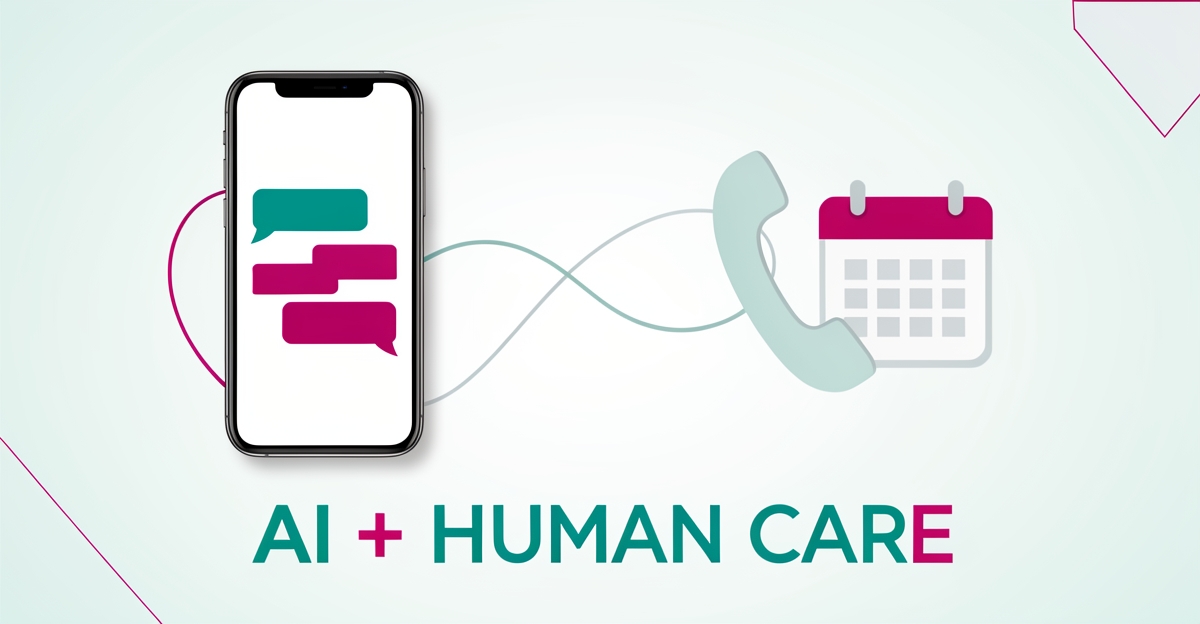
Many cosmetic clinics struggle to balance patient communication demands with limited staff resources, often leading to burnout or missed opportunities for engagement. A hybrid model offers a practical path forward by combining the strengths of both AI and human teams. Research shows AI assistants can handle 67% of appointment booking requests, freeing staff from repetitive scheduling tasks while maintaining 24/7 availability for patient inquiries. Meanwhile, in-house staff remain essential for nuanced interactions such as pre-operative consultations and post-operative follow-ups, where empathy and clinical judgment are critical. This tiered approach allows clinics to scale communication efforts without proportionally increasing payroll or overburdening existing teams.
Adopting this model becomes more feasible when clinics choose AI tools designed to integrate directly with their existing electronic health records (EHR). Since major EHR vendors like Athenahealth and Epic are embedding AI for patient engagement, clinics can avoid the technical complexity and support challenges often cited as barriers to implementation. By selecting EHR-compatible solutions, private practices reduce integration hurdles and gain access to AI capabilities that work within familiar workflows. This alignment helps address the adoption gap between hospital-employed and private-practice physicians, where only 64% of private practices currently use AI tools compared to 72% in hospital settings.
For clinics concerned about upfront costs, framing AI as an operational efficiency investment—rather than just a technology expense—can clarify its long-term value. Data shows 66% of ambient scribing users save 1–4+ hours daily on documentation, and similar time savings apply to automated communication tasks like reminders and follow-ups. These efficiencies translate into reduced need for additional administrative hires or overtime pay, effectively offsetting initial implementation costs. When deployed thoughtfully, a hybrid model not only alleviates staffing pressures but also enhances patient access and satisfaction through consistent, timely communication—without sacrificing the personal touch that defines quality cosmetic care. AI Business Sites supports this balance by building websites that include embedded AI tools designed to work seamlessly with clinic operations, helping small practices run more efficiently from day one.
Implementation Steps for AI-Powered Patient Communication
Implementing AI-powered patient communication in your cosmetic clinic doesn’t require a complete overhaul—just the right starting point and a structured rollout. Clinics that begin with high-volume, repetitive tasks see the fastest return on investment, with patient inquiry handling and appointment scheduling accounting for up to 67% of routine requests in similar practices source. This approach not only reduces staff burnout but also ensures consistent, error-free responses during peak hours and after business closes.
Start with scheduling automation, a low-risk entry point that directly addresses the most time-consuming patient interaction. Research shows that 57% of physicians prioritize administrative burden reduction as the top opportunity for AI source, and automated confirmations alone can cut no-show rates by standardizing communication. Choose a vendor that integrates seamlessly with your existing EHR to avoid the implementation hurdles cited by 64% of private practices source.
Before deployment, verify HIPAA compliance and data security—non-negotiable for patient-facing tools in aesthetics. Opt for platforms with built-in safeguards and transparent audit trails to meet privacy requirements without additional overhead. Once live, measure time savings by tracking how many hours per week staff reclaim from manual confirmations and routine inquiries. Clinics using ambient AI tools report saving 1–4+ hours daily source, a benchmark you can replicate by starting small and scaling based on real usage data.
- Select a HIPAA-compliant AI vendor with proven healthcare integrations to minimize setup complexity.
- Begin with scheduling automation and confirmation messages to test patient acceptance and system reliability.
- Use built-in analytics to measure time savings, response accuracy, and patient satisfaction before expanding to more complex interactions.
AI Business Sites’ platform accelerates this process by embedding compliant automation directly into your clinic’s website and CRM, ensuring every patient interaction—from first inquiry to post-op follow-up—stays connected and consistent. The system scales with your needs, handling 24/7 availability without additional staffing while keeping human oversight intact for sensitive conversations. Start simple, measure rigorously, and let the data guide your next steps.
Frequently Asked Questions
What percentage of U.S. physicians identify administrative burden reduction as the top AI opportunity?
How much time can AI save on documentation for clinic staff?
What percentage of appointment booking requests can AI handle?
Why do private practices lag behind in AI adoption compared to hospital systems?
What is recommended as the first step in implementing AI for patient communication in cosmetic clinics?
How does a hybrid model benefit cosmetic clinics in patient communication?
Your Next Step Toward Smarter Patient Communication
Cosmetic surgery clinics face mounting pressure from routine patient communications that drain staff time and impact care quality. As the article shows, AI excels at handling scheduling, FAQs, and appointment confirmations—freeing up to 4+ hours daily for your team to focus on consultations and post-operative care where human expertise matters most. A hybrid model, combining AI for routine tasks with in-house staff for sensitive interactions, offers a sustainable path forward without sacrificing the personal touch patients expect. Start by identifying your highest-volume, repetitive inquiries—like scheduling or pricing questions—and explore HIPAA-compliant AI tools that integrate with your existing systems. Measure time saved and patient feedback before expanding to more complex workflows. To see how AI-powered websites can streamline communication while supporting your clinic’s growth, review the latest data on AI adoption in private medical practices and consider how automation could reduce administrative burden in your own practice.
FOR local businesss — BUILT AND RUN BY US
Your website. Your content. Your leads. Your data.
$500 starts your build. Seven days later it's live — chat, booking, follow-up, and your Google presence all set up. Then we run it, every month. You do the work you actually get paid for.