
Key facts
- ["Mobile commerce sales reached **$3.56 trillion** in 2021, a 22.3% increase from 2020 according to PrintXpand.", "85% of consumers trust online reviews as much as personal recommendations PrintXpand research shows.", "57% of customers visit a company’s website after reading positive reviews as highlighted by PrintXpand.", "Centralized workflow management reduces burnout and quality dips Plaky’s project management insights reveal.", "78% of loyal customers spread the word to friends and family PrintXpand found in their studies."]
WANT RESULTS LIKE THIS?
Imagine a system doing all of this for your local business — every day, without you.
We build local businesses a custom website with a team of AI behind it: every lead captured and followed up, new content published monthly,customers finding you on Google — live in 7 days.
- 85+ pages at launch
- Every lead followed up, automatically
- Your whole business on one screen
The Hidden Cost of Disconnected Design Workflows
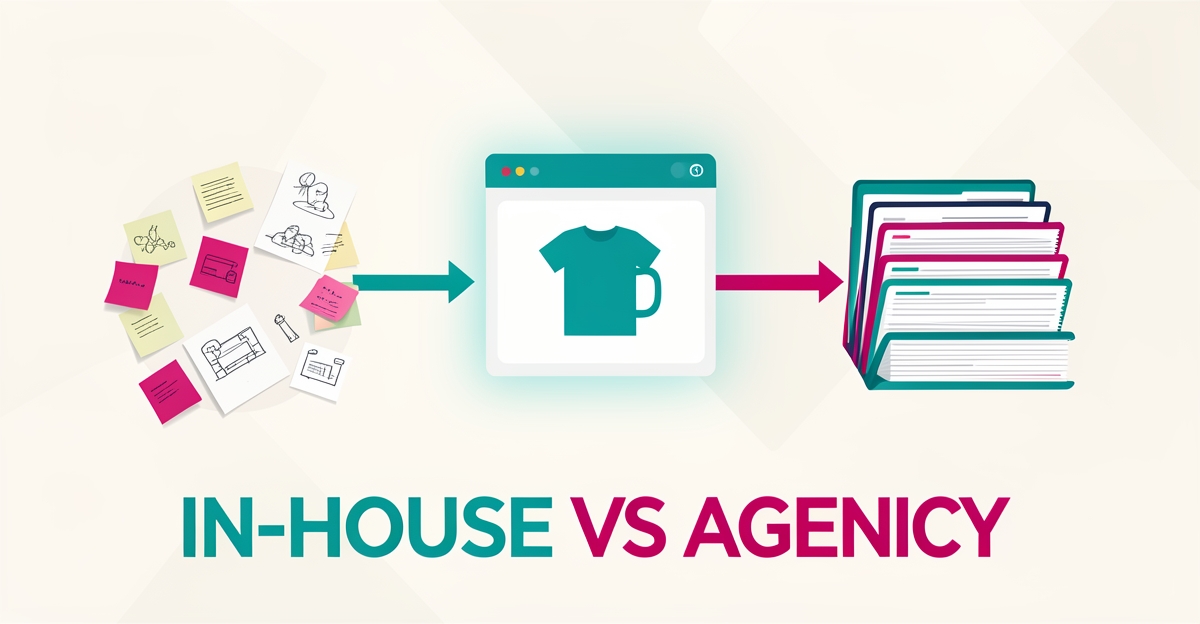
Communication errors between stakeholders and design teams are the primary cause of faulty designs and lost customers, whether design lives in-house or gets outsourced to an agency. When requests scatter across email, chat, spreadsheets, and hallway conversations, the result isn't just inefficiency — it's designs that miss the mark and customers who leave.
Research shows that 85% of consumers trust online reviews as much as personal recommendations, and 57% visit a company's website after reading positive reviews. Every design error that reaches a customer becomes a potential reputation hit that compounds across search and social channels. The stakes are higher than most businesses realize.
Scattered channels create three compounding problems. First, bottlenecks form when designers waste time chasing missing details instead of designing. Second, burnout accelerates as creative teams juggle unclear priorities and constant context-switching. Third, quality drops because no single source of truth exists for brand standards, specifications, or approval history.
- Requests arrive without creative briefs, forcing designers to guess at requirements
- Feedback loops stretch across days because stakeholders can't see real-time progress
- Version control breaks down when files live in personal inboxes instead of a shared system
- Approval chains stall when no one knows who signed off on what
The research is clear: unmanaged creative requests lead directly to quality dips and designer burnout. A centralized workflow doesn't just organize tasks — it makes the invisible visible, showing workload, priority, and status at a glance. This is where AI Business Sites changes the equation: the platform integrates design request management directly into your website's admin, so every brief, revision, and approval lives in one system without switching tools.
Mobile commerce sales hit $3.56 trillion in 2021, a 22.3% jump from the prior year. That growth demands real-time design previews and mobile-responsive workflows — capabilities that fragmented tools simply can't deliver consistently. When your website handles the workflow, the handoff from design to production to customer preview happens in a single environment.
Where Agencies Win: Specialized Expertise You Can't Easily Build
When it comes to specialized design capabilities for promotional products, agencies often hold a distinct advantage that in-house teams struggle to replicate without substantial investment. This is especially true for complex requirements like sustainability expertise, custom illustrations, bold typography, and sonic branding—areas where dedicated specialists deliver measurable results efficiently.
Sustainability has evolved beyond surface-level green aesthetics into a comprehensive lifecycle approach, demanding deep knowledge of eco-friendly materials, ethical sourcing, and circular design principles. As noted by Penta Creative, true sustainability "encompasses the entire lifecycle of a product, from sourcing raw materials to production, packaging, and disposal." Agencies like Firebrand Promotions demonstrate this expertise in practice, consistently applying sustainable materials such as bamboo, recycled plastic, and UK-made wood across client projects while maintaining fast turnaround times of 2–4 weeks, even for time-sensitive events.
Custom illustrations and bold typography also benefit from agency-scale resources. In-house teams frequently lack the bandwidth to maintain illustrators or typography specialists on staff, yet these elements are critical for storytelling and brand impact. Hydra Creative emphasizes that "the more unique your typography choices are to your brand, the more memorable your product will become," while Penta Creative highlights how custom illustrations help brands "tell authentic stories." Similarly, sonic branding—though less common—requires audio design partners that most internal teams simply don’t retain, particularly for promotional products with digital or experiential components.
These capabilities aren’t just nice-to-haves; they directly influence customer perception and engagement. With mobile commerce sales projected to reach $3.56 trillion in 2021 (a 22.3% increase from 2020), the demand for visually and functionally compelling promotional products continues to grow. Agencies bridge this gap by providing on-demand access to niche expertise without the overhead of full-time hires, allowing businesses to execute sophisticated campaigns with speed and precision. For organizations using platforms like AI Business Sites to manage design workflows, this external specialization integrates seamlessly into a centralized system—ensuring quality, consistency, and accountability across every touchpoint.
Where In-House Wins: Brand Control and Speed for Standard Requests
In-house design teams shine when the work is routine, brand-sensitive, and needs to move fast. They already know the voice, the color codes, the unspoken rules that keep a logo from looking "off" on a pen versus a hoodie. That institutional knowledge eliminates the briefing cycles that slow down external partners — especially for standard requests like reorders, minor tweaks, or seasonal swaps where the brand system is already established.
Research shows that formal request systems reduce burnout and quality dips by making workload visible to everyone involved. When creative requests flow through a centralized platform instead of scattered emails and hallway conversations, designers can communicate capacity, stakeholders understand timelines, and priorities stay clear. A project management blog notes that the two major benefits of managing design requests this way are reduced burnout and fewer quality drops — both critical when the same small team handles everything from trade show booths to employee onboarding kits.
Communication errors between requesters and designers are a primary cause of faulty designs and lost customers, according to promotional product design research. In-house teams avoid this naturally when they sit alongside marketing, sales, and operations — but only if the request process itself is structured. Without a defined intake process, even internal teams face the same back-and-forth that derails agency projects.
- Centralized intake captures every detail upfront — no missing specs, no guesswork
- Visible workload lets the team say "yes" with confidence or negotiate timelines honestly
- Version history and approval trails prevent the "I thought you changed that" problem
- Brand assets live in one place, so the right logo, font, and color values are never more than a click away
Speed matters too. With mobile commerce projected at $3.56 trillion, customers expect real-time previews and fast turnaround on standard items. An in-house team backed by a unified system can iterate in hours, not days — adjusting a logo placement, swapping a tagline, proofing a mockup — because the request, the assets, and the feedback loop all live in the same environment.
This is where AI Business Sites fits in: the platform centralizes design requests alongside CRM, project tracking, and approval workflows, so internal teams get the structure they need without stitching together separate tools. The website handles the intake, the routing, the reminders — leaving designers to design.
Local business: doing this the old way?
One system replaces the whole pile.
All of it — the website, the follow-up, the content, the leads — built and run for you for $1,497 + $497/mo. Month-to-month, and you own everything.
See what your build includesThe Real Differentiator: Centralized Workflow Management
The debate between in-house and agency design often misses the real issue: how requests move through your organization. Research consistently shows that communication errors between stakeholders and design teams are a primary cause of faulty designs and customer loss, with unsatisfied clients canceling orders and switching to competitors when designs miss the mark. Whether you keep design internal or outsource it, the workflow architecture determines outcomes more than the team structure itself.
A centralized platform for creative briefs, real-time previews, and approval tracking prevents the scattered communication that causes 85% of design failures. When requesters lack knowledge of what details designers need, informal channels create gaps that no amount of talent can fix. Formal request systems improve transparency, enable prioritization, and help stakeholders understand actual workload capacity — reducing both burnout and quality dips across the board.
Mobile commerce sales reached $3.56 trillion in 2021, a 22.3% increase from the previous year, making mobile-responsive design tools non-negotiable. Real-time design previews significantly reduce returns by letting customers visualize products before purchase. CRM integration ties it all together, centralizing inquiries, quotes, and orders while providing data-driven insights that neither spreadsheets nor email threads can deliver.
- Unified creative brief templates that capture every specification upfront
- Real-time design previews accessible on any device
- Automated approval workflows with version control
- CRM integration linking design requests to customer records and order history
- Mobile-responsive tools that work for clients on phones and tablets
AI Business Sites builds this workflow layer directly into your website, so design requests — whether handled by your team or an agency partner — flow through one system with full visibility. The platform handles the busywork: routing requests, tracking revisions, managing approvals, and connecting every step to the customer record. Your team stops chasing emails and starts delivering products that match what the client actually ordered.
Implementation: Build a System That Works Either Way
Implementation: Build a System That Works Either Way
Managing promotional product design requests efficiently, whether in-house or through an agency, hinges on a centralized workflow system. This approach mitigates common pitfalls such as communication errors, which can lead to faulty designs and customer loss, as highlighted by PrintXpand source. Here’s how to set it up:
1. Centralized Request Management with Creative Brief Templates Adopt a task management tool like Plaky source to handle all design requests. Ensure each request includes a comprehensive creative brief outlining key details such as target audience, brand guidelines, and specific design requirements. This structured approach prevents misunderstandings and ensures designers have all necessary information, as emphasized by Plaky’s guidelines for effective creative request management.
2. Formal Request Protocols for Transparency Enforce a policy where all design requests must be submitted through the centralized platform. This could be a custom-built solution like AI Business Sites’ integrated workflow manager or third-party software. For instance, AI Business Sites’ platform allows for streamlined communication and automated task assignment, reducing the likelihood of missed requests or miscommunication.
3. Real-Time Preview Tools for Reduced Returns Integrate real-time design preview capabilities, as recommended by PrintXpand source, to minimize returns. Platforms like PrintXpand’s designer tool enable customers to visualize products before finalization, significantly increasing satisfaction rates.
4. CRM Integration for Seamless Tracking Use a purpose-built CRM for the promotional product industry, such as Facilisgroup’s suggested solution source, to track inquiries, quotes, and orders in one place. This ensures whether you’re managing in-house teams or communicating with agencies, all data is centralized and accessible.
Key Takeaways for a Hybrid Workflow:
- Centralized Management: Regardless of the approach, use a unified platform to manage requests.
- Agency for Specialized Needs: Outsource for trends like sustainability or custom illustrations where in-house teams may lack expertise.
- Mobile-Responsive Designs: Ensure your workflow produces mobile-friendly products to capture the $3.56 trillion mobile commerce market source.
By consolidating these elements into a single system, like AI Business Sites’ integrated platform, businesses can efficiently manage promotional product design requests. This streamlined approach reduces errors, enhances collaboration, and provides data-driven insights to inform future design strategies.
Frequently Asked Questions
What are the main benefits of using a centralized workflow for managing promotional product design requests?
When should a business consider outsourcing promotional product design to an agency instead of keeping it in-house?
How does mobile commerce growth impact the need for real-time design previews in promotional product design?
What percentage of consumers trust online reviews as much as personal recommendations, and why does this matter for design quality?
Can in-house design teams avoid the same communication issues that plague agency workflows?
What role does CRM integration play in managing promotional product design requests effectively?
Workflows That Work, Whether You Build or Buy
The debate between in-house and agency design for promotional products ultimately comes down to one thing: how smoothly your requests flow from idea to finished product. Whether you leverage your team’s deep brand knowledge for routine updates or tap into agency specialists for sustainability expertise and custom illustrations, success hinges on eliminating communication gaps. A centralized workflow—capturing briefs, tracking approvals, enabling real-time previews, and connecting everything to customer records—turns scattered emails and missed details into transparent, efficient processes. This is where AI Business Sites fits in, integrating design request management directly into your website so your team or agency partners operate from a single source of truth. Stop letting design errors erode trust and start building a system that delivers what your customers actually ordered. See how a unified workflow can reduce burnout, improve quality, and keep your brand consistent across every promotional item—learn more about the impact of real-time design previews.
FOR local businesss — BUILT AND RUN BY US
Your website. Your content. Your leads. Your data.
$500 starts your build. Seven days later it's live — chat, booking, follow-up, and your Google presence all set up. Then we run it, every month. You do the work you actually get paid for.