
Key facts
- Only 17% of healthcare organizations use CRMs to manage leads, leaving most hospices flying blind on conversions per industry research.
- Over 60% of healthcare searches happen on mobile, yet slow sites lose families before they even engage healthcare web design analysis shows.
- A 4-second page load delay loses visitors before they reach a phone number—a critical trust-breaker in end-of-life care decisions page speed analysis proves.
- Hospice websites must balance compassion and authority—fragmented content across tools breaks the emotional tone that drives admissions design specialists emphasize.
- 83% of consumers demand personalized experiences, but only AI-integrated platforms can scale empathy without manual effort Dassault Systèmes study confirms.
- HIPAA-compliant portals for advance directives and power of attorney forms reduce logistical friction for families researching end-of-life care healthcare web design best practices recommend.
- AI-integrated platforms replace 8–10 separate subscriptions while consolidating website, CRM, automation, and content into one system platform documentation details.
WANT RESULTS LIKE THIS?
Imagine a system doing all of this for your local business — every day, without you.
We build local businesses a custom website with a team of AI behind it: every lead captured and followed up, new content published monthly,customers finding you on Google — live in 7 days.
- 85+ pages at launch
- Every lead followed up, automatically
- Your whole business on one screen
The Hospice Website Dilemma: Quality Leads & Emotional Tone at Stake
For hospice providers, a website isn't just a digital brochure — it's often the first moment a family decides whether to trust you with their loved one's final chapter. That weight changes every design decision, from the words on the page to the systems running behind them.
The stakes are measurable. Research shows that only 17% of healthcare organizations use a CRM to manage leads, leaving the vast majority flying blind on which inquiries actually convert to admissions. At the same time, over 60% of healthcare searches happen on mobile, yet many hospice sites still serve up tiny text, broken forms, and load times that push families away before they reach a phone number. A four-second delay doesn't just hurt rankings — it breaks trust when trust is the only currency that matters.
- Lead quality suffers without CRM integration and automated follow-up
- Mobile-first design is non-negotiable for families researching in crisis
- HIPAA-compliant tools must handle sensitive data without friction
- Emotional tone must stay consistent across every page and interaction
- Staffing shortages make recruitment marketing a parallel priority
The emotional tone challenge is unique to hospice. A plumber's site can be transactional; a hospice site must be compassionate without being maudlin, authoritative without being clinical. That balance breaks down when content is fragmented across freelancers, agencies, and internal staff with no shared voice. It breaks down further when lead capture forms dump inquiries into a spreadsheet nobody checks until Monday.
AI Business Sites was built for exactly this tension — where compliance, empathy, and operational reality collide. The platform consolidates website, CRM, automation, and content generation into one system so the tone stays consistent, the follow-up happens instantly, and the team isn't stitching together eight different tools. When a family reaches out at 2 a.m., the response is already personalized, compliant, and waiting in their inbox — not because someone was awake, but because the website was built to handle the weight of that moment.
Evidence-Based Solutions: AI-Integrated Platforms for Scalable Care
The gap between what hospice families need and what most websites deliver comes down to three things: lead quality, mobile speed, and trust. Only 17% of healthcare organizations use CRMs to track and nurture leads, leaving the vast majority flying blind on which inquiries actually convert https://www.cardinaldigitalmarketing.com/healthcare-resources/blog/top-hospice-marketing-trends-for-2025/. Meanwhile, 60%+ of healthcare searches happen on mobile, yet slow load times and clunky forms drive visitors away before they engage https://forefrontweb.com/healthcare-web-design-trends/. A four-second page load isn't just a technical metric — it's a missed conversation with a family in crisis.
AI-integrated platforms close these gaps by design. Instead of stitching together a website, a CRM, an automation tool, a content writer, and a scheduling system — each with its own login, bill, and learning curve — a unified platform handles the work behind the scenes. The website itself is built on Next.js and React for speed and search performance, while an AI assistant answers questions, captures leads, and follows up automatically across chat, voice, and forms. Content publishes monthly, grounded in the hospice's actual services and service areas, with internal linking that compounds SEO value over time. Google Business Profile and Bing search setup happen at launch, not as an afterthought.
- Instant, personalized lead responses across every channel — web, phone, form, booking
- Mobile-first, HIPAA-aware design that loads fast and converts on any device
- Trust signals baked in: real provider photos, credentials, testimonials, clear service descriptions
- Automated content and internal linking that builds topical authority without manual effort
- One system replacing 8–10 separate subscriptions, with full ownership of code, content, and data
AI Business Sites was built on this premise: the website is the product, and the platform underneath is what makes it run itself. Families get answers at 2 a.m. Staff get qualified leads, not noise. Leadership gets a system that scales without adding headcount or tool sprawl. The technology stays invisible — the outcomes don't.
Local business: doing this the old way?
One system replaces the whole pile.
All of it — the website, the follow-up, the content, the leads — built and run for you for $1,497 + $497/mo. Month-to-month, and you own everything.
See what your build includesAction Plan for Hospice Care Providers: Prioritizing Lead Quality & Trust
The difference between a website that simply exists and one that drives admissions comes down to three decisions you make before a single line of code is written. Hospice leaders who treat their digital presence as a clinical tool — not a marketing brochure — consistently capture higher-intent leads and reduce the administrative burden on already-stretched teams.
Start with the infrastructure that most healthcare organizations overlook. Only 17% of healthcare organizations use CRMs to manage lead quality, leaving the vast majority flying blind on which referral sources actually convert. Without that visibility, you cannot distinguish a family ready to admit from a researcher comparing options — and every hour spent on the wrong lead is an hour not spent on the right one. Industry research confirms that auditing leads by click-through rate, conversion rate, client acquisition cost, and revenue contribution is the fastest way to stop wasting budget on low-intent traffic.
Mobile performance is not a technical detail — it is a clinical access issue. 60%+ of healthcare searches happen on mobile, often by adult children researching at 11 p.m. from a hospital waiting room. A healthcare web design analysis found that a four-second page load loses visitors before they engage, and small touch targets or broken forms on mobile devices turn urgency into abandonment. Test your site weekly with Google's Mobile-Friendly Test and PageSpeed Insights; anything above two seconds needs immediate remediation.
Trust signals must carry more weight than visual polish. Families evaluating end-of-life care look for provider credentials, real photos (not stock imagery), and patient testimonials before they ever click "Contact Us." Design specialists emphasize that a beautifully designed website that does not immediately establish credibility is not doing its job. Layer in HIPAA-compliant patient portals for advance directives and durable power of attorney forms to move logistical friction off your clinical staff.
- Implement a CRM that tags leads by referral source and automates personalized follow-up within minutes
- Optimize every page for mobile-first speed — compress images, simplify forms, enlarge tap targets
- Feature real clinician photos, licenses, and unscripted family testimonials above the fold
- Add HIPAA-compliant portals for advance care planning documents
- Build a dedicated career landing page with employee stories to combat staffing shortages
Platforms like AI Business Sites consolidate these capabilities — CRM, mobile-optimized templates, automated content, and compliance-ready forms — into a single system that replaces the patchwork of tools most hospices currently manage. The goal is not more technology; it is fewer missed conversations when a family needs you most.
Frequently Asked Questions
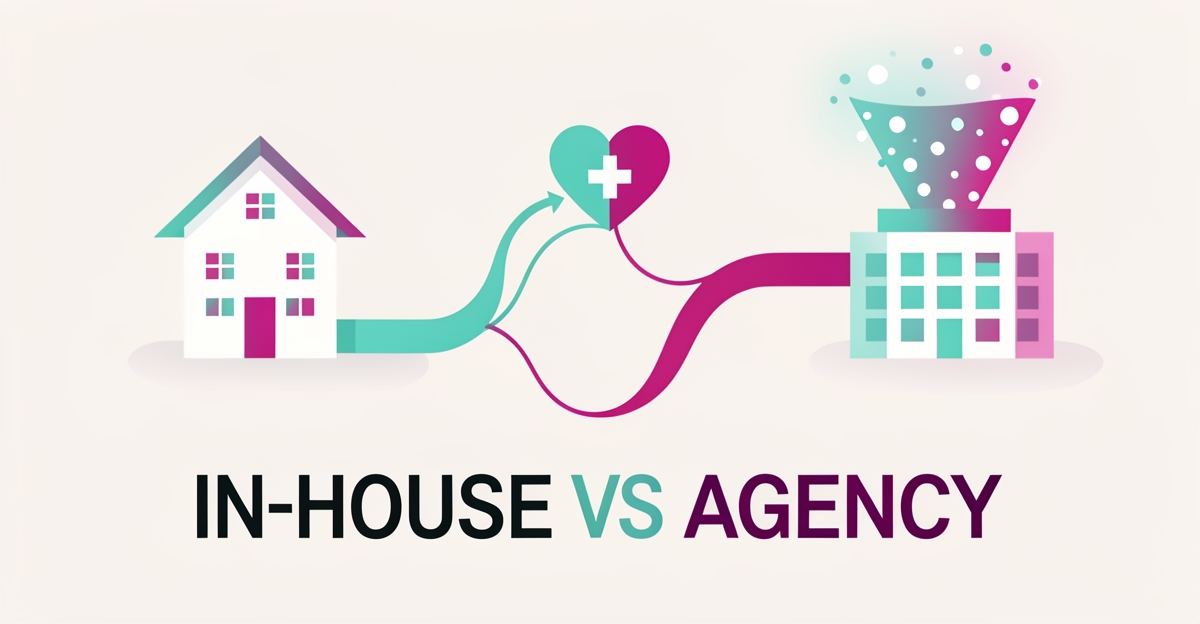
Is it better to build our hospice website in-house or hire an agency?
Why does our hospice website need a CRM if we already have a contact form?
How important is mobile speed for a hospice website really?
Can AI-generated content maintain the compassionate tone our hospice needs?
What trust signals should our hospice website prioritize over visual design?
How can our website help with hospice staffing shortages?
Your Hospice Website: A Trust-Building Tool That Works While You Rest
For hospices, a website isn’t just a digital brochure—it’s the first moment of trust families experience when making life’s most critical decisions. The research makes it clear: only 17% of healthcare organizations use CRMs to track leads, while over 60% of families search for care options on mobile devices. A slow-loading site or broken form isn’t a technical flaw; it’s a missed conversation when trust is the only currency that matters. Whether you build in-house, hire an agency, or choose an AI-integrated platform like AI Business Sites, the priority remains the same: lead quality, mobile-first design, and emotional consistency across every interaction. Start by auditing your current lead capture—are you tracking which inquiries convert to admissions? Next, test your site’s mobile performance today; a two-second delay costs more than rankings. Finally, ensure your website reflects the compassionate authority families seek, with real provider photos, clear service descriptions, and HIPAA-compliant tools. The right platform shouldn’t just *exist*—it should *work* for your team and your families, automating follow-ups so no inquiry slips through the cracks at 2 a.m. The goal isn’t perfection; it’s fewer missed conversations when families need you most. Ready to bridge the gap between your website and your admissions pipeline?
FOR local businesss — BUILT AND RUN BY US
Your website. Your content. Your leads. Your data.
$500 starts your build. Seven days later it's live — chat, booking, follow-up, and your Google presence all set up. Then we run it, every month. You do the work you actually get paid for.