
Key facts
- ["64% of paving service searches happen on mobile devices, where visitors expect instant visual confirmation" according to industry data, "Service Area Landing Pages with maps and local references/contractors-and-trades/local-seo-for-paving-contractors/">according to research, "Service Area Landing Pages with maps and local references see up to a 47% increase in qualified leads from organic search" per BrightLocal, "Google Business Profile allows a maximum of 20 service areas specified by cities or postal codes" per guidelines, "Near me searches have grown over 200% year-over-year for paving contractors" per industry data, "97% of people search for local businesses online" per local SEO research, "Embedding interactive maps with radius markers and local landmarks boosts conversions by proving service to specific neighborhoods" per BrightLocal, "Over 64% of paving service searches happen on phones, making mobile optimization critical for lead capture" per industry data]
WANT RESULTS LIKE THIS?
Imagine a system doing all of this for your local business — every day, without you.
We build local businesses a custom website with a team of AI behind it: every lead captured and followed up, new content published monthly,customers finding you on Google — live in 7 days.
- 85+ pages at launch
- Every lead followed up, automatically
- Your whole business on one screen
Why Your Website’s Service Area Map Is Costing You Customers
When a customer lands on your paving website, what they need most is one thing: a clear answer to whether you serve their street. If your "Service Areas" page is just a vague list of cities—without maps, landmarks, or real-time confirmation—you’re silently telling visitors to click away. Research shows that over 64% of paving service searches happen on mobile devices, where visitors expect instant, visual confirmation. A generic map with no radius or labeled neighborhoods forces them to guess whether you’re in their area, and they’ll guess wrong by choosing a competitor who made it obvious.
Google’s own algorithm punishes vagueness—especially for Service Area Businesses (SABs) that hide physical addresses. Without embedded service-radius maps and unique, location-specific content, your pages struggle to rank in local searches. According to BrightLocal research, paving contractors using Service Area Landing Pages (SALPs) with maps and local references see up to a 47% increase in qualified leads from organic search alone. Yet most websites skip this step entirely, leaving money on the table because they don’t realize how much local search behavior has shifted.
Mobile users—your core audience—abandon sites that make them work for answers. A Whitespark guide notes that customers now expect to see their neighborhood, not just a list of towns. If your service area display consists of a drop-down menu or a static list, you’re effectively turning away visitors who might have been a perfect fit. Even worse, vague service areas can trigger Google’s doorway-page penalties, slashing your visibility in Maps and local results.
The fix is straightforward: embed interactive maps with radius markers, highlight local landmarks, and match your Google Business Profile service areas exactly. Platforms like AI Business Sites automate this process by generating live SALPs updated with real-time service boundaries—no manual updates required. That way, your site doesn’t just look local; it acts local, keeping visitors engaged long enough to pick up the phone.
3 Elements Every Service Area Page Needs to Convert Visitors
3 Elements Every Service Area Page Needs to Convert Visitors
In the competitive landscape of local paving services, effectively showcasing your service area is pivotal to attracting and retaining customers. Research underscores three critical elements that, when incorporated into Service Area Landing Pages (SALPs), significantly boost conversions and enhance local SEO.
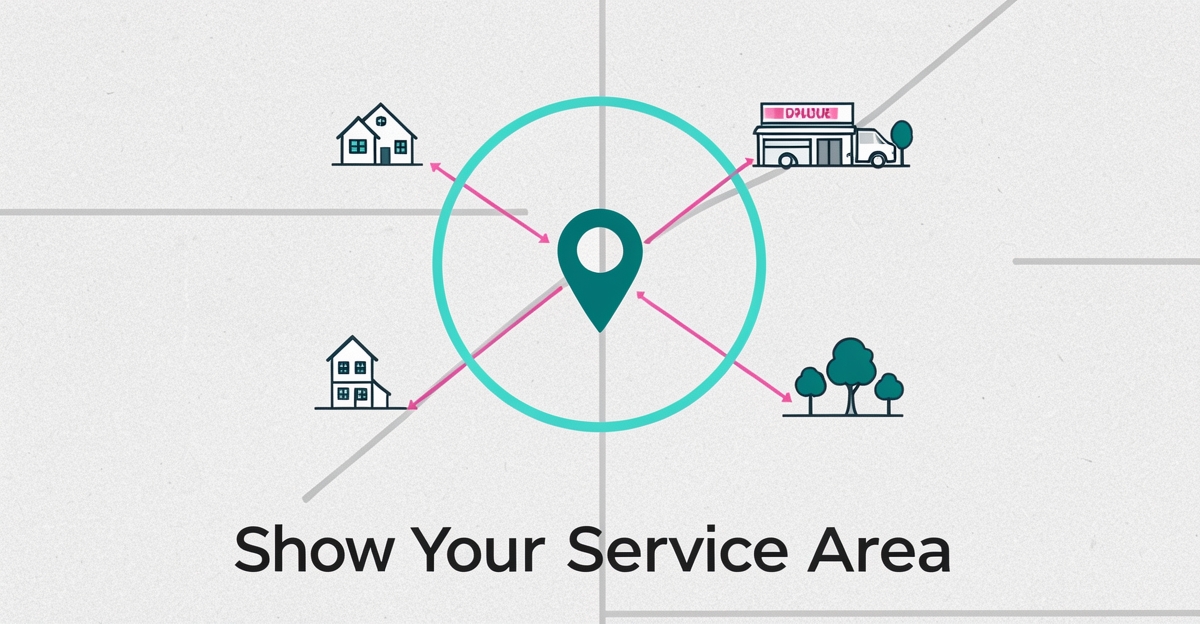
1. Embedded Maps with Radius Markers & Local Landmarks Integrating embedded maps with clear radius markers and referencing local landmarks on SALPs is not just visually appealing but also highly effective. According to BrightLocal, SALPs with such features see a notable increase in conversions, as they provide immediate clarity on service coverage source. For paving contractors, this could mean highlighting proximity to major highways or popular local parks, making the service more relatable and accessible to potential customers.
2. Content Tailored to Specific Neighborhoods Unique, location-specific content is crucial for building trust and improving rankings. Whitespark emphasizes the importance of customer-centric SALPs, suggesting the inclusion of local challenges, landmarks, and testimonials to resonate with the community source. For example, a paving service might discuss the unique drainage challenges in a particular neighborhood and how their services address these issues.
3. Optimized Google Business Profile (GBP) Integration Given the 97% of people searching for local businesses online source, optimizing your Google Business Profile is indispensable. Define service areas by cities or postal codes (up to 20, as per Market My Market guidelines) source, and ensure consistent NAP (Name, Address, Phone) across directories. Regular GBP updates and
Stop Guessing: How to Set Your Real Service Radius (Without the Headache)
Stop relying on outdated guesswork to define your paving service radius. Many contractors still draw circles on a map or list cities without knowing which neighborhoods actually generate the most calls. Research shows that 64% of local service searches happen on mobile devices, meaning customers need to see instantly whether you serve their block—not a vague 20-mile radius that could include nowhere near their driveway.
To set your real service boundary, use three proven methods that align with how customers search:
- City and postal code targeting on your Google Business Profile (GBP), which allows up to 20 service areas
- Radius markers (e.g., “within 15 miles of downtown”) displayed on high-conversion Service Area Landing Pages (SALPs)
- Local landmarks and neighborhood names in your page content, because customers don’t search for postal codes—they search for “paving near Central Park” or “asphalt contractor in River Heights”
Google’s own guidelines limit SABs (service-area businesses) to 20 service areas by city or postal code, but organic pages can expand your reach without triggering ranking penalties. Instead of hiding your address and hoping for the best, turn SALPs into trust-building hubs: embed a map with your coverage zone, add a short testimonial from that exact neighborhood, and write one paragraph explaining why driveways in that area crack faster (great excuse to highlight seasonal conditions).
AI Business Sites handles the busywork behind the scenes. Our platform automatically generates and updates Service Area Landing Pages with real-time radius data—no manual map redrawing or spreadsheet juggling—so your site stays accurate even when you expand into new towns. The system links each zone page to relevant service pages, builds internal connection strength Google rewards, and keeps your NAP (Name, Address, Phone) consistent across directories without extra effort.
Don’t let vague service maps cost you leads. Use city-level and postal code targeting in your GBP, pair it with radius visuals and neighborhood-specific copy on SALPs, and let automation keep everything current. That way, when someone searches “paving contractor near me” on their phone, your site appears and convinces them you’ve been in their exact driveway before.
Local business: doing this the old way?
One system replaces the whole pile.
All of it — the website, the follow-up, the content, the leads — built and run for you for $1,497 + $497/mo. Month-to-month, and you own everything.
See what your build includesTurn Your Map Into a Lead Machine (Step-by-Step)
You've mapped your service zones and optimized your Google Business Profile — now it's time to make your website do the heavy lifting. A well-structured service area page doesn't just inform visitors; it converts them. According to BrightLocal, embedding interactive maps with radius markers and local landmarks on dedicated landing pages significantly boosts conversions by proving you serve a customer's specific neighborhood.
Start with schema markup. Adding LocalBusiness and ServiceArea schema tells search engines exactly where you operate, improving your chances of appearing in "near me" searches — which have grown over 200% year-over-year for paving contractors. Next, ensure every page loads fast and looks flawless on mobile, since over 64% of paving service searches happen on phones per industry data. A clunky mobile experience kills leads before they call.
- Embed a dynamic service radius map centered on each target city or ZIP code
- Add schema markup for LocalBusiness, ServiceArea, and Review snippets
- Include hyper-local content: neighborhood names, landmarks, and recent project photos
- Place a sticky click-to-call button and quote form above the fold on mobile
- Link internally to related service pages and nearby location pages
Doing this manually for 20+ service areas isn't realistic — Google only lets you list 20 in your Business Profile anyway. That's where AI Business Sites comes in: the platform automatically generates and updates location pages with real-time service area data, accurate schema, and locally relevant content — so every neighborhood page works like a lead magnet without you lifting a finger. Fresh content gets published monthly, internal links build themselves, and your map stays current as your business grows.
One Tool That Updates Your Service Areas Automatically (So You Don’t Have To)
For paving contractors, keeping service area information accurate on a website is a constant battle—especially when service zones expand or shift. Manually updating maps, radius markers, and location pages every time you take on a new neighborhood eats up valuable time that could be spent on jobs or client calls. This is where automation becomes not just helpful, but essential for maintaining local visibility without the manual grind.
AI-powered platforms like AI Business Sites solve this by automatically generating and updating Service Area Landing Pages (SALPs) in real time. As soon as your service boundaries change—whether you add a new township or adjust your radius—the system reflects those updates across your website without requiring any action from you. This ensures your location pages always show the correct service zones, complete with embedded maps and local landmarks that build trust with visitors. According to industry research, SALPs with embedded maps and local content significantly boost conversions by making it instantly clear whether you serve a specific area. Over 64% of paving service searches happen on mobile devices, where clear, instantly visible service area information is critical for capturing leads on the go. Additionally, local SEO remains essential, with 97% of people searching for local businesses online—meaning your service area accuracy directly impacts your chances of being found.
By automating this process, AI Business Sites turns what used to be a recurring maintenance task into a seamless, background function. Your website doesn’t just sit there—it actively works to reflect your current service footprint, helping you show up in local search and Google Maps with accurate, up-to-date information. This consistency supports stronger local rankings and reduces the risk of frustrating potential customers with outdated service boundaries. For paving contractors focused on growing their business, having a website that keeps pace with their service area—without constant oversight—means more time spent on the job and less time worrying about whether their online presence is telling the right story.
Frequently Asked Questions
Why do I need a map on my service area page instead of just listing the cities I serve?
How many service areas can I actually set in my Google Business Profile without hurting my rankings?
Do I really need unique content for every neighborhood page, or can I reuse the same text?
What's the fastest way to add schema markup to my service area pages without hiring a developer?
If I expand into a new town next month, do I have to manually rebuild my website's service pages?
Does hiding my physical address on Google Business Profile hurt my local rankings as a paving contractor?
Your Service Area Map Isn't Just a Map—It's Your First Handshake
You've seen the pattern: vague city lists, static maps, and service areas that force visitors to guess. The data is clear—over 64% of paving searches happen on mobile, and customers decide in seconds whether you serve their street. Embedding interactive radius maps, referencing local landmarks, and aligning your Google Business Profile with dedicated landing pages isn't just an SEO tactic; it's how you prove you're already part of the neighborhood. The contractors winning these leads aren't guessing—they're using automation to keep every location page accurate, current, and connected. AI Business Sites builds websites that handle this automatically: generating Service Area Landing Pages with real-time boundaries, schema markup, and hyper-local content that ranks and converts. Your website should do more than show where you work—it should bring the work to you. Ready to stop losing leads to a blurry map? Let's build a site that shows up where your customers are searching.
FOR local businesss — BUILT AND RUN BY US
Your website. Your content. Your leads. Your data.
$500 starts your build. Seven days later it's live — chat, booking, follow-up, and your Google presence all set up. Then we run it, every month. You do the work you actually get paid for.