
Key facts
- 90–95% of total knee replacements last 10 years, and 80–85% last 20 years according to Healthline data
- One day of hospitalization typically equals about one week of recovery time per recovery expectation research
- Older adults often need longer than the standard 1:7 hospitalization-to-recovery ratio based on hospitalization recovery data
- Recovery is rarely linear, with "good days" and "bad days" being the norm according to post-op recovery research
- Patients want realistic expectations in plain language, not medical terminology per patient-centric communication studies
- Stage-based timelines reflecting non-linear healing build more trust than clinical phase descriptions per recovery roadmap research
- Celebrating small wins and normalizing setbacks reduces patient anxiety more effectively than technical milestones according to recovery psychology insights
WANT RESULTS LIKE THIS?
Imagine a system doing all of this for your local business — every day, without you.
We build local businesses a custom website with a team of AI behind it: every lead captured and followed up, new content published monthly,customers finding you on Google — live in 7 days.
- 85+ pages at launch
- Every lead followed up, automatically
- Your whole business on one screen
Patients Skip Your Site If Recovery Info Feels Like a Medical Textbook
A patient lands on your surgery practice website looking for answers — and finds a wall of medical jargon instead. Research shows that generic, technical recovery timelines drive patients away because they feel impersonal and overwhelming. Patients want to know what their life looks like after surgery, not a textbook definition of healing phases.
The problem isn't the information itself — it's how it's presented. Studies on patient-centric communication reveal that recovery is rarely linear, with "good days" and "bad days" being the norm rather than the exception. According to post-operative recovery research, patients experience non-linear progress that standard timelines fail to capture. Meanwhile, hospitalization recovery data suggests a general guideline of one day of hospitalization equaling roughly one week of recovery, though older adults often need longer. Yet most practice websites still present recovery as a straight line of clinical milestones.
What patients actually want to see:
- Realistic expectations written in plain language, not medical terminology
- Emotional recovery aspects acknowledged alongside physical milestones
- Stage-based timelines that reflect the non-linear nature of healing
- Personalized information relevant to their specific procedure and circumstances
This is where patient-centric communication makes the difference. Total knee replacement data shows 90–95% of implants last 10 years and 80–85% last 20 years — powerful reassurance when framed as "what this means for your daily life" rather than implant survival statistics. Recovery roadmap research emphasizes celebrating small wins and normalizing setbacks, which builds trust far more effectively than clinical phase descriptions.
AI Business Sites helps practices bridge this gap by generating recovery content that speaks to patients as people, not case numbers. The platform creates stage-based timelines grounded in your actual procedures and service areas, using language that acknowledges the emotional journey alongside the physical one — because patients who feel understood are patients who book consultations.
A Three-Stage Timeline That Feels Human (Not Clinical)
Recovery timelines can feel cold and clinical when presented as rigid schedules or medical jargon. Patients don’t just want to know how long healing takes — they want to understand what it feels like to move through each phase, with room for setbacks and small victories along the way. Breaking recovery into human-centered stages helps ease anxiety by making the journey feel manageable and personal, not overwhelming.
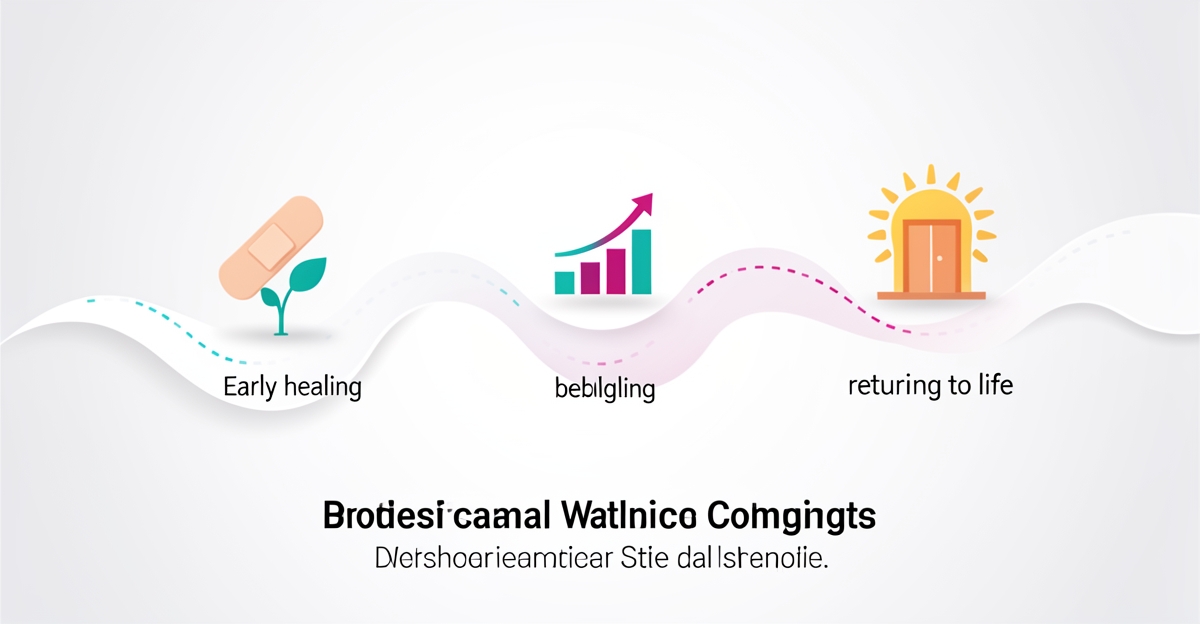
A three-stage framework works well: early healing, rebuilding strength, and returning to life. In the first stage, focus shifts from hospital discharge to managing discomfort and regaining basic mobility — like walking short distances or climbing a few stairs. Research shows that for older adults, about one day of hospitalization often translates to roughly one week of recovery, setting a realistic baseline without promising fixed outcomes. As patients progress, the emphasis moves to rebuilding strength through gentle activity and consistent effort, celebrating milestones like walking without assistance or resuming light household tasks. Finally, the long-term phase highlights gradual improvement toward pre-surgery function, acknowledging that full recovery can take months and that “good days” and “bad days” are normal parts of the process.
This approach avoids technical terms while keeping information grounded in real patient experiences. Instead of listing postoperative weeks with clinical benchmarks, use plain language like “when you might feel ready to drive again” or “returning to gardening or playing with grandchildren.” Visual aids — such as simple icons for each stage or an interactive timeline that adjusts based on procedure type — make the information easier to digest. AI Business Sites’ platform can auto-generate these personalized, empathy-driven timelines using procedure and location data, ensuring the content feels relevant without requiring manual updates. By focusing on emotional progress and realistic expectations, practices build trust and reduce the fear that often comes with uncertainty about recovery.
Make It Personal: AI Tailors Timelines to Each Patient
Patients searching for recovery information don't want generic charts — they want to see themselves in the timeline. A study on knee replacement recovery notes that 90–95% of implants last 10 years, but that statistic means little to someone wondering if they can walk their daughter down the aisle in six months. Generic timelines leave patients guessing; personalization answers the questions they're actually asking.
- Procedure-specific milestones that match the exact surgery a patient is considering
- Location-aware guidance reflecting the care team and facilities they'll actually use
- Realistic ranges instead of single dates — because recovery is rarely linear
- Emotional checkpoints acknowledging the mental side of healing
Research shows that older adults may need a full week of recovery for every day spent in the hospital, yet most websites still publish one-size-fits-all timelines. Recovery progress fluctuates with good days and bad days, and patients who understand that upfront are less likely to panic when progress stalls. A website that auto-generates these personalized timelines — drawing on procedure type, location, and the practice's own protocols — turns anxiety into confidence.
AI Business Sites builds this capability directly into your website, so every visitor sees a recovery picture that fits their situation without your team manually creating dozens of variations. The content engine behind the site produces these tailored timelines as part of its monthly SEO publishing, keeping them current as protocols evolve. Patients get the clarity they need; your practice gets the trust that converts visitors into consultations.
Local business: doing this the old way?
One system replaces the whole pile.
All of it — the website, the follow-up, the content, the leads — built and run for you for $1,497 + $497/mo. Month-to-month, and you own everything.
See what your build includesTurn Your Timeline Into a Trust-Builder (Not Just a Schedule)
Turn Your Timeline Into a Trust-Builder (Not Just a Schedule)
When patients undergo surgery, one of their primary concerns is the recovery process. Providing a clear, empathetic, and personalized recovery timeline on your surgery practice website is crucial for building trust and reducing anxiety. According to industry research (Healthline), patients prioritize realistic, non-technical recovery expectations. Here’s how to craft a timeline that does more than just schedule milestones—it reassures and guides your patients through their journey.
Recovery is rarely a straight line. Studies on post-op recovery (Sportscare Physical Therapy) and addiction recovery timelines (The Ashley Treatment Center) highlight the mix of "good days" and "bad days." Reflect this in your timeline by:
- Acknowledging Variability: Clearly state that recovery pace can vary.
- Focusing on Progress, Not Perfection: Emphasize milestones over strict deadlines.
- Encouraging Open Communication: Invite patients to discuss their unique experiences.
Adopt a stage-based approach (Recovery Answers) to structure your timeline, making it easier for patients to understand their journey:
- Immediate Recovery: Outline initial post-surgery care and what to expect.
- Building Strength: Detail the rehabilitation process and expected improvements.
- Long-Term Healing: Focus on the return to normal activities and final recovery stages.
AI can revolutionize recovery timelines by generating patient-specific schedules based on procedure type and location. This personal touch enhances the patient’s trust in your practice’s tailored approach to their care.
- Avoid Medical Jargon: Use relatable terms (Angel of Mercy Medical Services) to ensure understanding.
- Visual Aids: Incorporate infographics or interactive timelines for clarity and engagement.
By incorporating these strategies, your recovery timeline transforms from a mere schedule into a trust-building, anxiety-reducing tool that showcases your practice’s commitment to patient-centric care.
Statistics Highlighting the Impact:
- 90–95% of total knee replacements last 10 years, underscoring the importance of long-term recovery planning (Healthline).
- Hospitalization to Recovery Ratio: 1 day in the hospital often equates to about 1 week of recovery, though this can vary significantly with age (Angel of Mercy Medical Services).
At AI Business Sites, we understand the value of a website that not only informs but also empathizes with patient needs, integrating AI for personalized care plans that set your practice apart.
Quick Wins: Add This to Your Website Tomorrow
Quick Wins: Add This to Your Website Tomorrow
Start with small, empathetic changes to your existing recovery content that make a big difference in how patients perceive their healing journey. Instead of overwhelming visitors with technical jargon or generic estimates, focus on clarity and compassion. These tweaks can be implemented quickly and set the foundation for more personalized experiences down the line.
Begin by breaking recovery into simple, stage-based sections using language patients actually use. Replace clinical terms with relatable milestones like “First Few Days: Managing Discomfort” or “Weeks 2–6: Regaining Mobility.” This structure helps patients understand what to expect without feeling lost in medical terminology, and it aligns with how recovery naturally unfolds — often with ups and downs rather than a straight line. As noted in recovery resources, emphasizing emotional progress and celebrating small wins builds trust and reduces anxiety (the roadmap to recovery).
Next, add a brief note acknowledging that healing isn’t always linear. A sentence like “Some days will feel better than others — that’s normal” reassures patients that setbacks don’t mean failure. This simple addition addresses a key insight from recovery psychology: non-linear progress is common, especially after hospitalization or surgery (recovery expectations after hospitalization). Pair this with a visual cue, such as a gentle upward-trending graphic with minor dips, to reinforce the message without words.
Finally, include one patient-focused statistic to ground expectations in reality. For example, mention that most people regain significant function within a typical timeframe — like “Many patients return to light activities within 6–8 weeks” — while emphasizing individual variation. This balances hope with honesty, avoiding both false promises and unnecessary fear. When combined, these quick wins create a more human-centered experience that supports patient confidence and engagement. AI Business Sites can help scale this approach by auto-generating personalized timelines and visuals based on procedure and location, turning empathy into automation.
Frequently Asked Questions
Why do recovery timelines on most surgery websites feel so overwhelming or intimidating?
What do patients actually want to see in recovery timelines instead of clinical milestones?
How can I make recovery timelines feel less clinical and more human?
Is it true that recovery timelines should be personalized for each patient?
How do I account for the fact that recovery isn't always a straight line?
Can I use statistics to make recovery timelines feel more reassuring without overwhelming patients?
Key Takeaways
{ "title": "From Timelines to Trust: Elevating Your Surgery Practice's Online Presence", "content": "Patients seeking surgery don't just want technical recovery timelines; they crave empathy, clarity, and personalized insights into their healing journey. By shifting from generic, linear timeline
FOR local businesss — BUILT AND RUN BY US
Your website. Your content. Your leads. Your data.
$500 starts your build. Seven days later it's live — chat, booking, follow-up, and your Google presence all set up. Then we run it, every month. You do the work you actually get paid for.