
Key facts
- 95% of businesses report increased demand for self-service options according to Orases
- 81% of customers attempt to resolve issues themselves before contacting support as found by Heretto
- Customer portals can reduce service workload by 63% per Orases' statistics
- AI is expected to handle 50% of customer service issues by 2025 according to Orases' research
- 86% of customers are willing to pay more for a better experience as noted by Orases
WANT RESULTS LIKE THIS?
Imagine a system doing all of this for your local business — every day, without you.
We build local businesses a custom website with a team of AI behind it: every lead captured and followed up, new content published monthly,customers finding you on Google — live in 7 days.
- 85+ pages at launch
- Every lead followed up, automatically
- Your whole business on one screen
Why Your IT Support Website Fails Customers (And Loses Leads)
Why Your IT Support Website Fails Customers (And Loses Leads)
In today's digitally driven world, where 95% of businesses report an increased demand for self-service options source, having a static IT support website is a recipe for disappointment. These sites fail to provide the real-time updates customers crave, leading to frustration and a heavier support workload.
The Static Website Conundrum
- Missed Expectations: Customers, especially in the IT sector, expect transparency. A static website that doesn't display live ticket status or response timelines falls short of these expectations, frustrating clients who prefer self-service options.
- Increased Workload: Without real-time updates, customers are more likely to contact support for status checks, increasing the workload. 81% of customers attempt to resolve issues themselves before reaching out source, indicating a clear preference for proactive, self-service solutions.
The Cost of Inaction
- Lost Leads: Slow response times can lead to lost leads. The demand for immediate feedback is clear, with AI expected to handle 50% of customer service issues by 2025 source, highlighting the shift towards automated, real-time interactions.
- Reduced Efficiency: Manual updates are not only time-consuming but also prone to errors, reducing the overall efficiency of the support process.
Key Statistics Highlighting the Need for Change
- 95% of businesses see an increase in self-service demand, underscoring the need for dynamic, update-rich websites.
- Customer portals can reduce service workload by 63%, emphasizing the benefits of integrating real-time status updates.
- 86% of customers are willing to pay more for a better experience, indicating that investing in a dynamic website can lead to increased revenue.
The Path Forward
To mitigate these issues, IT support websites must evolve to provide:
- Real-Time Updates: Leveraging AI-driven CRM integration for automatic status updates.
- Self-Service Portals: Designed with mobile-friendliness and accessibility in mind, centralizing ticket status, knowledge bases, and chat support.
- Deep CRM Integration: Ensuring seamless read/write capabilities to reduce manual workload and enhance transparency.
By addressing these shortcomings, IT support websites can reduce customer frustration, decrease the support workload, and ultimately, prevent lead loss. The integration of AI and self-service portals not only meets but exceeds modern customer expectations, setting a new standard for efficiency and transparency in IT support.
What Customers Actually Want: A Self-Service Portal That Works
Most support teams still treat ticket updates as an internal conversation. Customers see a confirmation email and then silence — no timeline, no technician name, no real clue when the problem gets solved. That gap is exactly where trust erodes.
Research shows that 81% of customers try to resolve issues themselves before ever contacting support. They don't want to call or email for a status check — they want to log in, see the current state, and move on with their day. Industry data confirms this shift: 95% of businesses report rising demand for self-service options, and portals that deliver on that expectation can cut service workload by 63%.
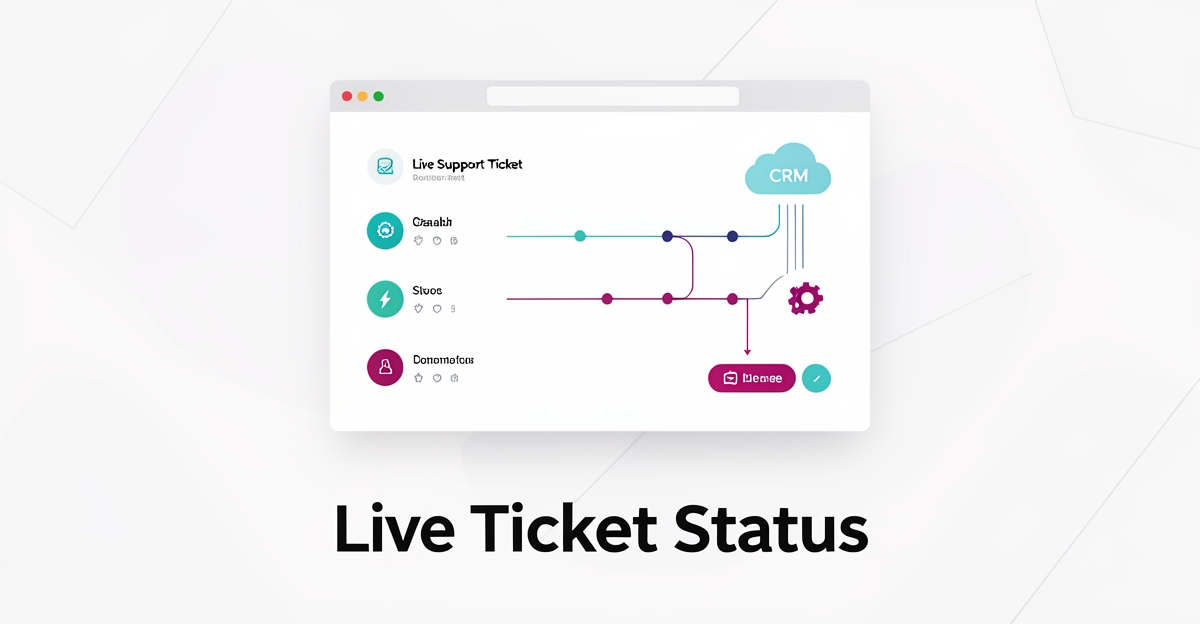
A functional status portal needs to answer three questions instantly: Where does my ticket stand? Who's working on it? When will it be resolved? That means live status badges, a visible response timeline, and technician assignment — all updating automatically as your team works. Mobile access isn't optional; clients check from job sites, trucks, and kitchen tables. The portal also needs to sit inside existing workflows, not create a new destination people have to remember.
- Real-time ticket status with stage progression (received, triaged, in progress, awaiting parts, resolved)
- Technician name, contact info, and estimated arrival or resolution window
- Full conversation history — emails, notes, approvals — in chronological order
- Mobile-first design that works without a separate app download
- Secure, loginless access via magic link for frictionless repeat visits
This is where AI Business Sites approaches the problem differently. Instead of bolting a portal onto a static website, the CRM and the site share the same data layer. When a technician updates a job in the Kanban board or marks a deal won, the client portal reflects it instantly — no sync delays, no manual publishing. The same system that powers lead follow-up and project tracking also drives the status view your customers see.
How to Build a Real-Time Status Portal (Step by Step)
A real-time status portal isn’t just a nice-to-have—it’s what customers now expect when they submit a ticket or request service. Research shows 95% of businesses report higher demand for self-service options, and 81% of customers try to resolve issues themselves before reaching out. For IT support teams, this means building a portal that doesn’t just show open tickets—it surfaces live updates, technician assignments, and response timelines without any manual input. Here’s how to make it happen.
Start with a clean, mobile-first layout optimized for quick glances. Customers shouldn’t scroll through walls of text to find their job status. Use a high-contrast status bar with color-coded labels (green for “In Progress,” yellow for “Waiting on Parts,” red for “Delayed”). Pair this with a real-time feed that auto-updates every 30 seconds, pulling data directly from your CRM. This approach reduces service workload by 63% because customers stop calling to ask, “What’s the status?”
Integrate AI-driven notifications so customers get instant alerts when their ticket moves stages. When a technician updates a job in the field, the portal reflects the change within seconds—and the customer sees it without refreshing the page. This level of transparency builds trust; research finds transparency removes guesswork and lowers frustration. Behind the scenes, your CRM should handle the heavy lifting. Choose a platform that supports deep CRM integration, allowing the portal to read and write back to your pipeline in real time. Avoid bolt-on solutions that require manual syncs—those create lag and risk mismatched data. Instead, prioritize a custom-built portal that’s part of your website’s core infrastructure, not a separate tool.
Plan your workflow in stages:
- Ticket Creation: Auto-generate a unique ID and timestamp when a customer submits a request.
- Assignment Logic: Use AI to assign technicians based on availability, location, and skillset.
- Status Updates: Allow field technicians to log notes via mobile app, which auto-populate the portal.
- Customer Notifications: Trigger emails or in-app alerts at each stage change.
- Closure & Feedback: Auto-close tickets after technician sign-off and prompt for reviews.
This workflow keeps your team efficient while giving customers control. For IT support teams, a portal like this isn’t just a feature—it’s a way to scale service without growing headcount. When your website handles status updates automatically, your team can focus on the work that matters, not answering repetitive questions.
Local business: doing this the old way?
One system replaces the whole pile.
All of it — the website, the follow-up, the content, the leads — built and run for you for $1,497 + $497/mo. Month-to-month, and you own everything.
See what your build includesAI That Updates Customers Automatically (So You Don’t Have To)
Most small businesses waste hours every week manually updating customers on ticket status—only to still field 10-15 frustrated calls asking, "Is my job done yet?" No one should need to babysit a spreadsheet to keep clients informed. With AI-driven CRM integration built into your website, customer updates become automatic, workload drops, and satisfaction rises—without you lifting a finger.
Research shows why this matters: 95% of businesses now face greater demand for self-service options, while AI is expected to handle half of all customer service issues by 2025. Customers already check portals first; give them real-time visibility and you’ll cut service workload by 63%. The result? Fewer interruptions, happier clients, and a website that actually runs your business.
Here’s how it works behind the scenes:
- An AI assistant tracks every ticket in your CRM and pushes live updates to both your dashboard and the client portal in seconds.
- When a technician marks a job “in progress,” the system instantly sends a personalized message—no manual copy-pasting required.
- Missed responses? The AI drafts follow-ups, tags the contact, and schedules retries until the issue is resolved.
- Clients see job timelines, technician assignments, and estimated completion dates—all updated automatically as changes occur.
At AI Business Sites, we’ve built this flow into every site we deliver. Your portal isn’t just a static page—it’s a live feed powered by the same CRM handling your sales pipeline. The AI doesn’t just answer questions; it monitors events, triggers workflows, and keeps every stakeholder aligned without another calendar reminder or email chase. Let your website do the updating while you focus on the work that matters.
Launch Checklist: Get Your Status Portal Live in 30 Days
Launch Checklist: Get Your Status Portal Live in 30 Days
Transform your IT support website into a transparent, customer-centric hub with a live ticket status portal, all set up in just one month. Here’s how:
Weeks 1-2: Planning & Setup (Days 1-14)
- Day 1-3: Define your portal’s scope with 95% of businesses in mind, who report increased demand for self-service options (Orases, 2024). Identify key features: ticket status, response timelines, and technician assignments.
- Day 4-7: Integrate your AI-driven CRM for automated updates, expecting AI to handle 50% of customer service issues by 2025 (Orases, 2024).
- Day 8-14: Design an intuitive, mobile-friendly portal, ensuring 81% of customers who prefer self-service first are catered to (Heretto, 2024).
Weeks 3-4: Development & Testing (Days 15-30)
- Days 15-18: Develop the portal with deep CRM integration for seamless updates, reducing service workload by 63% as seen in successful implementations (Orases, 2024).
- Days 19-22: Test for real-time status updates, transparency, and user experience, keeping in mind customers are willing to pay more for better experiences (Orases, 2024).
- Days 23-30: Finalize, deploy, and train your team on the new portal, ensuring a smooth launch.
Go-Live & Post-Launch
- Launch Day: Make your status portal live and announce it to clients, highlighting the transparency and efficiency it brings.
- Post-Launch Review: Monitor usage, gather feedback, and iteratively improve the portal, leveraging insights from customer portal statistics (Orases, 2024) to guide enhancements.
With AI Business Sites, you can leverage our expertise in building custom websites with integrated CRM solutions, streamlining your launch process and ensuring a seamless customer experience from day one.
Frequently Asked Questions
How can a live ticket status portal reduce the workload for my IT support team?
What do customers actually want when they check the status of their support ticket online?
Is it really necessary to have AI-powered updates for ticket status, or can I just update things manually?
Will a real-time status portal work on mobile devices, or do customers need to download an app?
How long does it typically take to launch a live ticket status portal on my website?
What percentage of businesses are seeing increased demand for self-service options like live ticket tracking?
Turn Frustrated Customers Into Loyal Advocates—With a Website That Works for You
Your IT support website shouldn’t be a digital ghost town where customers wonder if their ticket disappeared into a black hole. As this article has shown, the businesses that win today’s trust—and tomorrow’s revenue—are those that give clients real-time visibility into their open tickets and service jobs. With 95% of companies seeing surging demand for self-service and AI poised to handle half of customer service interactions by 2025, the message is clear: transparency isn’t optional; it’s expected. A well-built status portal isn’t just a nicety—it’s a strategic asset that cuts support workload by 63% while turning one-time clients into repeat buyers willing to pay more for a better experience. The key is deep CRM integration, AI-driven updates, and a mobile-first design that puts control in your customers’ hands wherever they are. If your website still drops the ball on status updates, the time to act is now. Start by mapping out your portal’s core features—live status badges, technician assignments, and instant notifications—and choose a platform that syncs seamlessly with your existing workflows. The result? Fewer support calls, happier clients, and a website that runs your business while you focus on the work that matters.
FOR local businesss — BUILT AND RUN BY US
Your website. Your content. Your leads. Your data.
$500 starts your build. Seven days later it's live — chat, booking, follow-up, and your Google presence all set up. Then we run it, every month. You do the work you actually get paid for.