
Key facts
- Google Business Profile accounts for 33% of local SEO ranking factors according to White Spark research
- Positive GBP reviews contribute up to 14% to local ranking factors per BrightLocal data
- 84% of service business customers rate reviews as important or very important per Search Engine Journal
- Metal fabrication near me gets 11,300 average monthly searches per Moz mid-2024 data
- GBP allows up to 20 service areas for service-area businesses per Market My Market
- Service area boundaries should generally stay within ~2-hour driving time per Market My Market
- Industry best practice requires 40–60% unique-value content per location page to avoid spam penalties
WANT RESULTS LIKE THIS?
Imagine a system doing all of this for your local business — every day, without you.
We build local businesses a custom website with a team of AI behind it: every lead captured and followed up, new content published monthly,customers finding you on Google — live in 7 days.
- 85+ pages at launch
- Every lead followed up, automatically
- Your whole business on one screen
The Hidden Cost of Vague Service Areas (And Why Most Plating Companies Lose Leads Here)
Many metal plating companies miss out on leads because their service areas aren’t clearly visualized or optimized for local searches. This section explains why vague service area definitions cost businesses 80% of potential local search leads and how thin, duplicated pages trigger Google’s spam policies—turning well-intentioned SEO into a visibility penalty.
Google’s spam policies now explicitly target scaled content abuse and doorway pages, which occur when businesses create dozens of near-identical city pages to manipulate rankings. As Market My Market notes, “more pages is not automatically more visibility” when content lacks unique value. Industry best practice requires 40–60% unique-value content per location page to avoid being flagged as low-quality or spammy. Simply listing service areas or using a generic radius map fails this standard and provides no real destination value for users.
A visual service area map with real boundaries improves conversions only when it aligns exactly with your Google Business Profile configuration—which must be set by city, postal code, or area, not radius. GBP allows up to 20 service areas for service-area businesses like metal platers, and boundaries should generally stay within a ~2-hour driving time from your base. When your website map contradicts your GBP settings, it creates confusion for both users and search engines, undermining trust and local rankings.
Without clear, unique location pages that include local landmarks, project photos, testimonials, or region-specific regulations, visitors have no reason to call—they’ll bounce to a competitor who demonstrates genuine local relevance. The fix isn’t more pages; it’s fewer, stronger pages that function as true destination content for high-intent searches like “titanium plating in Moncton” or “plating in Halifax.”
AI Business Sites helps metal plating companies avoid these pitfalls by building service area strategies grounded in actual service boundaries and localized content—ensuring every page earns its place in search results and drives real calls, not just visits.
Build a ‘Geo Hub’ That Steers Visitors to the Right Call (Not Just a Map)
Build a ‘Geo Hub’ That Steers Visitors to the Right Call (Not Just a Map)
When metal plating companies fail to clearly visualize their service areas, they miss out on valuable leads. Creating a central "geo hub" page can change this. This section outlines a step-by-step blueprint for designing such a hub, ensuring it drives calls, not just visits.
1. Craft a Visual Service Area Map with Real Boundaries
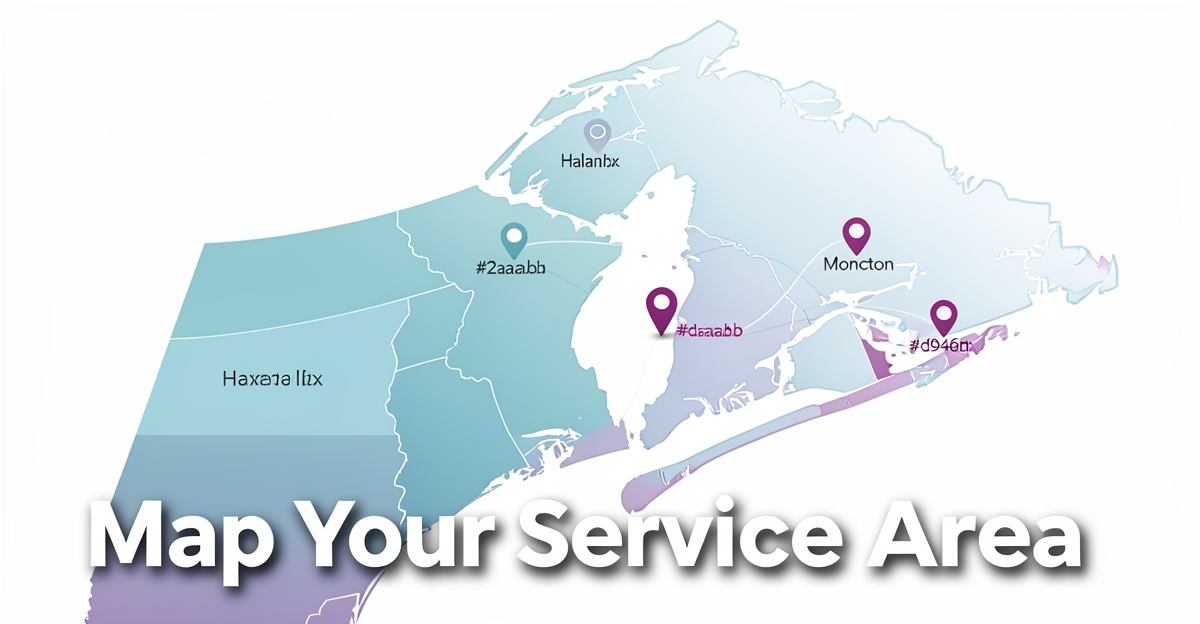
A dedicated /service-areas/ page with an interactive map (e.g., Google Maps API) showing real service boundaries by city/postal code (not radius) is crucial. Annotate with local landmarks, like "Serving aerospace manufacturers near Halifax Stanfield International Airport." Ensure map boundaries exactly match your Google Business Profile (GBP) service area configuration, as GBP accounts for 33% of local SEO ranking factors (Sensei Digital, citing White Spark).
2. Launch High-Value Location Pages, Not Thin Ones
Identify your top 3–5 revenue-generating cities (e.g., Halifax, Moncton) and build pages like /titanium-plating-halifax/ with:
- 2+ project photos from that city
- 1+ local testimonial
- Region-specific regulatory info (e.g., Halifax Regional Municipality environmental discharge compliance)
- Unique, 500–800 word content (avoiding "synonym rewriting" or automated transformations, as warned against by Google's spam policies)
- Click-to-call button above the fold
Example: A /titanium-plating-halifax/ page might highlight a project for a Halifax aerospace client, complete with photos and a testimonial, alongside information on compliance with local environmental regulations.
3. Optimize Google Business Profile (GBP) First Before publishing location pages, ensure your GBP is fully optimized:
- Set primary category to "Metal Finisher" or "Electroplating Service"
- Add all 20 service areas as cities/postal codes (not radius), generally within ~2-hour driving time from your base
- Upload high-res photos and a description with top keywords
- Enable messaging and review requests with direct links sent post-job
4. Implement Local Schema Markup for Rich Snippets Add JSON-LD LocalBusiness schema to every location page, including:
@type: "LocalBusiness"areaServed(array of City/PostalCode)serviceType(e.g., "Titanium Plating")telephone,address,geo,openingHours,priceRange- Validate with Google’s Rich Results Test to enable map pack eligibility and rich snippets.
5. Systematize Reviews and Local Citations
- Automate review requests post-job with direct GBP links, targeting 1 new review/month
- Respond to all reviews within 48 hours
- Audit NAP consistency quarterly across 20+ directories (BBB, Yelp, Apple Maps, Bing, Facebook, ThomasNet)
- Sponsor local industry events (e.g., Atlantic Canada Aerospace & Defence Association) for backlinks and citations
Key Statistic Highlight:
- Reviews contribute up to 14% to local rankings (BrightLocal via Sensei Digital), with 84% of service business customers rating them as "important" or "very important" (Search Engine Journal).
By following this blueprint, metal plating services can effectively map their areas, drive targeted traffic, and most importantly, increase calls from the right locations.
Actionable Checklist:
- Create a geo hub page with a boundary-consistent map
- Develop 3–5 high-value, unique location pages
- Fully optimize your Google Business Profile
- Implement LocalBusiness schema markup
- Systematize review generation and local citations
Source Insights:
- Market My Market emphasizes the importance of a "geo hub architecture" and consistent service area configuration.
- Sensei Digital highlights GBP's 33% influence on local SEO and the need for unique location content.
- Search Engine Journal underscores the role of reviews in local rankings and customer decision-making.
Bold Highlights (Limited to 2-3):
- GBP Optimization is Key to local SEO success.
- Unique Location Pages drive targeted calls.
- Systematic Reviews boost rankings and trust.
Location Pages That Actually Rank (And Get Answered Phones)
Most metal plating companies publish a list of cities they serve and call it a day — then wonder why the phone doesn't ring. A location page that actually ranks for "titanium plating in Moncton" or "electroless nickel Halifax" works differently: it proves local relevance with evidence a prospect can see and a search engine can verify.
The structure matters. Research from Market My Market shows that pages functioning as genuine destination content — not thin templates — need 40–60% unique-value content per URL to avoid Google's doorway and scaled-content penalties. Red Brick Web's checklist for service-area businesses puts the sweet spot at 500–800 words, built around a clear header hierarchy, local schema markup, and a click-to-call button above the fold on mobile. Search Engine Journal notes that many local searches happen on smartphones during site visits, so the tap-to-dial target has to be thumb-reachable without scrolling.
What makes the page unique isn't boilerplate. It's the project photo of the aerospace bracket you anodized for the shop near Halifax Stanfield International Airport. It's the named testimonial from the Moncton fabrication manager who needed AMS 2488 compliance yesterday. It's the line that says "We handle Halifax Regional Municipality discharge permits so you don't have to." Sensei Digital's local SEO guide explicitly calls out these three elements — local installation photos, regional customer testimonials, and permit info by area — as the differentiators that turn a generic service page into a local asset.
- 2+ photos of actual work completed in that city, with descriptive alt text
- 1+ testimonial from a named local client (company + role, with permission)
- Region-specific regulatory or permit notes relevant to plating
- Local landmark or industrial-park references that ground the service area
- Click-to-call and "Request Quote" CTAs fixed to the top on mobile
The keyword strategy is surgical: target "[Service] in [City]" and "[City] [Service]" patterns that show commercial intent — "plating in Halifax," "titanium plating Moncton," "electroless nickel Dartmouth" — and bake them into the H1, first paragraph, and LocalBusiness schema's serviceType and areaServed fields. Search Engine Journal recommends a regional page structure that flows from a top-level service hub down to these city-specific pages, each with its own JSON-LD markup validated through Google's Rich Results Test.
AI Business Sites builds this architecture into every launch: the geo-hub "Service Areas" page links to individual location pages, each automatically wired with schema, internal links to related service pages, and mobile-first CTAs — so the business owner publishes once and the structure keeps compounding. The platform's content engine then refreshes these pages monthly with new project photos, updated testimonials, and fresh regulatory notes, keeping the unique-value ratio high without manual effort.
Local business: doing this the old way?
One system replaces the whole pile.
All of it — the website, the follow-up, the content, the leads — built and run for you for $1,497 + $497/mo. Month-to-month, and you own everything.
See what your build includesTurn Your Google Business Profile Into a Lead Machine Before Your Website Does
Your Google Business Profile isn't just a listing — it's the single largest lever in local search. A White Spark study found that GBP drives 33% of local ranking factors, making it the foundation every service-area page strategy rests on. For metal plating companies that travel to client facilities, the setup has strict rules: GBP allows up to 20 service areas defined by city or postal code — not radius — and boundaries generally shouldn't exceed a two-hour drive from your shop.
- Claim and verify the profile, then set the primary category to "Metal Finisher" or "Electroplating Service"
- Add all 20 service areas as cities/postal codes matching the markets you actually serve
- Upload 10+ high-resolution photos — facility, equipment, team, finished parts
- Write a keyword-rich description that names your top services and service cities
- Enable messaging so prospects can reach you directly from Maps
Search Engine Journal notes that an optimized GBP lets customers "call your business, drive to its location, or visit its website with just one click." That click-to-call button above the fold on mobile is where many plating inquiries start — most local searches happen on smartphones, often while a plant manager walks the production floor.
Behind the scenes, local schema markup turns that profile data into structured signals Google can trust. Add JSON-LD LocalBusiness schema to every location page with areaServed arrays, serviceType, telephone, geo coordinates, and opening hours. This markup enables map-pack eligibility and rich snippets that plain HTML can't deliver.
At AI Business Sites, we configure GBP and schema as part of the launch — not an upsell — so the website and its search presence work together from day one. The profile becomes a lead machine before the first blog post publishes, capturing high-intent searches like "titanium plating in Moncton" or "electroless nickel Halifax" while your service-area pages build organic depth beneath it.
The 30-Minute Routine That Keeps Your Service Area Pages Working for Years
Most businesses build service area pages once and forget them — then wonder why the calls stop coming. The difference between a page that ranks for six months and one that works for years isn't magic. It's a repeatable, low-lift routine that keeps Google's trust signals fresh without eating your weekends.
Start with a monthly audit that takes 20 minutes. Check NAP consistency across your top 20 directories — BBB, Yelp, Apple Maps, Bing, Facebook, and plating-specific sites like ThomasNet and the Metal Finishing Association. A Sensei Digital guide emphasizes that mismatches hurt rankings, and Google Business Profile alone carries 33% of local ranking weight per the White Spark study. Verify your schema markup validates in Google's Rich Results Test. Confirm your 20 GBP service areas still match your actual coverage — boundaries set by city and postal code, not radius, within roughly a two-hour drive from base per Market My Market.
Every quarter, automate your review engine. BrightLocal data shows reviews contribute roughly 14% to local rankings, and 84% of service business customers call reviews "important" or "very important" in their decision process. Set up a post-job sequence that sends a direct GBP review link via email or SMS within 48 hours of completion. Respond to every review — positive and negative — within two days. This isn't reputation management. It's ranking fuel.
Twice a month, refresh content using your top-performing location pages as templates. If "/titanium-plating-halifax/" drives calls, clone its structure for "/electroless-nickel-moncton/" — swap the project photos, testimonial, permit notes, and landmark references. Keep 40–60% of the content unique per page, the threshold industry best practice sets to avoid doorway penalties. Add one new FAQ, one fresh photo, one updated spec reference.
- Monthly: NAP audit, schema validation, GBP service area sync
- Quarterly: Automated review requests, competitor review scan, citation cleanup
- Biweekly: Content refresh on 1–2 location pages using proven templates
The part most teams skip is internal linking — every new page needs ties to your strongest existing pages, and old pages need links to the new ones. AI Business Sites handles this automatically: when the content engine publishes a new location page, it maps topical relevance and inserts contextual links across the site. When a page is retired, orphaned links get cleaned up. No spreadsheets. No manual audits. The architecture improves itself while you're running the shop.
Frequently Asked Questions
How many service areas can I add to my Google Business Profile as a metal plating company?
Why shouldn’t I create a separate page for every city I serve?
What makes a location page actually rank and get calls instead of just getting visits?
How important are Google reviews for my metal plating business’s local rankings?
Should my website’s service area map match my Google Business Profile settings?
What’s the best way to keep my service area pages working over time without constant manual updates?
Your Service Area Map Isn't a Decoration — It's a Lead Filter
Vague service areas don't just confuse Google — they cost you the high-intent calls that come from plant managers searching "titanium plating in Moncton" while standing on a shop floor. The fix isn't more city pages; it's a geo hub with real boundaries that match your Google Business Profile, three to five location pages built on project photos and permit knowledge instead of synonym swaps, and a review engine that runs while you're running the shop. GBP alone carries 33% of local ranking weight, and every page you publish should reinforce that signal, not dilute it. AI Business Sites builds this architecture into every launch — schema, internal linking, content refreshes, and GBP alignment handled automatically — so your website earns its keep from day one. If your current site lists cities but doesn't prove you've actually worked there, you're not ranking; you're waiting. Let's build the version that gets the phone to ring.
FOR local businesss — BUILT AND RUN BY US
Your website. Your content. Your leads. Your data.
$500 starts your build. Seven days later it's live — chat, booking, follow-up, and your Google presence all set up. Then we run it, every month. You do the work you actually get paid for.