
Key facts
- ["43% of all cyberattacks in 2025 targeted small businesses, despite only 22% having an advanced security posture according to research.", "72% increase in AI-assisted attacks and 1,265% surge in phishing campaigns as reported.", "60% of SMBs that suffer a cyberattack shut down within six months, with an average breach cost of $254,445 found.", "MFA blocks 99.9% of automated account attacks, yet 65% of SMBs don’t use it per statistics.", "12 months of regular phishing training reduces employee susceptibility by 86% as noted."]
WANT RESULTS LIKE THIS?
Imagine a system doing all of this for your local business — every day, without you.
We build local businesses a custom website with a team of AI behind it: every lead captured and followed up, new content published monthly,customers finding you on Google — live in 7 days.
- 85+ pages at launch
- Every lead followed up, automatically
- Your whole business on one screen
Why Most Cybersecurity Explanations Fail Small Business Owners
Small business owners are walking into a credibility crisis they don't see coming. Research shows that 43% of all cyberattacks in 2025 targeted small businesses, yet 71% of owners feel confident in their preparedness while only 22% actually have an advanced security posture. That gap isn't just a perception problem — it's a communication failure. When explanations default to acronyms and architecture diagrams, the people who need to act tune out.
Security experts identify five mistakes that lose audiences before the first paragraph ends: leading with jargon instead of plain language, explaining "how" a tool works before "why" it matters, drowning readers in overwhelming detail, assuming prior technical knowledge, and using fear without context. Each mistake treats cybersecurity as a technical subject rather than a business survival skill. The stakes are measurable: 68% of incidents stem from human error, which means unclear communication isn't a marketing problem — it's a security vulnerability.
- Jargon that replaces "phishing" with "credential harvesting via social engineering"
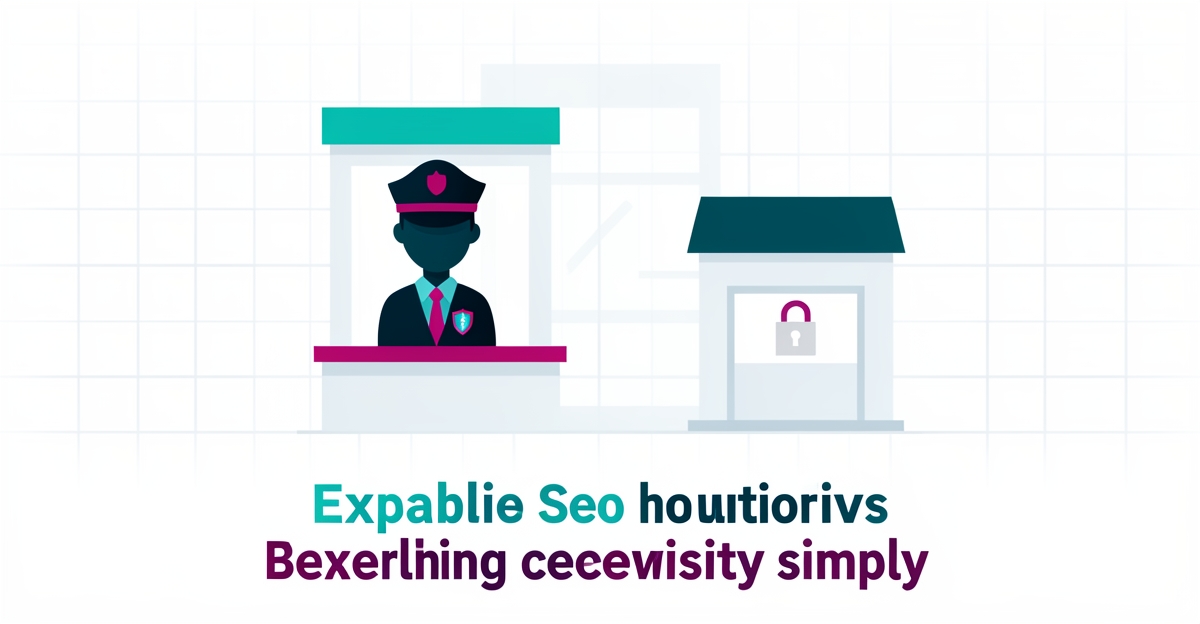
- Firewall explanations that describe packet inspection instead of "a security guard checking IDs at the door"
- MFA rollouts framed as "multi-factor authentication protocols" rather than "a second lock on your front door"
- Training programs that assume employees know what "malware" means
- Fear-based warnings about "$4M average breach costs" without a single actionable next step
AI-powered phishing now achieves 54–78% open rates compared to 12% for traditional methods, exploiting exactly the confusion that poor explanations create. When a business owner can't distinguish a legitimate security alert from a convincing fake, the explanation gap becomes an attack vector. Clear communication is a control, not a courtesy. At AI Business Sites, we've seen how websites built with analogy-driven, jargon-free content help local service businesses — from plumbers to law firms — turn cybersecurity from an abstract threat into a managed business risk. The sites that convert don't just list features; they translate risk into language the owner already speaks.
The Analogy Framework That Makes Technical Concepts Stick
When a small business owner hears "firewall," their mind might drift to a tech-heavy explanation about packet filtering or network layers. But what if it was simply "the security guard standing at the entrance of your business"? Research shows that relatable analogies make technical concepts stick because they connect to experiences everyone understands. A security guard keeps out unwanted visitors, just like a firewall keeps out malicious traffic. An encryption lockbox protects your customer data the same way a locked safe secures cash or documents. Multi-factor authentication (MFA) acts like two distinct locks on your front door—one key isn’t enough to get inside. And ransomware? It’s the digital equivalent of a thief replacing all your locks and demanding payment to give you the new keys.
Not all analogies land equally. Effective ones share five essential traits: they’re relatable to universal experiences like home security or banking, accurate enough to not mislead, simple to grasp in one sentence, memorable long enough to guide action, and focused on the core concept rather than technical mechanics. Research from SecurityScientist.net confirms that analogies meeting these criteria significantly improve comprehension and retention among non-technical audiences. For small business owners juggling dozens of priorities, these mental shortcuts turn abstract threats into everyday risks they can visualize—and act on.
Each analogy gains credibility when paired with concrete stakes. Consider phishing: it drives 47% of SMB breaches and costs targeted businesses an average of $254,445 per incident. Phishing messages now hit inboxes with 54-78% open rates thanks to AI tools that craft eerily convincing emails. Or MFA: blocking 99.9% of automated attacks while remaining unused by 65% of SMBs—a gap that’s hard to justify when a two-minute setup could prevent a catastrophic breach.
- Use a guard at the door: firewall = keeps intruders out before they reach the store
- Lock the vault: encryption = scrambles data so thieves can’t read it even if they break in
- Double-check the locks: MFA = requires more than one proof of identity before opening virtual doors
- Replace your locks: ransomware = hijacks your files and demands payment for the return key
- Phishing = con artist impersonating your bank to trick an employee into handing over the keys
These comparisons aren’t just memorable—they’re grounded in measurable impact. A local HVAC contractor using AI Business Sites might replace technical jargon in their blog post with the "locked safe" analogy for encryption, then add a sidebar: "Why this matters: Unencrypted customer data leads to 47% of SMB breaches and costs an average $254K to recover." The analogy makes the threat tangible; the statistic makes it urgent. That pairing—relatability plus real-world consequence—turns a technical explanation into a business decision.
Structuring Your Website for Four Different Audiences
Most small business websites treat cybersecurity as a single topic — either too technical for owners or too vague for IT teams. The sites that actually drive action structure content around four distinct audiences, each with their own entry point and decision criteria.
An Owner/Executive Hub leads with business impact: the $254K average breach cost, the 60% closure rate within six months, and a prevention ROI that exceeds 7x across threat categories. Executives don't need to know how a firewall inspects packets; they need to know that supply chain security delivers an 8.4x return and that tested incident response plans cut recovery time by 75%.
An Employee Action Center focuses on the human layer. Phishing drives 47% of attacks, yet 83% of SMBs lack phishing awareness training. Twelve months of regular training reduces susceptibility by 86%, and MFA blocks 99.9% of automated account attacks — yet 65% of SMBs still don't use it. This hub translates those numbers into daily habits: recognize the AI-crafted email, enable the second factor, report the suspicious link.
- Owner/Executive Hub — financial risk, ROI, and strategic decisions
- Employee Action Center — phishing, MFA, and daily security habits
- Compliance/Trust Pages — 70% consumer trust loss post-breach
- Technical Deep Dives — linked but not leading, for IT and auditors
Compliance and trust pages speak to customers and partners. Seventy percent of consumers say they'd be less likely to continue doing business with a company after a cyberattack. These pages showcase certifications, data handling practices, and incident response readiness — proof that trust isn't assumed, it's engineered.
Technical deep dives exist but live one click deeper. They serve IT staff, auditors, and curious visitors without cluttering the primary narrative. This "why before how" architecture — recommended by both REN-ISAC and SecurityScientist.net — ensures every visitor finds their answer without diluting the site's authority. AI Business Sites builds this structure into every cybersecurity-focused website, so the content architecture does the segmentation work automatically.
Local business: doing this the old way?
One system replaces the whole pile.
All of it — the website, the follow-up, the content, the leads — built and run for you for $1,497 + $497/mo. Month-to-month, and you own everything.
See what your build includesReal Stories, Real Costs: Case Studies That Prove the Stakes
Real Stories, Real Costs: Case Studies That Prove the Stakes
Cybersecurity threats are not abstract risks; they are tangible, costly, and devastatingly real for small businesses. According to a recent study highlighting small business cybersecurity statistics, 60% of SMBs that suffer a cyberattack shut down within six months, with the average cost of a breach totaling $254,445. Here are three compelling case studies, structured using NIST's narrative framework and inspired by LG Networks' scenarios, that translate abstract risks into undeniable business realities:
- Business Type: 10-person consulting firm
- Attack Vector: Phishing leading to unauthorized wire transfer
- Human Action: An employee clicked on a legitimate-looking phishing email
- Financial Loss: $15,000 (entire cash reserve)
- Recovery Time: 6 months (with partial recovery)
-
Preventive Measure: Regular phishing training and two-factor authentication (MFA)
-
Business Type: Medium-sized retail outlet
- Attack Vector: Compromised ACH credentials
- Human Action: Weak password practices
- Financial Loss: $550,000 stolen, $200,000 recovered
- Recovery Time: Ongoing (over 12 months)
-
Preventive Measure: Implementation of MFA for all financial transactions
-
Business Type: Government services contractor
- Attack Vector: Ransomware through a supply chain vulnerability
- Human Action: Outdated software patch
- Financial Loss: Over $1,000,000 in mitigation costs
- Recovery Time: Several days of operational downtime
- Preventive Measure: Regular software updates and a tested incident response plan
These cases underscore the critical need for proactive cybersecurity measures. As NIST's case study series emphasizes, storytelling about real threats is key to making cybersecurity accessible. Moreover, research by the U.S. Chamber of Commerce highlights that while 60% of small businesses identify cybersecurity as their top threat, only 48% have trained their staff in the last year, exacerbating the vulnerability.
Key Takeaways for Small Businesses:
- Phishing Training can reduce susceptibility by 86% (as seen in totalassure.com's blog on cybersecurity stats).
- MFA blocks 99.9% of automated account attacks, yet 65% of SMBs don’t use it.
- A tested incident response plan can reduce remediation costs by 60% and recovery time by 75%.
At AI Business Sites, we believe in empowering small businesses with not just a website, but a secure, proactive online presence. By learning from these real-world scenarios and implementing simple, effective countermeasures, businesses can significantly reduce their risk profile.
Take the First Step:
- Enable MFA across all accounts to block automated threats.
- Deploy Phishing Training to protect against the most common attack vector.
- Build a Tested Incident Response Plan to ensure swift recovery.
Don’t let your business become the next statistic. Act today.
Three First Steps With Implementation Simplicity Scores
Small businesses face more cyberattacks than large companies—43% of all breaches in 2025 targeted firms with fewer than 1,000 employees—yet most owners still think they’re too small to draw hackers’ attention. The truth? 68% of incidents start with human error, and phishing now uses AI to reach inboxes at rates 4.5x higher than traditional scams. Without clear, actionable steps, the gap between perceived and actual security leaves doors wide open for attacks that can shutter a business in months.
Start with three countermeasures that deliver outsized protection with minimal setup. Each is backed by hard numbers and designed for the realities of small teams with limited time:
- Enable MFA everywhere (Simplicity 5/5) — This single move blocks 99.9% of automated account attacks, yet 65% of SMBs still skip it. Most services (Gmail, QuickBooks, your bank) offer MFA with a few clicks, turning a five-minute task into the most effective security control you’ll ever use.
- Run 12 months of phishing training (Simplicity 4/5) — Regular drills cut employee susceptibility by 86%. Today’s AI-powered phishing arrives in polished emails that read like real invoices or HR notices, so consistent training keeps staff from becoming the weakest link.
- Build and test an incident response plan (Simplicity 3/5) — Businesses with tested plans recover 75% faster and spend 60% less on cleanup. A one-page checklist—who to call, how to contain damage, what to tell customers—turns chaos into a controlled process when minutes count.
Implementation starts where you are. The top tools adopted by SMBs—antivirus (58%), firewalls (49%), VPNs (44%), and password managers (39%)—fit most budgets and can be rolled out alongside the core three steps. AI-generated checklists, email templates, and step-by-step guides live on the backend of your site, ready to copy-paste into your workflow. Small changes now prevent the kind of breaches that close doors for good.
Frequently Asked Questions
Why do most cybersecurity explanations fail small business owners?
What's the most effective way to explain a firewall to a non-technical business owner?
Is multi-factor authentication really worth the hassle for my small business?
How much does a typical cyberattack cost a small business, and can we survive it?
My team is too busy for complex security training — what actually works?
Do I really need an incident response plan if I'm a small business?
Key Takeaways
**{ "title": "Secure Your Business, Simplify Your Cybersecurity", "content": "As the alarming statistics underscore, small businesses are squarely in the crosshairs of cyberattacks, with human error and phishing leading the charge. By embracing analogy-driven explanations, audience-centric messaging
FOR local businesss — BUILT AND RUN BY US
Your website. Your content. Your leads. Your data.
$500 starts your build. Seven days later it's live — chat, booking, follow-up, and your Google presence all set up. Then we run it, every month. You do the work you actually get paid for.