
Key facts
- Commercial scaffolding favors steel and system types like Ringlock/Cuplock for high load and OSHA compliance Fact.MR.
- Residential projects benefit most from lightweight aluminum and mobile scaffolding for speed and cost efficiency Credence Research.
- System scaffolding holds 32.8% market share due to its modularity and compliance readiness Fact.MR.
- Steel scaffolding dominates with a 58.2% share thanks to its high load capacity for commercial projects Fact.MR.
- Digital platforms cut scaffolding engineering design time by 50–70% while reducing over-ordering Fact.MR.
- 90% of contractors rent scaffolding to avoid $150K–$500K ownership costs for steel setups DataIntelo.
- OSHA reports 4,500 scaffolding injuries and 60 fatalities annually, making compliance critical DataIntelo.
- Medium-term rentals capture 36.5% of rental duration share, aligning with commercial project timelines Fact.MR.
- Suspended scaffolding is the fastest-growing segment driven by facade and bridge maintenance needs Market Research Future.
- North America’s supported scaffolding preference is enforced by OSHA’s high-rise safety standards DataIntelo.
- Asia-Pacific’s scaffolding market growth (4.5% CAGR in India) is fueled by urbanization and housing initiatives Construction Owners.
- Europe’s demand leans toward aluminum systems due to energy efficiency mandates in countries like Germany Fact.MR.
WANT RESULTS LIKE THIS?
Imagine a system doing all of this for your local business — every day, without you.
We build local businesses a custom website with a team of AI behind it: every lead captured and followed up, new content published monthly,customers finding you on Google — live in 7 days.
- 85+ pages at launch
- Every lead followed up, automatically
- Your whole business on one screen
Understanding the Core Differences Between Commercial and Residential Scaffolding Needs
The scaffolding you choose for a two-story home repair looks nothing like what a ten-story commercial tower demands — and treating them the same way is how contractors end up overpaying, underperforming, or worse, facing compliance violations. Market research confirms that commercial projects favor system and steel scaffolding for high load capacity and long-term durability, while residential projects benefit from lightweight aluminum or mobile systems built for speed and cost-efficiency (Credence Research). This fundamental split drives every decision downstream, from rental duration to safety documentation.
Commercial work — high-rises, infrastructure, industrial maintenance — runs on system scaffolding like Ringlock and Cuplock, which holds 32.8% market share thanks to its modularity and compliance readiness (Fact.MR). Steel scaffolding dominates overall at 58.2% share because its strength meets the non-negotiable load demands of large-scale, long-duration projects (Fact.MR). These jobs also align with medium-term rentals, which capture 36.5% of rental duration share and match commercial timelines (Fact.MR). Suspended scaffolding is the fastest-growing segment, driven by facade work and bridge maintenance where ground-based systems simply cannot reach (Market Research Future).
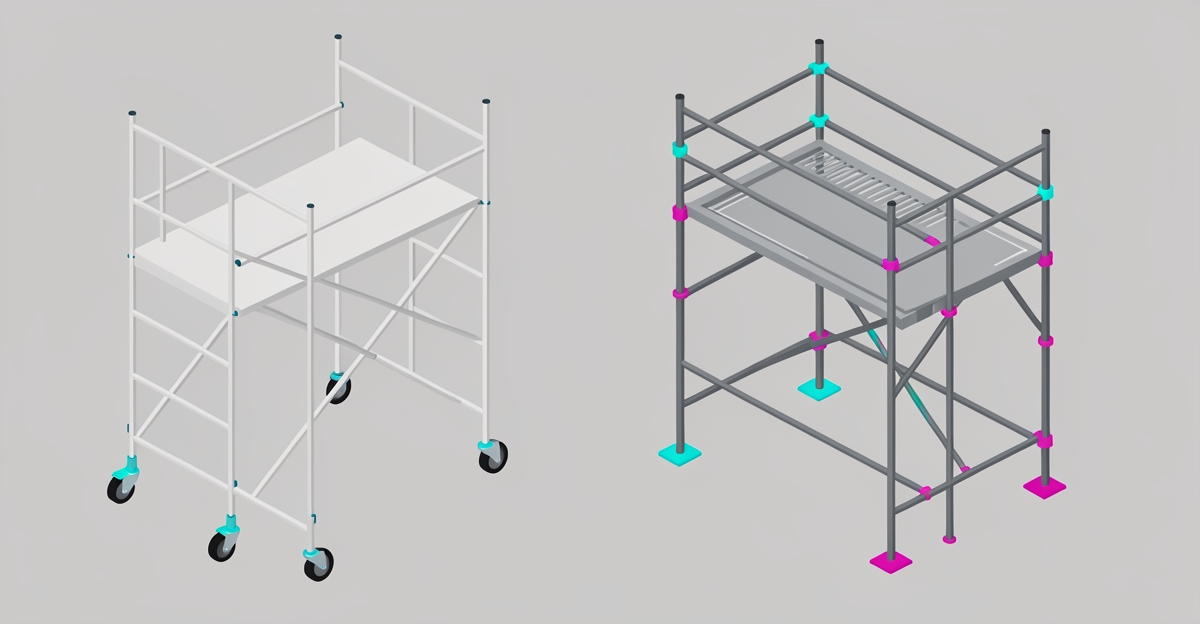
Residential projects tell a different story. Contractors gravitate toward aluminum scaffolding for its corrosion resistance and light weight, and mobile towers for rapid setup and teardown on short-duration jobs (Credence Research). Wood and bamboo, once common, are declining in regulated markets due to safety concerns (Fact.MR). Short-term rentals dominate here, reflecting the faster turnover of home repairs, remodels, and exterior maintenance.
- Commercial = system/steel scaffolding for load, duration, and OSHA compliance
- Residential = aluminum/mobile scaffolding for cost, portability, and quick assembly
- Rental models dominate both — 90% of contractors rent to avoid $150K–$500K ownership costs
- Digital platforms now cut engineering design time by 50–70% and reduce over-ordering
Understanding these distinctions isn't just technical — it's financial. Ordering commercial-grade steel for a residential job wastes budget; under-spec'ing a high-rise invites delays and liability. AI Business Sites helps scaffolding rental companies turn this expertise into a website that educates prospects automatically, so visitors get the right recommendation before they even request a quote. When your site answers "What do I need for a 12-story facade?" with sourced, project-specific guidance, you're not just informing — you're qualifying leads and building authority in the same interaction.
Why Rental Models Are the Smart Choice for Most Contractors
Why Rental Models Are the Smart Choice for Most Contractors
In the scaffolding industry, a paradigm shift is underway, with rental models gaining unprecedented traction. This trend is particularly pronounced in commercial projects, where medium-term rentals hold a 36.5% market share source. Contractors are increasingly opting for rentals to evade the substantial upfront costs associated with owning steel scaffolding, which can range from $150,000 to $500,000 source.
- Avoidance of Capital Outlay: The initial investment in steel scaffolding is prohibitively expensive for most contractors, making rentals an attractive alternative.
- Reduced Logistics Burden: Rentals eliminate the need for storage, maintenance, and transportation of scaffolding equipment, significantly lowering operational overheads.
Digital platforms are revolutionizing the scaffolding rental landscape by reducing engineering design time by 50–70% source. These platforms minimize over-ordering by providing precise quantity takeoffs and erection sequence planning, ensuring contractors receive exactly what they need, when they need it.
| Benefit | Description |
|---|---|
| Cost Efficiency | Avoid $150K–$500K upfront costs for steel scaffolding |
| Reduced Logistics | No storage, maintenance, or transportation hassles |
| Digital Precision | Platforms reduce design time by 50–70%, minimizing over-ordering |
| Compliance | Rental providers often offer OSHA-compliant solutions, reducing liability |
Given the market trends and the benefits outlined, contractors can make informed decisions by: 1. Assessing Project Scale: For commercial projects, prioritize system scaffolding for its modularity and compliance. Residential projects benefit more from aluminum or mobile scaffolding. 2. Leveraging Digital Tools: Utilize platforms that integrate BIM-based design for efficient planning. 3. Prioritizing Safety and Compliance: Opt for rental providers that offer OSHA-compliant scaffolding to reduce legal and financial risks.
By embracing rental models, contractors can enhance operational efficiency, reduce costs, and ensure compliance with regulatory standards, ultimately leading to more successful project outcomes.
Further Reading on Scaffolding Selection for Your Projects: Industry Research on Scaffolding Types
Local business: doing this the old way?
One system replaces the whole pile.
All of it — the website, the follow-up, the content, the leads — built and run for you for $1,497 + $497/mo. Month-to-month, and you own everything.
See what your build includesHow to Use Safety Compliance and Regional Trends to Guide Your Selection
Choosing the right scaffolding isn't just about height or material—it's about aligning with safety regulations and regional market shifts that directly impact project timelines and liability. OSHA reports approximately 4,500 scaffolding-related injuries and 60 fatalities annually, making compliance a non-negotiable factor in equipment selection. Contractors who partner with rental providers offering engineering certifications, load calculations, and on-site supervision significantly reduce on-site risks and regulatory exposure. This is especially critical in commercial projects where system scaffolding dominates due to its modularity and adherence to strict load-bearing standards. In North America, supported scaffolding remains the preferred choice, driven by OSHA’s enforcement of certified systems for high-rise and infrastructure work. Meanwhile, regional trends reveal diverging preferences: the Asia-Pacific region is experiencing rapid growth in steel system scaffolding adoption, fueled by urbanization and large-scale housing initiatives like India’s 10 million affordable housing units, where safety concerns are accelerating the shift away from bamboo. In contrast, Europe’s demand is increasingly shaped by energy efficiency mandates, particularly in countries like Germany, where facade insulation and window replacement projects favor lightweight, modular aluminum systems for ease of use and corrosion resistance. These regional patterns aren’t just market fluctuations—they signal where compliance requirements and material performance intersect to dictate optimal scaffolding choices. For contractors, recognizing these trends means anticipating not only what equipment is available locally but also what safety documentation and engineering support will be expected on-site. Rental providers that integrate digital tools—such as BIM-integrated design platforms—are gaining an edge by reducing engineering design time by 50–70% and minimizing over-ordering through precise quantity takeoffs. This transforms scaffolding rental from a simple equipment transaction into a compliance-driven service partnership. By leveraging these insights, contractors avoid costly mismatches between equipment and project demands while positioning themselves to meet both regulatory and operational expectations. For businesses looking to capture high-intent leads, embedding this level of regulatory and regional awareness into a website assistant enables instant, informed guidance—turning technical questions into qualified rental inquiries without requiring deep expertise from the visitor. This approach builds trust early in the decision process, especially when the assistant can reference OSHA statistics, regional growth rates, or material-specific advantages with source-backed clarity. Ultimately, scaffolding selection becomes less about guesswork and more about strategic alignment with safety, location, and project scope—factors that a smart website tool can help communicate consistently and accurately at scale.
Frequently Asked Questions
What type of scaffolding is best for a two-story home repair?
Why do commercial projects typically use steel scaffolding instead of aluminum?
Is it more cost-effective to rent or buy scaffolding for a commercial project?
How do digital platforms improve scaffolding rental decisions?
What safety risks should I consider when choosing scaffolding for a high-rise facade?
Are wood or bamboo scaffolds still used in residential projects today?
Build Smarter, Not Harder: Let Your Website Do the Heavy Lifting
Choosing the right scaffolding isn't just about materials or height—it's about matching your equipment to your project's scale, safety needs, and regional demands. Commercial jobs call for system or steel scaffolding to handle load and duration, while residential projects thrive with lightweight aluminum or mobile systems for speed and cost savings. With 90% of contractors opting to rent to avoid steep ownership costs and digital tools cutting design time by up to 70%, the smart move is clear: partner with a rental provider that offers compliance, precision, and support. When your website instantly answers these technical questions with source-backed guidance, you're not just informing visitors—you're turning curiosity into qualified leads. Ready to let your site work as hard as you do? See how AI Business Sites helps contractors capture high-intent inquiries by educating prospects before they even ask for a quote.
FOR local businesss — BUILT AND RUN BY US
Your website. Your content. Your leads. Your data.
$500 starts your build. Seven days later it's live — chat, booking, follow-up, and your Google presence all set up. Then we run it, every month. You do the work you actually get paid for.