
Key facts
- 33% of diners abandoned QSR orders in 2024 due to lack of personalization according to Monetate.
- Hyper-targeted dayparting can boost QSR sales by up to 38% as found by Monetate.
- 83% of consumers are receptive to personalized messages, yet only 44% find current offers relevant per QSR Magazine.
- Only 16.13% of organizations consider themselves 'data-driven' reported by QSR Magazine.
- 70% of QSR operators now send personalized offers, indicating a shift toward hyper-local marketing as noted by QSR Magazine.
- AI-driven menu platforms can categorize items into 'Stars', 'Plow Horses', 'Puzzles', and 'Dogs' based on real-time demand according to Algonomy.
- Top-performing QSRs achieve 62% monthly loyalty member retention and acquire 110 new members per store monthly as reported by QSR Magazine.
WANT RESULTS LIKE THIS?
Imagine a system doing all of this for your local business — every day, without you.
We build local businesses a custom website with a team of AI behind it: every lead captured and followed up, new content published monthly,customers finding you on Google — live in 7 days.
- 85+ pages at launch
- Every lead followed up, automatically
- Your whole business on one screen
The Personalization Gap Costing QSRs Sales
The gap between what diners expect and what QSRs deliver is widening fast. 33% of diners abandoned an order in 2024 due to lack of personalization, up sharply from 21% just a year earlier source. Over two-thirds of customers now report frustration with irrelevant offers based on their past behavior, signaling that generic menus no longer meet the baseline for relevance source.
Location-based suggestions close this gap by turning neighborhood-level demand into real-time menu intelligence. When a website can surface "cheese fries in downtown Halifax" or "veggie burger near St. Margarets" because local search trends and order data confirm those items are trending in those areas, conversion follows relevance. Hyper-targeted dayparting powered by AI has been shown to boost sales by up to 38% source, and 83% of consumers say they're receptive to personalized messages source — yet only 44% find current offers relevant.
The disconnect creates a clear opening for QSRs that invest in location-aware digital experiences. A website built to analyze real-time local signals — search trends, weather, time of day, neighborhood order patterns — can dynamically prioritize the items most likely to convert in each area. This isn't theoretical: 70% of QSR operators now send personalized offers source, but most lack the infrastructure to make those offers hyper-local.
- Generic menus ignore neighborhood-level demand signals that drive purchase decisions
- Static content fails to reflect real-time trends like weather-driven cravings or lunch-vs-dinner preferences
- First-party order data combined with local search trends reveals microsegments — "Friday 5:30pm downtown Halifax regulars" — that generic personalization misses
- Only 16.13% of organizations consider themselves data-driven, leaving a wide competitive moat for early adopters source
AI Business Sites builds websites that close this gap by design — combining a location-aware architecture with an AI content engine that researches local search trends, generates neighborhood-specific pages, and automatically links them into topical clusters that Google rewards. The result is a site that doesn't just display a menu, but actively suggests the right items to the right visitors in the right places.
How AI-Powered Location Suggestions Boost QSR Sales
The frustration is real: 33% of diners abandoned an order in 2024 because the experience wasn't personalized — up from 21% just a year earlier source. A static website that shows the same menu to everyone leaves money on the table, especially when hyper-targeted dayparting and location-based personalization can boost sales by up to 38% source.
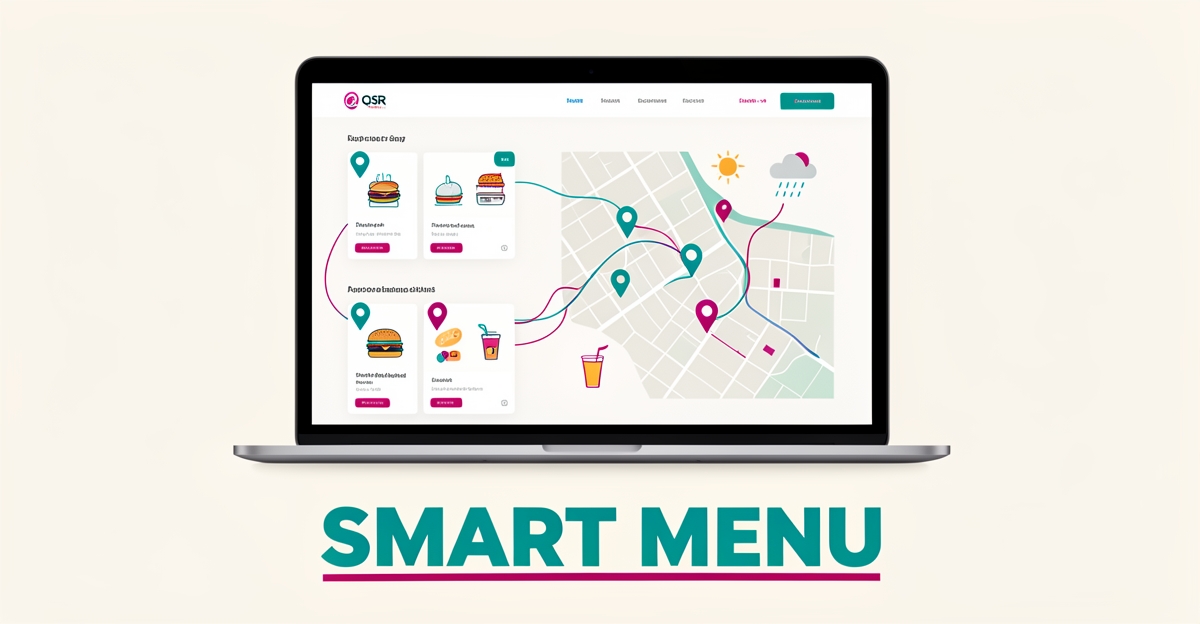
AI changes the equation by turning a website into an active sales tool. Instead of a generic brochure, the site analyzes real-time signals — local search trends, weather, time of day, and neighborhood preferences — to surface what people actually want right now. That means suggesting cheese fries in downtown Halifax on a Friday evening or a veggie burger near St. Margarets during a lunch rush, automatically.
The engine behind this works by combining first-party order data with third-party location insights to identify microsegments: customers who order spicy items after 5 p.m. in one neighborhood, plant-based buyers near a university campus in another. AI-driven menu platforms categorize items into "Stars," "Plow Horses," "Puzzles," and "Dogs" based on real-time demand and profitability, then recommend which items to promote where source.
- Real-time local search trends reveal what neighbors are craving right now
- Weather data triggers comfort-food or cold-drink suggestions automatically
- Time-of-day logic swaps breakfast for late-night without manual updates
- Neighborhood purchase history surfaces hyper-local favorites
AI Business Sites builds this intelligence directly into the website architecture — using Next.js and React for speed, schema markup for local SEO, and an AI content engine that generates location-specific pages and keeps internal linking optimized automatically. The result: a site that ranks for "best cheese fries near me" and converts that traffic by showing exactly what that searcher's neighborhood orders most.
Local business: doing this the old way?
One system replaces the whole pile.
All of it — the website, the follow-up, the content, the leads — built and run for you for $1,497 + $497/mo. Month-to-month, and you own everything.
See what your build includesBuilding Your Location-Aware QSR Website: Practical Steps
Building Your Location-Aware QSR Website: Practical Steps
In an era where 33% of diners abandon orders due to lack of personalization source, creating a QSR website that suggests popular menu items by location is crucial. Here’s how to leverage AI Business Sites’ platform to achieve this:
Design your website with Next.js and React for speed and mobile-first responsiveness. Implement schema markup for local businesses and structured data for service areas to boost local SEO. Modular content sections can be dynamically swapped based on visitor location, such as highlighting "Popular in Downtown Halifax" or "Best Veggie Burgers Near St. Margarets".
Use AI content engines to identify trending menu items by neighborhood (e.g., "cheese fries in downtown Halifax") via tools like Google Trends. Generate location-specific service pages (e.g., "Best Burgers in Downtown Halifax") and implement AI-driven menu suggestion widgets that update in real-time based on local search trends, weather, and time of day.
Combine first-party data (transactional/behavioral) from your built-in CRM with third-party location data to create microsegments (e.g., "Friday evening customers in downtown Halifax"). Use these to trigger personalized suggestions like, "Try our spicy cheese fries — a downtown Halifax favorite!"
Deploy AI-generated content for location-specific pages and automated internal linking to build topical authority. Ensure FAQ-rich content with schema markup to capture voice search opportunities (e.g., "What’s the best cheese fries near me?").
Configure Google Business Profile (GBP) with location-specific keywords and review management. Optimize Bing search profiles for broader discoverability. Automate review requests to enhance local search standing.
- Personalization Drives Sales: Up to 38% sales lift with hyper-targeted dayparting source.
- Data-Driven Approach: Only 16.13% of organizations are "data driven", presenting a competitive edge source.
- AI-Powered Efficiency: AI Business Sites’ platform handles leads, content, and local SEO automatically, ensuring your website runs itself.
By following these steps, your QSR website will not only attract more localized traffic but also provide a personalized experience that drives conversions and loyalty. Build a website that works for you, automatically suggesting popular menu items based on real-time neighborhood trends with AI Business Sites.
Frequently Asked Questions
Why is personalization crucial for QSR websites, and what's the impact of its lack?
How can location-based menu suggestions benefit QSR sales?
What role does AI play in optimizing QSR menu suggestions?
How prevalent is the use of personalized offers in QSRs, and what’s the consumer response?
What’s the current state of data-driven decision-making in QSRs?
How does AI Business Sites address the personalization gap for QSRs?
Turn Every Neighborhood Into Your Best-Selling Location
33% of diners walked away from an order last year because the experience felt generic—up sharply from just one year earlier source. That gap isn’t just a missed sale; it’s a missed opportunity to turn a website into a silent salesperson that speaks like a local. By building location-aware pages that spotlight what’s sizzling in each neighborhood—think “cheese fries in downtown Halifax” or “veggie burger near St. Margarets”—your site becomes the only menu that updates itself in real time. Combine first-party order data with neighborhood trends and weather cues, and you’re no longer guessing what to promote; you’re serving up the items most likely to convert right now. The tech stack that makes it possible—Next.js for speed, schema markup for local SEO, and an AI content engine that keeps pages fresh—is already part of every custom website we deliver. Start by auditing your current pages: if a visitor from another part of town sees the same menu as downtown locals, it’s time to let your site do the talking for you.
FOR local businesss — BUILT AND RUN BY US
Your website. Your content. Your leads. Your data.
$500 starts your build. Seven days later it's live — chat, booking, follow-up, and your Google presence all set up. Then we run it, every month. You do the work you actually get paid for.