
Key facts
- Over 76% of fitness website traffic comes from mobile devices according to industry benchmarks
- Non-responsive fitness sites see bounce rates increase by 67% on mobile per website design research
- Integrated booking systems boost conversions by 35% for fitness studios based on conversion rate studies
- Third-party booking redirects can slash conversion rates by up to 30% compared to direct website integration
- 88% of smartphone local searchers visit a fitness business within a week per local search behavior data
- 46% of all Google searches seek local information for services like fitness according to search trend analysis
- Fitness centers using solid SEO strategies gain up to 30% more leads in three months based on local SEO performance metrics
WANT RESULTS LIKE THIS?
Imagine a system doing all of this for your local business — every day, without you.
We build local businesses a custom website with a team of AI behind it: every lead captured and followed up, new content published monthly,customers finding you on Google — live in 7 days.
- 85+ pages at launch
- Every lead followed up, automatically
- Your whole business on one screen
Why Most Fitness Studio Websites Fail to Convert Mobile Searchers
The mobile reality for fitness studios is stark: more than three-quarters of their website visitors arrive on smartphones, yet many sites still treat mobile as an afterthought. When a fitness website isn't responsive, bounce rates jump by 67% as frustrated users abandon slow-loading pages or awkward layouts. This isn't just a design flaw—it's a direct leak in the lead pipeline for local studios competing for attention in crowded search results.
Consider what mobile searchers actually want: 87% are looking for class schedules, 85% need location or hours, and 92% check pricing before deciding. If that information is buried, loads slowly, or requires pinching and zooming to read, visitors leave—and often never return. Sites taking over three seconds to load on mobile lose 7% of conversions for every additional delay, turning interest into missed opportunities before a single class is booked.
The cost of ignoring mobile experience extends beyond bounce rates. Third-party booking redirects, common on non-optimized sites, can slash conversion rates by up to 30% compared to integrated systems that keep users on the studio’s own website. For fitness businesses relying on local discovery—where 88% of smartphone searchers visit a related business within a week—every mobile misstep hands potential members to competitors with faster, clearer, and more trustworthy online presences. AI Business Sites builds websites that meet mobile users where they are, turning traffic into booked classes through speed, clarity, and seamless access to real-time availability.
How Real-Time Class Syncing Increases Booking Conversions by 35%
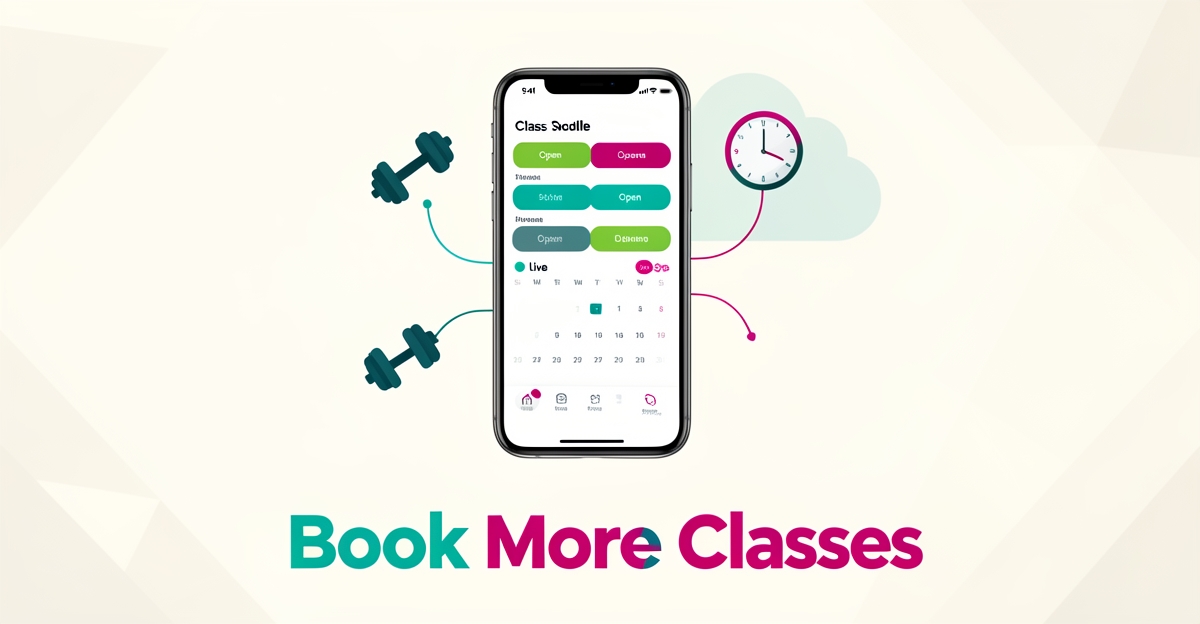
The difference between a visitor browsing your schedule and a member booking a spot often comes down to one thing: whether they can actually see what's open right now. When Sphinx CrossFit redesigned their website to sync directly with ZenPlanner's backend, they saw lead generation improve because class availability updated in real time — no stale data, no manual updates, no friction. CrossFit Fort Worth East took the same approach, using ZenPlanner and SugarWOD to keep schedules accurate across every platform their members use.
Research confirms this isn't anecdotal. Integrated booking systems increase conversions by 35%, while sending prospects to third-party platforms can reduce conversion rates by up to 30%. The reason is simple: every redirect, every extra click, every moment of uncertainty gives a potential member a reason to leave. With over 76% of fitness website traffic coming from mobile devices, where attention spans are shortest, that friction is fatal.
The solution is direct API integration between your website and your gym management software — whether that's ZenPlanner, Mindbody, or another provider. Instead of embedding an iframe or linking out to a booking portal, your site pulls live class data: open spots, waitlist status, instructor changes, cancellations. That data populates your schedule pages, your location pages, and even your structured data markup so Google can show real-time availability in search results.
- Live spot counts update automatically when someone books or cancels
- Waitlist status reflects in real time — no manual refresh needed
- Instructor changes and cancellations propagate instantly across all pages
- Multi-location studios show accurate availability for every studio from one dashboard
- Schema markup feeds Google rich snippets with current class data
This is exactly the architecture AI Business Sites builds for fitness studios: a custom Next.js website that consumes your management software's API directly, displaying real-time availability on every location and class page. The same automation that keeps your schedules accurate also feeds fresh content to your site monthly — new class types, seasonal programs, instructor spotlights — signaling to Google that your business is active and relevant. When your website runs on live data, you stop losing bookings to outdated information and start converting the 88% of mobile searchers who visit a business within a week of searching.
Local business: doing this the old way?
One system replaces the whole pile.
All of it — the website, the follow-up, the content, the leads — built and run for you for $1,497 + $497/mo. Month-to-month, and you own everything.
See what your build includesBuilding Location-Specific Pages That Rank in Local Search and Show Live Schedules
When 70% of gym members find their facility through local search, your studio's location pages aren't just informational — they're your primary acquisition channel. Research shows that 46% of all Google searches seek local information, and 88% of smartphone local searchers visit a related business within a week. Each studio location needs its own dedicated page built to rank independently and convert visitors who are already nearby and ready to book.
A high-performing location page starts with consistent NAP data (Name, Address, Phone) matching your Google Business Profile exactly. Embed a map with one-tap directions, display real-time class availability for that specific studio, and feature trainer bios and member testimonials from that neighborhood. Structured data is the framework search engines use to understand your business — implement LocalBusiness schema for the studio and Event schema for each class so schedules, capacity, and amenities appear in rich snippets and voice search results.
- NAP consistency across website, GBP, and all citations
- Embedded map with driving directions and transit options
- Live class schedule synced from management software
- Location-specific trainer profiles and member success stories
- LocalBusiness and Event schema markup on every page
For multi-location studios, centralized data sync is what keeps every page accurate without manual updates. Sphinx CrossFit improved lead generation by redesigning their website to sync with ZenPlanner's backend for real-time class availability, while CrossFit Fort Worth East drives member engagement by ensuring schedules stay accurate across all platforms. AI Business Sites builds this architecture into every custom website — your location pages pull live data from a single source, so a schedule change at one studio updates everywhere instantly. This approach supports the content freshness Google rewards: fitness centers using solid SEO strategies report up to 30% more leads within three months.
Frequently Asked Questions
Why do most fitness studio websites fail to convert mobile searchers?
What information do mobile searchers primarily look for on a fitness studio website?
How does integrating real-time class syncing impact booking conversions?
Why are location-specific pages crucial for local search and conversion?
What is the impact of slow-loading websites on conversions?
How often should fitness studios update their website content for SEO?
Key Takeaways
{ "title": "Convert More Members with a Future-Proof Fitness Studio Website", "content": "A well-crafted fitness studio website is no longer a nicety, but a necessity for converting mobile-savvy searchers into paying members. By prioritizing mobile responsiveness, integrating real-time class availab
FOR local businesss — BUILT AND RUN BY US
Your website. Your content. Your leads. Your data.
$500 starts your build. Seven days later it's live — chat, booking, follow-up, and your Google presence all set up. Then we run it, every month. You do the work you actually get paid for.