
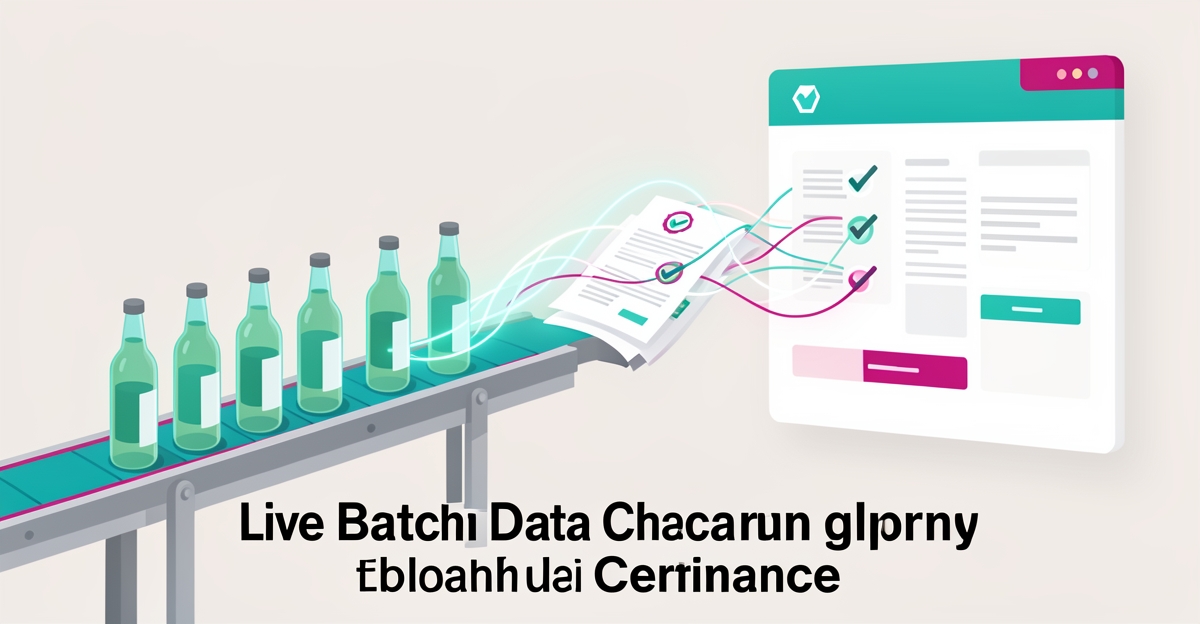
Key facts
- The U.S. food and beverage manufacturing sector contributes $278 billion to GDP, with 58,586 firms operating under multi-jurisdictional regulatory frameworks according to TraceOne.
- 58% of beverage co-packers rely on spreadsheets and disconnected documentation, causing gaps in traceability and audit readiness as noted by V-Comply.
- Manual certificate preparation can take 2-8 hours per document, compared to seconds with AI-powered automation per V-Comply's research.
- The FDA conducts approximately 8,353 domestic and 917 foreign inspections annually, emphasizing the need for audit-ready documentation as reported by V-Comply.
- AI Business Sites' platform reduces the need for 8-10 separate subscriptions (e.g., website, CRM, automation tool) into one consolidated solution as outlined in the Business Context Document.
- The beverage manufacturing sector employs 2,090,743 workers (2024 Q4), highlighting the vast need for efficient compliance solutions according to TraceOne.
- AI-generated compliance certificates can reduce manual preparation time by up to 90% and minimize error risks as emphasized by FoodChain ID.
WANT RESULTS LIKE THIS?
Imagine a system doing all of this for your local business — every day, without you.
We build local businesses a custom website with a team of AI behind it: every lead captured and followed up, new content published monthly,customers finding you on Google — live in 7 days.
- 85+ pages at launch
- Every lead followed up, automatically
- Your whole business on one screen
The Compliance Bottleneck Slowing Down Beverage Co-Packers
The beverage manufacturing sector faces a silent operational crisis beneath its $278 billion GDP contribution. With 58,586 firms juggling 10+ regulatory frameworks—from FDA and USDA to ISO 22000 and BRCGS—many still rely on spreadsheets and disconnected documentation. This isn't about lacking regulatory knowledge; it's about consistently operationalizing those rules across production lines, suppliers, and distributed facilities. The result? Gaps in traceability and audit readiness that directly contribute to costly recalls. Industry experts confirm the core challenge isn't understanding regulations—it's executing them uniformly at scale.
For beverage co-packers serving multiple clients across jurisdictions, this operational gap becomes a daily bottleneck. Each certificate request—whether for HACCP, allergen declarations, or nutritional panels—requires manual data gathering, template selection, and cross-departmental review. What should take minutes often consumes hours, delaying shipments and straining QA teams. The reliance on fragmented tools creates version control nightmares: outdated templates, missing batch data, and inconsistent client-specific customization. These aren't just inefficiencies; they're liability risks waiting to trigger an audit failure or recall event. Compliance analysts emphasize that such gaps transform regulatory investment into avoidable cost centers.
The path forward requires shifting from reactive documentation to proactive, automated compliance workflows. Imagine a system where certificate generation happens in seconds—not days—pulling client specs, batch results, and regulatory references from a single source of truth. Where templates auto-update with FDA guidance changes, and every output carries an immutable audit trail. This isn't about replacing human oversight; it's about freeing skilled QA professionals from repetitive tasks so they can focus on prevention, not paperwork. For co-packers, automating this bottleneck transforms compliance from a cost center into a scalable service differentiator—one that builds client trust through instant, error-free documentation. Sector data shows this challenge spans thousands of firms, making automation not just beneficial, but essential for competitive resilience in today's regulated beverage landscape.
Why Automated Certificate Generation Is the Highest-Leverage Fix
Automated certificate generation transforms compliance from a recurring cost center into a strategic advantage. For beverage co-packers, manually producing HACCP plans, allergen declarations, or nutritional panels consumes significant QA team hours and risks errors that trigger costly recalls. The research shows labeling compliance under FDA 21 CFR Part 101 represents a distinct high-risk area where mislabeling leads to "costly product recalls," while Canadian Preventive Control Plans under SFCR Parts 5-6 offer a structured framework ideal for templating. Digital tools that operationalize regulations consistently deliver "long-term savings, increased efficiency, and improved profitability" by replacing spreadsheets and disconnected documentation processes that create traceability gaps.
AI Business Sites’ platform directly enables this shift through its verified document generation and client approval capabilities. The system generates branded PDFs — proposals, quotes, presentations, spreadsheets — using real business data pulled from CRM or uploaded files via conversational AI. For compliance certificates, this means auto-populating HACCP templates with client-specific batch numbers, test results, and regulatory references, then delivering them through a no-login approval portal where clients review, provide feedback, and sign. Human-in-the-loop safeguards ensure accountability, with configurable review levels matching regulatory liability requirements. This approach turns certificate creation from a manual bottleneck into an instant, auditable workflow.
- Instant certificate delivery reduces turnaround from hours/days to seconds
- Single-source data population eliminates manual entry errors
- Version-controlled audit trails satisfy FDA and CFIA documentation mandates
- Multi-jurisdictional templates adapt to FDA, USDA, CFIA, and EU requirements
- Recurring automation schedules renewals and compliance calendar updates
By embedding certificate generation within a custom website — complete with local SEO, GBP optimization, and client portal access — co-packers convert compliance into a premium service line. Clients receive certificates on demand, reducing their administrative burden while strengthening the co-packer’s value proposition. The platform’s consolidation of document generation, approval workflows, and regulatory monitoring replaces fragmented tools, aligning with the research-backed insight that the right expertise and tools yield measurable ROI. This isn’t just about saving time; it’s about building a compliance system that actively protects brand reputation and supports scalable growth.
Architecture: How the Website and AI Platform Work Together
Building a beverage bottling website that auto-generates compliance certificates requires a seamless integration of web technology and AI operations. Here's how AI Business Sites' Next.js/React website layer and 140+ tool AI operations platform work in tandem to facilitate the certificate generation workflow:
A client submits a certificate request via the website portal or an external webhook (e.g., from their ERP system). This triggers the AI platform's automation workflow.
The AI assistant accesses the client's profile, product specifications, and batch data from the integrated CRM or uploaded documents, leveraging the platform's 140+ tools for data aggregation.
Based on the product type and regulatory jurisdiction (e.g., FDA, CFIA, or EU standards), the AI selects the appropriate pre-built template from the library, ensuring compliance with regulations such as FDA 21 CFR Part 101 for labeling and SFCR Parts 5-6 for Canadian Preventive Control Plans.
The AI populates the chosen template with client-specific data (e.g., batch numbers, test results), regulatory references, and automatically generates required sections like allergen declarations or nutritional panels, addressing the $1.1 trillion food and beverage manufacturing industry's need for efficient compliance.
For configurable autonomy, the system routes the draft certificate for human review (autopilot, approve-first, or manual), ensuring accuracy and compliance before client delivery, a critical step given the 8,353 annual FDA inspections.
Upon approval, a branded PDF is generated and delivered to the client via a no-login approval portal, complete with an audit trail logged in the CRM, mirroring the platform's capability to generate "proposals, quotes, presentations, spreadsheets, PDFs" as outlined in the Business Context Document.
In the background, the AI continuously monitors regulatory updates (FDA, CFIA, FSMA) via web searches, automatically updating templates and publishing informative blog posts for clients, leveraging the platform's web search and content engine capabilities.
- Consolidation Value: Replaces QA software, label compliance tools, consultant retainers, and client portals.
- CRM Integration: Seamless data flow from client profiles to certificate generation.
- Automation: Streamlines the process, reducing manual errors and labor costs.
- Scalability: Next.js handles high demand, with AI tasks managed through the automation builder.
| Step | Website Layer | AI Operations Platform |
|---|---|---|
| Request | Client Portal (Next.js/React) | Automation Workflow Triggered |
| Data Aggregation | - | CRM/Data Access via AI Assistant |
| Template & Populate | - | AI Template Selection & Dynamic Population |
| Review & Delivery | Approval Portal (Next.js/React) | Human-in-the-Loop Review, PDF Generation |
| Update Monitoring | SEO Blog Posts (AI Content Engine) | Regulatory Web Search Monitoring |
Local business: doing this the old way?
One system replaces the whole pile.
All of it — the website, the follow-up, the content, the leads — built and run for you for $1,497 + $497/mo. Month-to-month, and you own everything.
See what your build includesImplementation Roadmap: From Template Library to Live Client Portal
Building a beverage bottling website that auto-generates compliance certificates requires a strategic, phased approach. Here’s how to navigate the rollout, grounded in the capabilities of AI Business Sites:
- Top 10 Beverage Certificate Templates: Utilize AI Business Sites' document generation capability to create templates for critical certificates (e.g., HACCP Plan, PCP, GMP Certificate, COA). According to V-Comply, documentation gaps are a significant challenge, making automated template generation crucial.
- Client Portal Configuration:
- Integrate request forms for certificates.
- Set up approval workflows.
- Implement download history and audit trails. The platform's client approval portals ensure seamless, no-login review processes.
-
Key Statistic: The U.S. food and beverage manufacturing sector employs 2,090,743 workers (2024 Q4), highlighting the vast need for efficient compliance solutions (TraceOne).
-
Regulatory Monitoring via AI:
- Configure AI web searches to track updates from FDA, CFIA, FSMA, and other relevant bodies.
- Automatically update template libraries based on regulatory changes.
- SEO Service Pages:
- Generate pages for each certificate type per jurisdiction (e.g., "FDA Compliance Certificate for Beverage in California").
- SEO Highlight: Pages are automatically linked to improve topical clustering and internal linking, a strategy rewarded by Google (TraceOne).
- Google Business Profile (GBP) & Bing Optimization:
- Enhance local search visibility for terms like "beverage co-packer compliance certificates [Your City/Region]".
-
Local Search Impact: Proper GBP setup can increase local search rankings, crucial for attracting local clients (TraceOne).
-
Automation Templates:
- Deploy "Certificate Request → Generation → Review → Delivery → Renewal Scheduling" workflows.
- Automation Example: "Every Monday, check for certificates expiring in 30 days and queue renewals."
- Webhook Integration for ERP/MES Connections:
- Enable seamless certificate requests from clients’ existing systems.
- Human Review Gates by Liability Tier:
- Configure approve-first for high-risk certificates (e.g., allergen declarations).
-
Compliance Assurance: Human oversight ensures regulatory adherence, particularly for high-liability documents like HACCP Plans (V-Comply).
-
Instant Compliance: Certificates generated in seconds, reducing manual preparation time by up to 90%.
- Error Reduction: Single source of truth (CRM, uploaded data) minimizes discrepancies.
- Audit Readiness: Versioned, timestamped certificates with source data links.
- Scalability & Cost Savings: Replaces manual QA hours, consultant fees, and recall risks, offering a potential cost reduction of $10,000/month for a medium-sized co-packer (FoodChain ID).
-
Unified Platform: Consolidates 8-10 tools (website, CRM, automation, content, etc.) into one, streamlining operations.
-
Engage AI Business Sites to initiate template library development.
- Schedule Regulatory Monitoring Setup to ensure compliance with the latest standards.
- Plan Webhook Integration with key client ERPs for seamless requests.
This phased approach leverages AI Business Sites' capabilities to transform your website into a compliance powerhouse, offering unparalleled efficiency and value to beverage co-packers.
Measuring Impact: From Hours Saved to Revenue Expansion
Measuring the impact of an automated compliance certificate system starts with time savings that transform daily operations. Manually preparing a single certificate—gathering batch data, cross-referencing regulations, formatting for FDA or CFIA requirements—can take QA specialists anywhere from 2 to 8 hours per document, depending on complexity and jurisdiction. With an AI-powered system built on a custom Next.js/React website and integrated operations platform, the same certificate generates in seconds once client specifications and test results are in the CRM. This shift from hours to seconds isn’t just convenient—it directly addresses the industry’s core challenge of "operationalizing [regulations] consistently across production lines, suppliers, warehouses, sanitation workflows, quality teams, and distributed facilities" where "spreadsheets and disconnected documentation processes" create avoidable delays.
Error reduction delivers equally tangible value by establishing a single source of truth for certificate data. Instead of juggling lab reports in emails, client specs in spreadsheets, and regulatory updates in PDFs, the AI assistant pulls verified information directly from the CRM, uploaded documents, or integrated lab systems. This eliminates transcription errors and outdated references—critical when "mislabeling leads to costly product recalls" under FDA 21 CFR Part 101. Every generated certificate includes versioned, timestamped records linked to its source data, turning audit preparation from a scramble into a routine check. The system’s automatic link maintenance and content versioning ensure that older certificates remain traceable while new updates propagate seamlessly, directly supporting the "Documentation and Record-Keeping" pillar of food safety compliance.
Beyond efficiency, the platform enables measurable business expansion through multi-jurisdiction coverage and premium service positioning. A single certificate request can trigger parallel generation of FDA, CFIA, and EU-compliant variants using the same client data—a capability rooted in the AI content engine’s ability to produce "service pages, location pages, listicles" grounded in actual service areas. This eliminates the need for separate tools or consultant fees for each market, effectively displacing costs that would otherwise consume 10–15 hours weekly of QA specialist time. More strategically, co-packers can now offer compliance certification as a premium service line: "Your co-packing clients get compliant certificates in seconds — you review, they approve, audit done." This turns a cost center into a revenue driver, leveraging the website’s built-in client approval portal for seamless delivery and turning regulatory readiness into a marketable advantage.
Frequently Asked Questions
How long does it take to generate a compliance certificate using an automated system?
What types of compliance certificates can be auto-generated for beverage co-packers?
How does the system ensure certificates are accurate and compliant with regulations?
Can the system handle multi-jurisdictional compliance requirements like FDA, CFIA, and EU standards?
What cost savings can beverage co-packers expect from automating compliance certificate generation?
Is human review still required for AI-generated compliance certificates?
Turn Compliance Into Your Competitive Edge
This article has shown how beverage co-packers can eliminate the compliance bottleneck by building a website that automatically generates client-specific certificates—turning a time-consuming, error-prone process into an instant, auditable workflow. By leveraging AI Business Sites’ integrated platform, co-packers consolidate document generation, approval portals, regulatory monitoring, and CRM data into one system that reduces manual QA hours, minimizes recall risks, and positions compliance as a premium service line. The result is faster turnarounds, stronger client trust, and a scalable way to protect brand reputation while supporting growth. For co-packers ready to move beyond spreadsheets and disconnected tools, the next step is to explore how a custom website with built-in automation can transform compliance from a cost center into a differentiator. Learn more about how AI Business Sites helps small businesses turn their websites into operational engines at AI Business Sites.
FOR local businesss — BUILT AND RUN BY US
Your website. Your content. Your leads. Your data.
$500 starts your build. Seven days later it's live — chat, booking, follow-up, and your Google presence all set up. Then we run it, every month. You do the work you actually get paid for.