
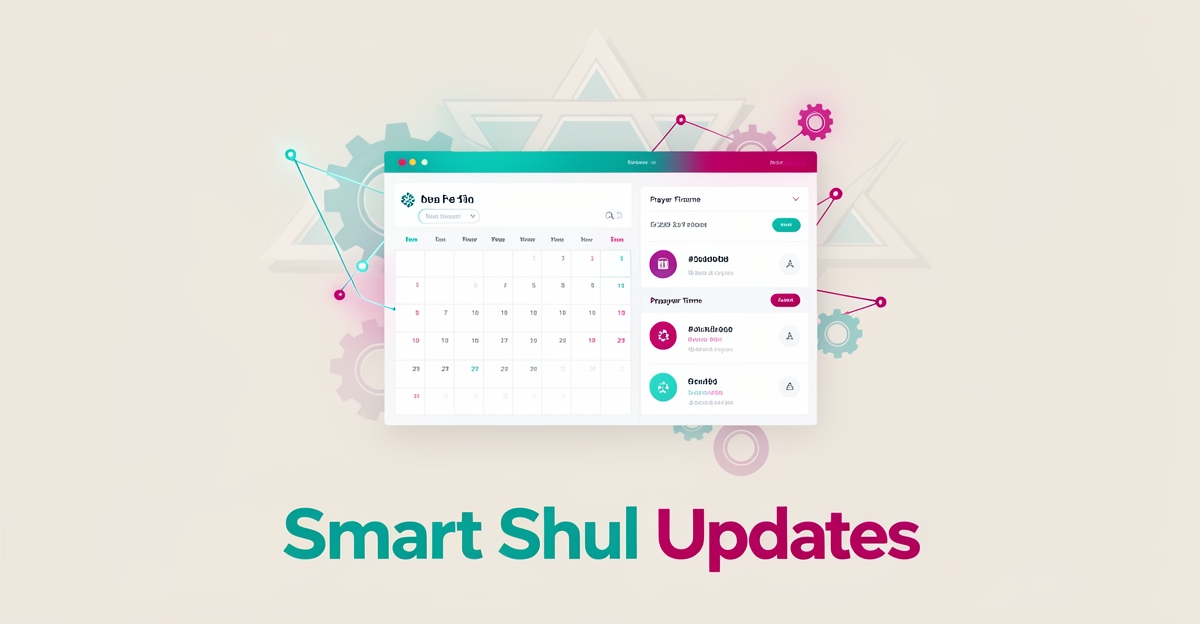
Key facts
- 66% of church staff now use AI tools regularly for content creation and administrative tasks according to 2024 research
- 33% of churches report actively using AI tools, primarily for content creation and graphic design per national survey data
- 83% of faith leaders express ethical concerns about AI, including data privacy and message integrity reveals Religion Unplugged research
- 80% of non-Arabic-speaking Muslims use AI tools like Tarteel for linguistic support during worship shows TIME reporting
- AI analyzed 4,400 synagogue sermons across 34 congregations, finding 66% addressed Israel post-October 7 per JTA coverage
- 78% of church leaders say technology makes ministry easier when integrated into community life notes Religion Unplugged
- Tarteel's AI platform logged 6 million hours of usage across 180+ countries during Ramadan 2026 demonstrating scale
WANT RESULTS LIKE THIS?
Imagine a system doing all of this for your local business — every day, without you.
We build local businesses a custom website with a team of AI behind it: every lead captured and followed up, new content published monthly,customers finding you on Google — live in 7 days.
- 85+ pages at launch
- Every lead followed up, automatically
- Your whole business on one screen
Why Your Synagogue Website Feels Outdated (And What It’s Costing You)
Your synagogue’s website might look polished, but if it still relies on someone manually updating prayer times, holiday schedules, and event listings every week, it’s quietly costing you more than you realize. Outdated or incorrect information doesn’t just frustrate members—it creates real operational drag, chips away at trust, and drains staff energy that could be spent on higher-value work. The problem isn’t just about appearances; it’s about lost engagement, missed opportunities, and even burnout in small teams.
More than a third of faith leaders are already experimenting with AI tools to automate routine tasks, not because they’re chasing trends, but because they’re drowning in manual work. One-third of churches now report using AI tools, primarily for content creation and administrative tasks. The same pressures squeeze synagogues: rabbis and administrators spend hours every week formatting calendars, rewriting holiday explanations, and chasing down last-minute event changes. Every minute spent on these repetitive updates is a minute not spent building community, teaching Torah, or connecting with members.
While some worry AI might feel impersonal, the real risk is the status quo. Staff burnout from manual updates leads to errors, delays, and inconsistent communication—factors that quietly erode member trust. Sixty-six percent of church staff now use AI tools regularly, not to replace human judgment, but to eliminate the tedium that slows down mission-critical work. For synagogues, that means freeing rabbinic and administrative teams from the grind of updating prayer times, candle-lighting schedules, and event listings by hand.
The costs of clinging to manual updates go beyond irritation. Confused members may skip services or events they think are canceled. Frustrated visitors might not return after seeing outdated information on your site. And behind the scenes, staff juggling spreadsheets and emails instead of deeper, more meaningful work are the ones who eventually burn out—which is exactly what you hired them to avoid.
If your website still feels like a static bulletin board, it’s silently undermining the very community you’re trying to serve.
The AI Solution: Automate Prayer Times, Holidays, and Events in Real Time
Synagogues can now leverage AI to dynamically generate accurate, culturally sensitive content for prayer schedules, holidays, and community events, streamlining administrative tasks and ensuring members always have access to the right information. 66% of church staff already use AI tools for content creation, a trend synagogues can adopt to reduce manual updates and improve engagement source.
-
Integration with Jewish Calendar APIs and Geolocation Data: AI can integrate with Hebcal or Chabad.org for accurate holiday calendars and MyZmanim for geolocation-based prayer times, ensuring real-time updates. For example, a synagogue in New York can auto-generate Shabbat candle-lighting times adjusted for the local timezone.
-
Human-in-the-Loop Review for Religious Accuracy: A rabbi or designated staff member reviews all AI-generated content (e.g., prayer time explanations, holiday summaries) before publication to address ethical concerns, such as ensuring AI does not issue halachic rulings. This process mirrors how 83% of church leaders emphasize the need for human oversight to maintain message integrity source.
-
Multilingual Support for Diverse Congregations: AI can auto-translate content into multiple languages (e.g., Hebrew, English, Spanish), serving diverse communities effectively, similar to how 80% of non-Arabic-speaking Muslims use AI for linguistic support source.
- Accuracy and Cultural Sensitivity: Train AI on authoritative Jewish sources and use prompt engineering to correctly identify liturgical phrases, avoiding misclassifications like "Shabbat shalom" source.
- Ethical Considerations: Clearly disclaim AI as a tool, not a halachic authority, and ensure human review to mitigate risks, as emphasized by Shé Langley who notes, "AI is a tool, not a voice" source.
- Technical Feasibility: Leverage workflow automation (e.g., Make.com, Zapier) to integrate with existing synagogue platforms (e.g., Google Calendar), streamlining updates and reducing staff workload, a strategy 78% of church leaders find effective for ministry ease source.
By adopting this AI-driven approach, synagogues can transform their websites into dynamic, self-updating platforms that reflect real-time changes, reducing administrative burdens while enhancing member engagement and trust. AI Business Sites, with its expertise in building websites that "run themselves," can guide synagogues in seamlessly integrating these AI solutions, ensuring a harmonious blend of technology and tradition.
Step-by-Step: Set Up AI Content Automation for Your Synagogue Website
Setting up AI content automation for your synagogue website doesn’t require deep tech expertise—just the right tools, clear workflows, and thoughtful integration. Start by choosing systems that align with your priorities: multilingual support, real-time accuracy, and rabbinic oversight. The goal isn’t just automation—it’s ensuring members always see the correct prayer times, holiday schedules, and event details without lifting a finger.
Phase 1: Choose Your Tools Select platforms that handle Jewish calendars, geolocation, and translations seamlessly. The Hebcal API is a top pick for accurate Jewish holiday and parshat hashavua data, while MyZmanim adjusts prayer times by location with precision. For workflow automation, Make.com (formerly Integromat) lets you connect these APIs to your website’s backend without coding. If your synagogue serves a diverse community, pair these tools with a translation API like Google Translate to auto-update event descriptions in Hebrew, Spanish, Russian, or other languages your members speak.
Phase 2: Integrate Systems for Real-Time Updates Link your chosen APIs to your synagogue’s calendar and website CMS. For example:
- Prayer times: Pull data from MyZmanim into your website’s event calendar, ensuring accuracy for candle-lighting times, Shabbat schedules, and zmanim.
- Holidays: Use Hebcal’s API to auto-populate holiday observances, including erev and yom tov details, with clear disclaimers that AI sources halachic data from authoritative Jewish calendars.
- Events: Set up RSS feeds or email parsing (via Make.com) to auto-import rabbinic announcements from your local Vaad or the Rabbinical Council of America, then push updates to Google Calendar, Mailchimp, or your website’s event listings.
Phase 3: Build Guardrails for Accuracy and Trust AI shines with repetitive tasks but requires human oversight to avoid errors. Assign a rabbi or designated staff member to review AI-generated content before it goes live, especially for culturally sensitive material like prayer time explanations or holiday summaries. Add a simple disclaimer—such as “Prayer times are provided for convenience; final halachic guidance should come from your rabbi”—to manage expectations. For multilingual content, have a native speaker spot-check translations to ensure cultural and linguistic nuance isn’t lost.
Why This Works for Synagogues
- 66% of faith leaders already use AI for content creation, proving the approach is proven and scalable (Exponential.org).
- Automation reduces the risk of outdated or incorrect information, which can erode member trust—critical for communities where accuracy matters deeply.
- A streamlined system like this frees your team from manual updates, letting them focus on community building instead of administrative busywork.
Local business: doing this the old way?
One system replaces the whole pile.
All of it — the website, the follow-up, the content, the leads — built and run for you for $1,497 + $497/mo. Month-to-month, and you own everything.
See what your build includesBeyond the Calendar: AI Use Cases That Save Staff Hours Every Week
Beyond the Calendar: AI Use Cases That Save Staff Hours Every Week
Synagogues can unlock the full potential of AI by leveraging it beyond dynamic prayer time and holiday calendar updates. By integrating AI into their workflow, staff can save hours weekly on repetitive tasks, enhance member engagement, and ensure a more streamlined, culturally sensitive experience.
1. Repurposing Rabbinic Announcements into Engaging Content AI can transform rabbinic announcements, sermon transcripts, and past event summaries into blog posts, social media updates, and newsletter sections. For instance, a sermon on the weekly parsha can be repurposed into a blog post, social media series, and newsletter highlight, reducing content creation time by up to 70%. According to industry research, content creation is the top AI use case for faith communities, with 66% of church staff already leveraging AI for similar purposes.
2. Auto-Translation for Diverse Congregations To cater to diverse linguistic needs, AI can auto-translate prayer times, holiday calendars, and event listings into multiple languages (e.g., Hebrew, English, Spanish, Russian). This approach, inspired by Tarteel’s success in bridging linguistic gaps for 80% of non-Arabic-speaking Muslims, ensures inclusivity and reduces manual translation efforts.
3. Automating Event Promotions with Workflow Integration By integrating AI with existing platforms (e.g., Make.com, Zapier), synagogues can automatically populate calendars with events from rabbinic announcements or RSS feeds, sending auto-notifications to members. This workflow mirrors the efficiency seen in churches using AI for administrative automation, freeing staff to focus on community building.
Key Benefits of AI Consolidation for Synagogues:
- Reduced Administrative Burden: AI handles updates, translations, and content creation.
- Enhanced Member Experience: Real-time, accurate, and inclusive information across languages.
- Streamlined Toolset: Replaces multiple subscriptions with a unified AI-driven solution, as seen with AI Business Sites' holistic approach.
By embracing these AI use cases, synagogues can not only keep up with the demands of a dynamic community calendar but also elevate their overall operational efficiency and member satisfaction, all while ensuring the cultural and religious accuracy that their community deserves.
Ethics and Trust: How to Use AI Without Losing the Human Element
Ethics and Trust: How to Use AI Without Losing the Human Element
As synagogues adopt AI to auto-update prayer times and events, common ethical concerns emerge: data privacy, message integrity, and the need for human oversight. 66% of church staff already use AI tools, but 83% of leaders express ethical concerns, highlighting the need for balanced implementation (https://exponential.org/7-insights-on-how-churches-are-adopting-ai-in-2024/, https://religionunplugged.com/news/us-churches-embrace-technology-but-move-cautiously-amid-ai-concerns).
Clearly label AI-generated content to manage expectations. For example, a disclaimer might read: "This prayer time schedule was generated by AI and reviewed by our rabbinic staff for accuracy." This approach, inspired by Shé Langley’s emphasis on AI as a tool, not a voice, ensures members understand the role of automation source.
Establish a human-in-the-loop process where AI-generated content (e.g., holiday explanations, prayer time adjustments) is reviewed by a rabbi or designated staff before publication. This mitigates the risk of AI misclassifying liturgical phrases or providing inaccurate information, as seen in a study where ChatGPT initially misinterpreted "Shabbat shalom" greetings source.
Given 80%+ concern over data privacy among faith leaders, ensure AI systems handling member data adhere to stringent security protocols. AI Business Sites’ privacy-first analytics can serve as a model, focusing on protection without compromising functionality source.
- Implement AI with Clear Disclaimers: Label AI-generated content to maintain transparency.
- Mandate Human Oversight: Ensure rabbinic review for all AI-generated religious or event content.
- Prioritize Data Security: Adopt privacy-first practices to safeguard member information.
By balancing AI’s efficiency with human oversight and transparency, synagogues can leverage technology to enhance community engagement while preserving the integrity of their religious practices. As seen with Tarteel’s success in bridging linguistic gaps for Muslims, AI can similarly support diverse synagogue communities without eroding trust source.
Frequently Asked Questions
Why should my synagogue switch from manual updates to AI for prayer times and events?
How does AI ensure the cultural and religious accuracy of prayer times and holidays?
Can AI handle multilingual support for diverse synagogue communities?
What are the key benefits of using AI for synagogue operations beyond calendar updates?
How do synagogues address ethical concerns, like AI replacing human judgment?
Is integrating AI with existing synagogue platforms technically feasible?
Your Synagogue Website Can Run Itself: A Smarter Way to Serve Your Community
Managing a synagogue website shouldn’t feel like a weekly scramble to update prayer times while your team wonders why no one’s showing up for events they thought were canceled. With AI, your website can keep itself updated in real time, so members always see correct candle-lighting times, holiday schedules, and event details—without draining staff energy on repetitive tasks. The 66% of faith leaders already using AI for content creation aren’t chasing trends; they’re cutting through the noise of manual updates that erode trust and burn out small teams. For synagogues, that means freeing rabbinic and administrative staff to focus on what matters most: building community, teaching Torah, and connecting with members. The tech stack is simpler than you think—just smart integrations with Jewish calendar APIs like Hebcal, geolocation-based prayer times from MyZmanim, and workflow automation to handle the heavy lifting. The result? A website that feels alive, a community that stays informed, and a team that finally has time to lead. Ready to see what this looks like for your synagogue? Start by mapping your current calendar updates and identifying one task AI could handle—then let technology do the rest.
FOR local businesss — BUILT AND RUN BY US
Your website. Your content. Your leads. Your data.
$500 starts your build. Seven days later it's live — chat, booking, follow-up, and your Google presence all set up. Then we run it, every month. You do the work you actually get paid for.