
Key facts
- 35% of diners want smart menus that remember past customizations according to industry research.
- 29% of diners prefer menus tailored to personal preferences but won’t configure them manually reported by Tillster.
- AI-powered personalization at IHOP boosted online sales by 20% and suggestion conversions by 15% per documented case study.
- 82% of restaurants plan to increase AI spending to solve personalization challenges found in Tillster research.
- A QSR chain saw a 70% increase in net revenue per customer and 4x marketing ROI via AI personalization testing.
- First-time sushi diners often walk out when menus feel overwhelming or lack dietary filters notes industry analysis.
- AI systems analyze real-time behavior like scroll depth and clicks to surface relevant rolls instantly as demonstrated in implementations.
WANT RESULTS LIKE THIS?
Imagine a system doing all of this for your local business — every day, without you.
We build local businesses a custom website with a team of AI behind it: every lead captured and followed up, new content published monthly,customers finding you on Google — live in 7 days.
- 85+ pages at launch
- Every lead followed up, automatically
- Your whole business on one screen
The Personalization Paradox for Sushi Restaurants
Sushi restaurants face a classic catch-22: diners crave personalized experiences, but most new visitors arrive with no prior history to inform those suggestions. According to industry research, 35% of diners want smart menus that remember past customizations—yet without guest profiles or order data, even the most attentive server can’t anticipate preferences on a first visit. For sushi spots, this creates a high-stakes gamble: serve generic recommendations and risk losing customers to competitors with smarter systems, or leave visitors overwhelmed by endless options with no guidance at all.
The cost of this “personalization paradox” is measurable. A recent study found that 82% of restaurants plan to increase spending on AI tools, largely to solve exactly this problem—because when choices feel overwhelming, 29% of diners prefer menus tailored to personal preferences but won’t spend the time to configure them themselves. For a first-time guest at a sushi restaurant, scrolling through pages of rolls with dietary restrictions like vegan, gluten-free, or extra-spicy can feel like navigating a maze without a map. If they can’t quickly find what suits them, they walk out without ordering—and the restaurant loses not just a sale, but the chance to build long-term loyalty.
What compounds the challenge is the sheer variety sushi menus offer. A single restaurant might feature dozens of specialty rolls, each with multiple preparation options. Without intelligent filtering, even the most attentive staff can’t surface the right roll fast enough. This is where AI shines: by analyzing real-time visitor behavior—like clicks on “vegan” filters or repeated views of spicy options—it can dynamically highlight relevant menu items before the guest even asks. Platforms like AI Business Sites integrate this logic directly into the website, so the menu adapts to each visitor’s signals, turning a static list into a personalized guide.
- First-time visitors bounce when faced with too many choices
- 35% of diners want smart menus that remember past preferences
- 29% prefer menus tailored to their tastes but won’t configure them manually
- Restaurants losing leads to competitors with AI-powered personalization tools
- Staff can’t manually track preferences fast enough to influence first orders
AI-Driven Solution: Dynamic Dietary Suggestions for New Visitors
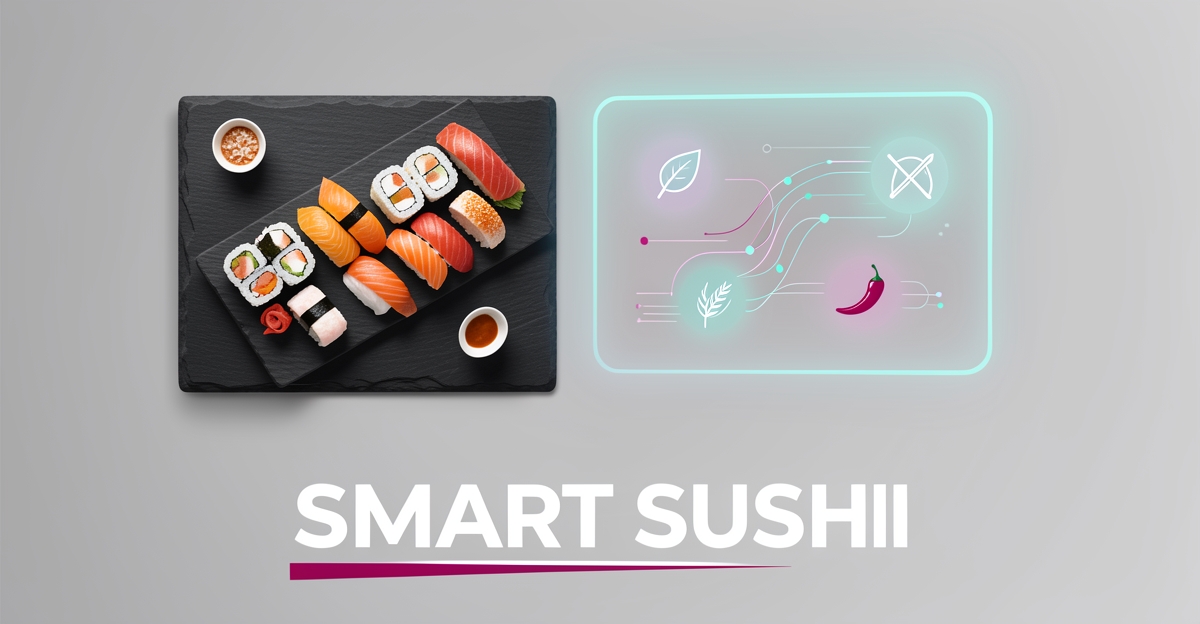
When a first-time visitor lands on a sushi restaurant's website, they're often scanning for something that fits their diet — vegan, gluten-free, or a kick of heat. AI recommendation engines turn that moment into a conversion opportunity by analyzing real-time behavior like search queries, hover patterns, and click paths to surface the right roll instantly. According to industry research, 35% of diners want smart menus that remember past customizations, and 29% prefer menus tailored to personal preferences — expectations that start on the very first visit.
These systems work by deploying a Customer Data Platform that centralizes every interaction, building a provisional profile even for anonymous users. As the visitor browses, the engine dynamically reorders menu sections, highlights dietary badges, and serves contextual prompts like "New here? Try our vegan dragon roll!" — all without requiring a login. IHOP's implementation demonstrated this at scale, achieving a 20% increase in online sales and a 15% lift in suggested item conversions, with over 90% accuracy in predicting customer preferences.
- Real-time behavioral analysis — search terms, filter usage, and scroll depth signal intent within seconds
- Dynamic menu adaptation — dietary tags (vegan, gluten-free, spicy) reposition based on inferred preferences
- Contextual nudges — first-visit prompts guide discovery without overwhelming the user
- Continuous learning — each interaction refines the model for returning visitors
Multivariate testing sharpens the approach further. A QSR case study showed that experimenting with different offer phrasings, product selections, and messaging sequences produced a 70% increase in net revenue per customer and a 4x marketing ROI. For a sushi restaurant, that means testing whether "Gluten-free soy paper available" outperforms "Celiac-safe rolls made fresh daily" — and letting the data decide.
AI Business Sites builds this capability directly into the website, so the recommendation engine runs on the same platform that manages content, leads, and customer data — no separate tools to stitch together. The result is a site that doesn't just display a menu, but actively helps each visitor find their perfect roll from the first click.
Local business: doing this the old way?
One system replaces the whole pile.
All of it — the website, the follow-up, the content, the leads — built and run for you for $1,497 + $497/mo. Month-to-month, and you own everything.
See what your build includesImplementing AI-Powered Personalization: A Step-by-Step Guide for Sushi Restaurants
The gap between a first-time visitor and a loyal sushi customer often comes down to whether they feel understood before they even order. AI-driven personalization bridges that gap by turning anonymous browsing behavior into intelligent dietary suggestions — vegan rolls for the plant-curious, gluten-free options for the sensitive diner, spicy picks for the heat-seeker — all on the very first visit.
According to industry research, 35% of diners want smart menus that remember past customizations and 29% prefer menus tailored to personal preferences. That expectation doesn't start at the second visit. It starts the moment someone lands on your site. A QSR case study showed that hyper-personalized, behavior-driven interactions delivered a 70% increase in net revenue per customer and a 4x marketing ROI — results rooted in real-time data, not guesswork.
- Deploy a Customer Data Platform to unify website interactions, order history, and dietary signals into single guest profiles
- Activate an AI recommendation engine that reads real-time behavior — search queries, menu clicks, scroll depth — to surface relevant rolls instantly
- Use dynamic menu adaptation to highlight dietary matches with contextual prompts like "New here? Try our vegan dragon roll"
- Tie suggestions to loyalty incentives: "Earn 20 points for your first gluten-free roll" turns curiosity into conversion
- Run multivariate tests on phrasing, placement, and offer type to continuously optimize for each visitor segment
This is exactly the kind of personalization the Tillster research identifies as the next competitive frontier — where 82% of restaurants plan to increase AI spending. The technology doesn't require a massive team. It requires a website built to collect, learn, and adapt automatically. AI Business Sites builds that foundation into every custom site: real-time visitor tracking, integrated CRM, and an AI assistant that turns behavioral data into personalized content and recommendations without manual setup. The result? A sushi website that doesn't just show a menu — it guides each visitor to the roll they didn't know they were looking for.
Overcoming Challenges and Measuring Success in AI Implementation
Overcoming Challenges and Measuring Success in AI Implementation
As sushi restaurants embark on leveraging AI for personalized dietary suggestions, they must navigate common hurdles and track key performance indicators to ensure success. Two primary challenges stand out: data security and algorithm accuracy.
Data Security Concerns A critical challenge is safeguarding visitor data, as AI systems rely on collecting and analyzing sensitive information. Restaurants must implement robust security measures, such as encryption and access controls, to protect user data. For instance, ensuring compliance with data protection regulations (e.g., GDPR) is crucial, as highlighted in the importance of privacy-first analytics by AI Business Sites. According to Tillster's industry research, 60% of executives expect AI to enhance customer experience, but this must be balanced with stringent security practices to maintain trust.
Algorithm Accuracy and Personalization Achieving high algorithm accuracy is vital for relevant suggestions. Restaurants should continuously update their AI models with feedback and new visitor data to improve suggestion accuracy. For example, IHOP's AI implementation demonstrated >90% accuracy in predicting customer preferences, leading to a 20% increase in online sales. Regular model training and multivariate testing, as suggested in the ZS.com case study, can help optimize suggestions for better conversion rates.
Key Metrics for Success
- Conversion Rate: Monitor the percentage of visitors who try suggested dishes. A ZS.com case study reported a revenue lift of >6% through personalized engagement.
- Repeat Visits: Track the increase in return customers who appreciate tailored experiences. Wendy's loyalty program, with 3.5 million monthly active users, exemplifies how personalized incentives drive repeat business.
- Algorithm Update Frequency: Regularly assess and update AI models to maintain accuracy and relevance.
By addressing these challenges and focusing on these metrics, sushi restaurants can successfully integrate AI-powered personalization, enhancing both customer satisfaction and business outcomes.
- Implement end-to-end encryption for all data collected.
- Schedule regular algorithm audits for accuracy.
- Use A/B testing to refine suggestion strategies.
AI Business Sites supports this integration by providing a secure, AI-driven platform that can be naturally aligned with the needs of sushi restaurants, though direct implementation examples in the research highlight the need for tailored approaches in this niche.
Frequently Asked Questions
How can my sushi restaurant show the right rolls to new visitors without knowing their preferences?
Will customers actually trust AI suggestions on a sushi menu?
Is it creepy to use AI to personalize sushi recommendations?
How do I start using AI for dietary suggestions without a huge budget?
What if my AI suggests the wrong roll to a customer?
Can AI personalization work for small, independent sushi restaurants?
Your First Roll Is Waiting
The personalization paradox doesn't have to be a dead end. By deploying a Customer Data Platform and an AI recommendation engine that reads real-time behavior — search terms, filter clicks, scroll depth — a sushi website can surface the right vegan, gluten-free, or spicy roll before a first-time visitor even thinks to ask. Dynamic menu adaptation and contextual nudges turn anonymous browsing into guided discovery, while multivariate testing sharpens every prompt and placement. The payoff is measurable: a QSR case study showed a 70% increase in net revenue per customer and a 4x marketing ROI from hyper-personalized, behavior-driven interactions. AI Business Sites builds this capability directly into the website — no separate tools to stitch together — so the menu adapts from the first click and keeps learning with every visit. Ready to turn browsers into regulars? Start with a site that recommends the perfect roll before they've even picked up their phone.
FOR local businesss — BUILT AND RUN BY US
Your website. Your content. Your leads. Your data.
$500 starts your build. Seven days later it's live — chat, booking, follow-up, and your Google presence all set up. Then we run it, every month. You do the work you actually get paid for.