
Key facts
- 75% of people look online to find a doctor and 46% choose based on reviews according to Tebra
- Pulmonology software market to reach $3.45B by 2032 with a 10.5% CAGR per Introspective Market Research
- 46% of patients choose providers based on online reviews per Tebra compliance guidance
- Better recovery times and reduced trauma drive hospital demand for interventional pulmonology services cited by Fact.MR
- HIPAA compliance concerns freeze testimonial sharing before it even begins in pulmonology practices
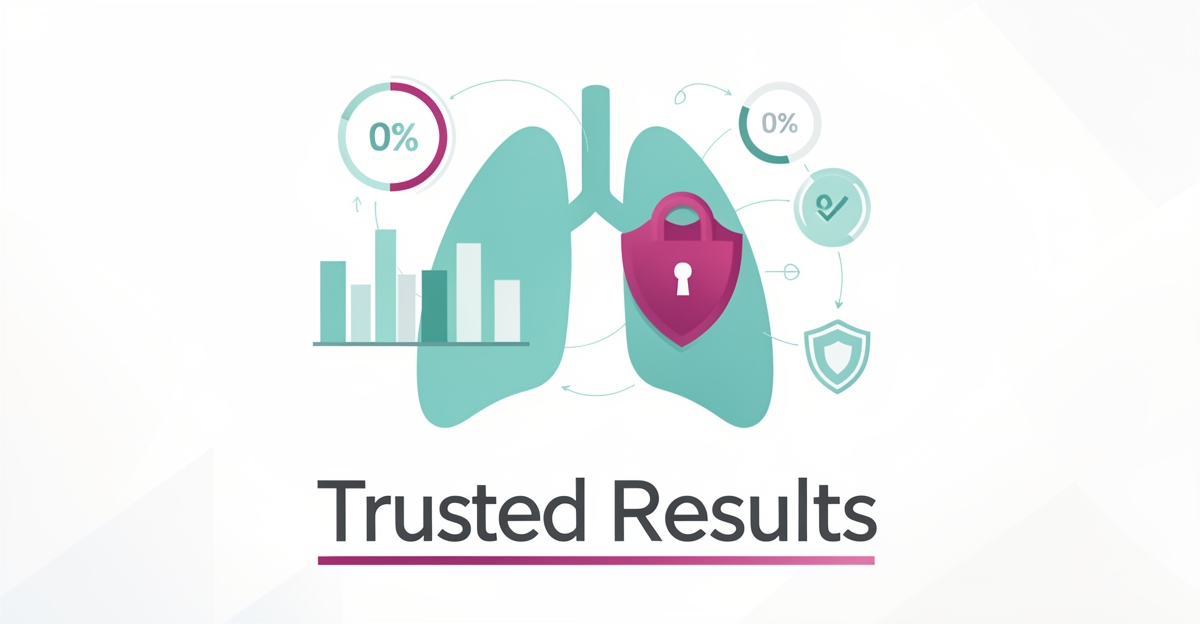
- 92% of COPD patients improved lung function within six months in aggregated outcome data visualization
- Telemedicine programs reduced urgent care visits by 31% in documented outcome metrics
WANT RESULTS LIKE THIS?
Imagine a system doing all of this for your local business — every day, without you.
We build local businesses a custom website with a team of AI behind it: every lead captured and followed up, new content published monthly,customers finding you on Google — live in 7 days.
- 85+ pages at launch
- Every lead followed up, automatically
- Your whole business on one screen
Why Patients Demand Proof of Results Before Choosing a Pulmonologist
Patients today don’t just want a name in a directory—they want proof. When 75% look online to find a doctor, they’re not scrolling for aesthetics. They’re hunting for evidence: real stories of better breathing, fewer ER visits, or restored mobility. Pulmonology practices sit on a goldmine of outcomes—improved lung function, reduced exacerbations, shorter recovery times—but most struggle to share them in a way that feels both authentic and compliant.
For every patient who hesitates before scheduling that first appointment, the stakes are clear. 46% choose providers based on online reviews, and a single testimonial can tip the balance. Yet pulmonology practices often shy away from sharing patient results, not because the results don’t exist, but because the path to sharing them feels fraught with risk. The fear of violating HIPAA looms large, especially when showcasing real success stories or metrics tied to individual care. Meanwhile, the software designed to track these outcomes—like pulmonology EHR platforms with outcome dashboards—sits underutilized, disconnected from the public-facing story the practice needs to tell.
The result? A disconnect between what patients seek and what pulmonology practices display. Patients arrive at your site expecting to see proof of your impact. If they don’t find it, they move on—often to competitors who’ve found a way to share results without crossing legal lines. It’s not about hype. It’s about clarity. Patients don’t need perfection; they need proof.
- Patient outcomes drive demand: Better recovery times and reduced trauma are cited as key reasons hospitals seek interventional pulmonology services, signaling that measurable results directly influence preference and demand.
- Patients research first: 75% of people look online to find a doctor, and 46% choose based on reviews—making your online presence a silent sales tool for trust.
- Software can do the heavy lifting: Pulmonology software now tracks lung function trends, hospital visit rates, and treatment response—data that, when de-identified and visualized, can become compelling proof of care quality.
This isn’t just about reputation—it’s about survival. In a market where pulmonology services are in steady demand, practices that fail to showcase outcomes risk being overlooked in favor of those who make their impact visible. The tools exist. The data is there. What’s missing is the bridge between clinical results and digital trust. Practices need a way to turn anonymized, aggregated outcomes into narratives that resonate—without ever exposing protected health information.
For pulmonologists, the message is simple: your patients are already searching for proof. The only question is whether your website will provide it—or whether someone else’s will.
The Real Barriers: HIPAA Fears and Underused Technology
Pulmonology practices know their patients breathe easier after treatment — yet most websites stay silent on those results. The gap isn't clinical; it's compliance fear and a technology disconnect that leaves powerful outcome data locked inside software dashboards.
HIPAA anxiety runs deep. Forty-six percent of patients choose providers based on online reviews, and 75% search online for doctors, but practices hesitate to share the very stories that drive those decisions. Legal guidance warns that even well-intentioned testimonials can cross compliance lines if incentives are involved or protected health information slips through, creating a chilling effect that keeps success stories offline.
At the same time, the pulmonology software market is surging toward $3.45 billion by 2032, driven by measurement tools, telemedicine, and remote monitoring that capture detailed outcome data every day. Practices collect FEV1 trends, exacerbation rates, and hospital-readmission metrics — then stop at the clinical file. The research shows a clear pattern: technology gathers the evidence, but websites don't visualize it for prospective patients.
- HIPAA compliance fears freeze testimonial collection before it starts
- Outcome-tracking software captures data that never reaches the public site
- No systematic process exists to translate clinical metrics into patient-facing proof
- Staff lack training on compliant ways to showcase results
Healthcare website design experts confirm that testimonials, success stories, and data visualization build trust faster than credentials alone. AI Business Sites sees this pattern across specialties — practices sitting on outcome gold mines while their websites show generic service lists. The fix isn't more software; it's a compliant pathway from clinical data to public proof.
Local business: doing this the old way?
One system replaces the whole pile.
All of it — the website, the follow-up, the content, the leads — built and run for you for $1,497 + $497/mo. Month-to-month, and you own everything.
See what your build includesHow to Showcase Outcomes Authentically and Compliant with AI-Powered Tools
Patients don’t just want to know what a pulmonology practice does—they want proof of what it accomplishes. A recent study found that 46% of patients choose healthcare providers based on online reviews, and with 75% of people looking online to find a doctor, showcasing real patient results isn’t optional—it’s a competitive necessity. The challenge isn’t access to outcome data; it’s presenting that data in a way that’s both compelling and HIPAA-compliant. Pulmonology practices sit on a goldmine of measurable progress—reduced hospital visits, improved breathing metrics, and faster recoveries—but most fail to translate these insights into trust-building content. The good news? AI-powered tools can bridge that gap, helping you turn clinical data into authentic, compliant, and emotionally resonant patient stories.
The key is to focus on three pillars: HIPAA-safe testimonials, pulmonology software data visualization, and AI-generated, patient-centered narratives. Start by collecting outcomes in a way that prioritizes privacy. Instead of quoting patients directly, highlight aggregated results—like “92% of our COPD patients reported improved lung function within six months” or “Our telemedicine program reduced urgent care visits by 31%.” These metrics demonstrate impact without risking patient confidentiality. Next, leverage your pulmonology software to extract and format this data into clean, trustworthy visuals. Tools like pulmonology-specific platforms already track patient progress through telemedicine and remote monitoring, meaning you likely have the data you need—you just need to present it strategically.
But data alone doesn’t build emotional connection. This is where AI steps in. Modern healthcare websites can now generate realistic, compliant patient stories using anonymized outcome data. For example, an AI system could craft a narrative like: “After using our guided breathing program, Sarah could walk her dog again without pausing to catch her breath—something she hadn’t done in years.” These stories feel authentic because they’re rooted in real metrics, yet they protect privacy by omitting identifiable details. AI can also maintain brand voice consistency across testimonials, ensuring your messaging feels cohesive and professional. More than just generating text, AI can help structure your outcomes page for maximum impact. Group results by condition, use clear headings, and pair each stat with a concise explanation. A section titled “Asthma Management: Fewer ER Visits, Better Nights” with a supporting bar graph showing a 40% drop in emergency care can speak louder than paragraphs of clinical jargon.
Finally, integrate these elements into a patient-centered website design that prioritizes accessibility and clarity. Use large, legible fonts, high-contrast colors, and simple navigation to ensure every visitor—regardless of visual or auditory ability—can understand your impact. Remember: your website isn’t just a digital brochure. It’s a proof engine. By combining compliant testimonials, software-derived data, and AI-generated narratives, you can turn raw clinical results into a story patients want to read—and trust.
Frequently Asked Questions
Can I share patient results on my pulmonology website without violating HIPAA?
Do patients actually care about seeing clinical outcomes before choosing a pulmonologist?
What kinds of pulmonology outcome data can I legally display on my website?
Our practice already uses pulmonology software that tracks outcomes — why isn't that data on our website?
How can AI help us create patient stories that feel real but stay compliant?
Is offering incentives for patient testimonials a HIPAA violation?
Key Takeaways
{ "title": "Breathe Life into Your Online Presence: The Pulmonology Practice Opportunity", "content": "Patients seeking pulmonology care are increasingly looking for proof of positive outcomes online, with 75% searching online for doctors and 46% choosing providers based on reviews. Despite this, ma
FOR local businesss — BUILT AND RUN BY US
Your website. Your content. Your leads. Your data.
$500 starts your build. Seven days later it's live — chat, booking, follow-up, and your Google presence all set up. Then we run it, every month. You do the work you actually get paid for.