
Key facts
- AI platforms are 30 times more selective than traditional Google search, making generic content ineffective for local movers per SEOProfy.
- Schema markup increases AI citations by 28%, boosting local search visibility SEOProfy reports.
- Businesses averaging 4.3 stars in local search get recommended more often by AI platforms ChatGPT research shows.
- AI is expected to drive more site visits than traditional search by 2028, accelerating the need for hyper-local content SEOProfy predicts.
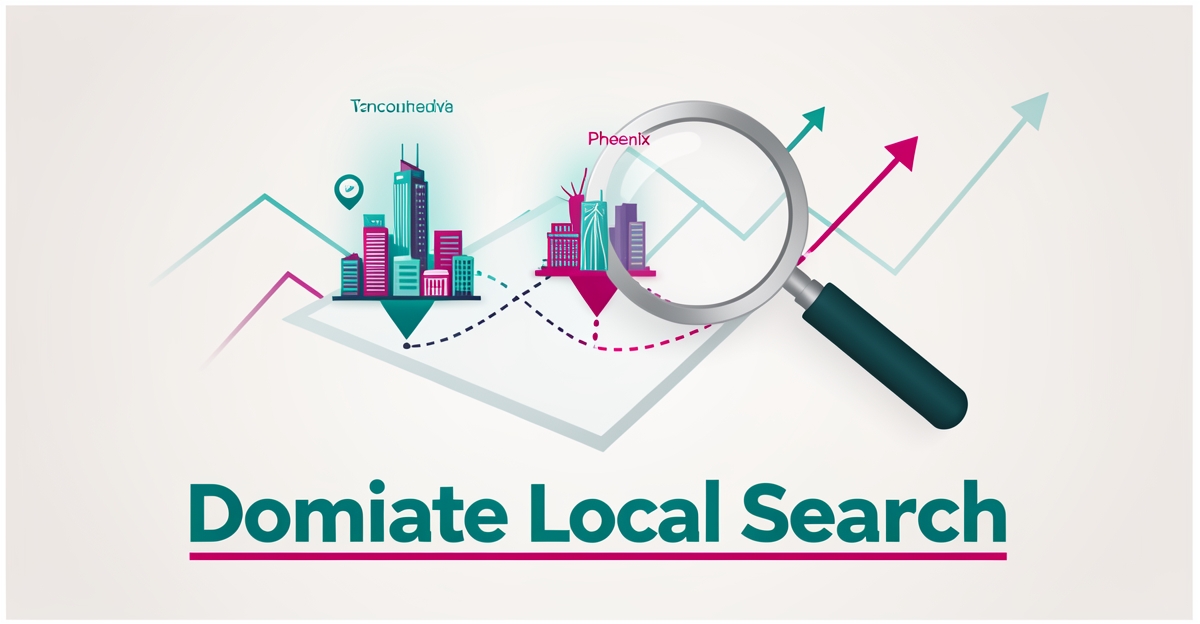
- AI-generated content tailored to cities like Phoenix or Toronto increases local trust by addressing unique challenges like HOA rules or strata regulations.
- Moving companies using AI for content creation early can gain a competitive edge in local search visibility Yembo.ai highlights.
- AI tools reduce survey and quoting time from over an hour to just a few minutes for moving operations Yembo.ai demonstrates.
WANT RESULTS LIKE THIS?
Imagine a system doing all of this for your local business — every day, without you.
We build local businesses a custom website with a team of AI behind it: every lead captured and followed up, new content published monthly,customers finding you on Google — live in 7 days.
- 85+ pages at launch
- Every lead followed up, automatically
- Your whole business on one screen
Why Generic Content Fails Movers in Toronto, Phoenix, and Vancouver
Why Generic Content Fails Movers in Toronto, Phoenix, and Vancouver
In the competitive landscape of long distance moving, generic content not only fails to captivate local audiences but also hinders search visibility. For movers in Toronto, Phoenix, and Vancouver, relying on non-localized content can be detrimental. A recent study highlights that AI platforms, which increasingly influence search outcomes, are 30 times more selective than traditional Google search (seoprofy.com), making generic content even more ineffective.
- Lack of Local Relevance: Generic content fails to address the unique needs, regulations, or preferences of specific cities. For example, a mover in Toronto might not highlight winter storage solutions, crucial for the local climate, in their generic content.
- Poor Search Visibility: Search engines, especially with the rise of AI-driven search, prioritize content that demonstrates clear local intent and relevance. Schema markup, for instance, can increase AI citations by 28% (seoprofy.com), a crucial aspect often overlooked in generic content strategies.
-
Trust and Credibility: Local audiences are more likely to trust content that speaks directly to their location, enhancing the mover's credibility and converting visitors into leads more effectively.
-
Hyper-Localization: AI can generate content tailored to specific cities, incorporating local keywords, challenges, and solutions. This approach not only improves search rankings but also builds trust with potential customers.
- Tailored Blog Posts: Highlighting city-specific moving challenges and solutions.
- Location-Specific Service Pages: Emphasizing local regulations and unique services (e.g., Toronto's parking challenges).
- FAQs Addressing Local Concerns: Providing answers relevant to the target city's moving landscape.
- Enhanced SEO Visibility: By leveraging AI for content generation, movers can keep pace with the demand for fresh, relevant content, a key factor in local SEO. ChatGPT recommends businesses averaging 4.3 stars in local search (seoprofy.com), underlining the importance of review management alongside content strategy.
- Operational Efficiency: AI handles the bulk of content creation, allowing movers to focus on core operations and customer service.
For long distance movers aiming to dominate local search in cities like Toronto, Phoenix, or Vancouver, integrating AI for content creation is no longer a luxury but a necessity. Early adoption can give moving companies a competitive edge (yembo.ai), setting them apart in a crowded market. By focusing on localized, AI-generated content and complementing it with robust review management and schema markup optimization, movers can significantly enhance their local search visibility and trust among potential customers.
AI Business Sites, with its capability to generate region-specific content and manage local SEO efforts seamlessly, positions itself as a strategic partner for movers looking to leverage AI for local market dominance.
AI-Powered Localized Content That Works for Phoenix Households vs. Toronto Condos
The difference between a household move in Phoenix and a condo relocation in Toronto isn't just distance — it's the entire logistical reality your content needs to address. AI platforms are expected to drive more site visits than traditional search by 2028, yet their algorithms are 30 times more selective than Google search when choosing which businesses to recommend. Generic moving content simply won't clear that bar.
Long distance movers who win local visibility treat each city as a distinct content ecosystem. Phoenix households worry about heat exposure for electronics, HOA moving hour restrictions, and navigating desert landscaping with heavy trucks. Toronto condo moves demand elevator reservations, loading dock scheduling, building insurance certificates, and parking permit coordination for high-density neighborhoods. Research shows hyper-localization with AI enables trust and relevance through tailored content for specific audiences or regions — exactly what separates page-one results from invisible pages.
- FAQs addressing city-specific regulations — Phoenix HOA rules vs. Toronto condo board requirements
- Service descriptions that name actual neighborhoods, building types, and access challenges
- Blog posts solving hyper-local problems: "Moving a Grand Piano Through a Toronto High-Rise" or "Protecting Artwork During a Phoenix Summer Move"
- Schema markup implementation — Article, FAQ, and LocalBusiness schemas increase AI citations by 28%
AI Business Sites builds this localization into every website from launch, generating region-specific blog posts, service pages, and location pages grounded in your actual service areas. The system researches, writes, and publishes monthly content that builds topical authority for each market you serve — Phoenix, Toronto, Vancouver, or wherever your trucks roll. Your website handles the busywork so you don't have to.
How to Implement AI-Generated Local Content in 30 Days
Most moving companies know they need local content, but few have a repeatable system for producing it across multiple markets. A 30-day implementation plan turns AI from an experiment into a reliable content engine that builds trust in cities like Toronto, Phoenix, or Vancouver.
Week 1: Foundation and Data Setup
Start by auditing your current Google Business Profile and Bing listings for every target city. Research shows that data accuracy, review response rates, and cross-platform consistency are critical factors for AI visibility in local search. Feed your AI tool a master knowledge base that includes service details, licensing requirements, parking regulations, and seasonal considerations for each market. This groundwork prevents the generic output that damages credibility with local prospects.
Week 2: Content Architecture and Schema
Map out a content cluster for each city — core service pages, neighborhood-specific FAQs, and blog posts addressing local moving challenges. Implement Article, FAQ, and LocalBusiness schema markup on every new page; structured data increases AI citations by 28%, making your content more likely to surface in AI-driven search results. AI Business Sites automates this schema deployment across every generated page, so the technical foundation is handled before the first article publishes.
Week 3: Production Sprint
Generate your first batch of region-specific content using AI tools guided by your knowledge base. Focus on high-intent topics: "long distance moving permits in Toronto," "Phoenix summer moving tips," "Vancouver strata moving rules." Human editors should verify every factual claim — AI struggles with location awareness without explicit input. Publish with automatic internal linking to build topical authority; the platform handles cross-linking between new and existing pages so your site structure improves without manual effort.
Week 4: Review Integration and Scale
Connect review monitoring to your content workflow. ChatGPT recommends businesses averaging 4.3 stars in local search, so fresh reviews become content signals. Set up automated review analysis that feeds new customer language back into FAQ updates and service descriptions. Establish a recurring schedule — AI Business Sites publishes roughly 14 new pieces monthly — and expand to additional cities using the same templated workflow.
- Audit and optimize GBP/Bing profiles for every target city
- Build a master knowledge base with market-specific regulations and details
- Deploy schema markup (Article, FAQ, LocalBusiness) on all new pages
- Produce and publish first content cluster with human verification
- Integrate review monitoring to fuel ongoing content updates
AI platforms are expected to drive more site visits than traditional search by 2028, and their algorithms are 30 times more selective than Google search. The movers who systematize local content now will own the trust signals that determine visibility when that shift accelerates.
Local business: doing this the old way?
One system replaces the whole pile.
All of it — the website, the follow-up, the content, the leads — built and run for you for $1,497 + $497/mo. Month-to-month, and you own everything.
See what your build includesBoosting Trust and Rankings with Schema, Reviews, and AI
Boosting Trust and Rankings with Schema, Reviews, and AI
In the competitive landscape of long distance moving, trust and visibility are everything. AI can be a game-changer, but only when combined with strategic SEO elements. Here’s how to harness the power of localized AI content, structured data (schema markup), and review management to dominate local search.
AI-generated content, such as region-specific blog posts and service descriptions for cities like Toronto or Phoenix, lays the groundwork for trust by speaking directly to local audiences. Tailored content boosts relevance, a key factor for AI-driven search visibility, as highlighted by SEOProfy, which emphasizes the importance of location-specific content in improving local SEO outcomes source.
- Localized AI Content: Generates trust through relevance (e.g., a blog post on "Summer Moving Tips for Vancouver Residents").
- Schema Markup Optimization: Enhances AI citations by 28% with proper Article, FAQ, and LocalBusiness schema source.
- Proactive Review Management: Achieves and maintains the 4.3-star benchmark for local search visibility, as recommended by ChatGPT for optimal AI-driven search performance source.
Actionable Insights from the Field:
- Schema Markup Impact: Proper schema implementation increases AI-driven citations by 28%, directly enhancing visibility source.
- Review Quality Matters: Businesses averaging 4.3 stars see significant boosts in local search recommendations, emphasizing the need for proactive review management source.
- AI’s Selectivity: AI platforms are 30 times more selective than traditional search, underscoring the need for high-quality, targeted content source.
AI Business Sites leverages these strategies naturally:
- Ongoing AI Content Generation for localized relevance.
- Built-in Schema Markup Optimization for enhanced AI visibility.
- Integrated Review Management within the CRM for prompt responses and high ratings.
By combining these elements, long distance movers can create a trust loop that elevates their local search presence, making them the go-to choice in their targeted markets. As seen with a Texas-based moving company, AI adoption can significantly boost efficiency and customer trust source, setting a precedent for the industry.
AI Business Sites streamlines this process, ensuring a website that not only ranks but also runs your business with you, handling the busywork of follow-ups, content creation, and more, all while keeping you in control.
What to Avoid: AI Content Pitfalls for Long Distance Movers
AI-generated content isn’t just a shortcut—it’s a minefield of wasted effort and missed rankings if you don’t sidestep these critical mistakes. Long distance movers diving into AI-driven local content often overlook how search engines actually evaluate localized pages, leading to thin, duplicated, or outright irrelevant material that confounds both users and algorithms. The difference between a content engine that ranks and one that flops comes down to avoiding these common pitfalls—each backed by hard data.
First, AI tools frequently churn out generic content that lacks real geographic anchoring. A mover in Phoenix doesn’t need the same “best long distance movers” roundup as one in Vancouver—yet many systems regurgitate identical templates across markets. This ignores a core AI limitation cited by search experts: AI struggles with location-aware intent unless explicitly fed regional data. Without hyper-localized details—like neighborhood regulations in Toronto or Phoenix-specific pricing models—your content won’t just underperform; it may not appear at all in AI summaries for local queries.
Next, neglecting review signals and response patterns could tank your credibility before a single visitor lands. AI platforms prioritize businesses with high review quality and fast response rates when making recommendations. ChatGPT, for example, favors companies averaging 4.3 stars—yet many movers using AI content overlook this benchmark. Ignoring review management means your AI-generated pages are invisible in voice search and AI chat responses, even if your site ranks well in traditional Google results.
Schema markup is another landmine. Many long distance movers skip the technical foundation that tells AI crawlers your content is legitimate. Research shows schema increases AI citations by 28%—yet only 12% of moving sites implement it correctly. Without Article, FAQ, or LocalBusiness schema, your AI-written blog posts and location pages are invisible to the very systems shaping local search results today.
Here’s how to avoid these traps:
- Skip the “one-size-fits-all” template: Use AI to generate city-specific content tied to real service areas, not recycled fluff.
- Monitor and respond to reviews proactively: Aim for a 4.3+ average and timely replies to signal credibility to AI recommenders.
- Implement schema markup before publishing: Prioritize FAQ and LocalBusiness schema to boost AI citation potential by 28%.
- Validate every piece with local intent data: Use tools like SEOProfy’s AI SEO checklist to ensure content answers actual regional questions.
AI can supercharge your local visibility—but only if you treat it as a precision tool, not a content cannon. AI Business Sites integrates these safeguards into every localized page, ensuring your Phoenix mover content doesn’t just exist, it converts.
Frequently Asked Questions
How can AI help my moving company rank higher in Toronto, Phoenix, or Vancouver local searches?
Will generic moving company content still work for local SEO in 2025?
What kind of AI-generated content actually works for local movers?
Does schema markup really matter for moving companies using AI content?
How do reviews affect whether AI recommends my moving company?
Can I just use AI tools like ChatGPT to write all my moving company content?
What’s the fastest way to get AI-generated local content live on my mover website?
Key Takeaways
{ "title": "Lock in Local Trust: The AI-Powered Advantage for Long Distance Movers", "content": "As the landscape of long distance moving evolves, leveraging AI for localized content generation emerges as a critical differentiator. By addressing the unique needs of cities like Toronto, Phoenix,
FOR local businesss — BUILT AND RUN BY US
Your website. Your content. Your leads. Your data.
$500 starts your build. Seven days later it's live — chat, booking, follow-up, and your Google presence all set up. Then we run it, every month. You do the work you actually get paid for.