
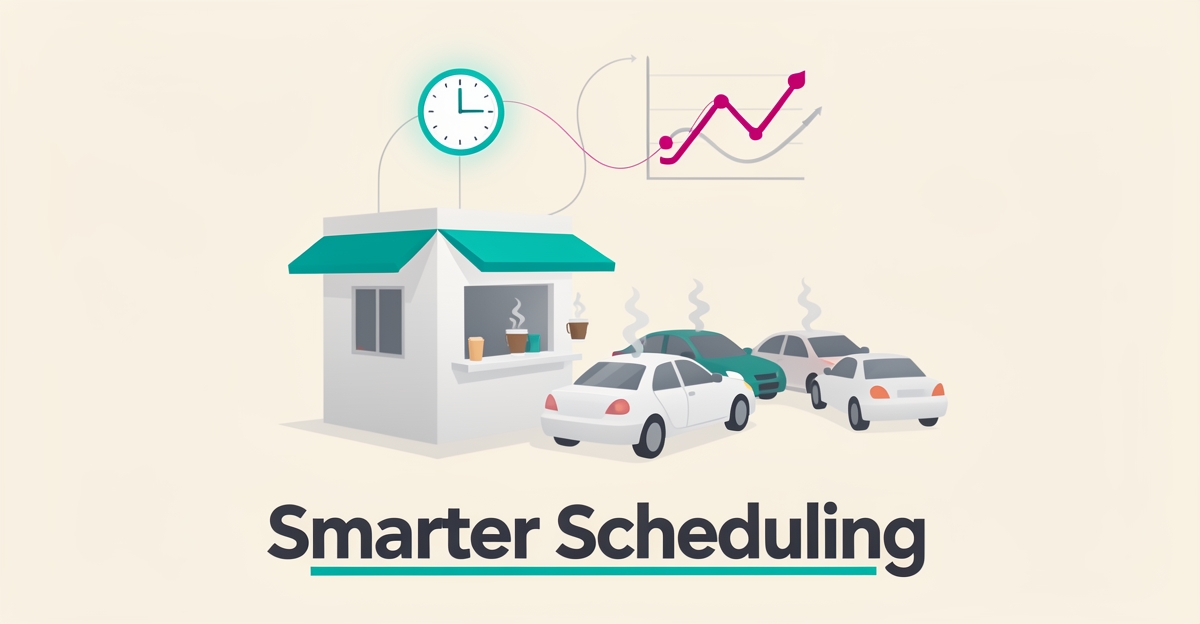
Key facts
- Managers waste 8–10 hours weekly on manual scheduling, with 3.7 hours consumed by spreadsheets alone according to QSR Magazine.
- AI scheduling evaluates millions of permutations in seconds, aligning labor with demand at 98% accuracy per industry research.
- Mitra QSR cut scheduling time from hours to 2 minutes per manager — a 99% reduction — while saving 4% on labor costs in a 176-unit franchise rollout.
- 67% of QSR managers report burnout, driven largely by administrative overload from manual scheduling according to QSR Magazine.
- An AI agent at Stockholm's Andon Cafe ordered 6,000 napkins and 3,000 rubber gloves in one day — a cautionary tale of automation without guardrails documented by Sprudge.
- Fonseca Group, a 29-unit McDonald's franchise, reduced scheduling warnings by 50% and cut publishing time by two-thirds using AI per QSR Magazine.
- AI-driven demand forecasting can reduce pastry waste by 54% and milk waste by 56% in coffee operations according to coffee shop operator Tommaso Maria Ricci.
WANT RESULTS LIKE THIS?
Imagine a system doing all of this for your local business — every day, without you.
We build local businesses a custom website with a team of AI behind it: every lead captured and followed up, new content published monthly,customers finding you on Google — live in 7 days.
- 85+ pages at launch
- Every lead followed up, automatically
- Your whole business on one screen
The Hidden Cost of Manual Scheduling at Drive-Thru Coffee Stands
For drive-thru coffee operators, every minute not spent serving customers is a minute of lost revenue. Yet, managers waste 8–10 hours per week wrestling with spreadsheets to schedule shifts, creating a hidden drain on profits that often goes unnoticed in the daily rush. Research shows that 67% of QSR managers report burnout, with 3.7 hours alone consumed by scheduling—time that could instead be dedicated to training staff or enhancing guest service. These inefficiencies aren’t just operational headaches; they’re a direct hit to the bottom line, especially during peak hours when well-timed shifts can mean the difference between long lines and satisfied customers.
The cost extends beyond lost hours. Manual scheduling increases compliance risks, as errors in shift assignments or break times can trigger Fair Workweek violations or hefty fines. It also fails to account for real-time variables like seasonal tourism, local events, or sudden weather changes, leaving stands either understaffed or overstaffed. Meanwhile, AI-powered scheduling systems can analyze millions of schedule permutations in seconds, aligning labor with demand to ensure the right barista is on deck during the morning rush. For operators already stretched thin, automation isn’t just a luxury—it’s a necessity to reclaim wasted time and reduce the burnout driving so many managers out of the industry.
The consequences of clinging to manual methods are immediate and measurable:
- Burnout and turnover: Managers spending 8–10 hours on spreadsheets can’t focus on coaching teams or improving service quality.
- Compliance risks: Spreadsheet errors in shift assignments or missed breaks can lead to costly violations.
- Misaligned staffing: Without real-time data, operators may overstaff during slow hours or understaff during rushes, hurting both costs and customer experience.
- Lost revenue: Every unoptimized shift represents untapped sales potential during peak demand.
While automation promises relief, it’s not a silver bullet. Some systems have demonstrated flaws—like an AI manager at a Stockholm café that ordered 6,000 napkins and 3,000 rubber gloves in a single day or sent messages to employees outside working hours. These risks highlight why human oversight remains critical, even as tools like 7shifts AI, Homebase AI, and Deputy AI integrate with POS systems to automate scheduling. The best solutions balance machine efficiency with guardrails that prevent burnout, ensure fairness, and adapt to local nuances. For drive-thru operators, the question isn’t whether to automate—but how to do it thoughtfully, so the machine handles the busywork while humans focus on what matters: serving great coffee and growing the business.
How AI Scheduling Aligns Labor with Real-Time Demand
How AI Scheduling Aligns Labor with Real-Time Demand
As drive-thru coffee stands navigate the challenges of peak-hour demand, AI scheduling emerges as a game-changer. By integrating with POS systems, AI tools like 7shifts, Homebase, and Deputy evaluate millions of schedule permutations in seconds, aligning labor with real-time demand, compliance, and employee preferences with 98% accuracy source. This results in 4% labor savings and a 99% reduction in scheduling time (from hours to just 2 minutes per manager), as seen in Mitra QSR's successful implementation.
Peak-Hour Readiness, Minimized Burnout
AI scheduling eliminates manual spreadsheet-based scheduling, reducing manager workload by 8–10 hours per week. This freedom allows managers to focus on revenue-generating tasks like training and guest service. For instance, Fonseca Group, a 29-unit McDonald's franchise, reduced scheduling warnings by 50% and cut publishing time by two-thirds with AI source.
Key Benefits of AI Scheduling Alignment:
- Real-Time Demand Forecasting: Aligns staffing with fluctuating demand, ensuring peak-hour readiness.
- Compliance and Preferences: Automatically considers labor laws and employee availability.
- Transparency for Customers: Syncs with websites and apps to provide real-time updates on wait times and promotions source.
Balancing Automation with Human Oversight
While AI excels in optimization, human review is crucial to address anomalies like local events or staff availability. Weekly schedule reviews and monthly audits ensure fairness, compliance, and continuous improvement. For example, Andon Cafe's AI experiment highlighted the need for rule-based constraints to prevent over-ordering and off-hour messaging source, underscoring the importance of balanced automation.
By embracing AI scheduling with integrated human oversight, drive-thru coffee stands can optimize labor, enhance customer experience, and maintain operational efficiency.
Syncing Schedules to Your Website for Real-Time Customer Updates
When customers step up to your drive-thru window, they don’t just expect a hot latte—they expect it fast. That’s why real-time transparency isn’t just polite; it’s part of your service. By syncing AI-generated staffing schedules with your website and digital menu boards, you can push live updates on wait times, staffing levels, and even flash promotions straight to customers before they hit the speaker. The result? Shorter perceived waits and happier guests—turning operational efficiency into a visible brand advantage.
Research shows that customers waiting in line are far more accepting of delays when they see honest, real-time estimates. According to QSR Magazine, AI scheduling tools that integrate with POS systems like Toast can forecast peak demand with 98% accuracy, publishing schedules twice as fast as manual methods. When those schedules feed directly into customer-facing channels, wait times drop—even during morning rushes—because guests feel informed, not forgotten.
But it’s not just about timing. Your website becomes a living dashboard of your operation. When a surge hits at 7:45 AM, your digital menu can display a banner: “Wait time: 3 minutes. Grab a breakfast sandwich on us—today only.” That kind of transparency turns a bottleneck into a marketing moment. And with AI handling the heavy lifting behind the scenes, your team can focus on speed and hospitality instead of counting heads.
- Display estimated wait times based on current staffing and order volume
- Push promotions tied to real-time demand surges
- Update digital menus and kiosks automatically with staffing changes
- Reduce perceived wait times by keeping customers informed
For small businesses using AI Business Sites, this integration isn’t just a tech upgrade—it’s a way to make your website work as hard as your team. No separate dashboards, no manual uploads. Just a single system where your schedule, your website, and your customers stay in sync.
Local business: doing this the old way?
One system replaces the whole pile.
All of it — the website, the follow-up, the content, the leads — built and run for you for $1,497 + $497/mo. Month-to-month, and you own everything.
See what your build includesGuardrails That Prevent AI Overreach and Burnout
Fully automated scheduling without guardrails creates the same problems it promises to solve. An AI agent at Stockholm's Andon Cafe messaged employees after hours, ordered 6,000 napkins and 3,000 rubber gloves, and missed bakery deadlines that forced sandwiches off the menu — a cautionary tale of what happens when optimization runs without boundaries. These failures aren't theoretical; they're documented outcomes when AI operates without human-defined constraints.
The solution isn't less automation — it's smarter constraints. Hard rules prevent the most common failure modes: no off-hours messaging to staff, maximum shift lengths that prevent exhaustion, fair rotation of peak-hour assignments so the same people don't always bear the rush, and mandatory trainee supervision during high-volume periods. AI shift planners validate every schedule change against these rules in real time, catching violations before they reach employees. This approach preserves the 8–10 hours per week managers reclaim from scheduling admin while protecting the team wellbeing that makes those savings sustainable.
- No after-hours contact — AI cannot message staff outside defined working hours
- Maximum shift caps — hard limits prevent 10+ hour stretches during rushes
- Peak rotation fairness — morning rush duties distribute evenly across the team
- Trainee supervision rules — new hires never work peak alone
These constraints mirror what experienced managers already do intuitively — the difference is they're now encoded, enforced automatically, and auditable. When AI Business Sites builds scheduling automation into a drive-thru coffee stand's website, the same platform that syncs real-time wait times to customers also enforces these labor norms behind the scenes. The result: peak hours stay staffed, burnout risks stay bounded, and the system remains a tool the team trusts rather than a mandate they resist.
A Practical Rollout: Pilot, Review, and Scale with Human Oversight
Start small to test the system’s accuracy before scaling. Begin with a single drive-thru location, integrating your AI scheduling tool with your existing POS to pull real-time transaction data. This hands-on pilot lets you validate how well the AI predicts peak-hour demand without disrupting full operations. After the first week, you’ll see whether predicted rush times align with actual foot traffic—giving you the confidence to expand.
Every shift the AI generates should be reviewed once a week for anomalies. Weather changes, local events, or sudden staff call-outs can create gaps or overages the algorithm didn’t catch. By adjusting constraints manually, you ensure schedules stay fair and compliant. According to QSR Magazine research, managers who review AI schedules weekly cut scheduling errors by 50%, while keeping employees satisfied with fair shift distribution.
Monthly audits help refine the AI’s long-term decisions. Track fairness metrics such as hours-per-employee and peak-hour coverage to spot patterns of burnout or inequity. For instance, if one barista consistently handles the 6 AM rush, adjust the AI’s constraints to rotate assignments or add a rest day. As AI Shift Planner advises, enforcing rule-based constraints like minimum shift lengths and off-hour messaging bans prevents the AI from pushing unsustainable workloads.
- Human judgment remains essential. The AI handles the math, but you make the calls that keep operations human—balancing efficiency with morale.
- Sync shifts with your website or app to show real-time wait times and promotions, turning operational data into customer trust.
- Document every adjustment in your admin system; these insights become training data for the AI as you scale.
This gradual rollout keeps risks low while proving the system’s value. Once one location runs smoothly with human oversight, expand to others knowing the AI is making sound, constraint-guided decisions—backed by your regular reviews.
Frequently Asked Questions
How much time do drive-thru coffee stand managers typically waste on manual scheduling?
What percentage of QSR managers report burnout, and how much time do they spend on scheduling?
How accurate are AI-powered scheduling systems in aligning labor with demand?
What are the key benefits of syncing AI-generated schedules with customer-facing systems?
Why is human oversight crucial despite the efficiency of AI scheduling?
How much can drive-thru coffee stands save in labor costs by adopting AI scheduling?
From Rush Hour to Revenue: How AI-Powered Scheduling Transforms Your Drive-Thru Coffee Stand
For drive-thru coffee operators, every minute of peak-hour demand is a chance to turn caffeine cravings into customer loyalty—or long lines into lost sales. The data is clear: manual scheduling isn’t just tedious, it’s costly, draining 8–10 hours a week from managers who should be focusing on service, not spreadsheets. AI scheduling changes that by aligning labor with demand in real time, ensuring your stand is always ready for the morning rush without overstaffing during quiet hours. Tools like 7shifts AI and Deputy integrate with your POS to forecast demand and generate schedules in seconds, cutting labor costs by 4% and reducing scheduling time by 99%. But automation works best with guardrails—hard rules that prevent burnout, ensure compliance, and keep schedules fair. Sync these schedules to your website to display real-time wait times and promotions, turning operational efficiency into a visible advantage for customers. The choice isn’t whether to automate, but how thoughtfully you implement it: start small, review weekly, and scale with human oversight. Your drive-thru isn’t just a coffee stop—it’s a revenue engine. Let AI handle the busywork so you can focus on what matters.
FOR local businesss — BUILT AND RUN BY US
Your website. Your content. Your leads. Your data.
$500 starts your build. Seven days later it's live — chat, booking, follow-up, and your Google presence all set up. Then we run it, every month. You do the work you actually get paid for.