
Key facts
- ["93% of debt collection and settlement companies adopted AI by 2025, transforming operational efficiency according to industry research.", "AI implementation can reduce operational expenses by up to 40% and improve recovery rates by approximately 10% as reported.", "98% of organizations now offer at least one digital self-service capability, with AI-powered tools leading the shift in the industry.", "Debt settlement firms handling over 100 daily messages can prevent lead loss with 24/7 AI chatbot support as highlighted in conversational AI studies.", "Consumers increasingly use AI for debt negotiation, emphasizing the need for 24/7 AI-powered support noted by TrueAccord.", "Human-AI collaboration models in debt settlement improve efficiency by 67% and client satisfaction by 85% according to Kompato AI."]
WANT RESULTS LIKE THIS?
Imagine a system doing all of this for your local business — every day, without you.
We build local businesses a custom website with a team of AI behind it: every lead captured and followed up, new content published monthly,customers finding you on Google — live in 7 days.
- 85+ pages at launch
- Every lead followed up, automatically
- Your whole business on one screen
The Inbound Message Avalanche: Why Debt Settlement Firms Are Losing Leads
The Inbound Message Avalanche: Why Debt Settlement Firms Are Losing Leads
Debt settlement companies are drowning in a sea of inbound inquiries, struggling to keep afloat as the volume of messages overwhelms their operational capacities. According to industry research, the debt collection sector has seen a staggering 93% AI adoption rate by 2025, yet many firms still grapple with the basics of timely response. The consequence? Missed follow-ups, after-hours gaps in support, and a hefty cost of unresponsiveness that translates to lost clients.
The Alarming Reality
- Volume Overload: With hundreds of inquiries daily, manual handling leads to inevitable slip-ups. Conversational AI studies highlight the impossibility of human agents maintaining 24/7 responsiveness without AI support.
- After-Hours Gap: Debtors seeking support outside business hours are often left hanging. AI-powered chatbots and voice assistants can bridge this gap, as emphasized by consumer behavior trends, where 24/7 availability is no longer a luxury but a necessity.
- Cost of Silence: Each unattended inquiry potentially means one less client. Given the projected 40% operational expense reduction through AI, the economic case for adoption is compelling.
Key Challenges Faced by Debt Settlement Firms
- Missed Follow-Ups: Overwhelmed staff fail to pursue leads in a timely manner.
- After-Hours Service Gaps: Limited support hours frustrate clients seeking immediate assistance.
- Operational Inefficiency: Manual handling of routine inquiries wastes resources better spent on complex cases.
The Human Cost of Inefficiency
Beyond the numbers, the human impact cannot be overstated. Clients seeking debt settlement are often in vulnerable financial situations, making timely and empathetic support crucial. The failure to provide this support not only loses clients but also damages the firm's reputation and trustworthiness.
Turning the Tide with AI
The integration of AI-powered solutions offers a lifeline. By leveraging chatbots for routine inquiries (interest rates, timelines, eligibility) and routing complex cases to human agents, debt settlement firms can ensure no lead goes unaddressed. Moreover, AI-driven systems can automate follow-ups, reducing the likelihood of missed opportunities.
The Path Forward
For debt settlement companies aiming to stem the tide of lost leads, the following strategies are paramount:
- Implement AI for Scalability: Ensure 24/7 coverage for routine queries.
- Human-AI Collaboration: Preserve the personal touch for complex, emotionally charged interactions.
- Regulatory Compliance: Hard-code FDCPA, UDAAP, and Regulation F adherence into AI systems.
By embracing this dual approach, debt settlement firms can transform the inbound message avalanche from a liability into an opportunity, fostering a responsive, efficient, and client-centric operational model.
AI Chatbots That Actually Work: What Top Firms Are Doing Right
AI Chatbots That Actually Work: What Top Firms Are Doing Right
In the fast-paced world of debt settlement, handling over 100 daily inquiries without losing clients is a daunting task. Top debt settlement firms are leveraging AI-powered chatbots and voice agents to tackle this challenge head-on, ensuring 24/7 responsiveness to routine queries while maintaining human empathy for complex cases.
Immediate Responses, Reduced Lead Loss AI chatbots are being effectively utilized to address common debtor inquiries, such as interest rate explanations, timeline clarifications, and eligibility checks. For instance, firms like TrueAccord have seen success with AI-driven self-service tools, which have become increasingly popular, with 98% of organizations now offering at least one digital self-service capability (Kaplan Collection Agency). This immediate responsiveness prevents lead loss and sets the foundation for trust.
Human-AI Collaboration for Complex Cases While AI excels at routine interactions, complex situations requiring empathy and judgment are seamlessly routed to human agents. This hybrid model, highlighted by Master of Code, ensures that debtors receive personalized support when needed, enhancing the overall client experience.
Key Statistics Driving the Shift:
- 93% of debt collection and settlement companies have adopted AI by 2025, reflecting a significant operational shift (Kaplan Collection Agency).
- AI implementation can lead to up to 40% in operational expense reduction and ~10% improvement in recovery rates (Kaplan Collection Agency).
- Consumers are increasingly using AI for debt negotiation, as noted by TrueAccord, shifting the dynamics of debtor-firm interactions.
Ensuring Regulatory Compliance A critical aspect of AI integration in debt settlement is hard-coding compliance with regulations such as FDCPA, UDAAP, and Regulation F into AI systems, as advised by Kompato AI, to prevent violations and maintain regulatory adherence.
By embracing AI chatbots for routine inquiries, fostering a human-AI collaboration model, and prioritizing regulatory compliance, top debt settlement firms are not only managing high volumes of inbound messages efficiently but also enhancing client satisfaction and reducing operational costs. This strategic approach positions them for success in a market where responsiveness and personal touch are paramount.
Local business: doing this the old way?
One system replaces the whole pile.
All of it — the website, the follow-up, the content, the leads — built and run for you for $1,497 + $497/mo. Month-to-month, and you own everything.
See what your build includesFrom Bot to Human: The Smart Workflow That Scales Without Sacrificing Trust
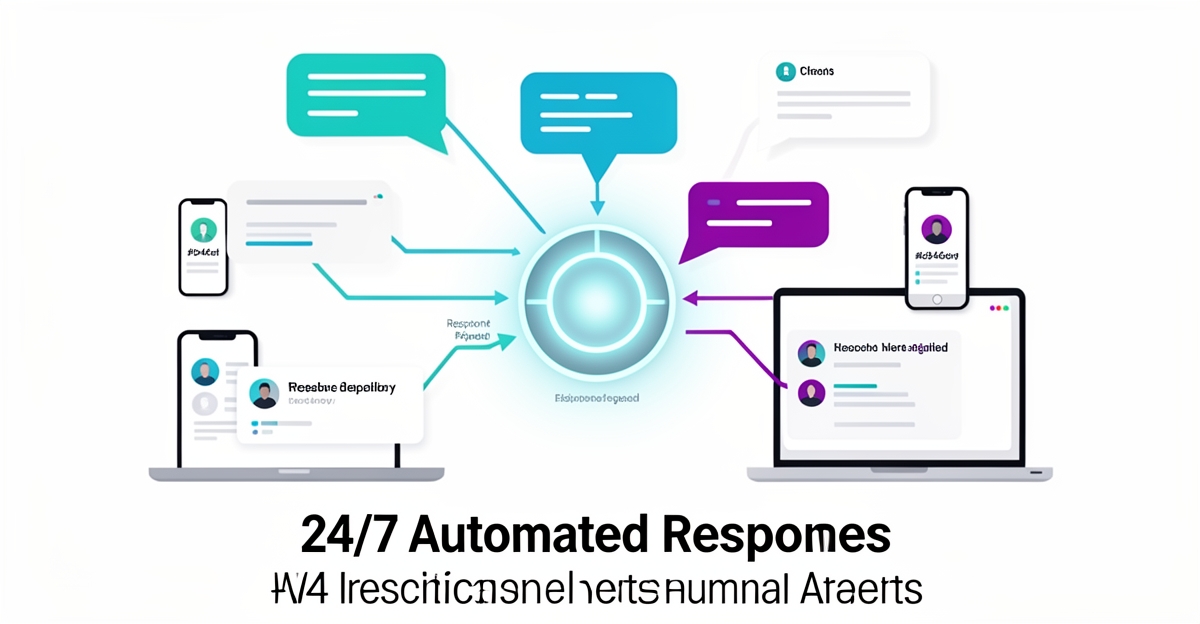
Debt settlement firms face mounting pressure to respond to over 100 daily messages while maintaining client trust. AI-powered chatbots can instantly answer routine questions about interest rates, timelines, and eligibility 24/7, preventing lead loss during off-hours and ensuring no inquiry goes unanswered. This immediate responsiveness addresses a critical gap, as debtors often need support outside standard business hours and expect timely engagement.
A human-AI collaboration model optimizes this workflow by directing simple inquiries to chatbots while escalating complex cases to human agents. Research shows AI adoption in debt collection surged from 49% in 2023 to 93% in 2025, reflecting industry-wide recognition of its scalability benefits. By handling high-volume, repetitive interactions, AI frees human agents to focus on nuanced negotiations that require empathy and judgment—such as restructuring payment plans or addressing hardship claims—where personal touch directly impacts recovery outcomes.
- Routine inquiries (eligibility, timelines, interest rates) handled by AI chatbots
- Complex cases (negotiations, disputes, hardship reviews) routed to human agents
- 24/7 availability ensures no lead is missed outside business hours
- Human oversight maintains compliance and builds trust in sensitive interactions
- Real-time escalation triggers based on conversation sentiment and complexity
This balanced approach improves efficiency without sacrificing the personal connection clients expect. Studies indicate AI-driven systems can reduce operational expenses by up to 40% while improving recovery rates by approximately 10% through predictive scoring and consistent follow-up. However, efficacy varies—some experiments show automated systems outperforming humans in repayment rates, while others reveal gaps in complex scenarios, underscoring the need for strategic human oversight.
AI Business Sites enables this model through integrated AI assistants that live on your website, answer visitor questions using your knowledge base, and seamlessly transfer context to human agents when needed. Every interaction—whether chat, call, or form submission—flows into a unified system where conversation history is preserved, ensuring clients never have to repeat themselves. Behind the scenes, automation tools tag leads, trigger follow-ups, and alert teams only when human intervention is required, keeping workflows efficient and client experiences smooth.
5 Steps to Deploy an AI Message Handler That Doesn’t Break Compliance
Deploying an AI message handler isn’t just about speed—it’s about trust and compliance. Debt settlement firms handle sensitive financial conversations that must align with regulations like the FDCPA and Regulation F. When you automate responses, the system must hard-code compliance guardrails to prevent violations, not just mimic human conversation. Research shows 93% of debt collection firms have adopted AI, but only when paired with strict oversight to avoid costly missteps.
Start with a compliance-first framework that embeds legal requirements into every interaction. Embed rules for call timing, disclosure language, and debt validation directly into the AI’s decision tree. This prevents automated messages from straying into prohibited territory. Research highlights that companies using AI for debt recovery saw up to 10% improvement in recovery rates, but only when systems were built with regulatory constraints in mind.
Next, train the model exclusively on your internal knowledge base. Your AI should only respond using your firm’s approved messaging, fee structures, and negotiation scripts. A study found that 64% of debtors now use AI tools for self-service inquiries, making it critical that your automated responses match your firm’s policies—not generic scripts. This approach ensures consistency while reducing the risk of non-compliant language slipping through.
Testing isn’t optional—it’s the safety net for edge cases. Run controlled simulations using real client interactions to identify where the AI might deviate from protocol. For instance, test how the system handles requests for payment extensions or disputes to ensure it doesn’t offer prohibited concessions. One experiment showed algorithmic call routing achieved 23.4% higher repayment rates than human agents, but only when tested rigorously against edge-case scenarios like emotional or aggressive debtor responses.
Finally, design fallback procedures that escalate complex conversations to human agents. The AI should flag high-risk inquiries—such as those involving medical debt or active litigation—for manual review. Research indicates that while AI excels at routine tasks, it underperforms in nuanced negotiations, where empathy and legal judgment are required. A human-in-the-loop system ensures no client falls through the cracks due to an automated misstep.
Here’s how to implement it step by step:
- Compliance guardrails: Embed FDCPA, UDAAP, and Regulation F rules directly into the AI’s decision-making logic to prevent violations.
- Train the model on your firm’s internal knowledge base to ensure responses align with your policies.
- Test rigorously using real client scenarios to catch edge cases before deployment.
- Human escalation: Automatically route complex or high-risk inquiries to human agents for review.
- Monitor performance metrics weekly to refine responses and maintain regulatory alignment.
Stop Losing Clients to Silent Phones: How AI Turns Inbound Messages into Revenue
Debt settlement firms stand at a critical crossroads—where every unanswered message represents a potential lost client and every delayed response erodes trust. As the volume of inbound inquiries continues to surge, the manual approach simply can’t keep pace, leaving businesses vulnerable to the high cost of unresponsiveness. The solution isn’t just about adding more staff; it’s about working smarter with AI-powered systems that handle the routine while preserving the human touch where it matters most. By deploying AI chatbots for instant responses to common questions and seamlessly routing complex cases to human agents, firms can ensure no lead slips through the cracks—even outside business hours. The data speaks for itself: with AI adoption at 93% across the industry and the potential for up to 40% in operational savings, the path forward is clear. Start by identifying your most frequent inquiries—interest rates, eligibility, timelines—and let AI handle them around the clock. Then, set up clear escalation paths for sensitive conversations, ensuring compliance guardrails are hard-coded into every interaction. The result? More responsive service, happier clients, and a business that works as efficiently as it sounds. Your website doesn’t have to be just a digital brochure—it can be the frontline of your client acquisition, tirelessly engaging every visitor 24/7.
FOR local businesss — BUILT AND RUN BY US
Your website. Your content. Your leads. Your data.
$500 starts your build. Seven days later it's live — chat, booking, follow-up, and your Google presence all set up. Then we run it, every month. You do the work you actually get paid for.