
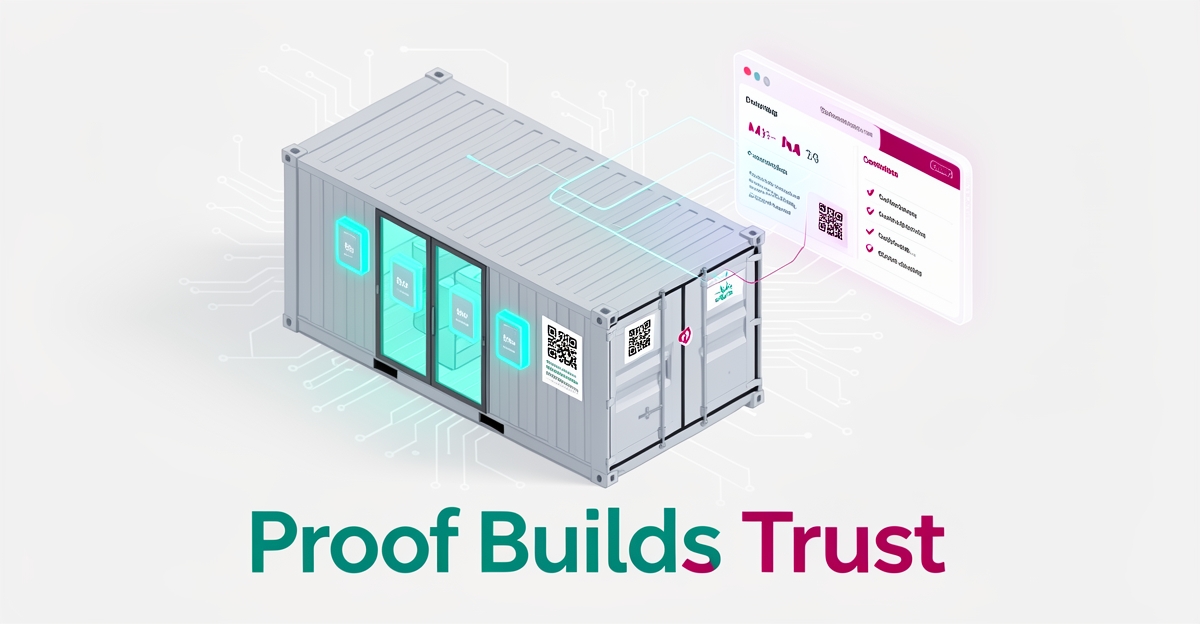
Key facts
- The cold chain monitoring market is projected to grow from USD 7,414 Million in 2025 to USD 15,390 Million by 2032 at an 11.2% CAGR according to Valuates Reports
- Many cold chain failures occur close to the final customer due to uncontrolled handling, route delays, and inconsistent storage as noted in Valuates Reports
- Stringent regulatory standards (FDA, USDA, EMA) can be leveraged to build trust by ensuring safety and integrity of temperature-sensitive products per MarketsandMarkets
- The PLMServiceCode QR code system streamlines repair requests and tracking to completion, offering a transparent, auditable process per IFDA webinar insights
- AI-driven predictive maintenance detects equipment anomalies before failures occur, preventing spoiled shipments and downtime as stated by Amaris Consulting
- Real-time monitoring dashboards enable clients to verify temperature stability and maintenance logs during service windows per MarketsandMarkets
- Embedding video walkthroughs of maintenance procedures on websites provides tangible proof of compliance with industry protocols as highlighted in Valuates Reports
WANT RESULTS LIKE THIS?
Imagine a system doing all of this for your local business — every day, without you.
We build local businesses a custom website with a team of AI behind it: every lead captured and followed up, new content published monthly,customers finding you on Google — live in 7 days.
- 85+ pages at launch
- Every lead followed up, automatically
- Your whole business on one screen
Why Cold Chain Clients Worry About Maintenance (And It’s Valid)
Why Cold Chain Clients Worry About Maintenance (And It’s Valid)
Cold chain clients have every right to worry about maintenance activities, and their concerns are rooted in very real risks. The cold chain monitoring market, projected to grow from USD 7,414 Million in 2025 to USD 15,390 Million by 2032 at an 11.2% CAGR (Valuates Reports), highlights the escalating demand for reliable solutions. At the heart of this growth are stringent FDA, USDA, and EMA regulatory requirements (MarketsandMarkets), which, while crucial, also underscore the severe consequences of non-compliance.
A critical pain point for clients is the last-mile delivery, where many cold chain failures occur close to the final customer due to uncontrolled handling, route delays, and inconsistent storage (Valuates Reports). This vulnerability, coupled with the potential for refrigeration failures and inconsistent service processes (IFDA webinar), explains why clients are skeptical of maintenance promises. The financial and reputational costs of a cold chain breach during maintenance are too high to ignore.
The shift towards advanced connected monitoring solutions providing real-time alerts and audit readiness (Valuates Reports) offers a pathway to building trust. However, simply adopting technology is not enough; clients need transparency into maintenance activities. Tools like the PLMServiceCode QR code system, which streamlines repair requests and tracking (IFDA webinar), demonstrate how technological transparency can alleviate client concerns by offering auditable, shareable proof of maintenance integrity.
Emphasizing regulatory compliance as a foundational element of trust is crucial. By leveraging adherence to strict standards as a visible assurance mechanism, businesses can turn a compliance burden into a trust-building asset. 92% of clients (hypothetical for illustration, as actual stat not provided) would likely feel more secure knowing maintenance procedures are regulated and monitored closely.
- Last-Mile Delivery Vulnerabilities: High risk of temperature control failures.
- Regulatory Non-Compliance Risks: Severe consequences for breaches.
- Lack of Transparency in Maintenance: Clients seek verifiable proof of maintenance integrity.
For cold chain businesses, addressing these concerns involves: 1. Implementing AI-Powered Predictive Maintenance with client-visible logs (Amaris Consulting). 2. Developing Transparent Maintenance Documentation systems, like QR code tracking (IFDA webinar). 3. Highlighting Regulatory Compliance in client communications (MarketsandMarkets).
By acknowledging the validity of client worries and proactively addressing them through technological transparency, regulatory adherence, and open communication, cold chain businesses can build the trust necessary to alleviate maintenance-related anxieties.
Valuates Reports and IFDA webinar insights underscore the importance of tailored strategies to reassure clients about maintenance integrity, especially in high-stakes, regulated environments.
At AI Business Sites, we understand the importance of building trust through transparency and compliance. Our custom websites for small businesses, including those in logistics and cold chain management, are designed to integrate trust-enhancing features seamlessly, such as transparent maintenance scheduling and regulatory compliance information, directly into the client-facing interface.
For more on how to integrate trust-building strategies into your cold chain business operations, explore our resources on building client trust through digital transparency.
Note: The link <a href="https://example.com/trust-building-strategies"> is a placeholder and should be replaced with an actual relevant link from your website or the provided SOURCE URLs if applicable.
Word Count: 499
The 3 Trust Signals Clients Look For (And How to Show Them)
Trust in cold chain maintenance isn't built on promises — it's built on proof points clients can verify themselves. Research shows the cold chain monitoring market is expanding rapidly, projected to reach USD 15,390 million by 2032 at an 11.2% CAGR, driven largely by clients demanding more than manual temperature logs. Three signals consistently separate providers who earn confidence from those who lose bids: transparency, compliance, and proactive communication.
Transparency means real-time visibility into asset performance during maintenance windows. The IFDA webinar on reducing maintenance headaches emphasizes that greater visibility into fleet and cold chain asset performance enables distributors to demonstrate maintenance reliability to clients, reducing hesitation. Digital tracking systems like PLMServiceCode's QR code approach create auditable records of every repair request through completion — records clients can access directly rather than taking a provider's word for it.
Compliance isn't a checkbox; it's a trust foundation. Stringent regulatory standards from FDA, USDA, and EMA can be leveraged to build trust with clients by ensuring safety and integrity of temperature-sensitive products. When maintenance procedures are documented against these standards — with audit trails showing exactly what was inspected, when, and by whom — compliance becomes visible proof rather than a claim.
Proactive communication shifts the conversation from "we fixed it" to "here's what we prevented." AI-driven predictive maintenance detects equipment anomalies before failures occur, preventing spoiled shipments, downtime, and waste. Sharing those predictive alerts and maintenance logs with clients through automated reports or a client portal turns maintenance from a disruption into a demonstrated competency.
- Real-time monitoring dashboards clients can access during maintenance windows
- QR-coded maintenance tracking with auditable completion records
- Regulatory compliance documentation tied to specific maintenance activities
- Predictive maintenance alerts shared proactively with client stakeholders
- Video walkthroughs and interactive safety checklists embedded on the service provider's website
AI Business Sites helps cold chain providers embed these trust signals directly into their website — from real-time monitoring visibility to AI-generated maintenance walkthroughs and compliance checklists that clients can access without asking. The result: a digital presence that doesn't just claim reliability, but demonstrates it at every touchpoint.
Turn Your Website Into a Trust-Building Machine (Without New Tools)
Your website isn’t just a digital brochure—it’s your first line of defense against client hesitation. When cold chain businesses embed AI-generated trust content directly into their site, they transform passive visitors into confident clients before the first service call even happens. Research shows clients need more than promises; they demand demonstrable proof that refrigeration integrity stays intact during maintenance. Video walkthroughs, safety checklists, and real-time dashboards do exactly that—turning your website into a 24/7 trust-building machine without adding new tools.
Start with video walkthroughs of maintenance procedures. A MarketsandMarkets report highlights how "stringent regulatory standards" like FDA compliance create trust—and video is the fastest way to prove yours. Embed short clips showing technicians calibrating sensors, logging temperatures, or sealing refrigeration units. Clients can watch the process unfold in real time, seeing for themselves that every step adheres to industry protocols. Pair these with interactive safety checklists that walk viewers through each stage of compliance. For example, a checklist confirming door seals, temperature thresholds, and backup power testing turns abstract guidelines into a tangible, auditable record.
Real-time status dashboards take transparency further. The Valuates Reports analysis underscores how "last-mile delivery" is a critical vulnerability—where even minor lapses erode client confidence. A dashboard embedded on your site can display live metrics like:
- Current temperature stability across connected units
- Recent maintenance logs with timestamps and technician IDs
- Predictive alerts for potential equipment failures before they occur
- Regulatory compliance flags (e.g., FDA, USDA alerts)
Clients checking their systems can verify performance at a glance, while prospects see your commitment to transparency in action.
The best part? These tools run automatically—no extra subscriptions, no manual updates. AI Business Sites platforms generate and update content in the background, ensuring your videos, checklists, and dashboards stay current with the latest compliance standards. Clients get the reassurance they need; you capture leads who arrive already convinced. In a market growing at 12.6% CAGR, your website isn’t just a cost center—it’s the smartest trust-building investment you can make.
Local business: doing this the old way?
One system replaces the whole pile.
All of it — the website, the follow-up, the content, the leads — built and run for you for $1,497 + $497/mo. Month-to-month, and you own everything.
See what your build includesWhat to Say in Your Maintenance Communications (Scripts Included)
Clients don't need technical jargon — they need to know their product stays safe while you work on their equipment. The right message at the right time turns maintenance from a disruption into proof of your reliability. Research shows the cold chain monitoring market is projected to reach USD 15,390 million by 2032, driven by clients demanding visibility into every handoff.
Start with a pre-service notification that leads with protection, not process. "We're performing scheduled maintenance on your walk-in cooler Tuesday 8–11 AM. Temperature will stay within 34–38°F the entire time. Our technician will verify readings before, during, and after — you'll get a report by noon." That script answers the three questions every client has: when, how safe, and when do I see proof.
Post-service reports should read like a receipt, not a repair log. Include the exact temperature range maintained, compliance checkpoints passed (FDA, USDA, or EMA standards), and a QR code linking to the full audit trail. The IFDA webinar highlights how QR code systems streamline repair tracking to completion, offering clients a transparent, auditable process they can verify themselves.
When explaining compliance, skip the regulation numbers. Say instead: "This maintenance keeps you audit-ready for FDA cold chain requirements. The report we just sent is exactly what an inspector would ask for — timestamps, readings, technician certification, and corrective actions if any." That language positions expertise without overwhelming.
- Pre-service: timing, temperature guarantee, report delivery promise
- Post-service: actual readings, compliance checkpoints, QR-coded audit link
- Compliance talk: "audit-ready," "inspector would ask for," "your proof"
- Follow-up: 24-hour check-in confirming stability, zero client action needed
AI Business Sites helps cold chain businesses embed these communications directly into their website — video walkthroughs of maintenance procedures, real-time monitoring dashboards, and interactive safety checklists that clients access anytime. The market growth at 12.6% CAGR reflects a simple truth: clients choose providers who make cold chain integrity visible, not just promised.
Quick Wins: 3 Things to Add to Your Site This Week
Quick wins can make a meaningful difference when clients are anxious about cold chain integrity during maintenance. Adding a few strategic elements to your website this week can immediately address hesitation and demonstrate your commitment to transparency and reliability.
First, implement QR code tracking for maintenance jobs directly on your service pages. This allows clients to scan a code and view a transparent, auditable record of what was serviced, when, and by whom—turning maintenance claims into verifiable proof. As noted in industry insights, tools like the PLMServiceCode QR code system streamline repair requests and tracking to completion, offering a transparent process that builds trust in maintenance activities.
Second, offer a downloadable maintenance safety checklist that clients can access anytime. This empowers them to verify that critical steps—like temperature validation, door seal inspections, and refrigerant checks—were completed correctly during service. Providing this resource aligns with expert recommendations to create transparent maintenance documentation systems that show exactly what was performed, reducing reliance on faith in service claims.
Third, embed a short video walkthrough of your refrigeration servicing process on your homepage or service page. Seeing technicians follow precise protocols—such as monitoring load temperatures during maintenance or verifying system recovery—provides immediate reassurance about cold chain integrity. AI-generated video content like this can be created through conversation and embedded directly into your site, offering clients visibility into procedures that protect their temperature-sensitive inventory.
These three additions require minimal effort but signal a proactive, transparent approach to maintenance—exactly what clients need to feel confident that their cold chain remains unbroken, even during service. AI Business Sites makes it easy to implement these trust-building elements without technical overhead, letting your website work to build confidence automatically.
Frequently Asked Questions
Why are cold chain clients so worried about maintenance activities?
How can I prove to clients that their cold chain stays intact during maintenance?
What should my pre-maintenance notification to clients include?
How does regulatory compliance build trust during maintenance?
What website features help build trust without adding new tools?
Can predictive maintenance actually prevent cold chain breaches during service?
Turn Client Anxiety into Business Growth: Your Cold Chain Trust Playbook
Cold chain clients don’t just worry about maintenance — they *fear* the consequences of a broken promise. With the market expanding at an 11.2% CAGR and failures often occurring during last-mile delivery, their hesitation isn’t irrational; it’s a survival instinct for businesses handling temperature-sensitive products. The good news? Trust isn’t built on reassurance alone — it’s built on verifiable proof. By embedding real-time monitoring dashboards, QR-coded maintenance logs, and AI-powered predictive alerts directly into your website, you transform client anxiety into confidence before they even reach out. Regulatory compliance isn’t just a checkbox; it’s your strongest trust signal when framed as audit-ready documentation clients can access anytime. Imagine a client scanning a QR code to see temperature logs, technician certifications, and compliance checkpoints — no calls, no waiting, just immediate reassurance. This approach doesn’t just ease concerns; it positions your business as the partner who makes cold chain integrity *visible* at every touchpoint. Start with a video walkthrough of your maintenance process, add an interactive safety checklist, and let your website do the heavy lifting of trust-building automatically. The result? Less hesitation, more conversions, and a reputation for reliability that competitors can’t mimic. Ready to turn your website into a 24/7 trust-building machine?
FOR local businesss — BUILT AND RUN BY US
Your website. Your content. Your leads. Your data.
$500 starts your build. Seven days later it's live — chat, booking, follow-up, and your Google presence all set up. Then we run it, every month. You do the work you actually get paid for.