
Key facts
- 70% of online shopping carts are abandoned, a rate that directly applies to incomplete league registrations according to Klaviyo research
- 43% of shoppers abandon because they're "just browsing" or "not ready to buy" — families waiting on schedules or comparing options per Baymard Institute data
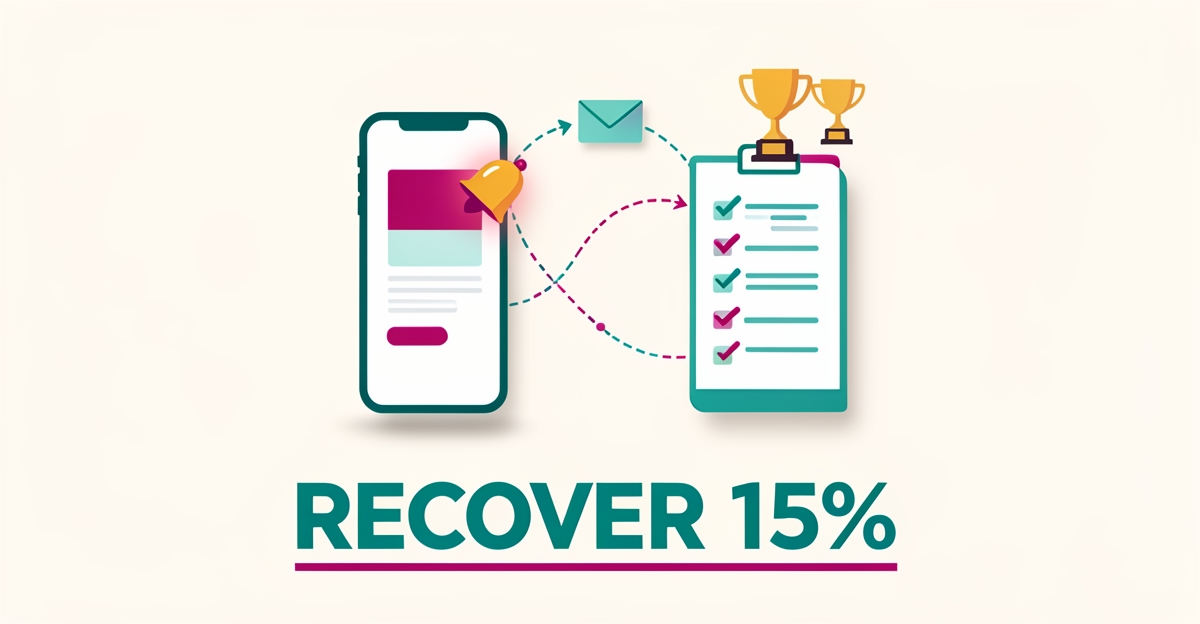
- HC Torpedo recovered ~15% of lapsed fans using targeted promotions enabled by RFM segmentation per The BrightByte case study
- 52% of home service pros use AI for customer communication, a strategy equally viable for leagues per Housecall Pro survey
- Abandoned cart emails use first-party, consent-based data, making them legally compliant with GDPR and CCPA as clarified by Klaviyo
- Average email open rates for abandoned cart emails are around 30%, a useful benchmark for recovery sequences per Klaviyo research
- 1-2 hours and 24 hours are optimal timing for the first two stages of abandoned registration follow-ups based on Klaviyo guidance
WANT RESULTS LIKE THIS?
Imagine a system doing all of this for your local business — every day, without you.
We build local businesses a custom website with a team of AI behind it: every lead captured and followed up, new content published monthly,customers finding you on Google — live in 7 days.
- 85+ pages at launch
- Every lead followed up, automatically
- Your whole business on one screen
The Abandoned Registration Conundrum: A Silent Killer for League Operators
Every league operator knows the frustration: a parent starts a registration, selects a division, enters their child's details — and then vanishes. The form sits half-finished. The spot stays empty. The season approaches with holes in the roster.
According to industry research from Klaviyo, 70% of online shopping carts are abandoned — a statistic that maps directly to league registrations. The mechanics are identical: a registration flow is a checkout flow, and an abandoned registration is an abandoned cart. But there's a critical difference that makes recovery even more worthwhile. When a parent starts a sign-up, they've already signaled high intent to purchase — they've chosen a sport, an age group, a location. They're not browsing; they're one step from committing.
- 43% abandon because they're "just browsing" or "not ready to buy" — families waiting on schedules or comparing options
- Unexpected fees (processing, equipment, uniforms) mirror ecommerce's "high shipping costs" problem
- Unclear refund policies and payment security concerns create friction at the final step
- Limited payment options — no installment plans, no digital wallets — stop completions cold
The HC Torpedo hockey club proved this isn't theoretical. Using behavioral segmentation to identify fans who "attended 3 games and stopped," targeted automated follow-ups recovered roughly 15% of lapsed fans the following season. Before that visibility, "those fans were invisible. They just stopped showing up and nobody followed up because nobody knew."
For league operators, the same invisibility problem exists. Without automated tracking at each registration step — sport selected, age group chosen, payment initiated — abandoners slip away unnoticed. AI Business Sites builds websites that capture this funnel data automatically, triggering personalized follow-ups at the exact moment a parent drops off. The platform's built-in automation handles these sequences without manual effort, turning invisible abandoners into completed registrations while you focus on running the league.
Evidence-Backed Solution: Strategic Automated Follow-Up Sequences
When families start a league registration but don’t finish, they’re not just browsing—they’ve already signaled strong intent by selecting a sport, age group, location, and potentially entering child details. This makes them far more valuable than cold leads, and recovering them requires a strategic, automated follow-up sequence grounded in proven ecommerce principles.
Research confirms that 70% of online shopping carts are abandoned, a rate that directly translates to incomplete league registrations when users start but don’t complete sign-up flows. Klaviyo’s framework for abandoned cart recovery—validated by industry data from the Baymard Institute—provides the foundation for leagues to reclaim these high-intent prospects through multi-stage, behavior-triggered emails. The first message should arrive 1–2 hours after abandonment, acting as a gentle “you dropped this” reminder with registration details and a clear CTA to resume—no discount yet, just a frictionless path back to completion.
By 24 hours, layer in social proof and urgency: include parent testimonials or player reviews alongside messaging about limited spots or approaching deadlines to address hesitation. At 48–72 hours, deploy economics-driven incentives only for high-value registrations—such as travel teams or multi-child families—where lifetime value justifies the margin hit, echoing Klaviyo’s guidance to avoid blanket discounts. For recreational leagues, substitute non-monetary rewards like priority practice time or free clinic access. Finally, at one week, offer alternative recommendations: a nearby location, different division, or waitlist option to capture interest that may have shifted.
Critically, these sequences rely exclusively on first-party, consent-based data—email or SMS permission captured at registration start—making them fully compliant with GDPR and CCPA, unlike third-party tracking methods. To maximize relevance without causing fatigue, use trigger splits to personalize by sport, age group, or past participation, and filter out users who abandoned recently. This approach transforms “invisible” abandoners into actionable opportunities, turning near-misses into completed registrations without manual effort.
AI Business Sites’ platform enables this natively through its visual automation builder, allowing league operators to set up these sequences once and let the system handle timing, personalization, and delivery—freeing them to focus on coaching, not chasing paperwork.
Local business: doing this the old way?
One system replaces the whole pile.
All of it — the website, the follow-up, the content, the leads — built and run for you for $1,497 + $497/mo. Month-to-month, and you own everything.
See what your build includesPutting it into Practice: Implementation Steps for League Operators
Putting it into Practice: Implementation Steps for League Operators
Automating follow-ups for abandoned league registrations isn't just about sending emails—it's about strategically re-engaging high-intent users at the right moment with the right message. Here's how to implement an effective automated follow-up sequence, leveraging insights from proven marketing automation strategies and the unique capabilities of AI Business Sites' automation platform.
Trigger automated emails at key drop-off points, tailored to the user's registration stage:
- Stage 1 (1-2 hours): "You dropped this" email with registration details and a clear CTA to resume, leveraging AI Business Sites' Automated Email & Notification Sequences to ensure timely engagement.
- Stage 2 (24 hours): Add social proof (e.g., parent testimonials) and urgency (limited spots), using AI-generated content for personalization.
- Stage 3 (48-72 hours): Offer economics-driven incentives (e.g., sibling discounts) for high-value registrations, segmented using the platform's CRM capabilities.
- Stage 4 (1 week): Suggest alternative registrations (different division, location), utilizing Behavioral Segmentation to avoid inbox fatigue.
Statistic in Action: Klaviyo's research shows 70% of online shopping carts are abandoned source, a phenomenon directly applicable to league registrations. By addressing this with targeted sequences, leagues can significantly reduce abandonment rates.
- Explicit Consent: Capture consent with clear language during registration starts.
- Trust Signals: Display security badges and refund policy links in follow-ups to alleviate concerns, enhancing the trust built by AI Business Sites' Secure Payment Processing.
Expert Insight: "Abandoned cart emails use first-party data—online behavioral data you observe after someone gives you consent to contact them via email or SMS," emphasizing their legality source.
- High-Value Registrations: Reserve discounts for registrations with higher lifetime value (e.g., travel teams).
- Non-Monetary Incentives: Offer priority practice time or free clinics for recreational leagues, aligning with AI Business Sites' focus on Personalized Engagement.
Case Study: HC Torpedo recovered ~15% of lapsed fans using targeted promotions source, demonstrating the power of segmented incentives.
- Track Registration Funnel: Tag users at each registration step to identify drop-off points, utilizing AI Business Sites' Real-Time Analytics.
-
Predictive AI: After accumulating 6+ months of data, leverage predictive models for more accurate targeting, a capability integrated into the platform's automation workflows.
-
Complex Issues: Ensure all automated emails include a direct reply-to address for staff, complementing AI Business Sites' Human-in-the-Loop approach for sensitive or complex inquiries.
Actionable Bullet Points for Immediate Implementation:
- Activate Consent-Based Tracking: Immediately capture explicit consent for follow-ups.
- Map Your Registration Funnel: Identify and tag every step to pinpoint drop-offs.
- Launch a 2-Stage Pilot: Start with the first two stages of your follow-up sequence to test timing and response.
By integrating these steps with AI Business Sites' automation capabilities, league operators can significantly boost last-minute registrations, turning would-be abandoners into engaged participants. Housecall Pro's findings support this, showing 52% of home service pros use AI for customer communication source, a strategy equally viable for leagues.
Measuring Success & Avoiding Pitfalls in Automated Follow-Ups
Automated follow-ups are a powerful tool for recovering abandoned league registrations, but their effectiveness hinges on careful measurement and strategic avoidance of common pitfalls. Here’s how to navigate both:
Key Metrics to Track for Success
- Recovery Rate: The percentage of abandoned registrations successfully completed after automated follow-ups. Aim for at least a 15% recovery rate, as seen in the HC Torpedo case study with lapsed fan recovery source.
- Open and Click-Through Rates (CTR): Monitor to ensure your messages are being seen and acted upon. Average email open rates for abandoned cart emails are around 30% source, a useful benchmark.
- Opt-Out Rates: High rates may indicate over-aggressive follow-up strategies.
Common Pitfalls to Avoid
-
Over-Discounting: Avoid blanket discounts. Instead, use economics-driven incentives for high-value registrations (e.g., multi-child families) where the margin justifies the cost, as advised by Klaviyo source.
-
Poor Timing:
- Too Soon/Too Late: Avoid sending follow-ups either immediately (before the user might complete on their own) or too long after abandonment. 1-2 hours and 24 hours are optimal for the first two stages source.
-
Inconsistent Frequency: Balance reminders without causing inbox fatigue. Filter out recent abandoners to avoid overwhelming subscribers source.
-
Lack of Personalization:
- Generic Messages: Ensure follow-ups are tailored to the user’s registration stage, sport, and location. Personalization can increase click rates as shoppers investigate new, relevant finds source.
- Ignoring Behavioral Triggers: Fail to adapt messages based on the user’s actions (or inactions).
The Importance of Testing League-Specific Optimizations
- A/B Testing:
- Subject Lines and CTAs: Test for higher open and click rates. Prominent, action-oriented CTAs are crucial source.
-
Incentive Types: Compare monetary vs. non-monetary incentives for effectiveness in your demographic.
-
Segmentation Testing:
- Demographic Segmentation: Tailor messages by age group, location, or sport type.
- Behavioral Segmentation: Target users based on their registration progress and past interactions.
Example in Practice
A youth soccer league might find through A/B testing that families with multiple children respond better to priority practice time selection as an incentive, rather than discounts. Meanwhile, single-child families might be more swayed by free clinic access. By segmenting their follow-ups, the league can significantly boost recovery rates.
Actionable Advice
| Action | Rationale |
|---|---|
| Implement a Multi-Stage Follow-Up | Addresses different user mindsets over time source |
| Use First-Party Consent Data | Ensures legal compliance and user trust source |
| Regularly Review Metrics | Identifies areas for optimization and prevents pitfalls |
Your Next Season Starts With the Registrations You Almost Lost
Abandoned registrations aren't lost causes — they're high-intent signals waiting for the right nudge. The data is clear: 70% of online carts are abandoned, but strategic, multi-stage follow-ups grounded in first-party consent data can recover a meaningful share of those near-misses. The framework is proven: gentle reminders at 1–2 hours, social proof and urgency at 24 hours, economics-driven incentives for high-value spots at 48–72 hours, and alternative options at one week. The HC Torpedo hockey club saw roughly 15% of lapsed fans return after implementing behavioral segmentation and targeted outreach. For league operators, the same principle applies — visibility into your registration funnel turns invisible abandoners into actionable opportunities. AI Business Sites builds websites that capture this funnel data automatically and trigger personalized follow-up sequences through a visual automation builder, so you recover registrations without manually chasing paperwork. Start by mapping your registration drop-off points, activating consent-based tracking, and launching a two-stage pilot sequence. The families who started signing up already want in — your website can help them cross the finish line.
FOR local businesss — BUILT AND RUN BY US
Your website. Your content. Your leads. Your data.
$500 starts your build. Seven days later it's live — chat, booking, follow-up, and your Google presence all set up. Then we run it, every month. You do the work you actually get paid for.