
Key facts
- Builder Prime's platform has processed $4.29 billion in sales across 869,794 jobs with 11.4 million automated tasks executed since launch
- Precision Cabinets Inc. achieved a 30% decrease in product returns and complaints through AI-driven optical inspection for quality control
- The U.S. custom cabinet market valued at $10.1 billion in 2024 is projected to reach $14.9 billion by 2033 growing at 4.7% CAGR
- Cabinetshop Maestro teams can start tracking jobs in as little as 15 minutes with flat-rate pricing starting at $199/month for 20 users
- Jobman ERP users report full operational rollout in just 2 weeks after training with seamless integration
- Interdepartmental inefficiencies — not production speed — are the primary driver of lead time delays in custom cabinet manufacturing
- AI-integrated websites consolidate CRM, project management, content, and automation into one platform replacing 8-10 separate subscriptions
WANT RESULTS LIKE THIS?
Imagine a system doing all of this for your local business — every day, without you.
We build local businesses a custom website with a team of AI behind it: every lead captured and followed up, new content published monthly,customers finding you on Google — live in 7 days.
- 85+ pages at launch
- Every lead followed up, automatically
- Your whole business on one screen
The Hidden Cost of Fragmented Project Tracking
The Hidden Cost of Fragmented Project Tracking
In the world of custom cabinet manufacturing, where precision and timeliness are paramount, the repercussions of fragmented project tracking can be devastating. Disconnected systems - a maze of spreadsheets, emails, texts, and separate CAD and accounting tools - create insidious information gaps. These silos not only lead to missed deadlines and lost leads but also foster administrative bottlenecks that stifle operational efficiency.
Interdepartmental Inefficiencies: The Unsung Culprit
Research underscores that it's not just production speed that drives lead time delays in custom cabinet manufacturing, but rather interdepartmental inefficiencies source. When sales, design, production, and installation teams operate in data silos, the cumulative effect is a perfect storm of miscommunications, delayed updates, and post-sale chaos in tracking progress and communicating with clients. For instance, a simple project update might be lost in an email chain, causing a production delay that cascades into a missed deadline.
The Quantifiable Toll
- Builder Prime's platform has processed over $4.29 billion in sales, highlighting the scale of operations where fragmented tracking could lead to significant losses source.
- A 30% decrease in product returns and complaints was achieved by Precision Cabinets Inc. through AI-driven quality control, indirectly showcasing the benefits of streamlined, data-driven processes source.
- The U.S. custom cabinet market, valued at $10.1 billion in 2024, stands to benefit vastly from reduced inefficiencies, with projected growth to $14.9 billion by 2033 source.
Key Pain Points Exacerbated by Fragmentation:
- Missed Deadlines: Due to poor visibility across departments.
- Lost Leads: From slow response times to inquiries.
- Administrative Bottlenecks: Manual tracking and communication burdens.
The Path Forward
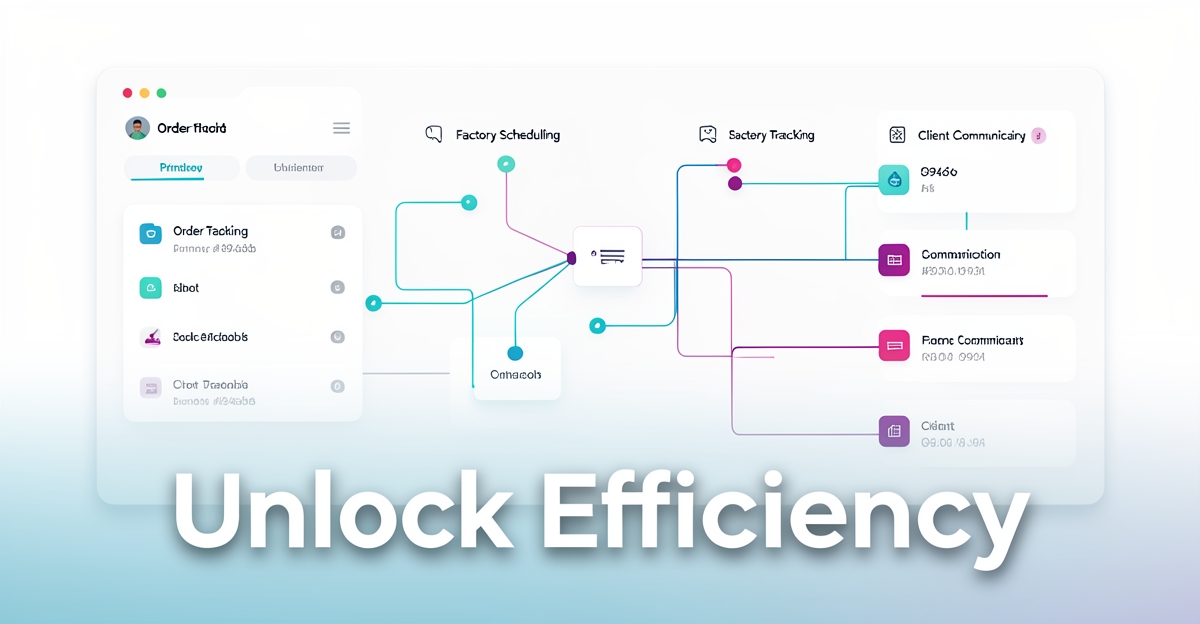
Implementing an AI-integrated website that automatically logs orders, updates delivery timelines, sends progress alerts, and syncs with factory schedules can be a transformative solution. By providing a single, transparent view of project stages from order intake to delivery, cabinet manufacturers can mitigate the hidden costs of fragmentation. As AI Business Sites illustrates through its project management solutions, consolidating operations onto a unified platform reduces the likelihood of miscommunication and ensures that every client remains informed, significantly reducing missed deadlines.
For example, an AI-driven system can automatically alert the production team when a design is finalized, ensuring timely manufacturing starts. Similarly, clients receive automated progress updates, reducing support inquiries and enhancing satisfaction.
Embracing Unity for Efficiency
The shift towards integrated, AI-enhanced project management is not just a technological upgrade; it's a strategic move to reclaim lost time, reduce errors, and elevate client satisfaction. By addressing the root cause of fragmentation, custom cabinet manufacturers can unlock a more streamlined, responsive, and profitable operation.
How AI Creates a Single Source of Truth from Order to Delivery
Cabinet manufacturers have long struggled with information scattered across emails, spreadsheets, and sticky notes — a fragmentation that costs time and trust. Industry research shows this disconnect causes leads to fall through cracks and critical details to get lost between sales, design, production, and installation teams. AI-integrated platforms solve this by creating a single digital job folder where estimates, drawings, schedules, material lists, and notes live together, accessible to every department in real time.
Modern solutions go beyond static storage. Voice-to-data entry lets shop crews dictate job notes, tasks, and specifications directly into the system from the production floor, eliminating manual entry bottlenecks. Automated client updates trigger when milestones shift — material arrival, CNC completion, finish application, delivery scheduling — generating draft communications for review before sending. This proactive approach reduces support inquiries while keeping homeowners informed without adding administrative burden.
- Centralized job folders accessible to sales, design, production, and installation teams
- Voice-to-data entry for shop crews on the production floor
- Automated client updates triggered by real-time milestone completion
- Predictive scheduling that identifies bottlenecks before they derail timelines
- Seamless integration with CAD/CAM systems and accounting software
Predictive scheduling transforms reactive firefighting into proactive planning. By analyzing machine status, operator availability, and job sequences, AI spots capacity conflicts and bottleneck-prone workflows days or weeks in advance. Implementation data shows teams can achieve full operational rollout in as little as two weeks, with some platforms enabling job tracking within 15 minutes of setup. For cabinet manufacturers ready to move from fragmented tracking to unified project visibility, AI Business Sites builds websites with this operational intelligence baked in — so the platform handling your leads also manages your projects from order to delivery.
Automating Client Communication Without Losing the Personal Touch
Client communication in cabinet manufacturing has traditionally meant project managers manually drafting updates, chasing approvals, and fielding the same questions repeatedly. AI changes this dynamic by generating progress updates directly from real-time job status — material arrivals, production milestones, delivery windows — so teams review and send instead of writing from scratch. According to Cabinetshop Maestro, their system drafts client-facing updates based on actual job data that staff can edit before sending, eliminating the blank-page problem while keeping communication accurate and timely.
This approach reduces the manual follow-up burden that consumes hours each week. Builder Prime's platform has executed over 11.4 million automations across nearly 870,000 jobs, demonstrating how routine communication tasks can be systematized at scale. When updates flow from actual project data rather than memory or scattered notes, clients receive consistent, factual information without project managers becoming bottlenecks.
Client-facing approval portals take this further by removing login friction entirely. Jobman ERP enables clients to review deliverables, leave feedback, upload files, and sign contracts through a simple link — no accounts to create, no passwords to reset. This self-serve approach cuts support inquiries and keeps homeowners informed without constant check-ins from your team.
Key benefits of AI-driven client communication:
- Progress updates drafted from live job data — material status, milestones, delivery windows
- Team review before sending maintains accuracy and brand voice
- Approval portals with zero login friction for clients
- Automatic notifications when clients take action — approvals, feedback, signatures
- Reduced support inquiries as homeowners self-serve for status and documents
AI Business Sites builds this communication layer directly into the website platform, so client updates, approvals, and project visibility live alongside your CRM, content engine, and newsletter — one system instead of duct-taped tools. The result: homeowners stay informed, project managers reclaim hours, and nothing falls through the cracks between the shop floor and the client's inbox.
Local business: doing this the old way?
One system replaces the whole pile.
All of it — the website, the follow-up, the content, the leads — built and run for you for $1,497 + $497/mo. Month-to-month, and you own everything.
See what your build includesIntegrating With the Tools You Already Use
Integrating With the Tools You Already Use
For cabinet manufacturers, integrating new technology with existing workflows is crucial to avoid disrupting operations. AI platforms designed for project tracking and delivery in this sector are engineered to seamlessly connect with familiar tools, ensuring a smooth transition.
By linking with CAD/CAM systems like Autokitchen and Cabinet Vision, and accounting software such as Xero, AI platforms eliminate data silos. This integration enables real-time synchronization of project designs, financials, and production schedules, reducing the likelihood of errors or overlooked updates. For instance, Cabinetshop Maestro facilitates voice-to-data entry, allowing shop crews to dictate job notes and specs, which are then auto-populated into the system, streamlining data entry and minimizing administrative burdens.
The rollout of these integrated AI solutions can be remarkably swift, with real-world deployments achieving full operational readiness in as little as two weeks, as highlighted by Jobman ERP users. Furthermore, flat-rate pricing models, such as those offered by Cabinetshop Maestro (starting at $199/month for up to 20 users), scale with the shop's needs rather than per user, making adoption more accessible and cost-predictable.
- Unified Workflow: Single-source truth across CAD designs, production schedules, and financial data.
- Rapid Deployment: Full integration achievable in weeks, not months, minimizing downtime.
- Scalable Pricing: Flat rates that grow with your business, not by the number of users.
For cabinet manufacturers, this means less time spent on manual data transfers between systems and more focus on high-value tasks like design optimization and client service. Builder Prime, for example, has processed over $4.29 billion in sales and managed 869,794 jobs, demonstrating the scalability and reliability of integrated AI solutions in streamlining operations.
By embracing these integrated AI platforms, cabinet manufacturers can enhance their project tracking and delivery capabilities without overhauling existing toolsets, leading to improved efficiency, reduced delays, and enhanced client satisfaction.
From Reactive to Proactive: What Changes When the Website Runs the Project
Cabinet shops rarely have a single source of truth for their projects. Orders live in emails, schedules disappear into spreadsheets, and clients call daily to ask, “Where’s my cabinet set?” The result isn’t just frustration—it’s missed deadlines, wasted time chasing details, and revenue left on the floor.
An AI-integrated website changes that. Instead of a static brochure, your website becomes the central hub that logs orders the moment they arrive, syncs every step with your factory schedule, and auto-generates draft alerts your team can edit before they go out. The owner steps in only when judgment is required: approving a delay, adjusting a milestone, or handling an exception. Everything else runs automatically.
Builder Prime’s platform alone has executed 11.4 million automated tasks since launch, proving that the right system can handle routine workflows without constant oversight. Cabinet manufacturers using Jobman ERP report rolling out full operations in as little as two weeks after training, while Cabinetshop Maestro teams can start tracking jobs in 15 minutes flat. AI doesn’t just reduce busywork—it turns project tracking from reactive to proactive:
- Auto-log orders from web forms, phone calls, and booking widgets into digital job folders that hold estimates, drawings, and material lists in one place.
- Auto-sync factory schedules with real-time progress so milestones update without manual entry and bottlenecks appear before they delay delivery.
- Auto-generate draft progress alerts for clients based on job status—material availability, shop capacity, and delivery windows—ready for your review before sending.
- Auto-create follow-up tasks and approvals when a stage completes, keeping the pipeline moving without micromanagement.
- Auto-deliver branded documents—proposals, change orders, and installation guides—populated with current project data and sent straight to inboxes.
The shift isn’t about more software—it’s about fewer missed deadlines, less time chasing details, and more capacity for the work that actually grows your business.
Frequently Asked Questions
How does fragmented project tracking hurt cabinet manufacturers?
What’s the biggest time-waster in cabinet manufacturing project tracking?
Can AI really cut down on missed delivery deadlines?
How does AI handle client updates without losing the personal touch?
What’s the fastest way to adopt an AI project tracking system?
Do AI tools work with the software we already use?
Is AI too expensive for small cabinet shops?
Will AI replace my project managers?
Can AI help with scheduling bottlenecks before they happen?
What’s the simplest way to start using AI for project tracking?
Key Takeaways
{ "title": "Streamline Your Workflow, Elevate Your Business", "content": "Cabinet manufacturers can no longer afford the hidden costs of fragmented project tracking. By leveraging AI-integrated websites, businesses can transform their operations, achieving end-to-end visibility from order intake to
FOR local businesss — BUILT AND RUN BY US
Your website. Your content. Your leads. Your data.
$500 starts your build. Seven days later it's live — chat, booking, follow-up, and your Google presence all set up. Then we run it, every month. You do the work you actually get paid for.