
Key facts
- Fleet pressure washing businesses spend 12–15 hours weekly on manual quoting and admin tasks according to industry tooling data.
- AI automates quote generation from 20–30 minutes to under 5 minutes per job as per QuoteIQ.
- AI-generated Before/After previews increase estimate acceptance rates by 37% as reported by QuoteIQ.
- AI pricing automation achieves 40–60% cost reduction on quoting and pricing workflows per implementation benchmarks.
- Businesses adopting AI automation report a 200–400% ROI in the first year according to cloudnsite.
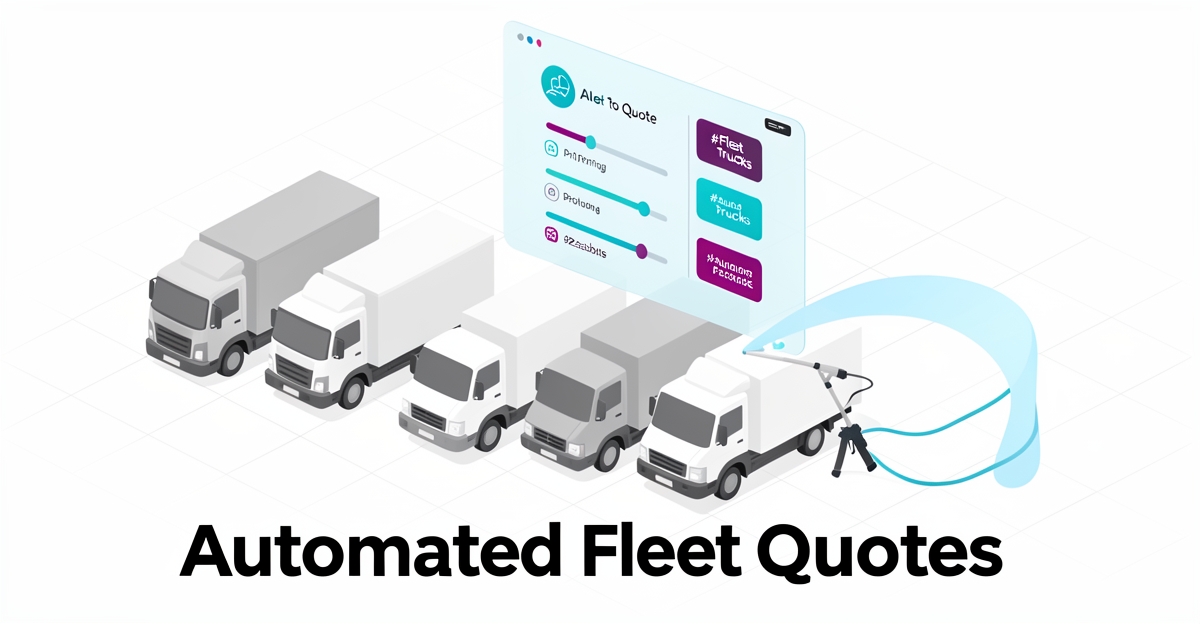
- Photo-to-quote AI instantly categorizes jobs into service tiers (e.g., Fleet Trucks) from vehicle images via QuoteIQ’s technology.
- Conversational AI editors allow instant service package adjustments via natural language commands as featured in QuoteIQ.
WANT RESULTS LIKE THIS?
Imagine a system doing all of this for your local business — every day, without you.
We build local businesses a custom website with a team of AI behind it: every lead captured and followed up, new content published monthly,customers finding you on Google — live in 7 days.
- 85+ pages at launch
- Every lead followed up, automatically
- Your whole business on one screen
The Quoting Bottleneck: Why Manual Pricing Hurts Fleet Pressure Washing
Most fleet pressure washing owners know the drill: a new inquiry lands, you pull up a spreadsheet, measure square footage by hand, cross-reference vehicle counts, and piece together a quote that still feels like a guess. Multiply that by every truck, van, and trailer in a fleet, and the hours vanish before the first nozzle fires.
Research shows fleets spend 12–15 hours each week just on quoting and administrative work, with a single estimate eating 20–30 minutes of focused time according to industry tooling data. That operational drag compounds fast — delayed responses, inconsistent pricing across vehicle types, and margin erosion from underbidding complex jobs.
- Manual vehicle categorization leads to mismatched service tiers
- Static price sheets can't reflect local demand or competitor shifts
- Revision cycles add another 5–10 minutes per estimate change
- Owners stay stuck in the office instead of on the job site
The bottleneck isn't just time — it's the inability to offer customized pricing for different vehicle types or job sizes at scale. AI Business Sites sees this pattern across service businesses: the website captures the lead, but the quoting process becomes the choke point. When pricing logic lives in a spreadsheet instead of a system that understands your services, every new fleet inquiry restarts the same manual cycle.
How AI Generates Dynamic Service Packages Based on Vehicle and Surface Data
Most fleet pressure washing businesses still rely on static price sheets that don’t account for different vehicle types or surface areas—leaving money on the table and customers waiting. The AI tools now available can change that by generating custom service packages in real time, turning a 20-minute manual process into one that takes under five minutes per job.
Photo-to-quote AI analyzes vehicle images to instantly categorize jobs into service tiers like “Fleet Trucks” or “Commercial Van Cleaning,” while conversational editors let you tweak packages with simple commands. Behind the scenes, dynamic pricing engines match local demand and competitor rates, automatically updating your pricing pages to stay competitive without manual edits.
Fleet owners using these tools report saving 12–15 hours weekly on quoting and invoicing, with estimate-to-acceptance rates jumping by 37% when AI-generated before/after visuals are included in proposals. The hidden cost of outdated pricing pages—lost bids, undercharged jobs, and inconsistent quotes—disappears when every estimate reflects actual vehicle specs and current market conditions.
- Photo-to-quote AI converts vehicle images into accurate service tiers in seconds
- Conversational editors adjust packages instantly via natural language commands
- Dynamic pricing engines keep your rates competitive without manual updates
- Before/after AI previews boost acceptance rates by 37%
For AI Business Sites clients, this automation stitches seamlessly into existing workflows—your website doesn’t just look professional, it acts like a pricing analyst and sales assistant combined. Instead of juggling spreadsheets and phone tag, owners focus on service quality while the system handles the rest.
Local business: doing this the old way?
One system replaces the whole pile.
All of it — the website, the follow-up, the content, the leads — built and run for you for $1,497 + $497/mo. Month-to-month, and you own everything.
See what your build includesAutomating Pricing Pages to Match Local Demand and Protect Margins
Most fleet pressure washing businesses still update pricing pages by hand — a slow process that leaves money on the table when local demand shifts or competitors adjust their rates. AI pricing engines change that by turning static service tiers into living, responsive catalogs that adapt in real time.
These systems ingest competitor pricing, historical job data, and seasonal demand patterns to recalculate rates for packages like "Fleet Trucks" or "Commercial Van Cleaning" without manual intervention. Margin rules stay locked in — for example, a floor of $X per hour for heavy-duty trucks — while the engine finds the competitive sweet spot above that floor. According to pricing automation research, intelligent systems evaluate multiple variables simultaneously, detecting anomalies and opportunities that manual analysis misses.
- Real-time competitor monitoring keeps service tiers aligned with local market rates
- Margin protection rules prevent pricing from dropping below profitable thresholds
- Demand forecasting adjusts packages seasonally — higher rates during peak fleet maintenance windows
- Conversational interfaces let owners ask "Where am I overpriced?" and get instant answers
The payoff is measurable. Businesses adopting AI automation for pricing and quoting workflows report 40-60% cost reductions on those processes, with 200-400% ROI in the first year according to implementation benchmarks. For a fleet washing operator spending 12-15 hours weekly on quoting and admin, that translates to reclaiming most of a workday.
At AI Business Sites, we've seen how this plays out on the website itself. The pricing page isn't a static document anymore — it's a live surface that reflects what the market will bear today, not what you guessed six months ago. When your site runs on an AI operations platform, those updates happen automatically, and the same engine that adjusts your fleet truck package can also generate the blog post explaining the new seasonal rate, draft the newsletter announcing it, and log the change in your CRM for the sales team.
The shift isn't about adding complexity. It's about removing the manual drag that keeps pricing stale — so your website earns its keep while you're out on the job site.
Frequently Asked Questions
How much time do fleet pressure washing businesses typically spend on quoting and administrative work weekly?
What is the average time spent on creating a manual estimate for fleet pressure washing?
Can AI really improve estimate acceptance rates for fleet pressure washing services?
What kind of cost savings can be expected from implementing AI automation for pricing and quoting workflows?
How long does it take to implement AI automation for fleet pressure washing services?
Does AI pricing automation adjust to local market conditions and competitor pricing?
From Spreadsheet Chaos to a Website That Prices for You
The math is straightforward: fleet pressure washing owners lose 12–15 hours every week to quoting work that AI can handle in minutes. Photo-to-quote tools turn vehicle images into accurate service tiers like "Fleet Trucks" and "Commercial Van Cleaning" instantly. Conversational editors let you adjust packages with plain-language commands. Dynamic pricing engines keep your rates competitive without you lifting a finger — and AI-generated before/after previews lift acceptance rates by 37%. The hidden cost of static pricing pages isn't just time; it's the jobs you underbid, the leads that go cold while you're at a desk, and the margins that erode when the market shifts and your spreadsheet doesn't. Businesses adopting this automation see 40–60% cost reductions on quoting workflows and 200–400% ROI in the first year. At AI Business Sites, we build websites that don't just sit there — they run the pricing logic, update the pages, and follow up on leads while you're on the job site. The next estimate you send could be the last one you build by hand. Ready to see what your website can do when it stops being a brochure and starts being a business partner?
FOR local businesss — BUILT AND RUN BY US
Your website. Your content. Your leads. Your data.
$500 starts your build. Seven days later it's live — chat, booking, follow-up, and your Google presence all set up. Then we run it, every month. You do the work you actually get paid for.