
Key facts
- Small crypto exchanges spend $3,000 to $10,000 per month on compliance costs according to industry research.
- Compliance costs can reach $50,000 to $1,000,000 annually for exchanges operating across multiple jurisdictions depending on the scale of operations.
- Customer support costs are often embedded within personnel expenses, representing the largest operational cost category for small exchanges according to industry research.
- Automating compliance workflows can reduce manual labor and error rates by 20-40% according to operational cost analyses.
- KYC/AML integration systems can cost $2,000 to $20,000+ per month depending on user volume according to industry benchmarks.
- Blockchain node operations can cost $500 to $3,000+ per month per chain to maintain network connectivity.
- Consolidating fragmented tools into a unified platform can potentially save small exchanges $5,000 to $15,000 per month according to industry research.
WANT RESULTS LIKE THIS?
Imagine a system doing all of this for your local business — every day, without you.
We build local businesses a custom website with a team of AI behind it: every lead captured and followed up, new content published monthly,customers finding you on Google — live in 7 days.
- 85+ pages at launch
- Every lead followed up, automatically
- Your whole business on one screen
The Hidden Cost Burden: Support & Compliance in Small Crypto Exchanges
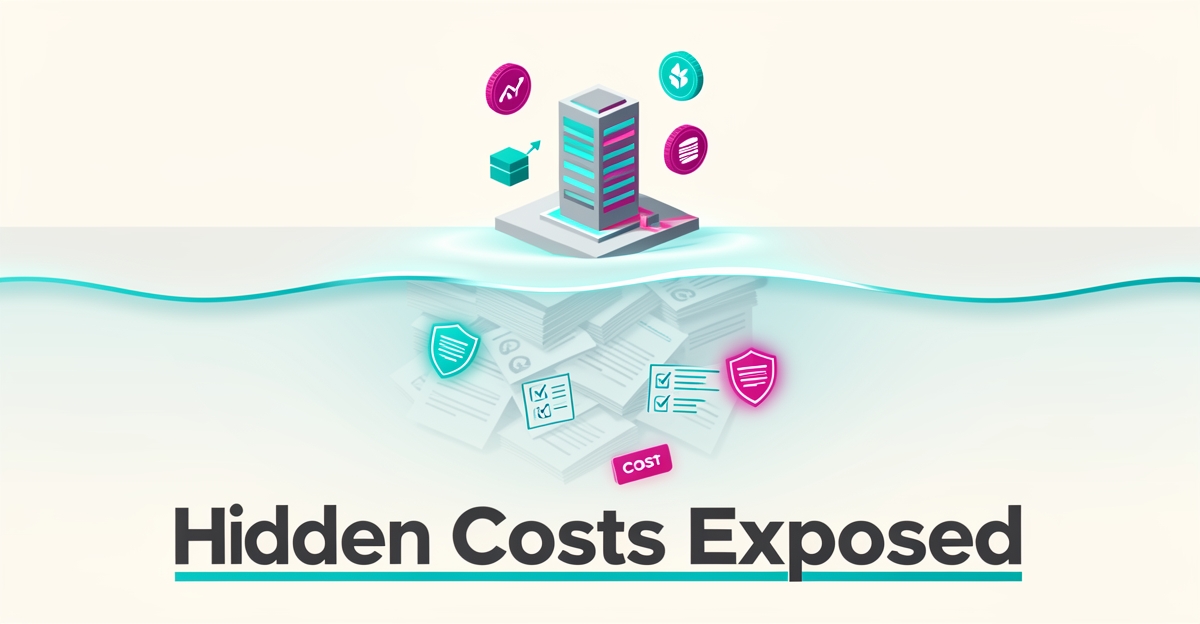
For many small crypto exchanges, the most significant drain on profitability isn't the visible cost of trading, but the mounting expenses hidden within operational workflows. As regulatory scrutiny intensifies, these "invisible" costs can quickly erode the margins necessary for scaling a growing platform.
Compliance is a primary driver of this financial pressure. Small exchanges often face compliance costs ranging from $3,000 to $10,000 per month to manage regulatory requirements. These expenses stem from the need for robust KYC (Know Your Customer) and AML (Anti-Money Laundering) systems to meet international standards.
The complexity of these costs escalates as a business expands. For exchanges operating across multiple jurisdictions, compliance costs can reach between $50,000 and $1,000,000 annually depending on the scale of operations. Beyond direct software fees, there is the constant necessity of proactive monitoring to avoid catastrophic security failures.
Beyond compliance, customer support represents a massive operational hurdle. While specific tool pricing varies, support costs are often embedded within heavy personnel expenses, which represent the largest operational cost category for small exchanges according to industry research.
To manage these pressures, many operators face a fragmented landscape of specialized tools, including:
- KYC/AML integration systems, which can cost between $2,000 and $20,000+ monthly depending on user volume.
- Automated reporting systems, which are essential for timely SAR filings as transaction volumes grow.
- Blockchain node operations, costing between $500 and $3,000+ per month per chain to maintain network connectivity.
- Dedicated security protocols to mitigate risks from high-profile industry hacks.
This fragmentation creates a "subscription tax" that hampers growth. Many exchanges find themselves managing 8–10 separate subscriptions for CRM, automation, and support, leading to compounding operational overhead. AI Business Sites addresses this inefficiency by providing a unified platform that consolidates these disparate functions into one system, allowing owners to focus on growth rather than managing a pile of separate tools.
By implementing automated compliance workflows, such as KYC processing and transaction monitoring, exchanges can potentially reduce manual labor and error rates by 20–40% while optimizing infrastructure costs.
As we look closer at these numbers, the strategic benefit of moving toward a unified operational model becomes clear.
Consolidation as a Solution: Leveraging Unified Platforms
Small crypto exchanges face a multitude of hidden costs in customer support and compliance, with expenses ranging from $3,000 to $10,000 per month for compliance tools alone. To mitigate these costs, consolidation of fragmented third-party tools into a unified platform has emerged as a critical strategy. Integrated platforms like AI Business Sites offer a solution, replacing 8-10 separate subscriptions with a single, comprehensive system.
According to industry research, small exchanges spend an estimated $30,000 to $93,000 per month on operational costs, with compliance and security expenses accounting for a significant portion of these costs. By leveraging automation and integrated platforms, small exchanges can reduce their operational overhead by 20-40%. For instance, automated compliance workflows can cut manual labor costs by 20-40%, directly addressing the $3,000 to $10,000 monthly compliance expense range.
The benefits of consolidation are clear:
- Reduced operational costs: By replacing multiple subscriptions with a single platform, small exchanges can save $5,000 to $15,000 per month.
- Improved efficiency: Integrated platforms streamline workflows, reducing the need for manual labor and minimizing the risk of errors.
- Enhanced security: Consolidation of security tools and protocols ensures that small exchanges can maintain the highest level of security and compliance.
In the context of small crypto exchanges, AI Business Sites offers a comprehensive solution that includes a custom-built website, CRM, automation tools, and content generation, all designed to work together seamlessly. By levering this unified platform, small exchanges can eliminate the need for multiple subscriptions and reduce their operational costs, freeing up resources to focus on growth and development.
As the crypto industry continues to evolve, the importance of consolidation and automation will only continue to grow. By embracing integrated platforms like AI Business Sites, small crypto exchanges can stay ahead of the curve and maintain a competitive edge in the market.
This shift towards consolidation and automation is not just a trend, but a necessity for small crypto exchanges looking to reduce costs and improve efficiency. By understanding the benefits of unified platforms and leveraging the right tools, small exchanges can position themselves for success in an increasingly complex and competitive market.
Transitioning to the next section, we will explore the specific features and capabilities of AI Business Sites and how they can be leveraged to drive growth and success for small crypto exchanges.
Local business: doing this the old way?
One system replaces the whole pile.
All of it — the website, the follow-up, the content, the leads — built and run for you for $1,497 + $497/mo. Month-to-month, and you own everything.
See what your build includesActionable Strategies for Cost Optimization in Compliance & Support
Small crypto exchanges can significantly reduce hidden costs by adopting practical, data-driven strategies for compliance and support optimization. Industry research shows that small exchanges spend $3,000–$10,000 monthly on compliance tools alone, with automation cutting manual labor and error rates by 20–40% according to operational cost analyses. Implementing automated workflows for KYC/AML processing and transaction monitoring directly targets these expenses while improving accuracy and scalability.
Consolidating fragmented tools into a unified platform eliminates redundant subscriptions and streamlines operations. Research indicates that small exchanges would otherwise pay $5,000–$15,000 monthly for separate tools like CRM, automation, and newsletter platforms based on industry benchmarks. By integrating these functions, exchanges reduce overhead, minimize integration complexity, and free up budget for core growth activities. AI Business Sites supports this consolidation by combining website, CRM, automation, and content generation into a single system that runs business operations automatically.
Key steps for implementation include prioritizing real-time monitoring for suspicious activity to meet SAR filing requirements, using drag-and-drop automation builders to design compliance workflows without coding, allocating security spending as 10–15% of operational budgets to align with regulatory expectations, and training teams to oversee AI-driven processes with human-in-the-loop safeguards. These strategies ensure compliance remains robust while reducing reliance on manual effort. As exchanges optimize these functions, they create a more resilient foundation for sustainable growth in a regulated market.
Frequently Asked Questions
How much do small crypto exchanges typically spend on compliance tools?
What are the biggest hidden costs that drain an exchange's profits?
Can automation actually help reduce my compliance expenses?
Why is using many different software subscriptions a problem for my business?
How much should I be budgeting for security to prevent hacks?
What is the total monthly operational cost for a typical small exchange?
Turning Hidden Costs into Strategic Advantage
Small crypto exchanges are discovering that the real drain on profitability isn't trading volume—it's the rising, often invisible costs of compliance and customer support. As highlighted, compliance alone can consume $3,000 to $10,000 monthly, scaling to six figures annually for multi-jurisdiction operations, while support burdens personnel expenses. The solution lies in adopting a single, unified platform that automates support, compliance, and workflows—reducing tool sprawl, cutting manual effort, and freeing teams to focus on growth. For exchanges looking to regain control of their margins, the next step is evaluating how consolidation through an integrated business platform can replace 8–10 separate subscriptions while strengthening security and scalability. Learn how streamlining operations starts with a smarter foundation: see how AI Business Sites unifies essential tools.
FOR local businesss — BUILT AND RUN BY US
Your website. Your content. Your leads. Your data.
$500 starts your build. Seven days later it's live — chat, booking, follow-up, and your Google presence all set up. Then we run it, every month. You do the work you actually get paid for.