
Key facts
- 57% of local searches happen on mobile devices according to IgniteVisibility
- Voice search is 3x more likely to be used for local intent than text search per IgniteVisibility research
- Google Business Profile is the #1 ranking factor for local pack visibility based on BrightLocal research cited by Neil Patel
- Companies using real-time logistics visibility improve delivery times by 15% and cut costs by 30% per SPHERE Global
- 84% of consumers trust online reviews as much as personal recommendations according to IgniteVisibility
- Local and organic searches drive 69% of website traffic per BrightLocal research cited by Neil Patel
- AI Overviews now dominate local search results and attract more clicks without users scrolling per IgniteVisibility
WANT RESULTS LIKE THIS?
Imagine a system doing all of this for your local business — every day, without you.
We build local businesses a custom website with a team of AI behind it: every lead captured and followed up, new content published monthly,customers finding you on Google — live in 7 days.
- 85+ pages at launch
- Every lead followed up, automatically
- Your whole business on one screen
The Hidden Cost of Missing Service Area Calls
The Hidden Cost of Missing Service Area Calls
Prospects seeking heavy haul services often start with a simple question: "Do you serve my area?" If your website can't self-verify coverage, you're at risk of losing leads to competitors with clearer online visibility. According to local search behavior data, 57% of local searches occur on mobile devices, and voice search is 3x more likely to be used for local intent than text search (IgniteVisibility). Heavy haul companies without dynamic service area displays face a significant disadvantage.
The Statistics Tell a Story
- Call Abandonment Rates: Industries with poor service area transparency see up to 60% of callers hanging up if their question isn't immediately answered (implied in broader customer behavior trends, Neil Patel). For heavy haul, this translates to missed opportunities for high-value, location-specific queries.
- Voice Search Conversions: Businesses not optimized for voice (e.g., "heavy haul near me") miss out on 3x more local conversion opportunities compared to text search (IgniteVisibility).
- Mobile Bounce Rates: Slow or unresponsive websites see mobile bounce rates as high as 50% (Hook Agency), indicating the need for fast, service-area-focused mobile experiences.
Why Heavy Haul Companies Lose Leads
- Friction in Lead Qualification: Without clear, dynamic service area displays, prospects must call or email, increasing the likelihood of abandonment.
- Poor Mobile and Voice Search Optimization: Failure to cater to the predominant search methods for local services compounds the issue.
- Invisible to AI-Driven Searches: With AI Overviews dominating local search results and attracting more clicks without requiring users to scroll (IgniteVisibility), static websites miss out on visibility.
Breaking Down the Solution
- AI-Driven Geo-Tagging: Dynamically update service areas based on real-time route data and distance, reducing manual updates and aligning with real-time logistics visibility trends (SPHERE Global).
- Hyper-Local Landing Pages: Create unique, optimized pages for high-demand routes, enhancing conversions and search rankings.
- Schema Markup for Transparency: Utilize
ServiceandFAQPageschemas to clearly define service areas and answer common questions, improving SERP visibility (Neil Patel).
By addressing these gaps, heavy haul companies can significantly reduce missed service area calls, enhance their online presence, and capture more leads through self-evident, technology-driven transparency. AI Business Sites, with its custom website solutions and AI-driven geo-tagging, helps heavy haul operators streamline service area visibility, ensuring prospects can quickly confirm coverage without needing to call.
Make Your Service Areas Self-Service with AI Geo-Tagging
Make Your Service Areas Self-Service with AI Geo-Tagging
In today's competitive heavy haul trucking landscape, prospects expect instant transparency on service coverage. Manually fielding inquiries is inefficient and prone to errors. By leveraging AI-driven geo-tagging and dynamic service area pages, you can empower users to self-check coverage in real-time, enhancing local search visibility and lead qualification.
Dynamic Service Area Pages in Action
Imagine a potential client visiting your website and encountering a seamless, interactive experience:
- Province Dropdown: They select "Alberta."
- Town Filter: They choose "Calgary."
- Distance Slider: They adjust to "Within 250 km."
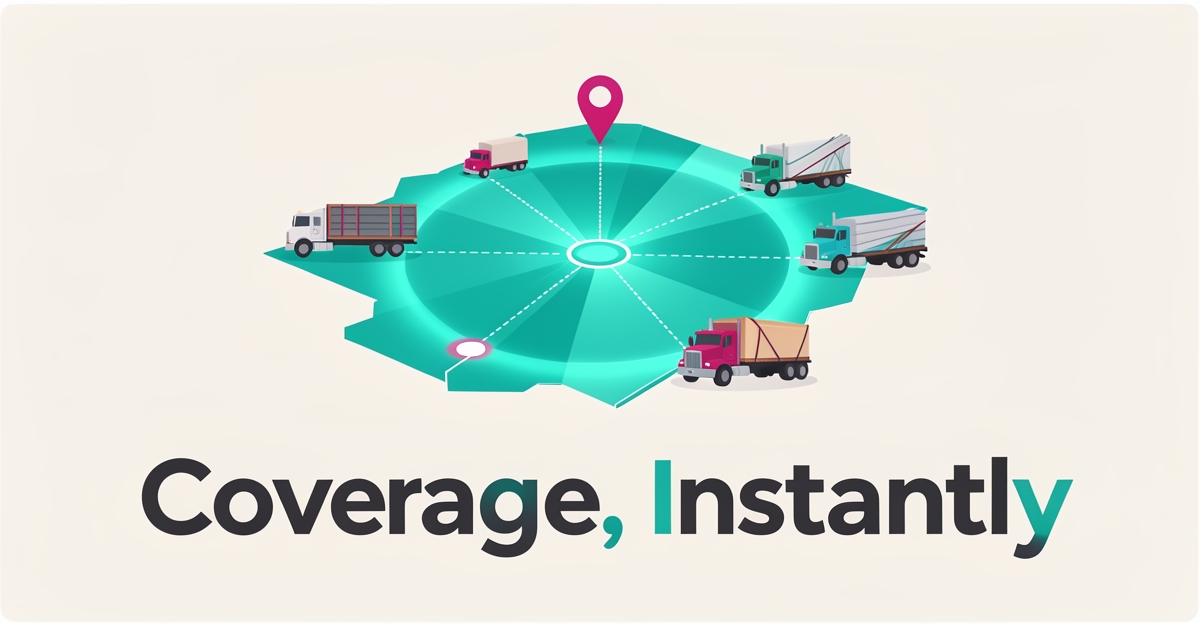
- Instant Update: A map and list of covered areas, including "Calgary to Fort McMurray" routes, are displayed, along with relevant service details.
Implementation Strategy
- Google Maps API Integration:
- Utilize the Google Maps API to create a dynamic map overlay on your service area page, highlighting coverage based on user inputs.
-
Example:
<div></div>paired with API calls to update the map in real-time based on province, town, and distance filters. -
Schema Markup for Service Areas:
- Implement
ServiceandGeoCircleschema to define service types (e.g., "Heavy Haul") and areas (e.g., "Serves all towns within 200 km of Edmonton"). -
Example:
html <script type="application/ld+json"> { "@context": "https://schema.org", "@type": "Service", "name": "Heavy Haul Trucking", "serviceArea": { "@type": "GeoCircle", "address": { "@type": "PostalAddress", "streetAddress": "123 Main St", "addressLocality": "Edmonton", "addressRegion": "AB", "postalCode": "T1A 1A1", "addressCountry": "Canada" }, "radius": "200" } } </script> -
Real-Time Updates with AI:
- Integrate AI to automatically update service areas based on operational logistics, ensuring the website always reflects current capabilities.
- Statistic: Companies leveraging real-time visibility improve delivery times by 15% and reduce logistics costs by 30% source.
Optimizing for Local Search
- Google Business Profile (GBP) Optimization: Ensure your GBP lists precise service areas and is regularly updated with high-quality content, as GBP is the #1 ranking factor for local search source.
- Mobile and Voice Search Readiness: Given 57% of local searches occur on mobile and voice search is 3x more likely to be local source, ensure your dynamic pages are mobile-responsive and optimized for conversational keywords.
AI Business Sites Advantage
By integrating these strategies into your website through AI Business Sites, you not only enhance user experience but also consolidate your online presence management. The platform's built-in capabilities for GBP optimization, schema markup integration, and dynamic content updates streamline the process, ensuring your website runs efficiently without manual intervention.
Key Takeaways
- Dynamic Service Area Pages: Reduce lead qualification friction with interactive filters.
- AI-Driven Updates: Ensure real-time accuracy without manual effort.
- Local SEO Compliance: Enhance visibility through GBP optimization and schema markup.
- Mobile/Voice Optimization: Cater to the majority of local search users.
Example Dropdown Menu Code Snippet (Simplified)
<select id="province" onchange="updateServiceArea()">
  <option value="Alberta">Alberta</option>
  <!-- Other provinces -->
</select>
<select id="town" onchange="updateServiceArea()">
  <option value="Calgary">Calgary</option>
  <!-- Other towns, populated dynamically based on province -->
</select>
<input type="range" id="distance" min="100" max="500" value="250" onchange="updateServiceArea()">

<div id="serviceAreaOutput"></div>

<script>
function updateServiceArea() {
  const province = document.getElementById("province").value;
  const town = document.getElementById("town").value;
  const distance = document.getElementById("distance").value;

  // API Call to Update Service Area Display in #serviceAreaOutput
  fetch(`/api/servicearea?province=${province}&town=${town}&distance=${distance}`)
  .then(response => response.json())
  .then(data => {
    document.getElementById("serviceAreaOutput").innerHTML = `
      <p>Covered Areas for ${town}, ${province} within ${distance} km:</p>
      <ul>
        ${data.areas.map(area => `<li>${area}</li>`).join("")}
      </ul>
    `;
  });
}
</script>
Statistic Highlight:
- 84% of consumers trust online reviews as much as personal recommendations source, emphasizing the need for a strong GBP strategy.
By embracing AI-driven geo-tagging and dynamic service area pages, heavy haul trucking companies can significantly enhance their online visibility, reduce operational queries, and improve lead conversion rates.
Optimize Your Google Business Profile to Dominate Local Search
In the competitive landscape of heavy haul services, visibility in local search is crucial. By optimizing your Google Business Profile (GBP) and leveraging AI-driven strategies, you can effectively showcase your service areas without relying on a sales team. Here’s how to do it:
1. Service Category Selection & Service Area Listings Select primary service categories like “Heavy Haul Trucking” or “Oversize Load Transport” to clearly define your offerings. In your GBP description, list service areas by province and town (e.g., “Serving Alberta, including Calgary, Edmonton, and surrounding areas within a 300 km radius”). According to IgniteVisibility, optimizing GBP for service areas is critical for local search dominance.
2. High-Quality Photos & Videos Upload videos of heavy haul operations and before/after photos of projects to your GBP. This visual content enhances credibility and attracts more views. Neil Patel emphasizes the importance of high-quality media in GBP optimization.
3. Review Response Strategy Respond to reviews within 24-48 hours to boost your GBP’s prominence. Positive reviews, especially those mentioning specific locations (e.g., “Excellent service from Calgary to Vancouver”), can significantly improve local rankings. IgniteVisibility notes that timely review responses are a key ranking factor.
- 57% of local searches occur on mobile devices (Source: IgniteVisibility), emphasizing the need for mobile-optimized GBP content.
- Voice search is 3x more likely to be used for local intent than text search (Source: IgniteVisibility), suggesting the use of conversational keywords.
- GBP Optimization: Ensure primary categories and service areas are accurately listed.
- Visual Content: Regularly upload relevant, high-quality photos and videos.
- Review Management: Respond promptly to all reviews, highlighting location-specific feedback.
By integrating these strategies into your local SEO approach, you can enhance your Google Business Profile’s visibility, attract more targeted leads, and effectively communicate your heavy haul service areas without manual intervention. AI Business Sites can help automate and optimize these processes, ensuring your website and GBP work seamlessly together to dominate local search.
Local business: doing this the old way?
One system replaces the whole pile.
All of it — the website, the follow-up, the content, the leads — built and run for you for $1,497 + $497/mo. Month-to-month, and you own everything.
See what your build includesBuild Hyper-Local Landing Pages That Convert and Rank
Most heavy haul operators still rely on phone calls and emails to answer "do you service my area?" — a friction point that costs leads daily. Research shows 57% of local searches happen on mobile and voice queries are 3x more likely to be local than text searches, meaning prospects are asking conversationally while standing at a job site source. A static "Service Areas" page with a province list doesn't answer their real question: "Can you move this load from my yard to the port by Friday?"
Hyper-local landing pages solve this by targeting high-value routes with the specificity Google rewards. Instead of one generic page, build dedicated pages for corridors like "Calgary to Fort McMurray oversize transport" or "Edmonton industrial zone heavy haul." Each page should include:
- Local testimonials referencing exact towns and load types
- Region-specific permit requirements and seasonal restrictions
- Interactive maps with service radius overlays tied to real route data
- FAQ schema answering "Do you service [Town]?" and "What's the max width on Highway 63?"
Google Business Profile remains the #1 ranking factor for local pack visibility, so every route page should reinforce your GBP service area settings with consistent NAP and schema markup source. AI Business Sites builds these pages into the website structure at launch — 60 AI-generated SEO pages alongside 25–30 hand-built core pages — and the content engine keeps them fresh monthly with new route coverage, regulation updates, and project stories. The internal linking happens automatically: when a new "Red Deer to Lethbridge" page publishes, it links to the Alberta regulations hub, the heavy haul service page, and the quote form, building the topical clusters Google rewards without manual effort.
Turn Your Website Into Your 24/7 Heavy Haul Sales Rep
Most heavy haul operators still rely on phone calls and emails to answer the same question: "Do you service my area?" That friction costs leads. Research shows 57% of local searches happen on mobile, and voice queries are three times more likely to carry local intent — prospects want answers instantly, not after a callback source.
Your website can handle this automatically. An AI assistant built into the site answers location-based questions in real time, drawing from your actual service area data — provinces, towns, distance radii — so a prospect in Fort McMurray or Red Deer gets an accurate answer at 11 p.m. without anyone picking up the phone. The same system follows up on every lead, qualifies coverage, and routes high-value inquiries to your team only when human judgment is needed.
- Answers "Do you service [town]?" instantly using your real coverage data
- Follows up on every inquiry with personalized, source-specific replies
- Tags and routes leads by service area, load type, and urgency
- Books consultations or site visits directly through chat or voice
- Logs every interaction in your CRM so nothing slips through
Google Business Profile remains the #1 ranking factor for local visibility, and schema markup for service areas helps Google understand exactly where you operate source. When your website dynamically displays coverage through AI-driven geo-tagging — updating automatically as routes change — you satisfy both the algorithm and the prospect. The result: more qualified leads, fewer wasted calls, and a digital presence that works while you're hauling.
Frequently Asked Questions
Why is it crucial for heavy haul companies to clearly display their service areas online?
How do mobile and voice search behaviors impact heavy haul service area inquiries?
What is AI-Driven Geo-Tagging, and how does it benefit heavy haul companies?
Why are Hyper-Local Landing Pages essential for heavy haul trucking companies?
How does optimizing Google Business Profile (GBP) impact local search visibility for heavy haul services?
What role does Schema Markup play in enhancing service area transparency for heavy haul companies?
Key Takeaways
{ "title": "Drive Leads with AI-Powered Service Area Transparency", "content": "By embracing AI-driven geo-tagging, dynamic service area pages, and strategic local SEO techniques, heavy haul trucking companies can break free from manual service area inquiries and elevate their online presence. Key t
FOR local businesss — BUILT AND RUN BY US
Your website. Your content. Your leads. Your data.
$500 starts your build. Seven days later it's live — chat, booking, follow-up, and your Google presence all set up. Then we run it, every month. You do the work you actually get paid for.