
Key facts
- 1.2% of dealers accounted for 57% of crime guns traced in Pennsylvania per Everytown's analysis
- 61% of gun owners and 81% of non-gun owners support handgun purchaser licensing per RAND Corporation research
- In New York City, a Firearms Dealer License requires a $100 fee and strict adherence to local laws according to NYC Business portal
- Just 60+ seconds spent reading licensing details signals serious customer intent on compliance pages
- Stores that proactively publish credentials separate themselves from the narrative of dealers linked to crime guns
- A dedicated compliance page answers the unspoken visitor question: 'Is this business trustworthy?'
- Public transparency initiatives like the Brady United Gun Store Transparency Project publish inspection reports to drive accountability through public pressure
WANT RESULTS LIKE THIS?
Imagine a system doing all of this for your local business — every day, without you.
We build local businesses a custom website with a team of AI behind it: every lead captured and followed up, new content published monthly,customers finding you on Google — live in 7 days.
- 85+ pages at launch
- Every lead followed up, automatically
- Your whole business on one screen
The Hidden Cost of Obscure Compliance
When a potential customer lands on a gun store's website and cannot find licensing, insurance, or safety information within seconds, trust erodes before a conversation even begins. Research shows that 61% of gun owners and 81% of non-gun owners support handgun purchaser licensing, signaling a broad expectation for visible accountability across the political spectrum. Yet many stores bury these credentials in footers or omit them entirely, leaving cautious buyers to assume the worst.
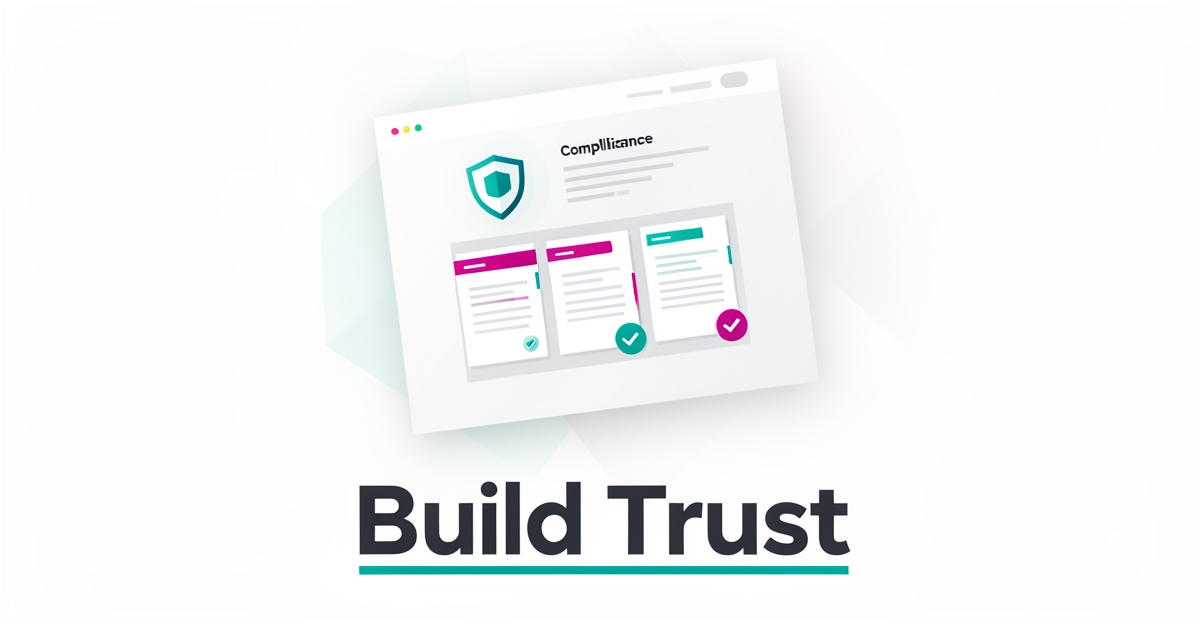
The regulatory landscape only amplifies the risk. In New York City alone, a Firearms Dealer License requires a $100 fee and strict adherence to local laws that vary by jurisdiction. When stores fail to display this compliance prominently, they not only frustrate customers but also miss a signal that search engines increasingly reward: transparent, structured information that confirms legitimacy. A dedicated compliance page does more than satisfy regulators — it answers the unspoken question every visitor carries: "Is this business trustworthy?"
- Licensing details (FFL number, state permits, local requirements)
- Insurance coverage proof (general liability, property, workers' compensation)
- Safety protocols (background check procedures, storage standards, training policies)
- Inspection history or compliance certifications where available
The stakes are measurable. Data from Pennsylvania reveals that just 1.2% of dealers accounted for 57% of crime guns traced in recent analyses — a statistic that fuels public scrutiny of every storefront, online and off. Stores that proactively publish their credentials separate themselves from that narrative, turning compliance into a competitive advantage. AI Business Sites builds this transparency directly into the site architecture, generating structured compliance pages that update automatically as regulations shift — so the trust signal never goes stale.
Transparent Compliance: The Solution Backed by Research
Research consistently shows that transparency builds trust — and for gun stores, that trust directly impacts whether cautious customers walk through the door or click away. A dedicated compliance page does more than check a regulatory box; it signals legitimacy in an industry where credibility is everything.
The regulatory landscape alone makes this essential. In New York City, obtaining a Firearms Dealer License requires a $100 fee and navigating detailed municipal requirements, according to the NYC Business portal. Most states impose their own layers of licensing, insurance mandates, and safety protocols. When that information lives only in a filing cabinet, customers assume it doesn't exist.
Public transparency initiatives reinforce the point. The Brady United Gun Store Transparency Project publishes inspection reports precisely because visibility drives accountability. Their research found that just 1.2% of dealers accounted for 57% of crime guns traced in Pennsylvania — a statistic from Everytown's analysis that underscores why responsible retailers must distinguish themselves visibly.
Support for these measures crosses political lines: 61% of gun owners and 81% of non-gun owners back handgun purchaser licensing, per RAND Corporation research. That consensus means a compliance page isn't just for regulators — it's for the majority of your potential customers.
- Create a single, prominent "Licensing & Safety" page linked in your main navigation and footer
- List every active license (FFL, state dealer license, local permits) with issuing authority and expiration dates
- Detail insurance coverage types and limits — general liability, property, and any specialized policies
- Publish your safety protocols: background check procedures, storage standards, staff training requirements
- Update quarterly or whenever a license renews, a policy changes, or a new regulation takes effect
AI Business Sites builds these pages into every gun store website at launch, then uses an AI content engine to keep them current — researching regulatory changes, rewriting sections when requirements shift, and automatically linking the compliance page from relevant service and location pages so search engines and visitors both find it. The result: a site that demonstrates legitimacy on every visit, without the owner manually tracking renewal dates or statutory updates.
Putting Transparency into Action: Practical Implementation Steps
Trust isn't built on promises — it's built on proof. When a customer lands on a gun store's website and can't find licensing, insurance, or safety policies within seconds, they don't dig deeper; they leave.
The regulatory landscape makes this non-negotiable. In New York City alone, a Firearms Dealer License carries a $100 fee and strict compliance requirements that must be maintained continuously according to the NYC Business portal. Yet research shows that just 1.2% of dealers accounted for 57% of crime guns traced in Pennsylvania per Everytown's analysis — a statistic that makes transparent compliance a competitive differentiator, not just a checkbox.
- Create a dedicated "Compliance & Safety" page in your main navigation — not buried in the footer
- Display your FFL number, state licenses, and insurance carrier details with expiration dates
- Publish your safety protocols: background check procedures, storage standards, training requirements
- Link directly to your ATF and state regulatory profiles where publicly available
- Add schema markup so search engines surface this trust data in local results
AI Business Sites builds this structure into every website from launch — hand-coded pages with proper heading hierarchy, local business schema, and internal linking that connects compliance content to service and location pages. The platform's content engine then keeps it current: when regulations, it updated. Monthly audits flag expiring licenses, regulation changes, or missing policy details, and the AI assistant drafts revisions for review before publishing. No manual calendar reminders, no forgotten updates.
Public transparency drives accountability. The Brady United Gun Store Transparency Project demonstrates that accessible inspection records improve industry standards through public pressure — the same principle applies to your digital storefront. With 61% of gun owners and 81% of non-gun owners supporting licensing laws per RAND Corporation research, visible compliance signals you're on the right side of the conversation.
Your website should do the heavy lifting: answer the trust question before a customer picks up the phone, rank for "licensed gun dealer [city]" searches, and update itself when regulations shift. That's not a marketing add-on — it's the baseline for operating legitimately online.
Local business: doing this the old way?
One system replaces the whole pile.
All of it — the website, the follow-up, the content, the leads — built and run for you for $1,497 + $497/mo. Month-to-month, and you own everything.
See what your build includesOvercoming the Compliance-Visibility Paradox
Overcoming the Compliance-Visibility Paradox
In the firearms industry, transparency is paramount, yet many gun stores struggle to balance detailed compliance information with user-friendly website design and SEO best practices. The absence of a transparent, easy-to-find page showcasing licensing, insurance, and safety policies can erode customer trust and lead to lost sales. According to regulatory requirements in NYC, for instance, transparency in licensing is not just a legal necessity but also a trust builder.
Customers are cautious, and without clear visibility into a gun store's compliance, trust is hard to establish. Brady United's emphasis on public transparency in reducing gun violence indirectly highlights the importance of showcasing compliance online. For example, a study by Everytown found that state-level licensing can significantly reduce gun violence, implying that transparent display of such licenses on websites could enhance credibility.
- Clear Navigation: Dedicate a straightforward, easily accessible page to licensing, insurance, and safety policies. This page should be prominently linked from the homepage to ensure visibility.
- AI-Driven Content: Leverage AI to generate and update compliant content, ensuring SEO optimization for local searches. AI can help maintain consistency with regulatory requirements, reducing the administrative burden.
- Periodic Audits: Regularly review website content to ensure compliance information is current and accessible, reflecting the complexity of regulatory demands (e.g., NYC's Firearms Dealer License requirements).
- Transparency Page: A single, dedicated page for all compliance information, linked from the homepage.
- AI Content Management: For consistent, SEO-optimized updates reflecting regulatory changes.
- Scheduled Compliance Audits: To maintain accuracy and accessibility of regulatory information.
By embracing these strategies, gun stores can overcome the compliance-visibility paradox, fostering trust with cautious customers while enhancing their online presence. At AI Business Sites, we understand the importance of balancing compliance with design, offering custom website solutions that integrate transparent compliance pages and AI-driven content management for enhanced local SEO.
For instance, our platform can generate a compliance page with the following structure:
- Licensing Information: Clearly displayed licenses with expiration dates.
- Insurance Details: Policy numbers and coverage types.
- Safety Standards: Detailed description of store safety protocols.
This approach not only builds customer trust but also supports the store's legitimacy in search engine results, aligning with the broader goal of running a self-sufficient website that attracts and retains customers.
Measuring Success: Tracking the Impact of Transparency
You've built the compliance page. Now how do you know it's actually working?
Most gun stores launch a licensing and safety page, check it off the list, and move on. But without tracking the right signals, you're guessing whether transparency is moving the needle on trust, foot traffic, or local visibility.
Start with the trust metrics that show up before a sale. Track time-on-page for your compliance section — visitors who spend 60+ seconds reading licensing details are signaling serious intent. Monitor chat and form submissions that reference "license," "insurance," or "safety protocols" — those are high-intent leads self-qualifying through your transparency. According to RAND Corporation analysis, 61% of gun owners and 81% of non-gun owners support handgun purchaser licensing, meaning visible compliance resonates across your entire customer base.
- Compliance page dwell time and scroll depth
- Lead form submissions citing licensing or safety
- Phone calls asking about FFL status or insurance coverage
- Google Business Profile direction requests after page visits
For local SEO impact, watch your Google Business Profile insights. A Everytown report found that 1.2% of dealers accounted for 57% of crime guns in Pennsylvania — regulators and platforms increasingly reward stores that proactively demonstrate compliance. Track keyword rankings for "licensed gun dealer [city]," "FFL transfer [city]," and "insured firearms store [city]" — these high-intent terms convert at higher rates than generic "gun store" queries.
AI Business Sites builds this measurement into every site we launch. The admin dashboard surfaces compliance page analytics alongside lead source tracking, so you see exactly which transparency signals drive real conversations. Automated monthly reports highlight ranking movement for compliance-related keywords and correlate them with lead volume — no separate analytics tool required.
The stores that treat transparency as a measurable asset, not a checkbox, are the ones earning trust before the first handshake.
Frequently Asked Questions
Why should I put my gun store's licensing and insurance info on my website if it's already on file with the government?
What specific compliance details should I include on my gun store's website to reassure customers?
Is it really worth the effort to maintain a compliance page if I'm already following all the rules?
How often should I update my gun store's licensing and safety information online?
Can showing compliance info on my website actually help me rank higher in local searches?
What if displaying my safety protocols makes customers worry we're expecting problems?
Your Compliance Page Is Your Strongest Sales Asset
Every section of this article points to the same truth: when a gun store makes its licensing, insurance, and safety policies impossible to miss, it doesn't just satisfy regulators — it answers the question every cautious visitor is asking before they ever walk through the door. The data backs this up. With 61% of gun owners and 81% of non-gun owners supporting handgun purchaser licensing per RAND Corporation research, visible compliance isn't niche — it's the mainstream expectation. And when just 1.2% of dealers account for 57% of traced crime guns, transparency becomes the clearest way to separate your business from that narrative. The next step is simple: audit your site today. Can a visitor find your FFL number, insurance details, and safety protocols in under ten seconds? If not, that's the gap AI Business Sites closes — building and maintaining a compliance page that updates itself as regulations shift, so your trust signal never goes stale. Your website should do the heavy lifting. Let it.
FOR local businesss — BUILT AND RUN BY US
Your website. Your content. Your leads. Your data.
$500 starts your build. Seven days later it's live — chat, booking, follow-up, and your Google presence all set up. Then we run it, every month. You do the work you actually get paid for.