
Key facts
- Freight brokerages competing for 'freight broker Los Angeles' must outrank entrenched authority signals from the top 8–10 logistics companies controlling over one-third of a $15.3B market growing at 7.7% CAGR.
- Capacity has shrunk 25% since Q1 2022 with small fleets down 13% YoY and large fleets down 7.9% YoY in a market enduring 27 months of freight contraction according to DAT data.
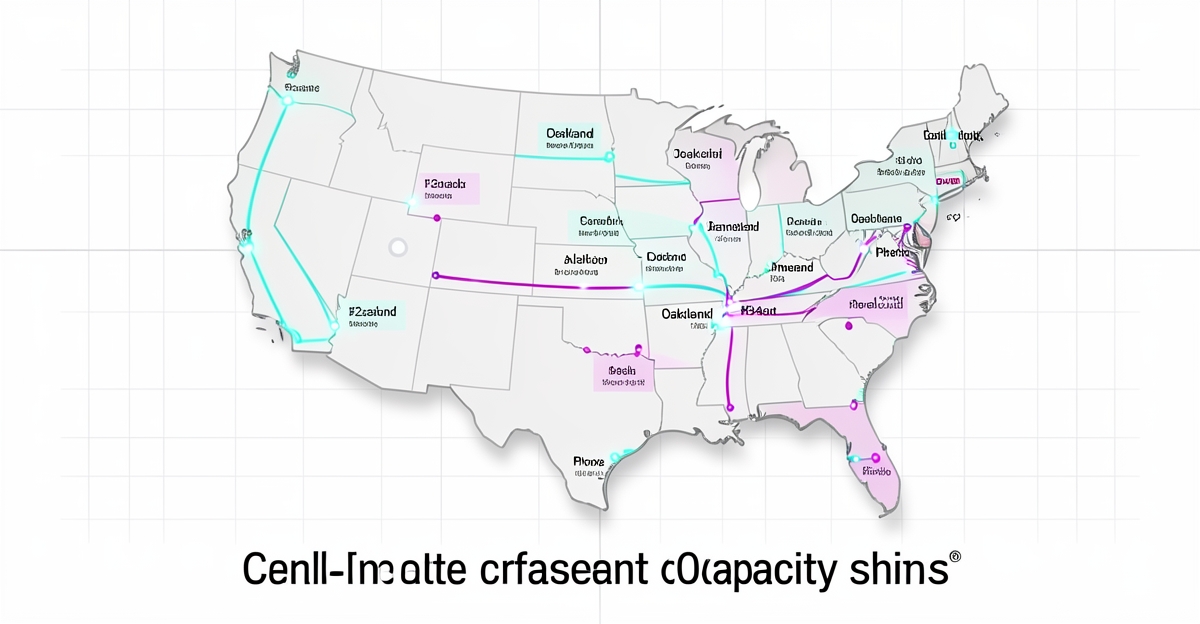
- West Coast ports like Oakland, Long Beach, and Los Angeles dominate import trucking, creating corridor-specific demand where static SEO templates fail to capture seasonal rate fluctuations Armstrong Transport research shows.
- A brokerage ranking for 'shipping from Long Beach' needs real-time lane economics (e.g., dry van, refrigerated, flatbed rates) because these move differently by corridor and season DAT reports positive YoY growth.
- Freight brokerages should focus on targeted phrases like 'Oakland to Phoenix LTL freight' rather than generic 'trucking services' to dominate high-value corridor queries where Google weights industry-specific ranking factors differently industry experts advise.
- Google Business Profile optimization matters: up to 10 categories can be selected, NAP consistency is critical, and review keywords with locations build local trust signals for freight queries Moz SEO guide explains.
- E-commerce growth driving 13–16% expansion over five years increases demand for LTL services and faster fulfillment, making West Coast port LTL solutions a top content opportunity for brokerages Armstrong Transport projects.
WANT RESULTS LIKE THIS?
Imagine a system doing all of this for your local business — every day, without you.
We build local businesses a custom website with a team of AI behind it: every lead captured and followed up, new content published monthly,customers finding you on Google — live in 7 days.
- 85+ pages at launch
- Every lead followed up, automatically
- Your whole business on one screen
Why Generic Local SEO Fails Freight Brokerages
Most freight brokerages treat local SEO like a checklist — claim the Google Business Profile, add NAP details, collect a few reviews — then wonder why they don't appear when shippers search "freight broker Los Angeles" or "LTL shipping Oakland." The problem isn't effort; it's that Google weights ranking factors differently for every industry, and freight brokerage has dynamics that generic local SEO simply doesn't account for.
Market concentration is the first hurdle. The top 8–10 logistics companies control over one-third of total gross revenues in a $15.3 billion market growing at 7.7% CAGR, which means smaller brokerages aren't just competing for keywords — they're competing against entrenched authority signals that Google already trusts. Add 27 consecutive months of freight contraction following 22 months of growth, and you have a market where capacity shifts (large fleets down 7.9% YoY, small fleets down 13% YoY) create unpredictable demand spikes that static content can't capture.
Seasonal rate fluctuations compound the problem. Dry van, refrigerated, and flatbed rates are all showing year-over-year positive growth as a new freight cycle emerges, but those rates move differently by corridor. A brokerage ranking for "shipping from Long Beach" needs content that reflects current lane economics, not last year's averages. Generic local SEO templates can't adapt to that velocity.
- Google weights ranking factors differently by industry — no universal hierarchy exists
- Freight demand concentrates in specific corridors (West Coast ports dominate import trucking)
- Capacity constraints and rate shifts require corridor-specific, timely content
- Review signals must include location and service keywords to build local trust
This is why AI Business Sites builds corridor-specific content into every freight brokerage website from launch — 60 AI-generated SEO pages targeting the actual lanes where shippers search, with internal linking that compounds authority over time. The platform's content engine researches, writes, and publishes new pages monthly, automatically updating internal links so older corridor pages gain relevance as new ones publish. Your website doesn't just sit there; it builds the topical clusters Google rewards for industry-specific local queries.
Building Authority Through Corridor-Specific Content
Freight brokerages can’t afford to rank just for general shipping terms—they need to dominate queries tied to their most profitable lanes. Research shows that West Coast ports like Oakland, Long Beach, and Los Angeles generate concentrated demand for trucking services, creating high-value opportunities for brokerages that align their content with these corridors. Industry data highlights these ports as critical hubs where trucking remains the dominant import solution, driving consistent search volume from shippers seeking capacity.
To build authority, focus on corridor-specific pages that go beyond generic service descriptions. Instead of broad terms like “trucking services,” target phrases such as “Oakland to Phoenix LTL freight” or “Long Beach cold storage trucking rates.” These pages should weave in technology-driven efficiency—like AI-powered load matching or real-time tracking—into the narrative, reinforcing why your brokerage stands out in competitive lanes. Highlighting sustainability credentials, such as SmartWay partnerships, can further differentiate your service, as research indicates brokers increasingly use eco-friendly options as a competitive lever.
E-commerce trends are reshaping demand patterns, and your content should reflect this shift. Emphasize how your brokerage supports LTL services for smaller, frequent shipments—a key driver of growth in the sector. For example, a page titled “West Coast Port LTL Solutions for E-Commerce Brands” can rank for queries tied to last-mile efficiency and faster fulfillment cycles. This approach aligns with the 13–16% projected e-commerce growth over the next five years, positioning your brokerage as a forward-thinking partner.
Your content shouldn’t just describe services—it should mirror the real-world priorities of local shippers:
- Detailed rate comparisons for high-traffic lanes (e.g., “Los Angeles to Denver freight rates Q2 2025”)
- Case studies highlighting tech-driven cost savings for specific commodities
- Seasonal trends, such as peak demand for refrigerated shipments during summer produce season
- Partnerships with automation platforms (e.g., Parade integrations) that streamline bookings
- Sustainability certifications paired with carrier profiles in target corridors
For brokerages using AI Business Sites, this strategy is straightforward to execute. The platform’s built-in AI content engine can generate corridor-specific pages in bulk, ensuring each piece links to your core services and other relevant content—no manual link-building required. The result? A site that doesn’t just rank but owns visibility for the lanes where your brokerage can deliver the most value.
Local business: doing this the old way?
One system replaces the whole pile.
All of it — the website, the follow-up, the content, the leads — built and run for you for $1,497 + $497/mo. Month-to-month, and you own everything.
See what your build includesImplementing a Local SEO Foundation That Works for Freight
Implementing a Local SEO Foundation That Works for Freight Brokerages
In the competitive freight brokerage landscape, where the U.S. market is projected to reach $15.3 billion in 2023 with a growth rate of 7.7% CAGR, establishing a strong local SEO foundation is crucial for visibility in local shipping queries. Freight brokerages must adapt local SEO principles to their industry specifics, focusing on high-volume lanes and technological differentiation.
1. Optimize Your Google Business Profile (GBP) Claim and optimize your GBP with accurate, industry-relevant categories (up to 10 allowed). According to Moz, this is a foundational trust signal for search engines. Ensure NAP (Name, Address, Phone Number) consistency across all platforms, a critical factor highlighted by Search Engine Journal.
2. Leverage Reviews for Visibility Generate and respond to keyword-rich reviews, as Search Engine Journal notes that positive reviews increase visibility. A 1-star Yelp rating improvement can lead to a 5-9% revenue increase, as noted by Harvard Business Review (via Search Engine Journal).
3. Build Local Citations and Content Construct accurate local citations from industry-relevant platforms. Develop location-specific content targeting high-volume lanes, such as West Coast ports (Oakland, Long Beach, Los Angeles), where trucking demand is concentrated, as highlighted by Armstrong Transport. This approach helps in building local authority.
Key Local SEO Tactics for Freight Brokerages:
- Corridor-Specific Content: Focus on high-demand shipping lanes with location-specific keywords.
- Technology Highlighting: Showcase AI-powered load matching, automation, and sustainability efforts in content.
- Systematic Rank Tracking: Monitor local pack, map, and organic rankings using geo-coordinated tools, as advised by BrightLocal.
Outcome and Integration with AI Business Sites By implementing these tactics, freight brokerages can improve their visibility in local shipping queries. AI Business Sites supports this strategy through its Local SEO Website Design service, which includes optimized page structure, schema markup, and internal linking tailored for local search performance. The platform's AI Content Engine generates location-optimized content, streamlining the process of targeting specific shipping corridors without manual effort, ensuring freight brokerages can establish local authority efficiently.
For instance, with AI Business Sites, a freight brokerage can automatically publish monthly content highlighting its expertise in West Coast ports, complete with relevant keywords and service area targeting, all while maintaining consistency across its online presence. This integrated approach not only enhances local SEO but also positions the brokerage as a knowledgeable, tech-savvy partner in the logistics space.
Using AI to Scale Local SEO Without the Workload
Using AI to Scale Local SEO Without the Workload
In the competitive landscape of freight brokerage, maintaining a strong local SEO presence without adding to your workload is crucial. AI Business Sites' platform is designed to automate the heavy lifting, ensuring your website continually improves its local SEO without manual effort.
Automated Content Creation for Local Authority
Our platform's AI content engine researches and publishes location-optimized content monthly, tailored to your actual service areas. For example, if your freight brokerage specializes in West Coast ports (Oakland, Long Beach, Los Angeles), the AI generates content highlighting your expertise in these high-demand corridors, incorporating keywords like "Los Angeles freight brokerage" or "Oakland shipping services" naturally into the text. This approach not only builds local authority but also attracts search queries with high commercial intent, such as "freight brokers near me" or "shipping services in Long Beach."
Statistics Highlighting the Need for Automation:
- The U.S. freight brokerage market is projected to grow at a 7.7% CAGR, reaching $15.3 billion in 2023, emphasizing the need for efficient marketing strategies (Source: Armstrong Transport Blog).
- 27 consecutive months of freight contraction highlight the volatility, where automated strategies can provide stability (Source: DAT Blog).
- Positive YoY growth in dry van, refrigerated, and flatbed rates signals a new freight cycle, where timely, automated content can capitalize on trends (Source: DAT Blog).
Key Automation Features for Freight Brokerages:
- Location-Specific Content Generation: Automatically creates pages targeting high-volume shipping corridors, enhancing local search visibility.
- Internal Linking Optimization: Ensures a robust site structure, boosting Google's understanding of your service areas.
- Ongoing Publishing Schedule: Keeps your content fresh, signaling to search engines that your site is active and relevant.
Aligning with Business Operations
By integrating AI-driven content generation with your website, AI Business Sites helps freight brokerages like yours scale local SEO efforts without adding workforce. The platform's ability to automatically adapt content to market trends (e.g., highlighting AI-powered load matching or sustainability efforts) positions your business as a local authority in shipping queries.
Example of Seamless Integration:
Imagine your website automatically generates a blog post titled, "Leveraging AI for Efficient Freight Management in the Los Angeles Corridor," complete with optimized meta tags and internal links to your Los Angeles service page. This not only attracts relevant search traffic but also demonstrates your brokerage's expertise in leveraging technology for client benefit.
Conclusion
In a market where technology adoption and sustainability are key differentiators (Source: Armstrong Transport Blog), AI Business Sites' automated platform ensures freight brokerages can focus on operations while continually improving local SEO presence. By grounding your online strategy in automated, data-driven content creation, you can outpace competitors in local shipping queries without the workload.
Frequently Asked Questions
Why isn’t my freight brokerage showing up in local search results even after setting up my Google Business Profile?
What kind of content should I create to rank for local shipping queries like 'freight broker Los Angeles'?
How does e-commerce growth affect what freight brokerages should include in their local SEO strategy?
Can AI really help my freight brokerage improve local SEO without adding to my workload?
What role do reviews play in local SEO for freight brokerages, and how should I manage them?
How do I know if my local SEO efforts are actually working for freight shipping queries?
Key Takeaways
{ "title": "Mastering Local Visibility in Freight Brokerage: A Path Forward", "content": "As the freight brokerage market navigates growth amidst volatility, establishing robust local SEO is pivotal. By focusing on corridor-specific content, leveraging technology-driven differentiators, and implemen
FOR local businesss — BUILT AND RUN BY US
Your website. Your content. Your leads. Your data.
$500 starts your build. Seven days later it's live — chat, booking, follow-up, and your Google presence all set up. Then we run it, every month. You do the work you actually get paid for.