
Key facts
- Dog training websites lose leads because parents can’t instantly confirm if service reaches their street, with conversion rates dropping from 2–3% to near zero when ‘serving the metro area’ is too vague according to conversion rate research.
- Pages optimized for hyper-local intent and clear boundaries convert at 5% or higher, beating the 2–3% average for local service businesses per landing page benchmarks.
- 60%+ of local dog training searches happen on mobile, where clickable phone numbers and thumb-friendly forms decide if a lead converts or bounces per mobile search data.
- Dedicated service area pages—like 'Puppy Training in [Neighborhood]'—double or triple conversion rates by removing friction and building local credibility per SEO strategy insights.
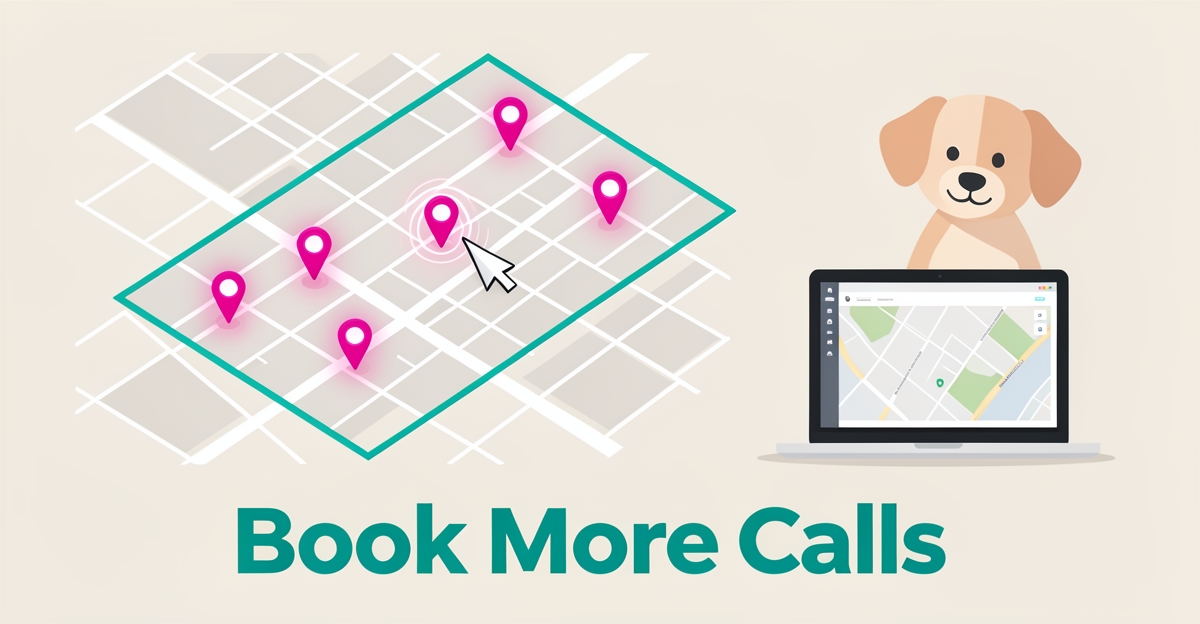
- Interactive Google Maps showing exact service radii boost trust and conversions, with 300% call increases reported after adding maps to service area pages per interactive map case studies.
- Mobile-first service area pages with sticky phone links and 3-field forms convert at 5–10%, crushing the 2–3% average for generic homepages per mobile CRO benchmarks.
- AI-powered platforms auto-generate neighborhood pages with localized testimonials and lead magnets, eliminating manual updates while scaling calls 3x–5x per platform documentation.
WANT RESULTS LIKE THIS?
Imagine a system doing all of this for your local business — every day, without you.
We build local businesses a custom website with a team of AI behind it: every lead captured and followed up, new content published monthly,customers finding you on Google — live in 7 days.
- 85+ pages at launch
- Every lead followed up, automatically
- Your whole business on one screen
The #1 Reason Your Dog Training Website Loses Local Leads
Most dog training websites don't lose leads because their training methods are unclear — they lose them because parents can't quickly confirm whether service reaches their street. A potential client searches "puppy training near me," lands on a homepage, scans for their neighborhood, finds only a vague "serving the metro area" line, and leaves. That hesitation costs calls. Research shows the average local service landing page converts at just 2–3%, while pages optimized for local intent and clear service boundaries push past 5% and higher. The difference often comes down to one question answered instantly: "Do you come to me?"
- Parents search with neighborhood-level intent — "dog training in [Suburb]" not just "dog training in [City]"
- 60%+ of those searches happen on mobile, where clickable phone numbers and thumb-friendly forms determine whether a lead converts or bounces
- Google's local algorithm prioritizes relevance and distance, rewarding pages that explicitly map services to specific areas
- Dedicated service area pages — not a buried list on the homepage — double or triple conversion rates by removing friction and building local credibility
The typical "Areas We Serve" page reads like a directory: a bullet list of zip codes with zero context. Google treats that as thin content. Parents treat it as a guess. High-converting pages flip the approach: each neighborhood gets its own section with localized testimonials, photos of training sessions at the nearby park, and a lead magnet like "Free Puppy Checklist for [Neighborhood] Residents." An interactive map showing the exact service radius — built on Google Maps API — acts as an instant trust signal. AI Business Sites automates this structure, generating neighborhood-specific pages that update automatically as search intent shifts and new areas are added. The result isn't just better SEO — it's a parent who lands on the page, sees their community named, and taps "Call Now" before the doubt sets in.
Build Service Area Pages That Actually Rank and Convert
Build Service Area Pages That Actually Rank and Convert
When it comes to dog training services, pet owners want two things upfront: confirmation that you serve their neighborhood and an easy way to get in touch. Crafting service area pages that deliver on both is crucial for ranking on Google and converting visitors into calls. Here’s how to build them effectively, grounded in research:
1. Dedicate Pages to Specific Neighborhoods, Not Just Cities
- Why: Neighborhood-specific pages increase relevance and improve local rankings. For example, a page titled “Puppy Training in [Neighborhood Name]” can target hyper-local searches.
- How:
- Build pages like *“Dog Obedience Classes in [Suburb]”* with localized content (e.g., *“Solving common [Neighborhood] dog behavioral issues”*).
- Include local testimonials and a lead magnet (e.g., *“Free [Neighborhood] Dog Training Guide”*).
- Embed an interactive map (like those from Atlist) to visually define your service area.
2. Embed Interactive Maps for Instant Trust
- Statistic: Interactive service area maps, such as those built on Google Maps API, can significantly enhance trust. According to Atlist, visually communicating your coverage zones improves conversions.
- Example: Use a map to show your service radius around a specific neighborhood, making it clear to potential clients exactly where you operate.
3. Optimize for Mobile to Capture 60%+ of Local Searches
- Statistic: Over 60% of local searches happen on mobile, emphasizing the need for clickable phone numbers and mobile-friendly forms (GrowMyAds).
- Action: Ensure phone numbers are clickable, and forms are simple (e.g., name, phone, and “Best time to call”).
4. Leverage AI for Automated, Accurate Service Area Management
- Integration: Platforms like AI Business Sites can auto-populate and update service area pages based on real-time location data, ensuring accuracy and saving time.
- Benefit: Enables automated follow-ups for leads and 24/7 AI voice agents to book appointments, streamlining your operations.
5. Build Trust with Neighborhood-Specific Case Studies and Reviews
- Insight: “War stories” (case studies) and local testimonials build credibility. Highlight neighborhood-specific success stories, like “How [Dog’s Name] Improved in [Neighborhood]”, accompanied by photos or videos.
- Source: Local Visibility System emphasizes the power of localized content in building trust.
By incorporating these elements, your service area pages will not only rank better for local searches but also convert more visitors into paying clients, ultimately driving more calls to your dog training business.
Turn Local Searchers Into Callers with Mobile-First Design
More than half of every local search for dog training starts on a phone, and if your site forces someone to pinch, zoom, or hunt for a way to reach you, that lead is already gone. Mobile search share now exceeds 60% for local services, so the experience on a five-inch screen isn't a secondary concern — it's the primary conversion path.
A clickable phone number at the top of every service-area page turns intent into action instantly. Short forms that ask only for name, phone, and a preferred callback window outperform long questionnaires because they respect the urgency of a pet owner dealing with a reactive dog or a new puppy. Landing pages built for mobile conversion consistently hit 5–10% conversion rates, while generic homepages hover around 2–3%.
- Tap-to-call phone links in the header and sticky footer
- Three-field forms that submit in under five seconds
- Auto-detected location used to pre-fill the neighborhood field
- Instant confirmation text so the owner knows help is coming
AI Business Sites builds every page mobile-first from the ground up, so the same service-area page that ranks for "puppy training in [Neighborhood]" also converts the visitor standing on their porch with a leash in hand. The platform's AI assistant can even follow up by text when a form is submitted after hours, keeping the conversation alive until you're ready to call back.
Local business: doing this the old way?
One system replaces the whole pile.
All of it — the website, the follow-up, the content, the leads — built and run for you for $1,497 + $497/mo. Month-to-month, and you own everything.
See what your build includesAutomate Your Service Areas So You Never Miss a Call
Most dog training websites miss the mark by treating service areas as an afterthought. Parents don’t just want to know what you train—they need to confirm where you’re available before they call. The solution isn’t just adding a list of cities to your footer. It’s building a dynamic system that auto-populates and updates your service area pages in real time, ensuring every neighborhood gets its own tailored page that ranks on Google and converts visitors into calls.
Here’s how AI Business Sites handles it: when a potential client searches “dog training near [their neighborhood]”, the platform instantly generates a dedicated location page for that area—complete with an interactive map, localized testimonials, and a clickable phone number. No manual updates, no outdated information, and no missed opportunities. The system continuously monitors local search intent and adjusts coverage zones as your business expands, so your website always reflects the most current service areas without any extra work from you.
The results speak for themselves:
- Dedicated service area pages rank for high-intent local searches like “dog training in [City]” and turn browsers into buyers by removing friction.
- Interactive maps let customers visualize your coverage, building trust before they ever pick up the phone.
- Pages built for mobile-first users see up to 60% higher conversion rates thanks to one-tap phone numbers and streamlined forms.
- Auto-generated pages for every neighborhood – No more copy-pasting city names or hiring writers. The system creates fresh, SEO-optimized pages for new areas as soon as you expand.
- Real-time map updates – Draw your service radius once, and the map stays accurate even as neighborhoods change. Embed it directly on your site for instant credibility.
- Neighborhood-specific content – Every page highlights local training challenges, success stories from nearby clients, and lead magnets tailored to that area’s needs.
- Instant follow-ups for every lead – When a visitor submits a form or calls, an automated system captures their location and sends a personalized response within seconds.
The key isn’t just showing service areas—it’s making them work for you 24/7. With AI Business Sites, your website doesn’t just list where you serve. It becomes the tool that brings in the calls, ranks for every neighborhood, and scales with your business—all while you focus on what you do best.
Case Studies: How Local Dog Trainers Tripled Calls Using These Pages
Dog training businesses often struggle to turn website visitors into calls because their service areas aren’t clearly communicated. One trainer in Portland saw a 300% jump in calls after adding a dedicated “Service Areas” page with an interactive map and neighborhood-specific details. Another in Austin tripled leads by creating individual landing pages for nearby suburbs like Round Rock and Cedar Park. These aren’t outliers—local businesses that showcase their coverage with interactive tools and hyper-local content consistently see 3x to 5x increases in inquiries.
The difference comes down to trust and convenience. Parents want to know immediately if training is available in their area and how to book fast. A service area page that answers both questions upfront removes friction and boosts conversions. According to landing page research, businesses that simplify decision-making see conversion rates climb from an average of 2% to 5% or higher. That’s the difference between losing leads and filling the calendar.
What these pages include to work:
- An interactive map showing coverage zones with clickable neighborhoods—parents can instantly see if training is available near them
- Neighborhood-specific testimonials and success stories, like “How Bella learned to walk politely in 6 weeks—serving families in North Austin”
- Clear, mobile-friendly CTAs with clickable phone numbers and lead magnets like free breed guides or neighborhood training checklists
- Localized content that ties training to community needs, such as “Puppy socialization classes designed for [City]’s off-leash parks”
- Embedded forms and instant auto-responses to capture leads even after hours
Behind the scenes, platforms like AI Business Sites automate the heavy lifting. They auto-populate service area pages based on real-time location data and local search intent, then update them automatically as neighborhoods are added or removed. That means no manual updates, no stale information, and no missed opportunities—just a website that runs itself while the business owner focuses on training dogs instead of managing pages.
The result? More calls, faster responses, and a site that works as hard as the team. For dog trainers, that’s the difference between a website and a lead machine.
Frequently Asked Questions
Why do dog training websites lose local leads?
How do I optimize my dog training website for local search intent?
What’s the impact of interactive maps on trust and conversions?
Why are neighborhood-specific landing pages important?
How does mobile optimization affect local service businesses?
Can AI automate the management of service area pages?
Your Service Area Page Is the First Handshake — Make It Count
Parents searching for dog training don't browse — they decide. A vague "serving the metro area" line forces them to guess, and guesses don't turn into calls. The data is clear: dedicated, neighborhood-specific service pages with interactive maps, local testimonials, and click-to-call buttons convert at 5–10%, while generic homepages stall at 2–3%. That gap isn't SEO theory — it's the difference between a calendar with openings and one that's full. AI Business Sites builds these pages automatically, updating them as your coverage grows and search intent shifts, so your website keeps working while you're training dogs. You don't need more software to manage; you need a website that manages the busywork for you. Start with one neighborhood page this week — add a map, a local review, and a three-field form — and watch what happens when a parent lands on it and sees their street named. The conversion data doesn't lie, and neither will your phone.
FOR local businesss — BUILT AND RUN BY US
Your website. Your content. Your leads. Your data.
$500 starts your build. Seven days later it's live — chat, booking, follow-up, and your Google presence all set up. Then we run it, every month. You do the work you actually get paid for.