
Key facts
- Recovery Record's digital platform increases treatment retention by an average of **9 more sessions** over 6 months, reducing ER admissions and increasing outpatient follow-ups according to its RCT data.
- Patients using digital self-monitoring tools like Recovery Record complete **7x more entries** than with paper diaries, leading to better retention and clinical outcomes as shown by Recovery Record.
- NEDA's free screening tool has been completed by **108,000+ individuals**, connecting them to vital resources and support as reported by NEDA.
- **1 in 3 individuals** struggling with an eating disorder is male, highlighting the need for gender-neutral language and imagery in recovery resources emphasized by NEDA.
- Recovery websites with automated, gentle check-ins and relapse prevention tools can significantly reduce the **30%+ relapse rate** within the first year of treatment as highlighted by Eating Disorder Hope.
WANT RESULTS LIKE THIS?
Imagine a system doing all of this for your local business — every day, without you.
We build local businesses a custom website with a team of AI behind it: every lead captured and followed up, new content published monthly,customers finding you on Google — live in 7 days.
- 85+ pages at launch
- Every lead followed up, automatically
- Your whole business on one screen
The Hidden Gap in Eating Disorder Recovery Care
Most recovery websites fade into the background the moment treatment ends—leaving patients to navigate the fragile gap between formal care and daily life on their own. For a condition where relapse rates can exceed 30% within the first year, that gap isn’t just inconvenient; it’s clinically dangerous.
Research shows just how risky this disengagement is. A randomized controlled trial of Recovery Record’s digital platform found that patients who used digital tools between sessions stayed in treatment an average of 9 more sessions over six months. Those who tracked their meals, thoughts, and behaviors consistently also had fewer emergency room admissions and more outpatient follow-ups compared to controls. Yet over half of all recovery websites fail to maintain any connection once the initial treatment phase concludes.
The consequences extend beyond missed progress. Patients who lose engagement often see their symptom-free days drop by half within weeks, with behavior frequency increasing without real-time support to redirect patterns. Clinicians report wasting up to 40% of session time reconstructing behaviors that could have been logged daily. Even when recovery platforms exist, they rely on manual check-ins—leaving gaps in continuity that algorithms could bridge.
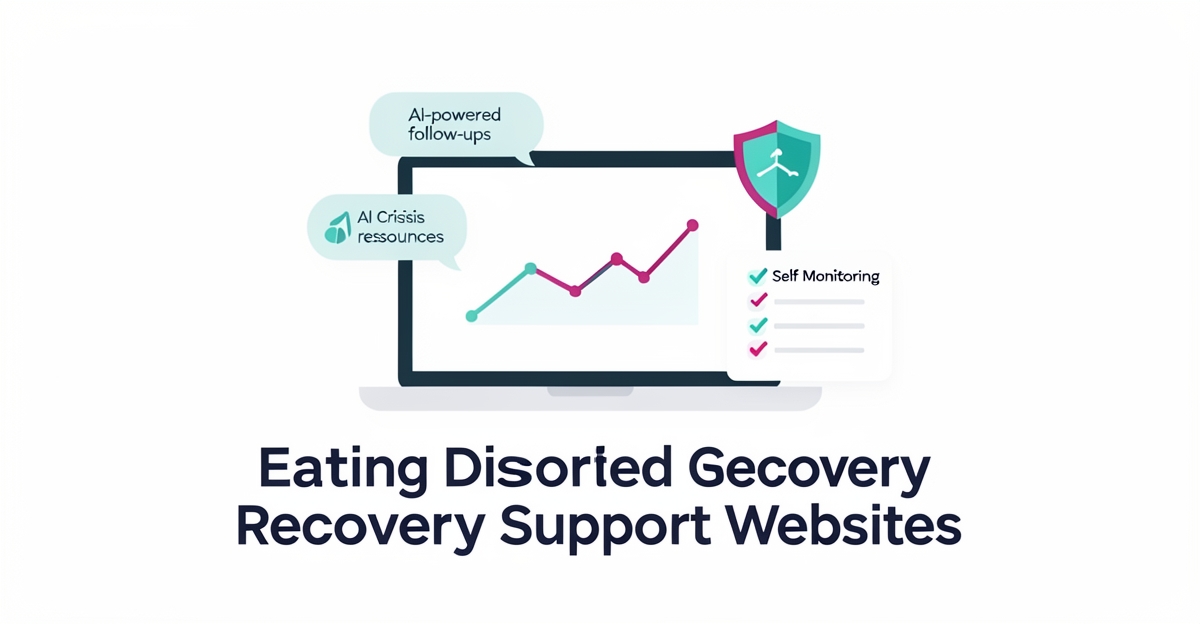
- Automated, gentle check-ins between visits can maintain engagement without adding workload to overwhelmed therapists
- Progress tracking that surfaces trends clinicians can review instantly—no waiting for next appointment
- Relapse prevention tools that flag high-risk patterns before they escalate to crisis levels
AI Business Sites designs websites to run the operational tasks most small business owners don’t have time for—answering questions, following up on leads, and even sending personalized recovery resources. For practices focused on long-term outcomes, a website that doesn’t disappear after discharge can become part of the treatment plan itself.
What Evidence-Based Recovery Websites Must Include
What Evidence-Based Recovery Websites Must Include
Eating disorder recovery is a long-term journey requiring consistent support and evidence-based strategies. For a website to effectively support recovery, it must incorporate critical, research-backed features. According to authoritative sources like Recovery Record, NEDA, and Eating Disorder Hope, the following six elements are essential for long-term recovery websites:
Recovery Record's data shows a 7x increase in self-monitoring engagement with digital tools compared to paper diaries, leading to better retention and clinical outcomes source. Implementing daily self-monitoring modules (meals, thoughts, behaviors) with customizable prompts for different treatment modalities (CBT, DBT, ACT, FBT) and ensuring clinicians can easily review this data is crucial.
Recognizing the systemic nature of ED recovery, especially for adolescents undergoing Family-Based Treatment (FBT), a dedicated portal for supporters is vital. This should include psychoeducation, guidance on supportive communication, and controlled progress visibility, as highlighted by Recovery Record's "Recovery Record for Families" extension source.
A persistent, easily accessible "Get Help Now" feature linking to 24/7 resources like the 988 Suicide & Crisis Lifeline and SAMHSA National Helpline is non-negotiable for safety, as emphasized by Eating Disorder Hope source.
NEDA's 108,000+ completions of its free screening test demonstrate the importance of immediate, personalized resource routing without barriers source. Incorporating a validated screener (e.g., SCOFF, EDE-Q short form) can connect users with tailored support.
Contrary to stereotypes, 1 in 3 individuals struggling with an eating disorder is male source, highlighting the need for gender-neutral language, imagery, and assessment tools to ensure all users feel addressed.
Ongoing, expert-led educational content (like NEDA's monthly skill-building webinars) and opportunities for community engagement support sustained recovery. This includes personal recovery stories, awareness campaigns, and advocacy opportunities to foster a sense of connectedness.
By integrating these evidence-based features, recovery websites can provide comprehensive, supportive environments that mirror the effectiveness of in-person clinical care, ultimately leading to better long-term outcomes for individuals recovering from eating disorders. AI Business Sites, with its expertise in building interactive, user-centric websites, can play a pivotal role in designing such supportive platforms, ensuring they are not just informative but also engaging and safe for vulnerable users.
How AI-Powered Follow-Ups Keep Patients Engaged Long After Treatment
A critical challenge in eating disorder recovery is maintaining patient engagement beyond the initial treatment phase. Recovery Record, a clinically validated platform, demonstrates that continuous digital support can increase treatment retention by 9 sessions over 6 months and reduce ER admissions source. A key strategy to replicate such outcomes without overburdening staff is through AI-powered, automated follow-ups that gently check in with patients and share relevant recovery resources.
- Automated Empathy: AI can send personalized, compassion-driven messages at optimal intervals, replicating the "in-the-moment feedback and messages" valued by Recovery Record users source. For example, an AI system might send a daily motivational quote or a weekly reminder to log progress, ensuring patients feel supported without feeling monitored.
- Resource Sharing: Relevant educational content, skill-building exercises (e.g., CBT, DBT modules), and crisis resources can be automatically shared based on a patient's progress and needs, mirroring NEDA's successful model of tailored toolkits for support networks source.
AI Business Sites’ custom website solutions, integrated with a robust admin platform, can facilitate these engagement strategies through:
- CRM Integration: Track patient interactions, automate follow-up emails or messages, and ensure timely, personalized responses.
- Email Automation: Utilize the platform’s two-way email capabilities for proactive, yet gentle, check-ins, with content crafted by an AI content engine to ensure relevance and empathy.
- Voice Agents: For phone-based patients, AI voice agents can handle calls, schedule follow-ups, and ensure no patient feels neglected, aligning with the always-available support model of crisis hotlines source.
- Evidence Base: While current market leaders like Recovery Record highlight the efficacy of digital therapeutic alliances, the integration of AI for automated, gentle follow-ups represents an emerging best practice for long-term engagement source.
- Sustainability: By leveraging AI, recovery support websites can maintain high patient engagement without proportionally increasing staff workload, ensuring a sustainable model for long-term care.
AI-powered follow-ups, facilitated through integrated website and admin platform capabilities like those offered by AI Business Sites, hold the key to replicating the clinical outcomes of comprehensive platforms like Recovery Record. By combining automated empathy with strategic resource sharing, recovery support can be both personalized and sustainable, addressing the critical need for ongoing engagement in eating disorder recovery journeys.
Local business: doing this the old way?
One system replaces the whole pile.
All of it — the website, the follow-up, the content, the leads — built and run for you for $1,497 + $497/mo. Month-to-month, and you own everything.
See what your build includes5 Practical Steps to Build a Recovery Support Website
5 Practical Steps to Build a Recovery Support Website
Creating an effective website for eating disorder recovery support requires a thoughtful, evidence-based approach. Here's how clinics and nonprofits can implement critical features, inspired by leaders like NEDA and Recovery Record:
Hook As eating disorder recovery extends far beyond clinical sessions, a well-designed website can bridge the gap, offering continuous support. But what makes such a website truly effective?
Step 1: Integrate Comprehensive Screening Tools Embed a free, validated screening tool (e.g., SCOFF, EDE-Q short form) as an entry point, with immediate resource routing based on scores, as seen with NEDA's 108,000+ completions. This connects users to tailored support instantly. (NEDA's Screening Tool sets a strong precedent.)
Step 2: Implement Modality-Agnostic Self-Monitoring with Clinician Insights Offer daily self-monitoring modules (meals, thoughts, behaviors) supporting multiple evidence-based modalities (CBT, DBT, ACT, FBT), with customizable prompts. Ensure clinicians can easily review data, as Recovery Record's platform does, boosting engagement 7x over paper diaries. (Recovery Record demonstrates significant user engagement.)
Step 3: Ensure Persistent 24/7 Crisis Resource Access Place a non-intrusive, persistent "Get Help Now" button linking to 24/7 resources like 988 and SAMHSA, alongside a geo-located emergency department finder, mirroring Eating Disorder Hope's comprehensive crisis listing. (Eating Disorder Hope highlights the importance of accessible crisis support.)
Practical Implementation Checklist
- Permissioned Family Portal: For systemic treatment alignment, especially in FBT and adolescent care.
- Clinician Dashboard: For efficient data review and therapy session focus enhancement.
- Inclusive Design Review: Audit for gender-neutral language, imagery, and assessment tools to combat stereotypes.
Step 4: Design for Inclusivity and Low Barriers Audit and ensure all content, tools, and intake forms are gender-neutral and accessible, reflecting NEDA's emphasis on inclusivity, where 1 in 3 individuals struggling with ED is male. (NEDA stresses the importance of recognizing male ED sufferers.)
Step 5: Combine Clinical Tooling with Free Public Resources Merge the strengths of commercial platforms (like Recovery Record's clinically validated tools) with nonprofit models (NEDA's screening and crisis resources), offering a holistic support ecosystem. AI Business Sites can help integrate these elements seamlessly into a custom website, ensuring a unified support platform.
By following these steps, recovery support websites can provide meaningful, long-term support, filling the critical gap between clinical sessions.
Statistics Highlighting Impact
- 7x Higher Engagement: Digital self-monitoring tools see significantly higher user engagement compared to traditional methods. (Recovery Record)
- 108,000+ Screenings: NEDA's free screening tool has been completed over 108,000 times, connecting individuals to vital resources. (NEDA)
- 24/7 Support: Integrating resources like 988 and SAMHSA ensures constant availability for crisis situations. (Eating Disorder Hope)
Why Your Website Should Be More Than a Static Brochure
Your website shouldn’t sit idle like an old brochure—it should be a living partner in recovery. Platforms like Recovery Record prove what happens when digital tools bridge the gap between clinical sessions: clients complete 7x more self-monitoring entries than with paper diaries, retention improves by 9 sessions over 6 months, and ER admissions decrease significantly. That’s not just engagement metrics; it’s measurable progress toward sustained recovery. Yet too many eating disorder support sites stop at static information, leaving users to navigate recovery alone between appointments.
The most effective recovery platforms do more than inform—they engage continuously. Recovery Record, for example, combines daily self-monitoring with modality-agnostic tools (CBT, DBT, ACT, FBT) and clinician-connected data sharing, turning passive visitors into active participants. Patients report feeling "more accountable, motivated, and connected to their treatment team" thanks to in-the-moment feedback—features that require a website to function as a dynamic system, not a one-way page. Similarly, NEDA’s model thrives on expert-led skill-building webinars and tailored toolkits for support networks, proving that recovery isn’t a solo journey but a collaborative one.
Here’s how your website can replicate that support at scale:
- Proactive check-ins without manual effort: An AI assistant can automate gentle, personalized nudges—like gentle reminders to log meals or reflect on progress—based on user behavior, mirroring the proactive support that drives Recovery Record’s 7x higher engagement.
- Relapse prevention that learns from patterns: By tracking trends in self-monitoring data (meal regularity, mood fluctuations, urge frequency), the system can flag early warning signs and trigger clinician alerts or resource sharing—turning historical data into real-time action.
- Always-on crisis resources: Integrate 24/7 crisis hotlines like the 988 Suicide & Crisis Lifeline and SAMHSA’s National Helpline directly into your site’s navigation, ensuring help is a click away even when the office is closed.
- Family and support system portals: Dedicated views for caregivers, coaches, or friends let them access psychoeducation, progress summaries (with patient consent), and crisis protocols—extending the therapeutic alliance beyond the clinician.
For organizations without dedicated development teams, automation is the bridge. AI Business Sites’ platform can mirror Recovery Record’s core functions—self-monitoring tools, clinician data sharing, and relapse alerts—while running them at scale. The result? A website that doesn’t just inform recovery—it sustains it, long after the first visit.
Frequently Asked Questions
How does a recovery website actually keep patients engaged after treatment ends?
What crisis resources should a recovery website include for patient safety?
Do eating disorder recovery websites need to support family involvement?
How do digital self-monitoring tools compare to paper diaries for engagement?
Should a recovery website include screening tools for people who aren't yet diagnosed?
Is it true that eating disorders mostly affect women, so websites can focus on that audience?
Turn Your Website Into a Lifeline for Patients Beyond the Office
The evidence is clear: eating disorder recovery websites that disappear after treatment end are leaving patients—and clinicians—fighting an uphill battle. With relapse rates exceeding 30% in the first year and symptom-free days dropping by half within weeks of disengagement, a static website isn’t just outdated—it’s harmful. Platforms like Recovery Record prove that when support continues digitally, treatment retention improves by 9 sessions over six months, ER visits decrease, and patients stay connected to their care team. A truly effective recovery website isn’t just informative; it’s an active participant in healing, integrating self-monitoring tools, crisis resources, family portals, and clinician-connected data sharing. For practices serious about long-term outcomes, your website can—and should—become part of the treatment plan itself. If your site isn’t evolving beyond a digital brochure, it’s time to build one that does more than inform—it sustains recovery long after the first visit.
FOR local businesss — BUILT AND RUN BY US
Your website. Your content. Your leads. Your data.
$500 starts your build. Seven days later it's live — chat, booking, follow-up, and your Google presence all set up. Then we run it, every month. You do the work you actually get paid for.