
Key facts
- The self-storage market is projected to reach $83.6 billion by 2027, growing at a 7.53% CAGR from 2022 according to industry growth projections
- 10.6% of U.S. households currently rent a self-storage unit, representing a massive addressable market per self-storage industry statistics
- Self-storage facility owners achieve an average 17% annual ROI over nine years according to industry growth projections
- Occupancy rates have remained steady at approximately 90% in recent years, indicating sustained demand per industry growth data
- Interactive Google Maps-based service area maps let visitors test their address instantly with drive-time zones using service area map tools
- AI content generation automatically updates service area maps when facilities expand or new developments emerge per rental management platform documentation
- Embedding interactive maps with unit details and booking CTAs directly on location pages converts more visitors into leads using service area mapping solutions
WANT RESULTS LIKE THIS?
Imagine a system doing all of this for your local business — every day, without you.
We build local businesses a custom website with a team of AI behind it: every lead captured and followed up, new content published monthly,customers finding you on Google — live in 7 days.
- 85+ pages at launch
- Every lead followed up, automatically
- Your whole business on one screen
The Hidden Cost of Unclear Service Areas
Many self-storage websites fail to clearly define where they actually serve, leaving potential customers guessing whether they're within range. This ambiguity creates friction at the moment of decision, causing interested visitors to abandon the site rather than risk contacting a facility that might not serve their neighborhood. Even as the self-storage industry grows steadily—projected to reach a market value of $83.6 billion by 2027 with a 7.53% CAGR from 2022 to 2027—unclear service areas quietly drain leads that could otherwise convert into rentals.
The problem isn't just inconvenience; it's a measurable loss of opportunity. When users can't quickly determine if a facility serves their ZIP code or neighborhood, they often turn to competitors with more transparent location details. Research shows that developing a website with clear location information is key to business success, yet many self-storage operators still rely on vague statements like "serving the greater metro area" or bury service boundaries in fine print. This lack of clarity undermines trust and increases bounce rates, especially among mobile users searching for immediate solutions.
- 10.6% of U.S. households rent a self-storage unit, representing a significant addressable market for facilities with clear online visibility
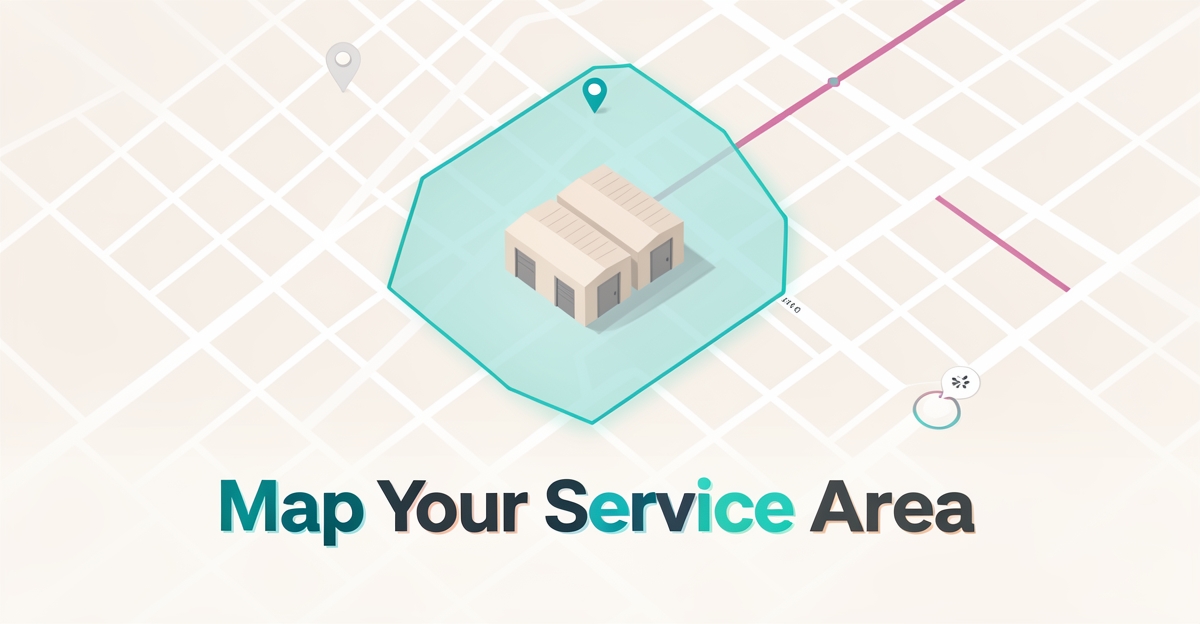
AI Business Sites helps self-storage operators turn this weakness into an advantage by building websites with interactive, Google Maps-based service area maps that users can explore in real time. These maps eliminate ambiguity by visually displaying exact boundaries, drive-time zones, and serviceable neighborhoods—critical for urban customers who prioritize convenience. Behind the scenes, AI content generation ensures these maps stay current as facilities expand or new developments emerge, automatically updating location details without manual intervention. This approach transforms a passive website into an active lead generator that aligns with how customers actually search for storage solutions.
Data-Driven Solution: Interactive Mapping & AI Updates
Most self-storage operators still rely on static images or vague zip-code lists to define their reach, leaving potential customers guessing whether they're actually covered. That ambiguity costs leads every day, especially in a market where 10.6% of U.S. households already rent a unit and the industry is growing at a 7.53% CAGR through 2027.
The most effective fix is an interactive, Google Maps-based service area map that lets visitors explore coverage visually. Tools like Atlist and Google My Maps make it straightforward to draw precise boundaries and embed them directly on your site, while drive-time analysis adds a layer of clarity that static radius circles can't match — especially in dense urban corridors where traffic patterns matter more than distance. Rental management platforms now document this workflow so operators can replicate it without a developer.
- Embed an interactive map built on Google Maps infrastructure so users can pan, zoom, and test their address instantly
- Layer drive-time polygons (5, 10, 15 minutes) instead of simple radius rings for urban accuracy
- Highlight facility markers with unit mix, pricing links, and online booking CTAs
- Sync map boundaries with your Google Business Profile service area for consistent local signals
Keeping that map current is where most operators fall short. New developments, road changes, or facility expansions shift the real-world service area faster than manual updates can track. AI content engines solve this by monitoring structured data sources and automatically regenerating map layers and accompanying location pages when boundaries change. This approach aligns with the broader technology shift in self-storage, where AI and automation are fueling market expansion alongside IoT and management software. AI Business Sites applies this same principle across the full website — not just the map — so service area pages, blog posts, and internal links all stay in sync without manual rework. The result is a living service area that reflects reality today, not six months ago, and a site that continues to earn trust from both search engines and the customers who actually drive to your gate.
Local business: doing this the old way?
One system replaces the whole pile.
All of it — the website, the follow-up, the content, the leads — built and run for you for $1,497 + $497/mo. Month-to-month, and you own everything.
See what your build includesStep-by-Step Implementation for Self-Storage Websites
A confusing service map or vague location details lead to lost leads. This guide explains how to design a clear, interactive service area map that users can explore—and how AI content generation ensures the map updates automatically with new developments or expansions.
For self-storage businesses, clearly defining where you serve is critical because 10.6% of U.S. households rent a self-storage unit, and customers often search locally before committing. An interactive map built with tools like Google My Maps or Atlist allows visitors to visualize your exact coverage, reducing uncertainty and building trust. Highlighting drive-time zones within the map helps urban customers quickly assess accessibility, especially in congested areas where proximity influences decisions.
Embedding such a map directly on your service area or location page improves user engagement and supports local SEO by reinforcing geographic relevance to search engines. Pair this with clear unit details, pricing, and online booking options to create a conversion-focused experience. Research shows that developing a website with these key features is crucial for business success in the self-storage industry.
To maintain accuracy without manual updates, integrate AI-driven content generation that automatically revises your service area map when you add new facilities or expand into neighboring zones. This ensures your website reflects real-time operations, keeping both customers and search algorithms informed. Over time, this consistency strengthens your local search presence and reduces the administrative burden of managing multiple listings.
By combining an interactive, easy-to-navigate map with automated updates, self-storage operators can turn a passive website feature into an active lead-generation tool. This approach aligns with broader industry trends where technology integration—like AI and IoT—is fueling market expansion and improving customer experience. When your website clearly communicates where you serve and keeps that information current, you remove barriers to inquiry and increase the likelihood of conversion. For businesses using platforms that unify website management with AI-powered content and lead handling, this process becomes seamless—supporting growth without adding complexity to daily operations.
Frequently Asked Questions
How does an interactive service area map help self-storage businesses get more leads?
Why are static maps or vague service area descriptions hurting self-storage websites?
What percentage of U.S. households rent a self-storage unit, and why does that matter for service area clarity?
How can AI keep a self-storage service area map up to date without manual work?
What’s the benefit of using drive-time zones instead of simple radius circles on a service area map?
Is there data showing that clear location information improves business success for self-storage facilities?
Key Takeaways
{ "title": "Unlocking Conversions with Clear Self-Storage Service Areas", "content": "As the self-storage industry continues to grow, with a projected market value of $83.6 billion by 2027, the need for clear service area visibility on websites is paramount. Ambiguity costs leads, but interactiv
FOR local businesss — BUILT AND RUN BY US
Your website. Your content. Your leads. Your data.
$500 starts your build. Seven days later it's live — chat, booking, follow-up, and your Google presence all set up. Then we run it, every month. You do the work you actually get paid for.