
Key facts
- The digital logistics market is projected to reach $177.26 billion by 2033, growing at a 19.8% CAGR according to market research.
- AI-powered fleet management achieves up to 500% ROI, reducing unplanned downtime by 30% and fuel costs by 12% per industry analysis.
- Over 80% of Europe’s digital technologies are imported, highlighting the need for open-source solutions for digital sovereignty as noted by the Open Logistics Foundation.
- Logistics businesses using disconnected tools manage an average of 5-6 separate subscriptions, causing data silos and inefficiencies.
- Consolidated AI-powered platforms can reduce operational complexity and costs by replacing multiple tools (e.g., CRM, automation, content generation).
- AI-driven automation in logistics can handle increased operational demands without proportional staff increases, enhancing scalability.
- Digital resilience, including open-source strategies, is critical for logistics businesses to adapt to geopolitical and regulatory changes.
WANT RESULTS LIKE THIS?
Imagine a system doing all of this for your local business — every day, without you.
We build local businesses a custom website with a team of AI behind it: every lead captured and followed up, new content published monthly,customers finding you on Google — live in 7 days.
- 85+ pages at launch
- Every lead followed up, automatically
- Your whole business on one screen
The Scalability Conundrum in Logistics Digital Infrastructure
Logistics companies don't hit a growth ceiling because they lack ambition — they hit it because their digital tools can't keep pace. As fleets expand, the patchwork of disconnected software for dispatch, documentation, and customer communication creates friction that compounds with every new vehicle and route. The digital logistics market reflects this urgency, projected to surge from $50.05 billion in 2026 to $177.26 billion by 2033 at a 19.8% CAGR, driven by the convergence of AI, IoT, and 5G technologies that demand unified infrastructure according to market research.
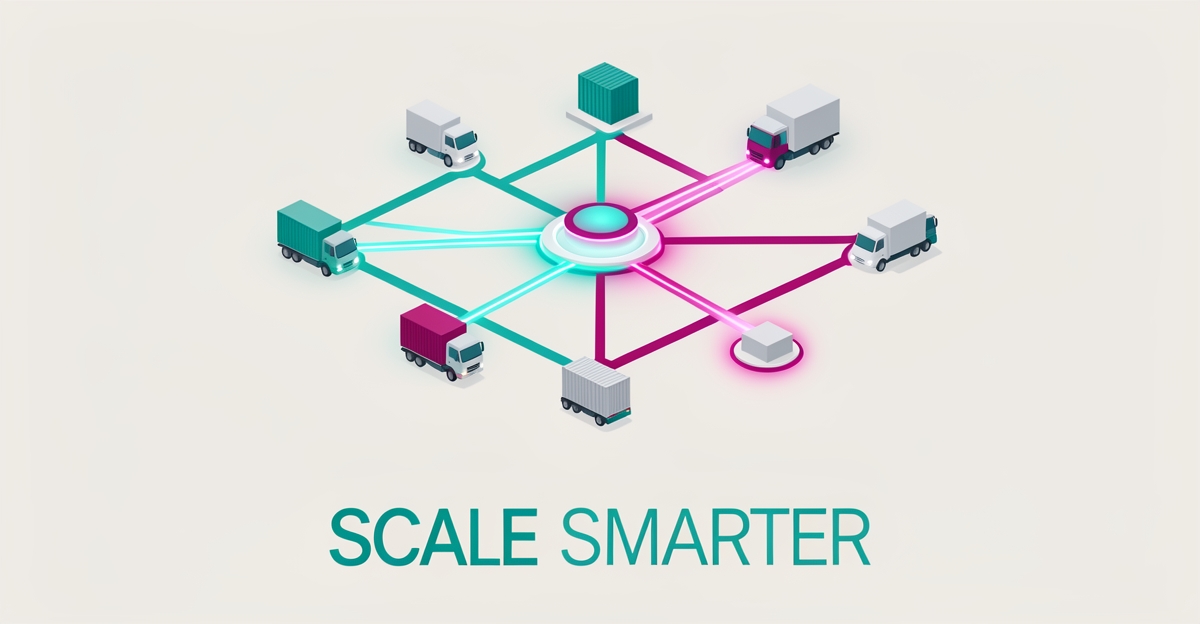
Most growing operators find themselves managing five or six separate subscriptions — a CRM here, a project tracker there, a document generator somewhere else — none of which talk to each other. This fragmentation doesn't just waste money; it creates data silos that blind decision-making. AI Business Sites was built to solve exactly this problem: a custom website that arrives with a complete operations platform underneath, replacing the duct-taped stack with one system that handles lead capture, project tracking, document generation, and automated follow-up from day one.
- Disconnected tools create blind spots that grow larger with every new route
- Manual handoffs between systems introduce errors and delays customers notice
- Subscription sprawl drains budget without delivering proportional value
- Data trapped in silos prevents the predictive insights that drive efficiency
The cost of this fragmentation shows up in measurable operational metrics. AI-powered fleet management delivers up to 500% annual ROI with a 44-day payback period, while cutting unplanned downtime by 30% and fuel costs by 12% through predictive accuracy reaching 89% per industry analysis. But those gains only materialize when AI has access to unified data — something a consolidated platform provides by design, not by integration project.
Digital resilience has become as critical as physical infrastructure for logistics networks. Over 80% of Europe's digital technologies are imported, creating strategic vulnerability that extends to any business dependent on proprietary, closed platforms. The path forward isn't adding more tools — it's consolidating onto infrastructure that scales with you, owns your data, and embeds AI where it actually reduces work rather than creating another dashboard to monitor.
Data-Driven Solution: Consolidated AI-Powered Platforms
Data-Driven Solution: Consolidated AI-Powered Platforms
In the rapidly evolving logistics landscape, where digital infrastructure growth is projected to reach $177.26B by 2033 with a 19.8% CAGR, embracing consolidated AI-powered platforms is no longer a choice, but a necessity for businesses seeking scalability and efficiency. A recent study highlights that AI-powered fleet management alone can achieve up to 500% ROI, reduce unplanned downtime by 30%, and lower fuel costs by 12% source.
For logistics businesses, the key to thriving lies in platforms that integrate built-in AI tools for seamless project tracking, automated document generation, and predictive maintenance, effectively replacing the cumbersome management of multiple separate subscriptions. Industry research underscores the importance of digital resilience, with over 80% of Europe’s digital technologies being imported, emphasizing the need for open-source solutions to enhance adaptability and reduce vendor lock-in source.
Benefits of Consolidated AI-Powered Platforms for Logistics:
- Enhanced Scalability: AI-driven automation handles increased operational demands without proportional staff increases.
- Operational Efficiency: Predictive maintenance and project tracking reduce downtime and improve delivery timelines.
- Cost Optimization: Consolidation of tools (CRM, automation, content generation) reduces operational complexity and costs.
A digital logistics market analysis further supports the shift towards integrated platforms, noting the convergence of AI, IoT, Blockchain, and 5G as key drivers for growth source. For logistics operators, this means seeking platforms that not only offer AI for operational efficiency but also ensure digital sovereignty through open-source technologies.
At AI Business Sites, we understand the importance of a unified digital infrastructure. Our approach focuses on delivering custom websites that are more than just an online presence—they are fully integrated business operations platforms. By consolidating essential tools under one roof, logistics businesses can streamline their operations, focus on growth, and navigate the complexities of the digital logistics market with agility.
Embracing the Future of Logistics with AI-Driven Solutions
As the logistics sector continues its digital transformation, the adoption of consolidated AI-powered platforms will be the defining characteristic of successful, scalable businesses. Whether it's enhancing supply chain visibility, optimizing fleet operations, or simply ensuring that every lead is promptly followed up, the integration of AI is redefining the benchmarks for efficiency and customer satisfaction.
For logistics companies looking to stay ahead, the message is clear: investing in a future-proof, AI-integrated digital infrastructure is not just a strategic move, but a foundational necessity for long-term competitiveness in a market expected to boom in the next decade.
Local business: doing this the old way?
One system replaces the whole pile.
All of it — the website, the follow-up, the content, the leads — built and run for you for $1,497 + $497/mo. Month-to-month, and you own everything.
See what your build includesImplementing the Right Digital Infrastructure: Key Considerations & Actions
The digital logistics market is accelerating toward $177.26 billion by 2033, growing at a 19.8% CAGR as AI, IoT, and 5G converge to reshape operations. Logistics leaders who treat their website and admin systems as separate purchases end up managing five or six subscriptions that don't talk to each other — CRM, automation, content, scheduling, analytics, document tools, project management, and more. A market research confirms the shift toward consolidated platforms that scale with fleet size rather than against it.
Digital resilience has become as vital as physical infrastructure, with over 80% of Europe's digital technologies imported and 85% of AI models originating from just two countries since 2017. Open source strategies reduce vendor lock-in and keep your business adaptable when regulations or geopolitics shift. The OLF-eCMR project demonstrates how open standards create interoperability without sacrificing control — a principle that applies equally to the platform running your website and daily operations.
AI-powered fleet management delivers measurable returns: 30% less unplanned downtime, 12% lower fuel costs, and 89% predictive accuracy translate to 200–500% annual ROI with a 44-day payback period. The same intelligence should extend beyond vehicles into your business operations — project tracking that updates itself, documents generated from conversation, follow-ups that never slip. When the platform handles the busywork, your team focuses on judgment calls that grow the business.
- Evaluate whether a provider's platform consolidates CRM, automation, content, project management, and analytics into one owned system
- Verify open source foundations and data portability to avoid lock-in as you scale
- Confirm built-in AI handles project tracking, document generation, and lead follow-up without separate tools
- Test whether the website launches with 85+ pages optimized for local search and Google Business Profile visibility
- Ensure the monthly cost replaces 8–10 subscriptions rather than adding another line item
AI Business Sites builds custom Next.js websites that include the admin platform running underneath — one system replacing the patchwork of tools most logistics operators manage today. The website captures leads, the AI assistant follows up instantly, projects track themselves, and content publishes monthly for local SEO. You own the code, the content, and the data. No long-term contracts. Just infrastructure that grows with your fleet.
From Fragmented Tools to Focused Growth
As the digital logistics market accelerates toward $177.26 billion by 2033, the real competitive edge isn't in adding more software—it's in consolidating what you already rely on into one intelligent system that scales with your fleet. Disconnected tools create blind spots, drain budgets, and slow down decision-making, while a unified platform with built-in AI turns lead capture, project tracking, and follow-up into seamless, automated workflows. For growing logistics businesses, this means fewer subscriptions to manage, faster response times, and the ability to focus on judgment calls that drive growth instead of juggling logins. The path forward starts with evaluating whether your current digital infrastructure owns your data, adapts to change, and replaces—not adds to—your monthly tool stack. Take the next step: assess how many separate subscriptions you're managing today and imagine what your team could achieve if those hours were redirected toward strategy, service, and scaling. See how market trends are shaping the future of logistics infrastructure and position your business to grow with confidence.
FOR local businesss — BUILT AND RUN BY US
Your website. Your content. Your leads. Your data.
$500 starts your build. Seven days later it's live — chat, booking, follow-up, and your Google presence all set up. Then we run it, every month. You do the work you actually get paid for.