
Key facts
- Marine repair services market to grow from $34.6B (2025) to $58.2B by 2034 at a 5.9% CAGR [1]
- Only 8% Planned Complete rate and 45% Clear Path Percent in marine repair operations before integrated systems [2]
- Regulatory compliance drives ~28% of dry-dock spending in marine repair [1]
- Last Planner methodology improved planning reliability by 175% and work readiness by 64% in ship repair [2]
- Asia Pacific dominates 41.8% of the marine repair services market [1]
- Average fleet age is ~14.8 years, driving demand for efficient maintenance scheduling [1]
- Marine repair market growth driven by predictive maintenance technologies and IoT adoption [1]
WANT RESULTS LIKE THIS?
Imagine a system doing all of this for your local business — every day, without you.
We build local businesses a custom website with a team of AI behind it: every lead captured and followed up, new content published monthly,customers finding you on Google — live in 7 days.
- 85+ pages at launch
- Every lead followed up, automatically
- Your whole business on one screen
The Hidden Cost of a Brochure Website in Marine Repair
The Hidden Cost of a Brochure Website in Marine Repair
Marine repair operations are notoriously complex, plagued by planning failures, with a mere 8% Planned Complete rate and 45% Clear Path Percent before implementing integrated systems. These "over-the-wall" handoffs between scheduling, project management, and daily trade assignments drive delays and overages. A website that merely looks good does nothing to address these operational silos.
The Cost of Disconnected Tools
- Missed Leads: Without a unified system, leads from various channels (web forms, phone calls, chat) can fall through the cracks. For instance, a potential client inquiring about hull repair via phone might not be promptly followed up with if the system doesn't automatically route and remind staff.
- Inefficient Communication: Manual handoffs between teams increase response times, potentially losing customers. A study showed that prompt responses to leads can significantly reduce the likelihood of losing them.
- Lack of Operational Visibility: Pretty brochures masquerading as websites fail to integrate with project management, leaving businesses blind to operational bottlenecks. This lack of visibility hinders the implementation of lean methodologies, such as the Last Planner System, which improved planning reliability by 175% and work readiness by 64% in a ship repair case study.
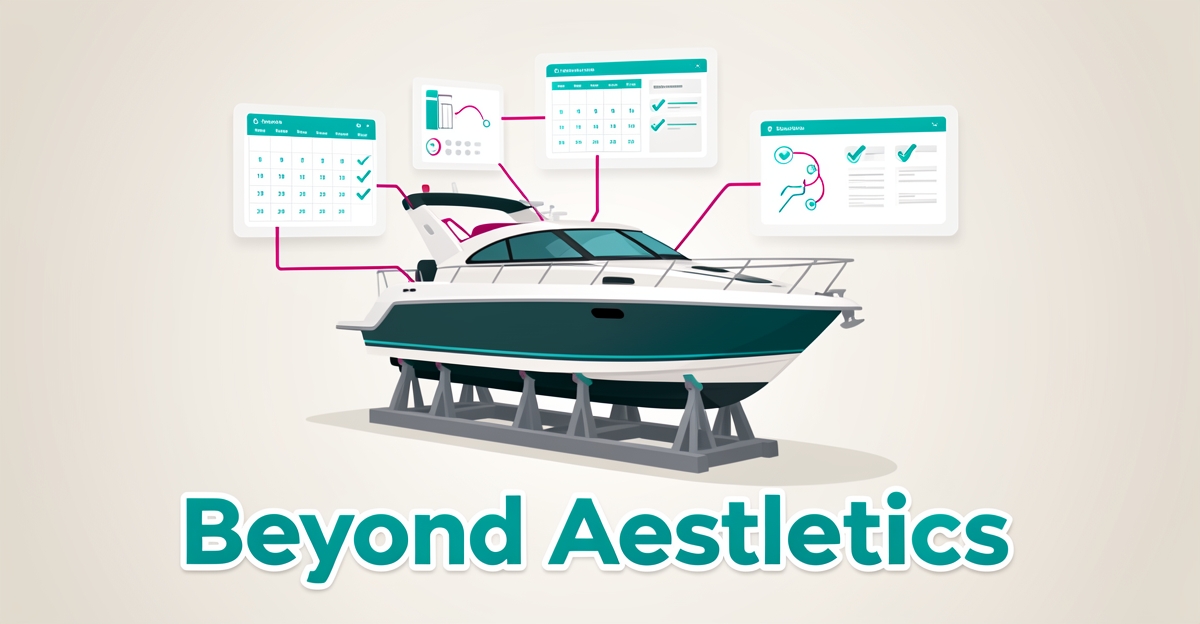
Beyond Aesthetics: The Need for an Operational Hub
Marine repair businesses require more than a digital showcase; they need a website that functions as a central operational hub. Key functionalities include:
- Unified Lead Management: Consolidating all lead sources into one system for instant, personalized responses.
- Integrated Scheduling and Project Management: Connecting bookings with constraint tracking for efficient resource allocation.
- Automated Compliance and Content Management: Easily updating regulatory compliance pages and safety documentation.
The Maritime Industry's Growing Need for Digital Integration
- The marine repair services market is projected to grow to $58.2 billion by 2034, with a CAGR of 5.9% .
- Successful operational transformations, like the one achieved by applying lean construction methodology to ship repair , underscore the need for integrated digital solutions.
Choosing Wisely
When evaluating a website provider, marine repair businesses should prioritize platforms that:
- Offer seamless integration of CRM, booking, and communications.
- Provide visibility into operational constraints and scheduling.
- Support multi-location management and global operations.
- Automate content related to regulatory compliance and safety.
Only then can a website truly support the operational complexities of marine repair, moving beyond mere aesthetics to drive business efficiency and growth.
References (Embedded in Text)
https://dataintelo.com/report/marine-repair-services-market
https://cbsteam.com/case-study/applying-lean-construction-methodology-to-ship-repair-reduces-delays-and-overages/
What Operational Integration Actually Looks Like for Marine Repair
What Operational Integration Actually Looks Like for Marine Repair
As marine repair businesses navigate the complexities of a $34.6 billion industry projected to grow to $58.2 billion by 2034 (CAGR 5.9%) [https://dataintelo.com/report/marine-repair-services-market], choosing a website provider that transcends mere aesthetics is crucial. Operational integration, as evidenced by a 175% improvement in planning reliability and 64% in work readiness through visual management and constraint-tracking systems [https://cbsteam.com/case-study/applying-lean-construction-methodology-to-ship-repair-reduces-delays-and-overages/], must be the focal point.
Unified Lead Capture: Beyond Silos Marine repair operations, often inundated with inquiries from various channels (e.g., phone calls post-facility announcements [https://www.marinelog.com/shipbuilding/shipyards/shipyard-news/austal-usa-reports-booming-ship-repair-business-at-new-west-campus/]), require a website that consolidates leads from web forms, phone calls, chat, bookings, and referrals into a single, unified system. This ensures no lead falls through the cracks, mirroring the operational cohesion seen in successful ship repair projects.
Integrated Scheduling with Constraint Management The success of methodologies like Last Planner, which shortened planning windows and improved alignment [https://cbsteam.com/case-study/applying-lean-construction-methodology-to-ship-repair-reduces-delays-and-overages/], underscores the need for scheduling systems tied to resource constraints. A website provider should offer integrated booking that connects to project-level constraint tracking, supporting look-ahead planning and resource allocation.
A Single Operational Hub: CRM, Booking, Communications To combat the "over-the-wall mentality" between scheduling, project management, and daily operations [https://cbsteam.com/case-study/applying-lean-construction-methodology-to-ship-repair-reduces-delays-and-overages/], the ideal platform integrates CRM, booking, and communications. This single system eliminates departmental silos, ensuring seamless handoffs and visibility.
Key Criteria for Marine Repair Website Providers
- Unified Lead Management: Consolidates all lead sources into one system.
- Integrated Scheduling with Constraints: Ties booking to resource and project constraints.
- Single Operational Platform: Combines CRM, booking, and communications for cohesive operations.
By prioritizing these operational integration aspects, marine repair businesses can leverage their website as a central hub for streamlined operations, not just a digital brochure. As the industry grows, with Asia Pacific dominating 41.8% of the market [https://dataintelo.com/report/marine-repair-services-market], and regulatory compliance driving 28% of dry-dock spending [https://dataintelo.com/report/marine-repair-services-market], the right website provider can be a pivotal differentiator.
Five Non-Negotiable Capabilities Your Website Provider Must Deliver
Five Non-Negotiable Capabilities Your Marine Repair Website Provider Must Deliver
As the marine repair market grows to $58.2 billion by 2034 (CAGR 5.9%) , your website must evolve from a static brochure to an operational hub. Here are the essential capabilities to evaluate when choosing a provider:
Ensure the platform funnels all inquiries (web forms, phone calls, chat, bookings, referrals) into one unified system with instant, personalized responses. This prevents missed opportunities, especially given the global, multi-channel nature of marine repair inquiries (e.g., Subsea Global Solutions' operations across Americas, Europe, and Asia) .
The provider must manage regulatory compliance pages (e.g., IMO CII, EEXI) and certification showcases (like Austal USA's ISO 9001:2015) with automatic internal linking to service pages, addressing the 28% of dry-dock spending driven by regulatory needs .
Opt for a platform architected for multi-location management from a single admin, with location-specific content and lead routing, crucial for businesses operating across various sites or globally .
Select a provider offering integrated booking/scheduling connected to project-level constraint tracking, supporting look-ahead planning and resource allocation, as seen in the successful implementation of the Last Planner methodology .
Ensure the platform can effectively display certifications (e.g., ISO 9001:2015 for Austal USA) and manage regulatory content, highlighting compliance with IMO CII and EEXI, which influence 28% of dry-dock expenditures .
By focusing on these operational integration capabilities over mere aesthetics, marine repair businesses can significantly enhance their efficiency and customer engagement.
Marine Repair Services Market Report
Subsea Global Solutions Case Studies
Lean Construction Methodology Case Study
Local business: doing this the old way?
One system replaces the whole pile.
All of it — the website, the follow-up, the content, the leads — built and run for you for $1,497 + $497/mo. Month-to-month, and you own everything.
See what your build includesFreelance Designer vs. Business Platform: The Wrong Comparison for This Industry
Freelance Designer vs. Business Platform: The Wrong Comparison for This Industry
The marine repair industry's complexity, characterized by an average fleet age of 14.8 years, growing predictive maintenance adoption, and global service footprints, renders the traditional freelance designer vs. agency debate irrelevant. A more pertinent question for marine repair businesses is whether their website provider delivers a consolidated platform that streamlines operations, replacing up to 8-10 separate subscriptions with a single, owner-controlled system encompassing code, content, and data ownership.
Beyond Aesthetics: The Need for Operational Integration
Research highlights the industry's operational challenges, including departmental silos and poor scheduling alignment, which improved significantly (175% in planning reliability and 64% in work readiness) with the adoption of integrated visual management systems . Similarly, the average fleet age of 14.8 years underscores the need for efficient maintenance scheduling, a challenge a consolidated platform can address by integrating booking, CRM, and communications.
The Consolidation Imperative
Marine repair businesses require more than a visually appealing website; they need an operational hub. This means seeking a provider that offers:
- Unified CRM, automation, and scheduling tools to manage diverse lead sources (e.g., global operations, referrals) and prevent operational silos.
- Content management capable of generating regulatory compliance pages, certification showcases, and safety documentation, automatically linked to service pages.
- Scalability for multi-location management, reflecting the industry's global footprint (e.g., Asia Pacific's 41.8% market share) .
Why the Freelance vs. Platform Debate Falls Short
- Lack of Operational Focus: Freelance designers and traditional agencies often prioritize aesthetics over operational integration, failing to address the industry's complexity.
- Fragmented Solutions: Both models typically result in multiple, disconnected tools, increasing management overhead and reducing efficiency.
- Ownership and Control: With a comprehensive business platform, marine repair owners retain full control over their website's code, content, and data, a critical aspect for long-term strategy and compliance.
The Right Approach for Marine Repair Businesses
Given the industry's growth projections ($34.6 billion in 2025 to $58.2 billion by 2034, at a 5.9% CAGR) and the documented benefits of integrated operational systems, the focus should be on identifying a platform that:
- Consolidates Essential Tools: Reduces subscription clutter and streamlines workflow.
- Supports Scalable, Integrated Operations: Meets the needs of global, multi-location businesses.
- Ensures Full Ownership and Control: Empowers owners with unrestricted access to their digital assets.
In the marine repair sector, the choice is clear: it's not about freelance designers versus agencies, but about embracing a comprehensive platform that transforms a website into the central operational hub of the business.
Operational Efficiency Case Study Marine Repair Services Market Report Marine Repair Services Market Forecast
Implementation: From Evaluation to Operational Hub in 30 Days
The same operational discipline that turned chaotic shipyard planning into a repeatable system — lifting Percent Planned Complete from 8% to 22% in weeks — applies directly to launching a marine repair website that functions as an operational hub, not a brochure. CBS Team's case study documented a 175% improvement in scheduling reliability and a 64% jump in work readiness when visual management and constraint tracking replaced siloed handoffs. Your website launch should follow the same logic: audit every lead source, map every regulatory content gap, and verify the platform can deliver 85+ search-ready pages with Google Business Profile and Bing configured from day one.
- Audit current lead sources and handoff failures — web forms, phone calls, chat, referrals — so nothing falls into the "over-the-wall" gap between marketing and operations
- Map regulatory content gaps: certifications (ISO 9001:2015), compliance pages (IMO CII, EEXI), and safety documentation that drive ~28% of dry-dock spending decisions
- Verify multi-location architecture needs — the CBS methodology became the standard across all client ship repair sites, and Subsea Global Solutions operates across Americas, Europe, and Asia
- Test the provider's ability to launch 85+ pages with GBP + Bing search presence configured from day one, not as an afterthought
- Confirm the platform consolidates CRM, booking, and communications into one system so leads route to the right manager instantly — whether from a commercial captain calling after a facility announcement or a web form at 2 AM
Austal USA's experience proves the market responds fast when capability is visible — they were inundated with calls from commercial captains immediately after announcing expanded capacity. AI Business Sites applies that same rapid-deployment rigor: 25–30 hand-built core pages plus 60 AI-generated SEO pages live within 30 days, with search profiles, lead routing, and automation sequences active from launch. The goal isn't a faster website build — it's an operational hub that eliminates the siloed handoffs marine repair operations know all too well.
Frequently Asked Questions
Why does a marine repair business need more than just a good-looking website?
What happens when leads come in through different channels like phone, web forms, and chat?
How does integrated scheduling help with the planning failures common in ship repair?
Our business operates across multiple locations — can a website platform handle that without duplicating effort?
How important is it that our website manages regulatory content like IMO CII and EEXI compliance pages?
Is hiring a freelance designer cheaper than investing in a comprehensive business platform?
Key Takeaways
{ "title": "Navigating the Tides of Efficiency: Your Marine Repair Website Blueprint", "content": "As the marine repair industry sails towards a $58.2 billion horizon by 2034, the imperative for operational cohesion cannot be overstated. Your website is no longer a mere digital brochure but the linc
FOR local businesss — BUILT AND RUN BY US
Your website. Your content. Your leads. Your data.
$500 starts your build. Seven days later it's live — chat, booking, follow-up, and your Google presence all set up. Then we run it, every month. You do the work you actually get paid for.