
Key facts
- ["Behavioral health no-show rates are 18-25%, nearly double primary care's 10% according to therapy scheduling research.", "77% of therapists experience mental fatigue due to bureaucratic tasks as reported in the same study.", "Integrated platforms reduce no-shows via automated reminders, improving workflow efficiency as seen in platform features.", "Post-pandemic telehealth adoption in behavioral health surged from 39.4% to 88.1% according to telehealth platform analysis.", "AI-assisted documentation in integrated platforms reduces administrative workload for therapists highlighted in scheduling tool reviews."]
WANT RESULTS LIKE THIS?
Imagine a system doing all of this for your local business — every day, without you.
We build local businesses a custom website with a team of AI behind it: every lead captured and followed up, new content published monthly,customers finding you on Google — live in 7 days.
- 85+ pages at launch
- Every lead followed up, automatically
- Your whole business on one screen
The Overwhelming Admin Burden in Behavioral Health Clinics
Running a behavioral health clinic today means juggling more than just therapy sessions. Behind the scenes, clinic owners and therapists are buried under a mountain of administrative tasks—scheduling conflicts pile up, intake forms get lost in email chains, and follow-ups slip through the cracks. The result? Rising no-show rates and burnout that’s pushing good clinicians out of the field.
Nearly 20% of behavioral health appointments end in no-shows, a rate nearly double that of primary care, according to a recent industry analysis on therapy scheduling software. These missed sessions don’t just disrupt schedules—they drain revenue and force therapists to spend unpaid hours calling clients or refilling slots last minute. Meanwhile, 77% of therapists report mental fatigue, much of it tied to bureaucratic busywork like managing documentation, chasing down payments, and tracking down overdue forms in the same report.
The problem isn’t just workload—it’s the tools themselves. Many clinics rely on a patchwork of disconnected systems:
- One platform for scheduling, another for messaging, and a third for billing
- Paper intake forms that need manual data entry into digital records
- Separate portals for clients to view notes or pay invoices
- Manual reminder calls or texts that still miss the mark
- No unified way to track which patient communications actually worked
This fragmentation forces therapists to switch between apps, re-enter data, and play phone tag—all while clients sit in waiting rooms or stare at empty calendars. The inefficiency isn’t just frustrating; it’s unsustainable. As one industry review put it, “Without all-in-one systems, providers will keep stitching together disconnected software that wasn’t built to talk to each other” in an analysis of therapy practice tools.
For clinics ready to break the cycle, the shift is already underway. Platforms that combine scheduling, intake, messaging, and billing in one place are gaining ground, with mobile access and HIPAA compliance becoming baseline expectations. Some even layer in AI-driven features like automated reminders and documentation to further cut down on manual work. The message is clear: the most efficient clinics aren’t adding more tools—they’re consolidating what they already use into a single system that works while they sleep.
The Integrated Solution: Research-Backed Benefits
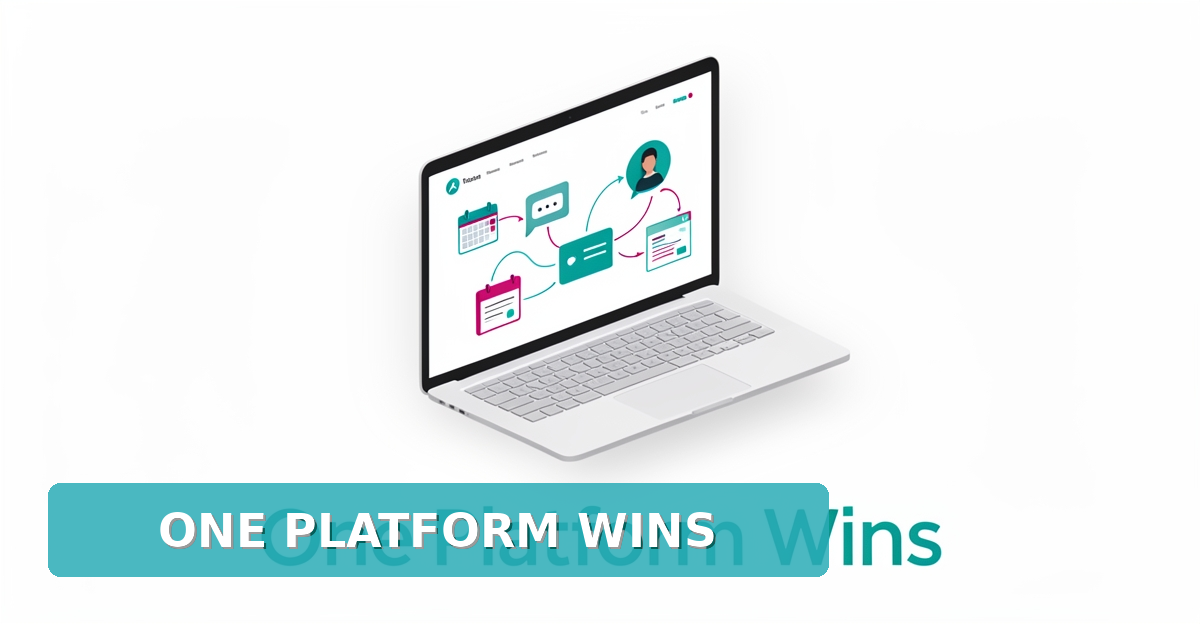
Research confirms that a single integrated platform can effectively manage both therapy scheduling and patient communication without the friction of disconnected tools. Multiple industry analyses show that all-in-one solutions combining scheduling, secure messaging, billing, and telehealth are now the standard for behavioral health practices, not the exception. This consolidation directly addresses the administrative overload driving therapist burnout — 77% of therapists report mental fatigue tied to bureaucratic tasks, according to industry research.
The measurable impact on practice operations is significant. Automated reminder systems built into integrated platforms have been shown to reduce no-show rates, which run 18–25% in behavioral health compared to roughly 10% in primary care. Post-pandemic telehealth adoption in behavioral health surged from 39.4% to 88.1%, making native video integration a baseline requirement rather than a nice-to-have. HIPAA compliance and mobile accessibility remain non-negotiable across every credible platform reviewed.
- Unified scheduling, intake forms, and post-session messaging in one workflow
- Automated reminders that cut no-shows without manual follow-up
- Secure patient portals for communication, documents, and telehealth
- Waitlist management that fills gaps automatically when cancellations occur
- AI-assisted documentation to reduce after-hours charting
The business case extends beyond convenience. When scheduling, communication, and clinical workflows share a single system, data flows without manual re-entry — intake responses inform session prep, session notes trigger follow-up sequences, and outcomes feed back into the record. This is the same consolidation principle AI Business Sites applies to small business websites: one platform replacing what would otherwise be a stack of separate subscriptions that don't talk to each other. The result is fewer missed messages, no double workloads, and a patient experience that feels coherent from first click to post-session follow-up.
Local business: doing this the old way?
One system replaces the whole pile.
All of it — the website, the follow-up, the content, the leads — built and run for you for $1,497 + $497/mo. Month-to-month, and you own everything.
See what your build includesImplementing the Ideal Integrated Platform: Key Considerations & Actions
Choosing the right integrated platform starts with a clear checklist: HIPAA compliance is non-negotiable, mobile access is expected by every patient, and AI-driven features are quickly becoming the standard for reducing administrative drag. Research confirms that behavioral health no-show rates sit between 18–25%, far above primary care averages, and that 77% of therapists report mental fatigue driven largely by bureaucratic tasks (therapist scheduling research). An integrated system that automates reminders, intake, and post-session follow-up directly attacks both problems.
- Verify end-to-end HIPAA compliance across scheduling, messaging, and telehealth modules
- Confirm mobile-first patient portals for self-booking, intake forms, and secure messaging
- Evaluate AI capabilities for automated documentation, note summarization, and smart reminders
- Test waitlist automation and recurring appointment logic for your specific workflow
- Ensure the platform consolidates billing, telehealth, and communication in one dashboard
Post-pandemic telehealth adoption in behavioral health surged from 39.4% to 88.1%, making integrated video visits a baseline requirement rather than a nice-to-have (telehealth platform analysis). Platforms that unify scheduling, communication, and clinical documentation eliminate the "duct-taped" workflows that drain staff time and introduce errors. A custom website with automated workflows — like those built by AI Business Sites — can extend this integration further, handling lead capture, intake sequencing, and personalized follow-up emails before a patient ever reaches the EHR. The goal is a single source of truth where every interaction, from first click to post-session check-in, flows through one coordinated system.
Frequently Asked Questions
Can one website really handle both therapy scheduling and patient communication without needing separate tools?
How much can automated reminders in an integrated system reduce no-show rates for therapy appointments?
Is HIPAA compliance really necessary for a therapy website that handles scheduling and messaging?
Do I still need a separate telehealth platform if I use an integrated therapy website?
Will using an all-in-one system actually save my therapists time, or just move the work around?
What happens if a client cancels last minute—can the system help fill that slot automatically?
Where Your Website Works While You Focus on Care
Behavioral health clinics don’t need more tools—they need fewer, smarter ones that actually talk to each other. As we’ve seen, fragmented systems drain time, increase no-shows, and contribute to therapist burnout, with 77% citing administrative overload as a key factor. An integrated platform that unifies scheduling, secure messaging, intake, billing, and telehealth isn’t just convenient—it’s a direct path to reclaiming clinical focus and improving patient outcomes. By automating reminders, streamlining documentation, and ensuring HIPAA-compliant communication, clinics can reduce no-show rates (which run 18–25% in behavioral health) and create a seamless experience from first click to follow-up. For clinics ready to move beyond duct-taped workflows, the next step is evaluating platforms that consolidate these functions into one cohesive system—where your website doesn’t just look good, but actively runs parts of your business so you can spend more time doing what you do best: supporting your patients.
FOR local businesss — BUILT AND RUN BY US
Your website. Your content. Your leads. Your data.
$500 starts your build. Seven days later it's live — chat, booking, follow-up, and your Google presence all set up. Then we run it, every month. You do the work you actually get paid for.