
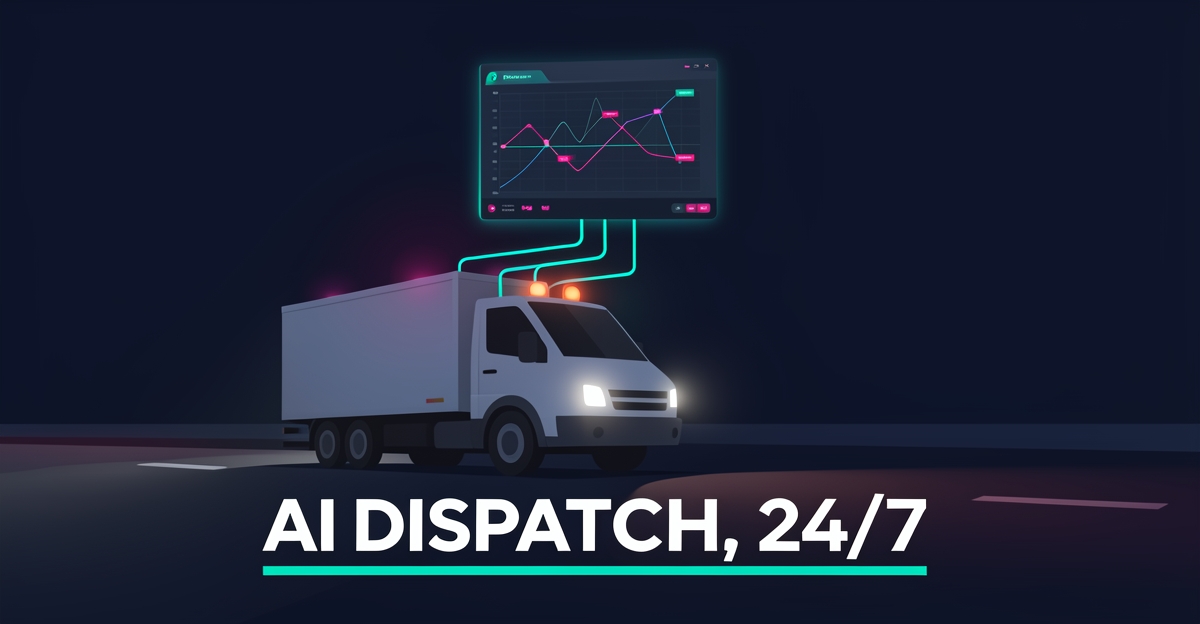
Key facts
- 70% of emergency dispatch centers report severe understaffing with average vacancy rates around 25% according to Prepared 911
- AI systems filter up to 35% of incoming calls as non-emergency in Arlington County, VA freeing human operators for true crises
- AI-powered translation reduced response times by approximately 60 seconds per call in Presidio County, TX per Police1 research
- Fresno PD achieved a 20–25% reduction in auto theft using AI-based dispatch according to Police1
- "When technology handles the data, humans can handle the crisis" — Dave Marcos, Motorola Solutions via EMS1
- AI voice assistants automatically gather vehicle details, GPS coordinates, and emergency type before human dispatchers engage per Police1 findings
- AI adoption in dispatch is accelerating to handle non-emergency calls and reduce workload on human operators according to Police1
WANT RESULTS LIKE THIS?
Imagine a system doing all of this for your local business — every day, without you.
We build local businesses a custom website with a team of AI behind it: every lead captured and followed up, new content published monthly,customers finding you on Google — live in 7 days.
- 85+ pages at launch
- Every lead followed up, automatically
- Your whole business on one screen
The Growing Strain on 24/7 Mobile Fleet Dispatch Teams
Mobile fleet dispatch teams operate in a pressure cooker. Every delayed response means a stranded driver, a missed delivery window, and a reputation hit that compounds across an entire operation.
The strain mirrors what 911 centers have faced for years. According to Prepared 911, 70% of emergency dispatch centers report severe understaffing, with average vacancy rates hovering around 25%. Mobile fleet services face the same squeeze — fewer dispatchers handling more calls, often across multiple time zones, with no relief in sight.
Non-emergency requests clog the lines. In Arlington County, VA, AI systems now filter up to 35% of incoming calls as non-emergency, freeing human operators for true crises. Fleet dispatchers know this dynamic well: routine maintenance inquiries, status checks, and scheduling requests bury the urgent breakdown calls that need immediate technician dispatch.
- Staffing shortages force dispatchers to juggle multiple calls simultaneously
- Non-urgent requests delay response to actual roadside emergencies
- After-hours coverage gaps leave drivers without support
- Manual data entry slows every handoff to field technicians
The Dave Marcos of Motorola Solutions puts it plainly: "When technology handles the data, humans can handle the crisis." That principle translates directly to fleet operations. When an AI assistant gathers vehicle details, location coordinates, and problem descriptions automatically, dispatchers skip the interrogation and move straight to routing the right technician with the right parts.
AI Business Sites builds this capability into the website itself — an AI voice agent that answers every call, captures structured data, and hands off a complete picture to your team. The dispatcher stays focused on decisions, not data entry.
How AI Can Triage and Gather Critical Data in Roadside Emergencies
How AI Can Triage and Gather Critical Data in Roadside Emergencies
Imagine receiving a distress call from a stranded driver in the middle of the night. Every second counts, and the ability to swiftly assess the situation is crucial. This is where AI voice assistants come into play, revolutionizing how mobile fleet services handle roadside emergencies. By leveraging AI, up to 35% of non-emergency calls can be efficiently filtered out, reducing the workload on human dispatchers and ensuring they focus on life-critical situations source.
AI-powered triage systems can quickly determine the severity of a roadside emergency. For instance, a driver reporting a flat tire versus one involved in an accident requires vastly different responses. AI can instantly classify calls based on predefined emergency criteria, ensuring human intervention is prioritized for high-risk situations. This not only streamlines operations but also enhances response accuracy.
Upon identifying an emergency, AI voice assistants can automatically collect vital information:
- Vehicle Details: Make, model, and license plate number to identify the vehicle quickly.
- Location Data: Precise GPS coordinates for rapid response team deployment.
- Nature of Emergency: Brief summary to prepare the response team.
This automated data gathering not only saves time but also reduces the likelihood of human error in high-pressure situations.
AI does not replace human judgment but augments it. By handling the initial data collection and triage, AI ensures dispatchers have all necessary information at their fingertips, allowing for focused, informed decision-making. As highlighted by experts in public safety, "When technology handles the data, humans can handle the crisis" source, emphasizing the collaborative potential of AI in emergency response.
For mobile fleet services, integrating AI into their dispatch system means enhanced efficiency and improved customer satisfaction. At AI Business Sites, we understand the importance of seamless technology integration into daily operations. Our custom-built websites for small businesses, including those in mobile fleet services, come equipped with AI-driven tools designed to handle the backend busywork, ensuring your team can focus on what matters most — providing timely assistance to those in need.
With the ability to reduce response times and increase the accuracy of emergency assessments, AI voice assistants are poised to revolutionize the mobile fleet service industry's approach to roadside emergencies. As the industry evolves, embracing AI not only future-proofs operations but also sets a new standard in customer care and emergency response.
Local business: doing this the old way?
One system replaces the whole pile.
All of it — the website, the follow-up, the content, the leads — built and run for you for $1,497 + $497/mo. Month-to-month, and you own everything.
See what your build includesImplementing AI Dispatch Support Without Replacing Human Judgment
Implementing AI dispatch support effectively means using technology to augment human expertise, not replace it. For mobile fleet services, this approach allows AI to handle routine data collection and initial triage while human dispatchers can focus on critical judgment remains central to emergency decision-making. The AI voice agent can automatically gather essential details like vehicle make, model, location, and the nature of the issue, freeing up human operators to focus on assessing urgency and coordinating the appropriate response. This division of labor ensures that technology supports speed and accuracy without compromising the nuanced assessment that only experienced personnel can provide.
Research shows that AI systems in emergency dispatch environments are most effective when designed as a "cognitive shield" or force multiplier for human operators, particularly by managing non-emergency or data-intensive tasks. For instance, AI has been shown to filter up to 35% of non-emergency calls in public safety contexts, significantly reducing the workload on human dispatchers and allowing them to concentrate on true emergencies. In mobile fleet operations, this could mean routing routine requests—such as battery jumps or tire changes—through AI triage while preserving human oversight for accidents, medical emergencies, or hazardous situations. By handling the initial data capture, AI creates a streamlined handoff where human agents receive structured, verified information to act upon immediately.
Adopting this human-in-the-loop model also addresses critical staffing challenges common in 24/7 operations. With many emergency and dispatch centers facing severe understaffing—reported at 70% in some studies—AI-assisted workflows help maintain service continuity without overburdening limited teams. The technology doesn’t eliminate the need for skilled judgment; instead, it ensures that when human intervention is required, dispatchers have timely, accurate data they need to make informed decisions quickly. AI Business Sites’ platform supports this balance through integrated AI voice agents, CRM synchronization, and automated lead capture, all designed to work behind the scenes so the business owner or fleet manager can focus on what matters most: delivering safe, reliable service when it counts.
Frequently Asked Questions
Can AI really handle 24/7 emergency dispatch for my mobile fleet service, or is that just marketing hype?
What happens when a driver calls in at 2 AM with a real emergency — does the AI just put them on hold?
Our dispatch team is already stretched thin — will adding AI just create more work to manage?
How does the AI know the difference between a flat tire and a serious accident?
We use fleet management software already — will this AI integrate with it or create another silo?
Is this only for huge fleets, or can a smaller operation with 10-15 trucks actually use it?
Key Takeaways
{ "title": "Revolutionizing Mobile Fleet Emergency Dispatch with AI: The Next Step", "content": "As mobile fleet services navigate the challenges of understaffing and overwhelmed dispatch systems, AI emerges as a transformative solution. By automating non-emergency call triage (potentially reducing
FOR local businesss — BUILT AND RUN BY US
Your website. Your content. Your leads. Your data.
$500 starts your build. Seven days later it's live — chat, booking, follow-up, and your Google presence all set up. Then we run it, every month. You do the work you actually get paid for.