
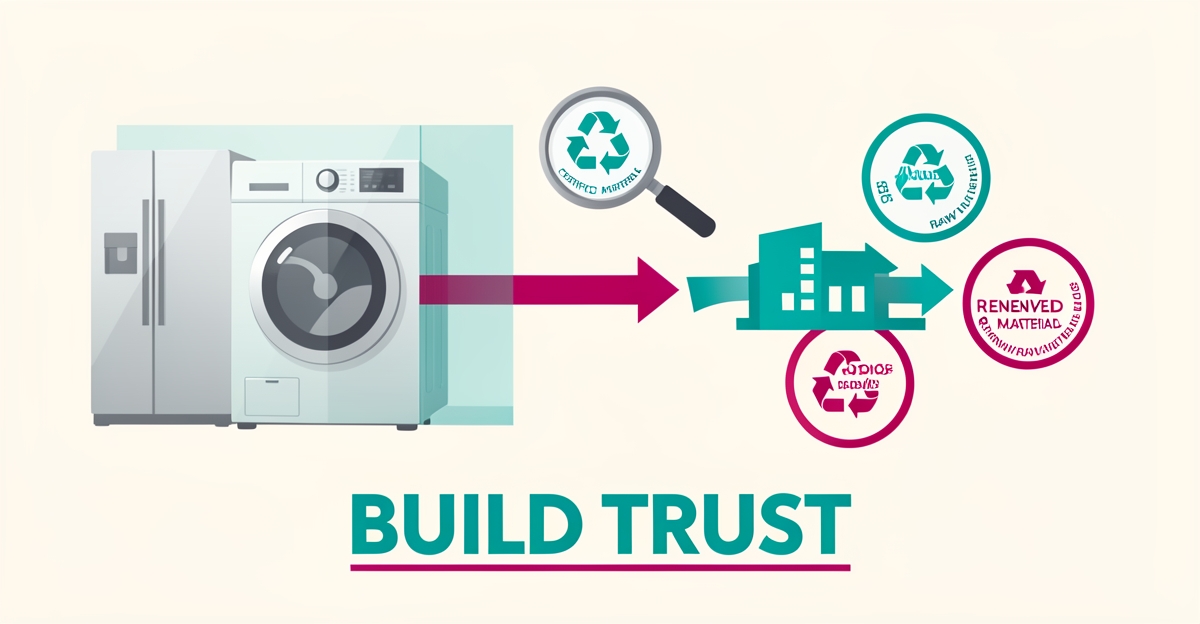
Key facts
- 75% of global consumers are willing to pay more for sustainable products according to Nielsen data cited by Emerger Strategies
- Waste Management demonstrates over 50 years of responsible material handling in electronics recycling operations
- California's Covered Electronic Waste Recycling Program has required manufacturer disposal information since 2005 per CalRecycle regulations
- Third-party certifications like R2/RIOS and ISO 14001 provide independent verification that enhances credibility according to sustainability marketing experts
- Real-time tracking of recycling journeys from pickup through final disposition directly builds customer confidence per Waste Management's electronics recycling model
- California will expand its e-waste program to cover battery-embedded products effective January 1, 2026 under upcoming regulatory changes
- Authentic sustainability storytelling requires sharing both successes and challenges using clear, jargon-free language to build trust with conscious consumers
WANT RESULTS LIKE THIS?
Imagine a system doing all of this for your local business — every day, without you.
We build local businesses a custom website with a team of AI behind it: every lead captured and followed up, new content published monthly,customers finding you on Google — live in 7 days.
- 85+ pages at launch
- Every lead followed up, automatically
- Your whole business on one screen
The Sustainability Trust Gap: Understanding Customer Concerns
The Sustainability Trust Gap: Understanding Customer Concerns
In an era where environmental consciousness drives consumer decisions, a significant trust gap exists between businesses and eco-conscious customers, particularly concerning appliance disposal. A staggering 75% of global consumers are willing to pay more for sustainable products (Emerger Strategies), yet many remain skeptical about the fate of their discarded appliances. This dichotomy underscores the need for transparency in recycling processes to bridge the sustainability trust gap.
Customers increasingly demand authenticity and integrity from brands, with transparency identified as a foundational element for building trust (Waste Management). The lack of clear communication about appliance recycling processes exacerbates this trust deficit. For instance, while regulations like California's Covered Electronic Waste Recycling Program ensure some level of accountability for electronic devices, the absence of similar transparency in appliance recycling leaves a knowledge void that erodes trust.
Key Concerns Driving the Trust Gap:
- Lack of Visibility: Uncertainty about the end-of-life processing of appliances.
- Credibility of Recycling Claims: Skepticism towards unverified sustainability assertions.
- Complexity in Disposal Processes: Difficulty in navigating responsible disposal pathways.
The Consequence of Inaction: Ignoring this trust gap can lead to lost sales and a damaged reputation, as eco-conscious consumers are more likely to abandon brands that fail to demonstrate responsible practices. For example, a brand that neglects to provide clear recycling information may face backlash on social media, highlighting the direct impact of transparency on customer loyalty.
Data-Driven Insights:
- Over 50 years of responsible material handling by some industry leaders (Waste Management) demonstrates long-term commitment, yet this is the exception rather than the rule in appliance recycling.
- Regulatory Compliance as a Trust Signal: In markets like California, adherence to programs such as the Covered Electronic Waste Recycling Program (effective since 2005, with upcoming expansions to include battery-embedded products by 2026) can leverage legal standards to build credibility (CalRecycle).
Bridging the Gap: To regain trust, businesses must prioritize transparency, obtain and display third-party certifications (e.g., R2/RIOS, ISO certifications), and engage in authentic storytelling about their sustainability efforts, using clear, jargon-free language (All Ireland Sustainability). By addressing the visibility, credibility, and complexity concerns head-on, companies can effectively close the sustainability trust gap and appeal to the environmentally conscious majority.
AI Business Sites, through its automated content generation capabilities, can help businesses communicate their recycling processes clearly and consistently, ensuring transparency and trust with eco-conscious customers. For example, a custom website can include a dedicated recycling page with real-time tracking links and certification badges, automatically updated to reflect the company's ongoing sustainability efforts. This proactive approach not only educates customers but also demonstrates a tangible commitment to environmental responsibility.
Evidence-Based Solutions for Building Trust
When customers watch their old refrigerator or dishwasher disappear down a driveway, they're not just letting go of an appliance — they're asking whether it will end up in a landfill, shipped overseas, or actually recycled responsibly. That moment of uncertainty is where trust is either earned or lost, and research shows the stakes are high: 75% of global consumers are willing to pay more for sustainable products, according to Nielsen data cited by Emerger Strategies.
Industry leaders like Waste Management demonstrate that real-time tracking and documentation of the recycling journey — from pickup through final disposition — directly builds customer confidence. This transparency principle applies equally to appliance recycling, where visible proof of responsible handling transforms a disposal transaction into a trust-building touchpoint. Sustainability marketing experts emphasize that authenticity requires sharing both successes and challenges, not just polished outcomes, using clear language that avoids greenwashing jargon.
Third-party certifications provide the independent verification that skeptical consumers demand. Certifications such as R2/RIOS, ISO 9001, and ISO 14001 signal that recycling processes meet rigorous environmental and operational standards. Becoming a certified electronics recycler through R2 or e-Stewards programs similarly demonstrates commitment to reducing environmental and health impacts — credentials that transfer directly to appliance recycling credibility.
Regulatory compliance offers another powerful trust signal, particularly in markets with established frameworks. California's Covered Electronic Waste Recycling Program requires manufacturers to provide consumers with clear information on "where and how to return, recycle, or dispose of their devices," with the program expanding to cover battery-embedded products in 2026. Businesses that proactively reference such compliance — even beyond legal requirements — position themselves as accountability leaders.
- Implement real-time tracking so customers see their appliance's journey from collection to final processing
- Obtain and display R2/RIOS, ISO 14001, or e-Stewards certifications prominently
- Share authentic stories about recycling challenges and improvements, not just successes
- Reference regulatory compliance (like California's CEW Program) as a baseline standard
- Create feedback channels where customers can ask questions and receive educational content
AI Business Sites helps appliance retailers and recyclers turn these strategies into automated website content — publishing transparent recycling process pages, certification showcases, and compliance updates that search engines and customers both trust. The platform's AI content engine researches and writes this material monthly, keeping your trust signals current without adding to your workload.
Local business: doing this the old way?
One system replaces the whole pile.
All of it — the website, the follow-up, the content, the leads — built and run for you for $1,497 + $497/mo. Month-to-month, and you own everything.
See what your build includesImplementing Transparency in Appliance Recycling: Practical Steps
In an era where 75% of global consumers are willing to pay more for sustainable products (Nielsen, 2023), building trust with eco-conscious customers through transparent appliance recycling strategies is paramount. Here’s how to turn transparency into trust:
1. Track and Trace with Transparency Provide customers with real-time tracking of their appliance’s journey from collection to final disposition, as seen in electronics recycling best practices (Waste Management). For example, a dedicated recycling portal can offer updates at each stage, from pickup to responsible processing, ensuring accountability and trust.
2. Seal Your Commitment with Certification Pursue and prominently display industry-recognized certifications like R2/RIOS, ISO 9001, or ISO 14001. These stamps of approval, as highlighted by Waste Management and FindCourses, significantly enhance credibility and trust among environmentally conscious consumers.
3. Tell Your Sustainability Story Authentically Share the highs and lows of your appliance recycling initiatives using clear, jargon-free language. Authentic storytelling, as advocated by All Ireland Sustainability, fosters a deeper connection with customers and reinforces your commitment to sustainability.
Key Actionable Takeaways:
- Embed Real-Time Tracking: Offer transparent updates on appliance recycling journeys.
- Display Certifications Prominently: Leverage third-party validations to build credibility.
- Educate Through Authentic Narratives: Use straightforward language to share sustainability efforts and challenges.
4. Leverage Regulatory Compliance In regulated markets, like California, explicitly highlight compliance with programs such as the Covered Electronic Waste Recycling Program. Reference upcoming changes, such as the inclusion of battery-embedded products by 2026, to demonstrate proactive adherence to legal standards (CalRecycle).
5. Engage for Trust Establish feedback mechanisms and educational content channels. Allow customers to inquire about disposal processes and learn more about sustainable practices, mirroring the engagement strategies suggested by All Ireland Sustainability for trust-building.
By integrating these strategies, businesses can effectively mirror the trust-building approaches seen in successful electronics recycling models, adapting them to the appliance sector for enhanced customer loyalty and a strengthened brand reputation. For small businesses, especially those in service-oriented industries like plumbing or HVAC, integrating transparent recycling practices can be a key differentiator, aligning with the values of an increasingly eco-conscious consumer base.
Frequently Asked Questions
Why do so many people worry about what happens to their old appliances after disposal?
How can I prove to customers that we actually recycle appliances responsibly instead of just saying we do?
Does showing customers the recycling journey in real time actually build trust?
What role do regulations like California's e-waste program play in building customer confidence?
Should we only share our recycling successes, or is it okay to talk about challenges too?
What's the simplest way to keep recycling information on our website current without constant manual updates?
Sealing Trust in the Sustainability Trust Gap
As the sustainability-conscious consumer base continues to grow, with 75% willing to pay more for eco-friendly practices, bridging the trust gap in appliance recycling is no longer an option, but a necessity. By embracing transparency through real-time tracking, validating commitment with certifications like R2/RIOS or ISO 14001, and narrating sustainability journeys authentically, businesses can turn apprehension into loyalty. For instance, leveraging platforms like AI Business Sites to automate clear, consistent communication about recycling processes can educate customers and demonstrate tangible environmental responsibility. The next step for forward-thinking businesses is to not just adopt these strategies, but to integrate them seamlessly into their operations, ensuring every appliance's end-of-life tells a story of responsibility. Start by assessing your current recycling transparency and take the first step towards a trusted, sustainable brand footprint today.
FOR local businesss — BUILT AND RUN BY US
Your website. Your content. Your leads. Your data.
$500 starts your build. Seven days later it's live — chat, booking, follow-up, and your Google presence all set up. Then we run it, every month. You do the work you actually get paid for.