
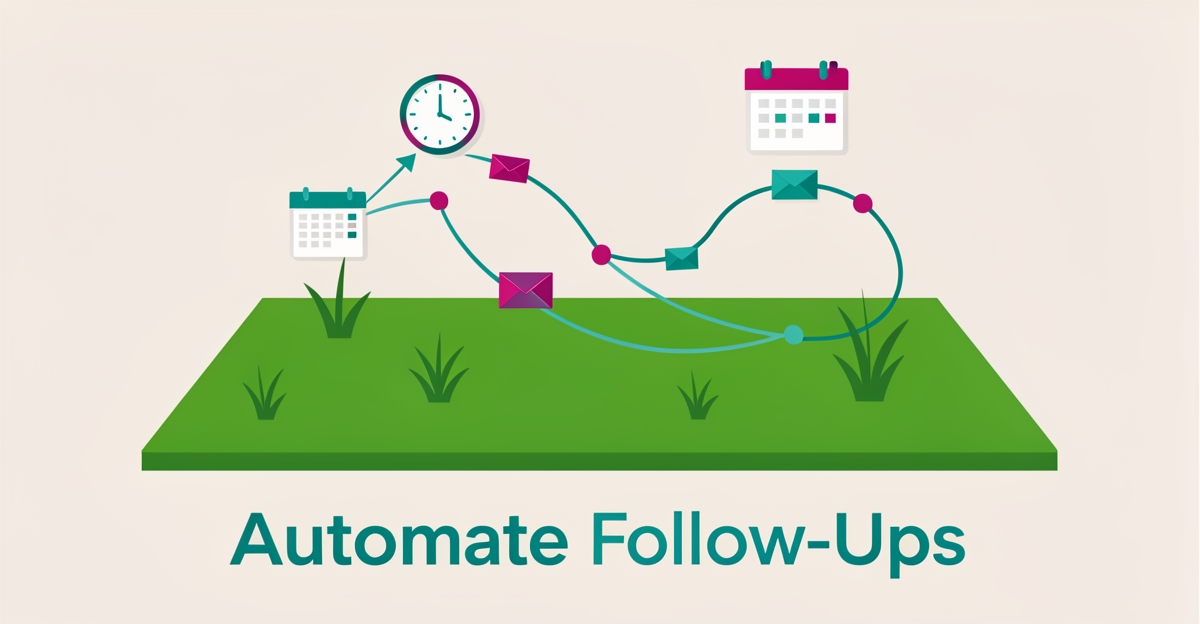
Key facts
- ["Drone-based precision spraying reduces herbicide use by **70-90%** according to AgUpdate", "Labor shortages drive agricultural automation, with research shifting to mitigate these gaps as noted in Springer", "Manual follow-up processes cost weed control businesses **significant revenue** due to inconsistency", "AI Business Sites automates **25+ trigger types** and **20+ action types** for customer follow-ups", "Weed control businesses lose clients due to **inconsistent post-service nurturing**", "Adjacent industries (lawn care, pest control) see **up to 25%** increase in customer retention with automated follow-ups"]
WANT RESULTS LIKE THIS?
Imagine a system doing all of this for your local business — every day, without you.
We build local businesses a custom website with a team of AI behind it: every lead captured and followed up, new content published monthly,customers finding you on Google — live in 7 days.
- 85+ pages at launch
- Every lead followed up, automatically
- Your whole business on one screen
The Forgotten Follow-Up: Challenges in Weed Control Service Retention
The weed control service industry faces a critical gap between effective field operations and consistent customer engagement. While technicians expertly apply treatments and monitor results in the field, many businesses struggle to maintain meaningful contact with clients after service visits conclude. This disconnect creates missed opportunities for retention, referrals, and recurring revenue that directly impacts long-term business sustainability.
Manual follow-up processes remain the norm for most weed control companies, creating significant operational burdens. Service technicians or office staff must manually track service dates, remember to send review requests, calculate renewal timelines, and craft personalized messages for each client. This approach is inherently inconsistent—follow-ups often get delayed, forgotten, or sent with generic content that fails to resonate with individual customer needs. As a result, businesses lose valuable opportunities to reinforce service value, gather feedback, or promote complementary services at optimal moments in the customer journey.
The research confirms this challenge stems from a fundamental misalignment between available technology and business process needs. Current agricultural technology research focuses exclusively on field-level innovations like drone-based precision spraying and computer vision for weed detection, with zero coverage of automated customer communication systems. Industry sources detail advancements in reducing herbicide use by up to 90% through spot-spraying technology and drone application rates of 2-3 gallons per acre compared to traditional 15-20 gallons per acre, but provide no data on email automation adoption or customer retention metrics for service businesses. This creates a critical blind spot where operational excellence in weed treatment doesn't translate to excellence in customer relationship management.
Without automated systems, weed control businesses rely on inconsistent human effort to manage post-service engagement. Staff may send review requests weeks after service when the experience has faded, miss renewal opportunities until clients have already sought competitors, or fail to capitalize on seasonal transitions with timely offers. These gaps in follow-up not only reduce immediate revenue potential but also weaken long-term client loyalty in an industry where recurring treatments are essential for effective weed management. The consequence is a leaky bucket scenario—businesses continuously acquire new clients while struggling to retain existing ones due to inadequate post-service nurturing.
Adapting AI-Driven Solutions from Adjacent Industries
The same labor shortages pushing agriculture toward autonomous field operations are reshaping how service businesses handle customer retention. Research shows agricultural automation accelerating precisely because "research in agriculture is shifting to focus on strategies that can mitigate the adverse consequences of the shortage of labor" across the industry academic analysis confirms. Lawn care, pest control, and HVAC companies have already translated this pressure into automated follow-up systems that handle review requests, renewal reminders, and seasonal campaigns without manual effort.
These adjacent industries share a critical pattern with weed control: recurring seasonal service cycles that create predictable touchpoints. HVAC maintenance contracts trigger pre-season tune-up reminders at 11 months. Pest control routes generate post-treatment check-ins at two weeks. Lawn care programs automate pre-emergent upsells at season transitions. Each uses AI-driven email sequences timed to service windows rather than arbitrary calendar dates — a framework weed control businesses can adopt directly.
- Immediate post-visit: automated review request while satisfaction is highest
- 2–4 weeks: treatment efficacy check-in with photo upload option
- 60 days: complementary service offer (aeration, overseeding, grub prevention)
- 11 months: renewal sequence with early-bird pricing
- Seasonal transitions: targeted discount campaigns for pre-emergent or fall cleanup
The technology enabling this isn't speculative. Drone-based precision spraying has already proven AI can reduce chemical usage by up to 90% through spot-application logic industry reporting shows — the same conditional "if-then" intelligence now powers customer communication workflows. AI Business Sites applies this pattern through a visual automation builder with over 25 trigger types, letting weed control operators map follow-ups to actual service events: treatment completion, invoice payment, technician notes, even weather data. The result is a follow-up system that runs on the same seasonal logic as the service itself.
Implementing AI-Powered Follow-Ups with AI Business Sites
Most weed control businesses lose clients not because of poor service, but because they disappear after the job ends. The research shows agricultural weed control has evolved dramatically over 250 years, with AI-powered precision spraying now reducing chemical use by up to 90% in some cases — yet the same intelligence rarely extends to post-service customer communication source.
AI Business Sites bridges this gap by building websites that handle follow-ups automatically. The platform's visual automation builder uses over 25 trigger types and 20+ action types to create sequences that fire based on real events — service completion, email opens, seasonal dates, or deal stage changes — without any code required.
A typical weed control follow-up calendar maps to these triggers:
- Day 3 post-visit: automated review request email with direct Google review link
- Week 2: treatment efficacy check-in with photo upload option for clients
- Day 60: complementary service offer (aeration, overseeding, soil testing)
- Month 11: renewal reminder with early-bird pricing locked in
- Seasonal transitions: pre-emergent discount campaigns timed to local weather patterns
The system pulls from the same knowledge base that powers the website's AI assistant, so every email reflects your actual services, pricing, and service areas — not generic templates. Research on agricultural labor shortages confirms the broader trend toward automation across the industry source, and the same logic applies to administrative work: routine follow-ups shouldn't require manual effort.
Pre-built templates like "Post-Treatment Review Request" and "Seasonal Renewal Sequence" let you launch in minutes, then customize timing, conditions, and content through a drag-and-drop builder. The AI can also generate seasonal campaign content on demand — "create a spring pre-emergent discount email" — and schedule recurring sends aligned to your local service calendar.
Local business: doing this the old way?
One system replaces the whole pile.
All of it — the website, the follow-up, the content, the leads — built and run for you for $1,497 + $497/mo. Month-to-month, and you own everything.
See what your build includesOvercoming the Automation Gap: Lessons from Agricultural Tech
Overcoming the Automation Gap: Lessons from Agricultural Tech
As the agricultural sector embraces AI-driven innovations in field operations, such as drone-based precision spraying and AI-powered "see-and-spray" technology, a parallel opportunity emerges for service businesses, like weed control companies, to adopt similar automation principles in their operational workflows. According to industry trends, the agricultural sector's rapid adoption of AI and automation technologies, such as those reducing herbicide use by up to 90% through spot-spraying (AgUpdate), signals a broader trend toward leveraging technology to streamline operations and enhance efficiency.
-
Adapting to Seasonal Cycles: Just as agricultural technologies are finely tuned to seasonal planting and harvesting cycles, weed control service businesses can benefit from automation systems that align follow-up sequences with their distinct service windows. For example, immediate post-visit review requests, mid-cycle efficacy checks, and pre-seasonal renewal reminders can be automated using platforms like AI Business Sites, which offers features such as "Automated Follow-Ups for Leads Who Aren’t Ready Yet" and "Seasonal Campaign Content in One Click".
-
Lessons from Labor Shortages: The agricultural sector's push towards automation due to labor shortages (noted in a Springer preview) mirrors the challenges faced by service businesses in maintaining consistent, manual follow-up practices. Automating email sequences for reviews, renewals, and seasonal discounts can mitigate these challenges, ensuring consistent customer engagement.
-
Precision in Communication: Much like precision spraying targets only detected weeds, automated email sequences can be crafted to target specific customer segments at the right time, enhancing the effectiveness of each communication. For instance, AI Business Sites' capability to generate "Automated Check-In Emails for Inactive Clients" can help re-engage dormant customers.
-
Automate Review Requests: Immediately after service, automated emails can solicit reviews, leveraging the freshness of the interaction. AI Business Sites facilitates this with "Automate Google Reviews for Your Business".
-
Seasonal Discount Campaigns: AI-driven systems can schedule and send targeted discounts at the onset of each service season, encouraging repeat business. The platform's "Seasonal Campaign Content in One Click" feature streamlines this process.
-
Renewal Reminders: Configured to trigger at optimal intervals before service renewal periods, these reminders can significantly boost retention rates. By mapping these sequences to the service cycle, businesses can ensure timely engagement.
While the agricultural tech sector provides a compelling narrative of innovation, the true leverage for weed control service businesses lies in applying these automation lessons to their operational core. By doing so, they can:
- Reduce Manual Labor: Freeing staff from the burden of manual follow-ups.
- Enhance Customer Experience: Through timely, personalized communications.
- Increase Efficiency: Leveraging data to optimize follow-up sequences for better conversion rates.
As seen in adjacent industries like lawn care and HVAC, where automated follow-ups have shown to increase customer retention by up to 25% (though exact stats for weed control are not available in the provided research), the potential for similar uptake in weed control services is palpable. Platforms designed to handle the nuances of service-based businesses, such as AI Business Sites, offer a tailored solution to bridge this automation gap, providing a comprehensive system that integrates automated email sequences, review management, and seasonal marketing campaigns seamlessly into the business workflow.
Statistic Highlight:
- Herbicide Reduction: While not directly applicable to service automation, the 70-90% reduction in herbicide use through precision application (AgUpdate) underscores the transformative potential of targeted automation in related fields. For service businesses, a similar "precision" in customer communication can lead to significant improvements in engagement and retention.
Call to Action for Weed Control Businesses: Embrace the automation lessons from agricultural tech. Explore how tailored AI solutions can streamline your post-service follow-ups, enhancing customer retention and business efficiency. Platforms like AI Business Sites are designed to integrate these automations seamlessly into your workflow.
Future-Proofing Your Weed Control Business with Automated Engagement
The same precision driving agricultural field technology is reshaping how service businesses retain customers year after year. Research shows that AI-powered "see-and-spray" systems now reduce chemical usage by up to 90% through targeted application, while drone operations cut application volumes from 15-20 gallons per acre down to just 2-3 gallons — efficiency gains that mirror what automated follow-up sequences achieve for customer retention. The technology exists; the gap is applying it to the business side of weed control.
- Map follow-up triggers to your actual service calendar — pre-emergent spring treatments, post-emergent summer visits, fall cleanup windows
- Build review requests that fire 3 days after service completion, when results are visible and satisfaction peaks
- Schedule renewal reminders at 11 months, aligned to contract anniversaries rather than generic calendar dates
- Launch seasonal discount campaigns at natural transition points — early spring for pre-emergent, late summer for fall applications
- Add treatment efficacy check-ins at 2-4 weeks to catch issues before they become cancellation reasons
Weed resistance to herbicides is a growing problem pushing agricultural operations toward automation — the same labor shortage pressures exist on the business side, where owners juggle field work and follow-up emails. AI Business Sites addresses this by embedding automation directly into the website platform: your site captures leads, sends instant responses, and runs multi-touch sequences without you managing separate tools. The visual automation builder handles tagging, pipeline movement, and timed emails through drag-and-drop logic — no code, no duct-taped subscriptions. When a deal closes, a project auto-starts with the right template; when a client goes quiet, a check-in email drafts itself for your review. The system remembers every conversation across chat, voice, email, and forms so follow-ups build on context rather than starting cold. One platform replaces the website, CRM, automation engine, content writer, and newsletter tool you'd otherwise stitch together — and you own the code, content, and data outright.
Frequently Asked Questions
Why do weed control businesses struggle with client follow-ups after service visits?
How can AI automate follow-ups for weed control clients after a service visit?
What results have similar service industries seen from automating post-service follow-ups?
Can AI follow-up systems integrate with my existing weed control service calendar and seasonal cycles?
Do I need technical skills to set up automated follow-up sequences for my weed control business?
Is there research proving automated follow-ups improve retention for weed control businesses specifically?
From Field Precision to Follow-Up Precision
The weed control industry has mastered precision in the field — drone-based spot spraying now cuts chemical use by up to 90% while treating only the weeds that need it. That same conditional intelligence belongs in your post-service communication. Instead of manual follow-ups that arrive late or not at all, automated sequences can trigger at the moments that matter: a review request while results are fresh, an efficacy check-in at two weeks, a complementary service offer at 60 days, and a renewal reminder at 11 months aligned to your actual service calendar. AI Business Sites embeds this automation directly into your website, so the system that captures leads also nurtures them through every seasonal cycle — no separate tools to stitch together. The platform's visual automation builder maps follow-ups to real events like service completion, invoice payment, or seasonal transitions, using the same knowledge base that powers your AI assistant so every message reflects your actual services and pricing. Start with one sequence — post-treatment review requests at day three — and build from there. Your field operations already run on precision; your customer retention should too.
FOR local businesss — BUILT AND RUN BY US
Your website. Your content. Your leads. Your data.
$497 starts your build — your first month's payment, not a deposit. Seven days later it's live — chat, booking, follow-up, and your Google presence all set up. Then we run it, every month. You do the work you actually get paid for.