
Key facts
- 40% of scheduling professionals rely on daily manual workarounds due to legacy system deficiencies according to CollegeNET research
- Up to 40% of classes run off-schedule, creating 30–60 minute idle gaps for students per CollegeNET findings
- Austin ISD saved 50+ hours per scheduling team and ~$2,600 per campus using AI for master schedule optimization reported by Education Week
- CollegeNET's LYNX integration provides bi-directional SIS data transfers every minute per CollegeNET documentation
- 80% of district budget is driven by the master schedule according to Austin ISD's director
- Large university reduced scheduling time by 70% using automated scheduling tools per Meegle analysis
- U.S. Department of Education warns against over-relying on AI without keeping real people in the decision-making loop per Education Week reporting
WANT RESULTS LIKE THIS?
Imagine a system doing all of this for your local business — every day, without you.
We build local businesses a custom website with a team of AI behind it: every lead captured and followed up, new content published monthly,customers finding you on Google — live in 7 days.
- 85+ pages at launch
- Every lead followed up, automatically
- Your whole business on one screen
The Hidden Cost of Manual Schedule Updates in Education
The Hidden Cost of Manual Schedule Updates in Education
Imagine a scenario where nearly half of all educational professionals rely on daily manual workarounds to manage their schedules, and up to 40% of classes run "off-schedule," leaving students with unnecessary gaps in their day. This is the stark reality faced by many multi-campus institutions, as highlighted by research from CollegeNET and EdWeek.
According to CollegeNET, a staggering 40% of scheduling professionals are bogged down by manual workarounds, while up to 40% of classes fail to adhere to their scheduled timings, resulting in 30-60 minute idle gaps for students. This inefficiency not only wastes resources but also erodes trust among students, parents, and instructors who rely on timely and accurate schedule information. EdWeek further emphasizes this challenge, noting the overwhelming reliance on manual email exchanges for even the simplest schedule adjustments, exemplified by the quote "so many emails going back and forth."
The financial and operational impacts are significant. For instance, Austin ISD's successful deployment of AI for pre-term schedule optimization saved over 50 hours per scheduling team and approximately $2,600 per campus. However, this solution, like many others, focuses on initial schedule creation rather than real-time adjustments. The U.S. Department of Education's Office for Civil Rights cautions against over-relying on AI without human oversight, emphasizing the need for balanced automation.
- Manual Workarounds: 40% of professionals spend valuable time on non-automated schedule management (CollegeNET).
- Off-Schedule Classes: Up to 40% of classes do not start as planned, impacting student productivity (CollegeNET).
- Communication Breakdowns: Heavy reliance on manual emails for schedule changes, lacking automation and transparency (CollegeNET).
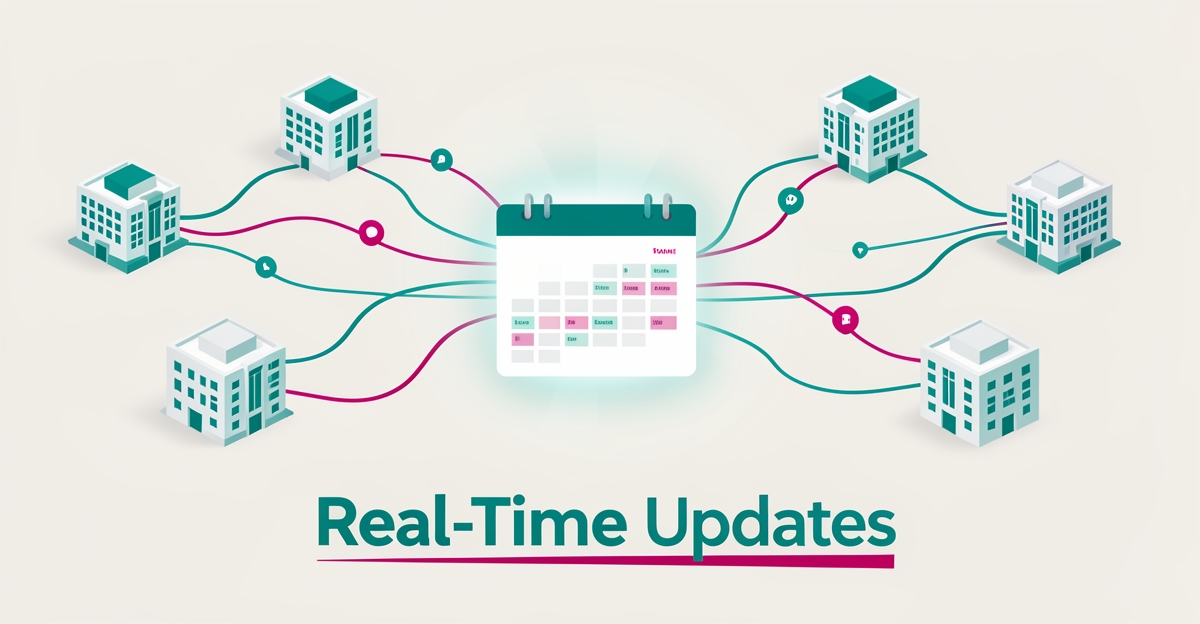
Automating schedule update notifications with AI-powered solutions can significantly mitigate these challenges. By integrating with existing SIS and scheduling platforms, institutions can detect schedule changes in real-time and send personalized, automated emails to stakeholders. This approach not only reduces manual labor but also ensures that students, parents, and instructors are always informed, rebuilding trust in the scheduling process.
For multi-campus institutions, leveraging AI-driven automation can streamline communications, ensuring that each campus receives relevant, timely updates. This scalability, combined with human-in-the-loop governance to approve notifications before sending, addresses the OCR's caution against unchecked AI use.
AI Business Sites understands the intricacies of automating workflows while emphasizing human oversight, offering a tailored approach to scheduling updates that complements existing infrastructure, ensuring seamless, personalized communication across all stakeholders.
Bridging the Automation Gap with AI-Driven Notifications
Bridging the Automation Gap with AI-Driven Notifications
In the dynamic environment of multi-campus institutions, schedule changes are inevitable, yet outdated information can erode trust among students, parents, and staff. A glaring automation gap exists between real-time schedule updates and the manual, email-heavy process of notifying stakeholders.
The Problem in Numbers
- 40% of scheduling professionals rely on daily manual workarounds due to legacy system deficiencies source.
- Up to 40% of classes run "off-schedule," creating significant idle gaps for students source.
Integrating AI for Seamless Notification AI Business Sites' automation engine can bridge this gap by integrating with existing Student Information Systems (SIS) and scheduling platforms. Here’s how:
- Real-Time Detection: Webhook receivers capture schedule changes from platforms like Schedule25 or Modern Campus in real-time.
- Personalized Notifications: AI generates tailored emails for students, parents, and instructors based on their roles and enrollments, leveraging the platform's "Auto-Tag Leads from Any Source" and segmentation capabilities.
- Human-in-the-Loop Governance: "Approve-first" mode ensures designated reviewers vet notifications before sending, aligning with the OCR's warning against over-relying on AI source.
Market Readiness and Solution Alignment
- Austin ISD's successful 33-campus AI scheduling adoption for pre-term planning demonstrates institutional readiness for AI solutions source.
- CollegeNET's LYNX achieves minute-level SIS sync, proving the technical feasibility of real-time data integration source.
Implementation with AI Business Sites By layering the automation engine over existing infrastructure, institutions can:
- Enhance Transparency with instant, personalized updates.
- Reduce Manual Labor by automating the notification process.
- Improve Stakeholder Satisfaction through timely, relevant communications.
This approach not only addresses the automation gap but also complements existing investments in scheduling technology, ensuring a seamless, future-proof solution for multi-campus institutions.
Actionable Takeaway For multi-campus institutions, integrating AI-driven notifications with existing scheduling platforms is not just an enhancement—it’s a necessity for operational efficiency and stakeholder trust. By bridging this automation gap, institutions can focus on what matters most: delivering education.
Source Links Embedded for Key Stats and Claims
Implementation Roadmap: From Detection to Delivery
The gap between real-time schedule changes and stakeholder communication remains a critical pain point for multi-campus institutions. While platforms like CollegeNET's LYNX25 offer real-time SIS data transfers every minute, they ensure students are all aligned"NX integration deliver bi-directional SIS updates every minute and Modern Campus Schedule ensures rooms, instructors, and students stay aligned during on-the-fly adjustments, neither system automates the personalized notifications that keep students, parents, and enrolled learners informed. This is where an automation layer built on top of existing scheduling infrastructure can close the loop — detecting changes, generating tailored messages, and delivering them without manual effort.
Implementing this solution begins with webhook setup to capture schedule change events from systems like Schedule25, 25Live, or Timely. AI Business Sites' automation engine ingests these external webhooks directly into its visual builder, treating each change as a trigger point — much like capturing a lead from a form or voice call. From there, the workflow filters by campus, program, or enrollment status using CRM tagging, ensuring only relevant stakeholders receive updates. For example, a room swap at the downtown campus triggers notifications only to students enrolled in affected sections there, avoiding unnecessary alerts across the 33-campus Austin ISD deployment referenced in the research.
Human-in-the-loop governance is configured next to maintain oversight and trust. Using the platform's approve-first mode, the AI drafts personalized emails for each stakeholder segment — students, parents, or instructors — based on the nature of the change (teacher absence, room swap, enrollment shift). These drafts route to designated reviewers per campus, who approve, edit, or reject before any message sends. This aligns with both Austin ISD's use of AI as decision-support and the U.S. Department of Education's warning against over-relying on automation without real people in the loop. Once approved, emails send via Resend integration with open and click tracking, creating a closed-loop system that logs confirmations in the CRM and triggers follow-ups for non-responders.
Finally, the automation extends beyond initial notification to cover the full stakeholder lifecycle. After sending a schedule change alert, the system tracks engagement and auto-follows up with non-openers after two hours — adapting the "Automated Follow-Ups for Leads Who Aren't Ready Yet" pattern to schedule confirmations. If a critical change like a canceled lab section goes unacknowledged, the workflow alerts campus administrators for intervention. Campus-specific segmentation ensures scalability, letting institutions manage unique needs across locations while maintaining consistent communication standards. This approach doesn't replace existing scheduling platforms; it enhances them by solving the one gap they all share: turning real-time data alignment into real-time stakeholder clarity.
Local business: doing this the old way?
One system replaces the whole pile.
All of it — the website, the follow-up, the content, the leads — built and run for you for $1,497 + $497/mo. Month-to-month, and you own everything.
See what your build includesOvercoming Challenges: Compliance, Scalability, and User Adoption
Implementing real-time schedule automation across a multi-campus district sounds straightforward until you confront the compliance, scale, and trust questions that stall most rollouts. The research shows that 40% of scheduling professionals still rely on daily manual workarounds, and up to 40% of classes run off-schedule on many campuses — a symptom of systems that sync data but don't communicate changes. Legacy platforms leave a communication vacuum that gets filled with "so many emails going back and forth" and no audit trail.
FERPA compliance isn't a feature you bolt on later; it shapes the automation architecture from day one. The U.S. Department of Education's Office for Civil Rights warns against over-relying on AI in administrative tasks without keeping real people in the decision-making loop. That guidance maps directly to a human-in-the-loop governance model where AI drafts personalized notifications for each stakeholder segment — students, parents, instructors — and routes them to a designated campus reviewer before sending. Austin ISD's 33-campus deployment proved this approach: AI handles the combinatorial optimization, humans approve the result, and the district saved 50+ hours per scheduling team.
Scaling across campuses means more than replicating a workflow 33 times. Each campus has unique enrollment patterns, program constraints, and communication preferences. The automation engine needs campus-aware segmentation — tagging contacts by campus, program, enrollment status, and role — so a room swap at one high school triggers emails only to affected stakeholders there, not district-wide noise. Multi-campus software vendors confirm that scalability requires customization for unique institutional needs, not one-size-fits-all rules.
User adoption hinges on gradual implementation that respects existing workflows. Start with a single campus pilot using approve-first mode, measure open rates and acknowledgment times, then expand. The automation layer should integrate with existing SIS and scheduling platforms via webhooks — CollegeNET's LYNX already pushes minute-level updates — rather than demanding a rip-and-replace. Real-time SIS synchronization exists; the missing piece is the trigger → personalize → deliver → confirm loop that turns data alignment into stakeholder confidence.
- Human-in-the-loop approval for every schedule change notification
- Campus-aware segmentation using CRM tags and custom fields
- Webhook integration with existing SIS/scheduling platforms
- Phased rollout starting with a single campus pilot
- Delivery tracking and automated follow-up for unacknowledged changes
Measuring Success: KPIs for Automated Schedule Updates
You can't improve what you don't measure — and for multi-campus schedule automation, the right KPIs reveal whether your system is actually reducing chaos or just moving it around. Start with the metrics that reflect real operational change: reduction in manual scheduling hours, decrease in "off-schedule" class instances, and improvement in stakeholder response rates to change notifications.
According to industry research, 40% of scheduling professionals still rely on daily manual workarounds, and up to 40% of classes run "off-schedule" on many campuses — creating 30–60 minute idle gaps for students. When Austin ISD deployed AI-assisted scheduling across 33 middle and high school campuses, they tracked concrete outcomes: ≥50 hours saved per scheduling team during summer planning and ~$2,600 saved per campus initially. Those same metrics — hours reclaimed, cost per campus, schedule accuracy — apply directly to real-time change automation.
A practical KPI framework for automated schedule updates should include:
- Manual hours eliminated per schedule change cycle (target: 80%+ reduction vs. email/phone workflows)
- Percentage of classes running "on-schedule" after automation deployment (baseline: up to 40% off-schedule)
- Stakeholder acknowledgment rate — open/click/confirmation within 2 hours of notification
- Time from SIS change detection to stakeholder inbox delivery (target: <5 minutes)
- Escalation rate — critical changes requiring admin intervention due to non-acknowledgment
Austin ISD's experience underscores a governance principle that should be its own KPI: human-in-the-loop review compliance. Their team used AI as decision support, not autonomous actor — a model the U.S. Department of Education's Office for Civil Rights explicitly endorses. Track what percentage of automated notifications go through approve-first workflows versus full autopilot, and correlate that with error rates and stakeholder trust scores.
The automation engine behind AI Business Sites is built for exactly this kind of closed-loop measurement — 25+ triggers and 20+ actions with built-in tracking, so every schedule change notification generates data you can actually act on. When you can see which campuses have the lowest acknowledgment rates or which change types trigger the most escalations, you're not just automating — you're improving.
Frequently Asked Questions
How much time are schools wasting on manual schedule changes?
Can AI actually send personalized schedule change emails to students and parents automatically?
Is this compliant with FERPA and federal guidance on AI in education?
We already use Schedule25 and 25Live — do we have to replace them?
How does this scale across 30+ campuses without spamming everyone?
What results have other districts seen from automating schedule communications?
From Data Alignment to Stakeholder Confidence
The research is clear: scheduling platforms have solved the data synchronization problem — CollegeNET's LYNX integration pushes bi-directional SIS updates every minute, and Modern Campus keeps rooms, instructors, and students aligned during on-the-fly adjustments. But data alignment isn't stakeholder clarity. When 40% of scheduling professionals still rely on daily manual workarounds and up to 40% of classes run off-schedule, the gap isn't in the schedule — it's in the communication. Austin ISD proved the model works: AI handles the complexity, humans approve the result, and the district reclaimed 50+ hours per scheduling team across 33 campuses. The same pattern applies to real-time changes. An automation layer that detects schedule events, personalizes notifications by campus and role, routes them for human review, and tracks acknowledgment doesn't replace your scheduling platform — it completes it. AI Business Sites builds this layer on top of your existing infrastructure, using the same visual automation engine that powers lead follow-up, project approvals, and newsletter delivery. You don't need a new scheduling system. You need the notifications your current system doesn't send. See how Austin ISD measured the difference.
FOR local businesss — BUILT AND RUN BY US
Your website. Your content. Your leads. Your data.
$500 starts your build. Seven days later it's live — chat, booking, follow-up, and your Google presence all set up. Then we run it, every month. You do the work you actually get paid for.