
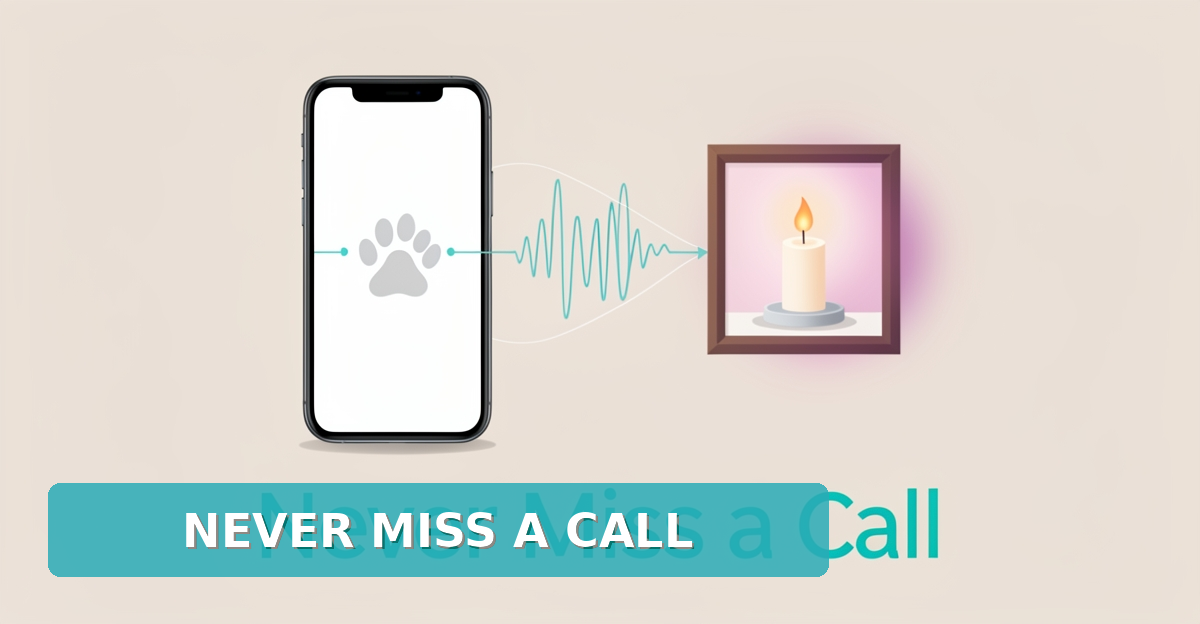
Key facts
- 85% of pet service callers won't leave voicemails and instead call competitors according to industry research
- Pet grooming businesses lose $30,000+ annually from missed calls per AgentZap data
- AI voice assistants cost $99–$199/month versus $1,800–$4,200+ for human receptionists per Talopet pricing
- A Nashville salon captured 23 after-hours bookings in 30 days using AI per Talopet case study
- 65% of deathcare AI calls lack empathy statements per FuneralVision mystery-shop research
- 76% of deathcare callers leave AI calls without clear next steps per FuneralVision research
- Firms with ongoing human coaching see 27% more revenue from calls per FuneralVision data
WANT RESULTS LIKE THIS?
Imagine a system doing all of this for your local business — every day, without you.
We build local businesses a custom website with a team of AI behind it: every lead captured and followed up, new content published monthly,customers finding you on Google — live in 7 days.
- 85+ pages at launch
- Every lead followed up, automatically
- Your whole business on one screen
The Missed Call Problem in Pet Aftercare
A late-night call for a pet cremation can’t wait. Yet for small aftercare services, the quiet hum of an unanswered phone means more than a missed opportunity—it’s a family walking away forever. Research shows that 85% of callers won’t leave a voicemail, instead dialing the next name on Google. For pet grooming businesses alone, that neglect costs an average of $30,000 in lost revenue each year, with each missed call representing $75 to $120 in immediate booking value. In an industry where trust is earned in moments of grief, a silent line isn’t just lost income—it’s lost compassion.
The problem isn’t just volume. It’s timing. Families searching for pet cremation often call outside regular hours, when staff are away or already comforting other families. A Nashville salon case study found that an AI assistant answered 23 bookings in 30 days after hours—times like 9 PM on Sunday or 7 AM Saturday. Those aren’t just clients; they’re people in crisis, seeking clarity before their next step. Without coverage, their calls vanish into the ether. With automated voice support, they get immediate answers about pricing, pet types accepted, and scheduling—without ever reaching a voicemail system that 68% of callers will hang up from without leaving a message.
- After-hours calls account for 20–30% of total volume in pet services, yet most small businesses lack coverage.
- An AI voice assistant costs a fraction of a human receptionist—$99 to $199/month versus $1,800 to $4,200+ monthly for part-time staff.
- Even with flat-rate AI pricing, businesses see 97% cost savings while capturing leads that would otherwise vanish.
For pet cremation services, this gap is especially critical. Unlike routine grooming or check-ups, families calling for cremation may be in acute emotional distress, needing clear, immediate guidance. A silent phone doesn’t just lose a booking—it risks leaving grieving families confused and seeking alternatives. Solutions like AI voice agents on your website can answer urgent questions instantly, log details automatically, and ensure no family is turned away by a busy signal or a full voicemail box. But they must be paired with compassionate human support for the conversations that demand empathy. The message isn’t that technology replaces care—it’s that it prevents good intentions from becoming missed connections.
What the Data Says: AI Efficiency vs. Empathy Gaps
What the Data Says: AI Efficiency vs. Empathy Gaps
As pet cremation businesses weigh the investment in AI voice assistants, a nuanced reality emerges from the data. On one hand, AI proves its operational prowess with 31% revenue increases and 41% call-to-booking conversion rates in adjacent pet services, coupled with 97% cost savings versus human receptionists (averaging $109/month vs. $4,200+/month). These efficiency gains are particularly compelling for after-hours coverage, where 23 bookings in 30 days can be captured without human intervention, as seen in a Nashville salon case study.
However, a critical counterpoint comes from the deathcare industry, a direct analog to pet cremation. Research reveals 65% of AI-handled calls lack empathy, 33% fail to confirm the death occurred, and 76% of callers leave without next steps. This empathy gap underscores the limitations of AI in emotionally sensitive contexts, where firms with ongoing human coaching see 27% more revenue.
- AI for Operational Efficiency: Utilize AI for after-hours coverage, routine inquiries (pricing, pet types, scheduling), and triage, leveraging its ability to handle 43% of calls about pricing and 26% about rescheduling without human intervention.
- Human Intervention for Emotional Support: Ensure all emotionally sensitive calls (grief support, urgent arrangements) are immediately routed to trained human staff, with AI configured to acknowledge loss before transfer.
-
Training Investment: Allocate budget for ongoing call coaching for human staff to address the empathy gap, focusing on acknowledging loss, matching emotional pacing, and providing clear next steps.
-
Missed Call Consequences: 85% of callers won’t leave a voicemail, opting for competitors instead, with an average lost revenue of $75–$120 per missed call.
- AI’s Role in Recovery: AI can capture 20-30% of currently missed calls, with a 41% conversion rate to bookings, as demonstrated in pet grooming services.
- Empathy Gap in Deathcare: Despite efficiency, 65% of AI calls lack empathy, emphasizing the need for human oversight in sensitive interactions.
By embracing a hybrid model that combines AI’s operational strengths with human emotional intelligence, pet cremation businesses can navigate the efficiency-empathy dichotomy effectively, ensuring a worthwhile investment in AI voice assistants.
Local business: doing this the old way?
One system replaces the whole pile.
All of it — the website, the follow-up, the content, the leads — built and run for you for $1,497 + $497/mo. Month-to-month, and you own everything.
See what your build includesThe Hybrid Model: Where AI Handles Volume, Humans Handle Trust
Most pet cremation services don’t miss calls because they’re asleep—they miss them because those calls arrive when the front desk is already swamped with grieving families, scheduling pickups, or handling urgent arrangements. Research shows 20-30% of calls to pet services go unanswered, and 85% of callers won’t leave voicemails, walking straight to competitors instead. The solution isn’t replacing humans with AI, but letting each handle what they do best: AI processes volume, humans preserve trust.
Start by pointing your AI voice assistant at the 86% of calls that fall into routine buckets—pricing questions, accepted pet types, scheduling basics, and directions—where 43% of inquiries land on pricing alone, followed by 26% reschedules and 17% general questions. This is triage at scale. An AI assistant can answer instantly, day or night, without hold music or missed windows, and handle multi-pet households, breed-specific logistics, and route-based scheduling with no extra effort. Platforms like Talopet and AgentZap pull services, pricing, and availability straight from your existing accounts, requiring no prompt engineering or new hardware—just a flat monthly fee between $99 and $199 per location.
- After-hours bookings: 23 recovered in 30 days for a Nashville salon, many at 7 AM Saturday or 9 PM Sunday
- Cost savings: $1,800–$4,200 per month saved versus a part-time or full-time human receptionist
- Triage depth: AI can escalate true emergencies based on your clinical protocols, ensuring urgent cases skip queues and reach trained staff immediately
Human staff then own the moments that define loyalty: the first 60 seconds of a grief-stricken call, the confirmation that a pet has passed, the gentle guidance toward next steps. Here, AI falls short. Deathcare research shows 65% of AI-handled calls lack any empathy, 33% don’t even confirm if a death occurred, and 76% of callers hang up without knowing what happens next. The fix isn’t to remove AI—it’s to pair it with ongoing human coaching. Firms that invest in continuous staff training see 27% more revenue from calls because empathy, not automation, closes the deal.
For pet cremation services using AI Business Sites, the platform’s built-in AI voice agent fields routine calls while your website admin routes emotionally charged conversations to your team. No new software stack, no extra logins—just one system that answers every call, captures every lead, and surfaces high-touch transfers in real time. The result? Fewer missed appointments, stronger first impressions, and a workflow that scales without sacrificing care.
Measuring What Matters: Metrics Beyond Cost Savings
Measuring What Matters: Metrics Beyond Cost Savings
In high-emotion services like pet cremation, success isn’t just about reducing call handling time or cutting costs—it’s about preserving trust in moments of vulnerability. While enterprise studies cite a 3.7x ROI and 35% handling time reduction from voice AI investments, these efficiency gains don’t capture whether families feel heard or guided toward next stepsaccording to industry benchmarks. For pet cremation businesses, the true value of an AI voice assistant lies in how it supports—not replaces—the human connection that defines aftercare.
The most meaningful metrics focus on empathy acknowledgment, clarity of next steps, and conversion quality. Research from the deathcare industry—a direct parallel to pet cremation—shows that 65% of AI-handled calls lack any empathy statement, and 76% of callers end the conversation without knowing what to do nextbased on mystery-shopped call analysis. Tracking the percentage of calls where the AI acknowledges loss with compassion and provides clear next steps (such as scheduling options or grief resources) reveals whether the technology is serving its purpose in sensitive contexts.
Equally important is measuring after-hours revenue recovered and staff time redirected to in-person support. Pet grooming businesses using AI receptionists recovered $2,680 in just 30 days from after-hours bookings that would otherwise have been lostas demonstrated in a Nashville salon case study, and redirected 8–12 hours weekly of staff time toward higher-value tasks. For pet cremation, this means more evenings and weekends captured for urgent arrangements, and more staff available to sit with families during viewings or memorial planning.
To refine AI/human handoff rules, implement a monthly review framework: assess empathy acknowledgment rates, clear-next-steps delivery, call-to-booking conversion, after-hours revenue recovered, and staff hours shifted to emotional support. Adjust triggers—for example, routing calls mentioning euthanasia or immediate loss directly to humans—based on what the data shows builds trust and closes arrangements. This approach ensures the AI handles volume and routine inquiries while humans focus on what they do best: guiding grieving families with care.
Frequently Asked Questions
Can an AI voice assistant really handle calls for pet cremation services after hours?
How much revenue could I lose from missed calls in pet aftercare?
Is an AI voice assistant expensive compared to hiring a receptionist?
Will families think they’re talking to a robot when they call for pet cremation?
Can AI handle emotionally sensitive calls, like when someone is grieving a pet?
What types of calls can AI handle for a pet cremation service?
Does using AI mean I’ll lose the personal touch families expect?
How do I know if investing in AI will actually work for my business?
Where Technology Meets Tenderness in Pet Aftercare
Investing in an AI voice assistant for your pet cremation business isn't about replacing the human touch that defines your service—it's about ensuring no call for help goes unanswered when grief strikes outside business hours. The data shows AI can recover after-hours bookings, save thousands versus staffing costs, and handle routine inquiries like pricing and scheduling with impressive efficiency. Yet the most meaningful metric remains how families feel in those first vulnerable moments: heard, guided, and supported. By using AI to triage volume and route emotionally sensitive calls to your trained team, you protect both your bottom line and the trust families place in you during their hardest days. Start small—enable after-hours coverage, measure recovered revenue and empathy acknowledgment rates, then refine your handoff rules based on what builds real connection. Your website, powered by AI Business Sites, can be the always-on front door that never misses a call while keeping the heart of your service firmly in human hands. Take the first step toward capturing every opportunity to serve—explore how an AI voice assistant fits into your call handling strategy today.
FOR local businesss — BUILT AND RUN BY US
Your website. Your content. Your leads. Your data.
$500 starts your build. Seven days later it's live — chat, booking, follow-up, and your Google presence all set up. Then we run it, every month. You do the work you actually get paid for.