
Key facts
- Nearly 80% of enterprises struggle to integrate AI with their existing tech stacks according to Zapier.
- Over 40% of enterprises use multiple AI vendors for enhanced capability and risk mitigation as reported by Zapier.
- AI orchestration platforms like Zapier integrate with over 9,000+ apps as highlighted in Zapier's blog.
- Engineers spend hours on repetitive pre-order calls, delaying design capacity and increasing mental switching penalties.
- AI voice assistants can handle 80% of common PCB pre-order inquiries, freeing engineers for high-value tasks.
- A single AI Business Site replaces up to 10 separate subscriptions (e.g., website, CRM, automation tool, content writer).
- AI Business Sites' setup includes 25-30 hand-built core pages plus 60 AI-generated SEO pages at launch.
WANT RESULTS LIKE THIS?
Imagine a system doing all of this for your local business — every day, without you.
We build local businesses a custom website with a team of AI behind it: every lead captured and followed up, new content published monthly,customers finding you on Google — live in 7 days.
- 85+ pages at launch
- Every lead followed up, automatically
- Your whole business on one screen
Why Pre-Order Calls Drain Engineering Time
Every minute an engineer spends explaining standard PCB stack-ups or lead-time windows is a minute not spent on layout optimization or signal-integrity analysis. Those calls feel quick in the moment — five minutes here, ten there — but they compound into hours of lost design capacity every week.
The hidden cost shows up in delayed tape-outs, rushed design reviews, and the mental switching penalty that comes from jumping between deep technical work and repetitive phone conversations. When a senior designer fields the same solder-mask thickness question for the third time in a day, the organization is effectively paying engineering rates for tier-one support work.
- Layer-count and stack-up clarifications that follow the same decision tree every call
- Solder-type and surface-finish specifications already documented in standard datasheets
- Lead-time and expedite-fee questions that change only when capacity shifts
- Panelization and array-format guidance covered in design-for-manufacturing rules
Nearly 80% of enterprises struggle to integrate AI with their current tech stacks, according to industry research, which means most manufacturers still route these inquiries to human experts by default. Yet more than 4 in 10 enterprises already use multiple AI vendors, signaling that the capability exists — it just hasn't been wired into the pre-order workflow. Orchestration platforms that connect 9,000+ apps can bridge that gap, letting an AI voice assistant pull live capacity data, reference approved stack-up tables, and log every inquiry directly into the CRM without an engineer touching the phone.
How AI Voice Assistants Handle Technical PCB Questions
How AI Voice Assistants Handle Technical PCB Questions
When potential customers call with specific, technical questions about Printed Circuit Boards (PCBs), AI voice assistants integrated with your business operations can provide accurate, instant responses. For instance, inquiries about layer counts, material specifications, or turnaround times are seamlessly addressed by leveraging a knowledge base grounded in the manufacturer's actual data.
According to industry research on AI integration challenges, nearly 80% of enterprises struggle to align AI with their existing tech stacks source. This highlights the importance of utilizing AI orchestration platforms like Zapier, which facilitates integration across 9,000+ apps, crucial for streamlining AI voice assistant workflows with your CRM, website, and other business tools.
- Layer Count and Material Specs: AI voice assistants can quickly retrieve and communicate specific layer configurations and material compositions from your database, ensuring accuracy and saving engineers from repetitive inquiries.
- Turnaround Time Estimates: By integrating with your production scheduling system, the AI can provide real-time estimates for PCB manufacturing timelines, managing customer expectations effectively.
- Customization and Compatibility: For questions on custom PCB designs or compatibility with specific components, the AI can access your technical documentation to offer tailored advice or route complex queries to engineers for a swift response.
A recent study emphasizes the strategic use of multi-vendor AI approaches, adopted by over 40% of enterprises, to enhance capability and mitigate risk source. This strategy could be particularly beneficial for PCB manufacturers looking to leverage specialized AI tools for different aspects of their operations, from technical support to production planning.
By proactively addressing integration challenges and adopting a streamlined approach to AI deployment, PCB manufacturers can ensure their AI voice assistants not only handle technical queries efficiently but also enhance the overall pre-order experience, freeing up engineers to focus on high-value design and development tasks. This integration is seamlessly supported by platforms like AI Business Sites, which combine custom website design with AI-driven operational capabilities, ensuring every customer interaction, whether on the phone or the website, contributes to a cohesive business strategy.
Local business: doing this the old way?
One system replaces the whole pile.
All of it — the website, the follow-up, the content, the leads — built and run for you for $1,497 + $497/mo. Month-to-month, and you own everything.
See what your build includesIntegrating AI Voice with Your Existing Workflow
The promise of an AI voice assistant that can answer technical questions about PCB layers, solder types, and lead times is compelling — but the reality of making it work inside your existing operation is where most projects stall. Research shows that nearly 80% of enterprises struggle to integrate AI with their current tech stacks, turning what should be a productivity gain into another disconnected tool that creates more manual work than it saves.
The problem isn't the voice technology itself. It's the gap between the call and everything that needs to happen after: logging the inquiry in your CRM, creating a follow-up task for engineering, updating the quote status, and ensuring the prospect receives a confirmation email with the right spec sheet. When those steps rely on copy-paste or memory, leads slip through the cracks.
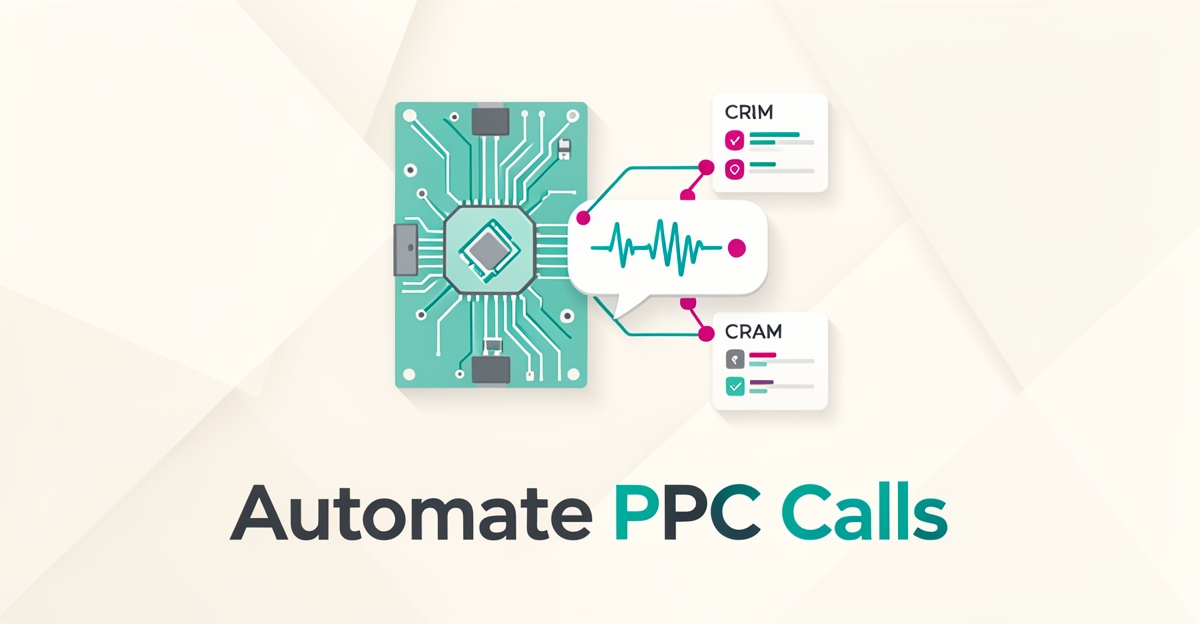
Orchestration platforms solve this by connecting the voice layer to the systems you already run. With 9,000+ app integrations available through tools like Zapier, an incoming call can trigger a chain of automated actions across your CRM, scheduling tool, and website backend without a single line of custom code. The assistant captures the technical requirements — layer count, material specs, impedance targets — and the orchestration layer ensures every detail lands in the right field, in the right system, instantly.
- Call details and technical requirements sync to the CRM contact record automatically
- Follow-up tasks route to the correct engineer based on complexity or product line
- Quote requests generate a draft proposal using the caller's exact specifications
- Confirmation emails send instantly with relevant datasheets attached
- Call recordings and transcripts attach to the deal for future reference
This is the architecture behind AI Business Sites: the website, CRM, and voice assistant share a single data layer, so every conversation — whether it starts on the phone, in chat, or through a form — builds on the same customer history. More than 4 in 10 enterprises now use multiple AI vendors, and orchestration is what prevents that complexity from becoming fragmentation. When the voice assistant, the chat widget, and the email follow-up all draw from the same knowledge base and write to the same CRM, the business operates as one system instead of three disconnected experiments.
What Implementation Looks Like for a PCB Shop
Most PCB shops already know the problem: engineers fielding the same pre-order questions about layer counts, solder mask options, and lead times instead of designing boards. An AI voice assistant changes that equation by handling those calls automatically — but only if it plugs into the way you already work.
The implementation starts with your knowledge base. You feed the system your actual specs: standard stack-ups, copper weights, surface finishes, and the lead-time rules your team already knows by heart. This isn't generic training data — it's your shop's rules, so when a caller asks "what's your fastest turn on 6-layer ENIG?" the answer matches what your estimator would say. Behind the scenes, an orchestration layer connects that voice agent to your CRM and calendar so every call creates a contact, logs the inquiry, and tags the lead by technology — without anyone copying notes between systems. Industry research shows nearly 80% of enterprises struggle to integrate AI with their current tech stacks, which is why the connection layer matters more than the voice model itself.
- Build the knowledge base from your actual design rules and quote guidelines
- Configure call routing so simple questions resolve instantly and complex ones transfer with context
- Set up CRM sync so every caller becomes a tagged contact with a full conversation history
- Define escalation paths for impedance-controlled designs, flex-rigid stacks, or anything outside standard specs
More than 4 in 10 enterprises now use multiple AI vendors to spread capability risk, and the same logic applies here: your voice assistant handles the phone, your website chat handles web visitors, and they both write to the same CRM. Automation platforms with 9,000+ app integrations make this possible without custom code. The result? Engineers stay in their CAD tools, the shop captures every inquiry, and the next quote request arrives with the conversation history already attached.
Frequently Asked Questions
Why are pre-order calls for PCBs such a drain on engineering resources?
What percentage of enterprises struggle with integrating AI into their existing tech stacks?
How can AI voice assistants specifically handle technical PCB questions?
What benefit does using multiple AI vendors bring to PCB manufacturers?
How does integration with existing workflows enhance the utility of AI voice assistants for PCB pre-orders?
What is the primary challenge in implementing AI voice assistants for PCB pre-order calls, and how is it addressed?
Key Takeaways
{ "title": "Freeing Engineering Talent: The AI-Powered Shift in PCB Manufacturing", "content": "By integrating AI voice assistants into their pre-order workflows, PCB manufacturers can reclaim a significant portion of engineering time currently spent on repetitive technical inquiries. This strat
FOR local businesss — BUILT AND RUN BY US
Your website. Your content. Your leads. Your data.
$497 starts your build — your first month's payment, not a deposit. Seven days later it's live — chat, booking, follow-up, and your Google presence all set up. Then we run it, every month. You do the work you actually get paid for.