
Key facts
- Google limits service areas to 20 non-radius-based zones (cities, postal codes, or regions) according to Google's guidelines
- AI-driven local search visibility is 30x harder than traditional SEO as reported by Search Herald
- Inaccurate service area data can reduce local visibility by up to 30x per Search Herald findings
- Only 1% to 11% of businesses are recommended by Google's AI-driven local search according to Search Herald
- AI-optimized service-area landing pages require title tags between 55–70 characters to prevent truncation as advised by Search Engine Land
WANT RESULTS LIKE THIS?
Imagine a system doing all of this for your local business — every day, without you.
We build local businesses a custom website with a team of AI behind it: every lead captured and followed up, new content published monthly,customers finding you on Google — live in 7 days.
- 85+ pages at launch
- Every lead followed up, automatically
- Your whole business on one screen
The Visibility Gap: Why Laundry Businesses Disappear from Local Search
The moment a commercial laundry business expands into a new neighborhood, it risks disappearing from local search—even when customers in that area are searching for services like yours right now. Google Business Profiles don’t play favorites, but they do enforce strict rules about how service areas can be defined. You’re limited to 20 service areas, and they must be based on cities, postal codes, or regions—not radius-based zones. That means if your laundry service covers Dartmouth, but your profile only lists “Greater Halifax,” Google may not surface your listing when customers search for laundry services in that specific community. Worse, if your service radii exceed roughly two hours of driving time from your base location, your visibility in Google Maps can drop sharply, leaving you invisible to whole neighborhoods that need you most.
Google’s guidelines are clear: service-area businesses (SABs) like commercial laundries must configure their profiles with pinpoint accuracy to stay discoverable. Yet most laundry services update their service zones manually—only when they remember—and end up with outdated or overlapping areas that confuse both customers and the algorithm. In fast-moving markets like Halifax and Dartmouth, where demand fluctuates and new clients appear daily, manual updates simply can’t keep pace with reality. That’s why businesses with inaccurate or incomplete service area data often lose up to 30x more local visibility than those with properly configured profiles.
Even when your profile is set up correctly, you face another hurdle: Google’s AI-driven local search. Today, AI systems parse structured data, real-time updates, and hyper-local content to recommend only 1% to 11% of businesses in a given query—making visibility 30 times harder than traditional SEO. Without a website that dynamically reflects your current service areas, your Google Business Profile becomes just another static listing in a sea of outdated data. AI-powered websites solve this by generating accurate service maps in real time based on your actual client data, ensuring your service areas stay compliant and visible across Google Maps and local search results.
Here’s what happens when service-area data is misconfigured:
- Customers can’t find you when they search for laundry services in specific neighborhoods like Dartmouth or Bedford, even if you serve those areas.
- Your Google Business Profile gets demoted in local rankings, reducing calls and bookings from nearby customers.
- Outdated service zones create confusion, leading to poor user experience and lower review signals.
- AI-driven discovery tools overlook your business because your data doesn’t match real-world service patterns.
The fix isn’t just about ticking boxes—it’s about building a website that runs itself. An AI-powered site can auto-generate and update service-area landing pages for key markets like Halifax and Dartmouth, keeping your local SEO fresh without manual effort. That’s not just a technical win—it’s the difference between showing up in search results and disappearing from them.
How AI Websites Automate Accurate Service Area Coverage
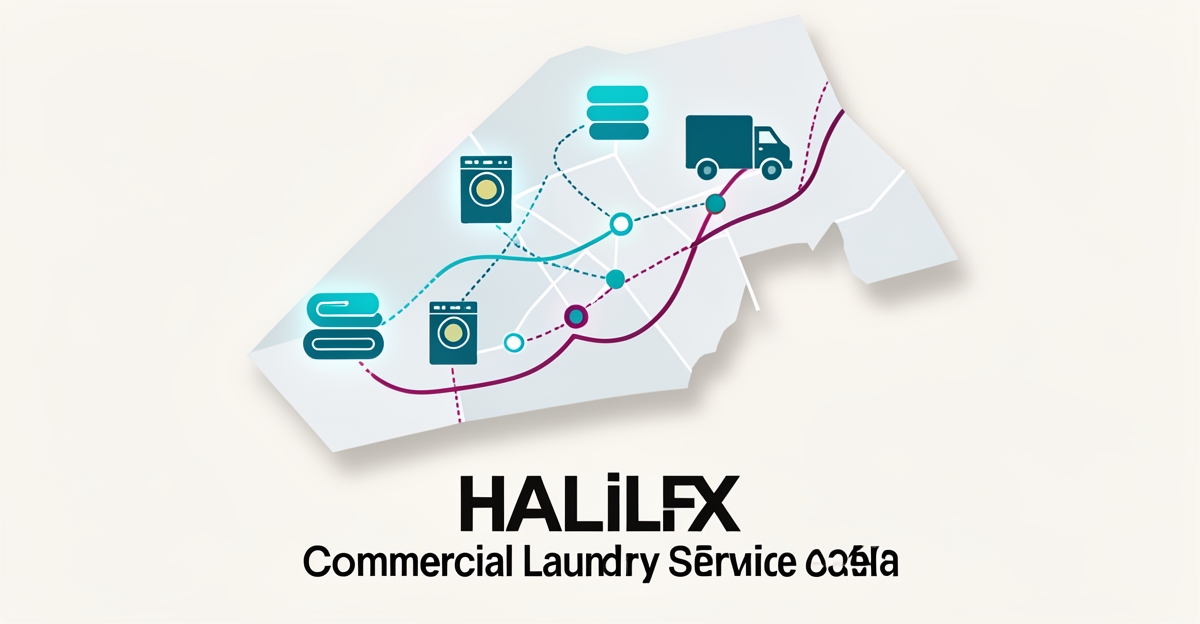
Many laundry services struggle to show exactly where they operate, leaving potential customers unsure if they’re covered. AI-powered websites solve this by automatically generating and updating service area maps in real time based on actual client data, ensuring accuracy and compliance with Google’s service area rules. This dynamic approach keeps visibility strong in local search and Google Maps, especially in key markets like Halifax and Dartmouth.
These systems use structured data—specifically LocalBusiness and Service schema—to clearly define service zones by city, neighborhood, or postal code, avoiding radius-based boundaries that Google doesn’t allow. By embedding this markup directly into the website, AI helps verify business information across listings and reduces conflicts that can hurt local rankings. As noted in industry research, schema markup is essential for AI systems to verify business details and improve discoverability in both traditional and conversational search.
AI-optimized service-area landing pages take this further by creating unique, helpful content for each location—such as “Laundry Services in Halifax”—with local customer reviews, project showcases, and community-specific offers. This aligns with expert guidance that usefulness and uniqueness prevent doorway page penalties while boosting organic visibility. For businesses without a physical storefront in a target city, these pages are critical for ranking in local intent searches and expanding reach across the service radius.
Behind the scenes, AI continuously monitors client interactions—like new bookings or service requests—to update service maps in real time, ensuring they stay within Google’s limits of 20 areas and approximately two hours driving time from the business base. This automation eliminates manual updates and reduces the risk of outdated or non-compliant listings. As AI-driven discovery like Google’s “Ask Maps” becomes increasingly influential—making visibility up to 30x harder than traditional SEO—having accurate, structured, and locally relevant content is no longer optional.
By connecting real-time data, schema markup, and AI-generated location pages, laundry businesses can maintain a search-optimized presence that adapts as their service area evolves. This integrated approach supports both traditional local SEO and emerging AI-powered search experiences, helping businesses stay visible where it matters most. AI Business Sites builds websites that handle this complexity automatically, so owners can focus on running their business instead of managing maps and listings.
Local business: doing this the old way?
One system replaces the whole pile.
All of it — the website, the follow-up, the content, the leads — built and run for you for $1,497 + $497/mo. Month-to-month, and you own everything.
See what your build includesBuilding High-Converting Service-Area Pages for Halifax, Dartmouth, and Beyond
Many commercial laundry businesses struggle to clearly show where they serve, missing opportunities to connect with local customers in Halifax, Dartmouth, and beyond. Creating service-area landing pages that are both helpful and unique is essential for avoiding Google's doorway page penalties while improving local search visibility.
Start by building distinct pages for each key service city, using city-specific project showcases, genuine local customer reviews, and evidence of community involvement to differentiate each location. For example, a Halifax page might highlight recent contracts with downtown hotels or partnerships with Halifax-based event venues, while a Dartmouth page could feature work with Burnside Industrial Park businesses or support for local Dartmouth charities. This approach aligns with expert guidance that uniqueness and usefulness govern high-quality service area pages, helping businesses stand out as the most helpful option in town.
Technical precision matters just as much as content. Keep title tags between 55–70 characters and meta descriptions within 150–160 characters to prevent truncation in search results, ensuring your pages display fully and attract clicks. For navigation, link directly to service-area pages in your main menu if you serve 10 or fewer cities; if you cover more than 10 areas, use an HTML sitemap to maintain crawlability and user experience without overwhelming visitors. These practices support AI-driven discovery by making it easier for systems like Google's "Ask Maps" to verify and recommend your business for location-specific queries.
AI Business Sites integrates these requirements directly into custom websites, automatically generating structured data and updating service maps in real time based on client data. This ensures your service areas remain accurate, compliant with Google's 20-area limit and two-hour driving time guideline, and optimized for both traditional and AI-powered local search. By combining differentiated, helpful content with solid technical foundations, laundry businesses can create service-area pages that rank well, engage local customers, and avoid penalties—turning geographic coverage into a competitive advantage.
From Visibility to Leads: Combining Organic Presence with Local Services Ads
You've optimized your service area coverage and Google Business Profile — now potential customers can find you on Maps and in local search. But visibility alone doesn't fill routes. The next step is layering Google Local Services Ads on top of that organic foundation to capture high-intent leads actively searching for commercial laundry pickup in your defined zones.
Local Services Ads appear at the very top of Google search results and Maps for service-related queries, displaying a "Google Guaranteed" badge that builds immediate trust. According to Google's own documentation, these ads help businesses "advertise on Google and get people to contact them" directly from search and Maps listings (Google Business Profile support). For commercial laundry routes targeting specific areas like Halifax and Dartmouth, LSAs ensure your business shows up when facility managers search "laundry pickup near me" or "commercial linen service Dartmouth" — precisely when they're ready to book.
- LSAs operate on a pay-per-lead model — you only pay for actual calls or messages, not clicks
- Ads are geographically restricted to your verified service areas, eliminating wasted spend
- The "Google Guaranteed" badge reduces friction for new commercial clients evaluating providers
- Lead details (business type, volume, location) arrive instantly for fast qualification
The challenge? Converting those leads before they go cold. Most laundry businesses lose prospects simply by being slow to respond — especially after hours when facility managers research vendors. This is where an AI-powered website changes the equation. Instead of leads scattering across Maps, search, chat, voice, and forms, they consolidate into one system with instant, personalized follow-up. An AI assistant answers questions, books pickups, and captures details 24/7 — whether the lead comes from an LSA call, a Maps click, or a late-night website visit. Research shows AI-driven discovery is up to 30x harder than traditional SEO, with AI assistants recommending only 1% to 11% of locations (Search Herald) — making instant, structured lead handling the difference between a booked route and a missed opportunity.
Behind the scenes, automated workflows tag leads by source, zone, and urgency, then trigger the right follow-up sequence — email, SMS, or a team alert — without manual intervention. The result: improved visibility on Google Maps and search translates directly into booked jobs for your commercial laundry routes, not just impressions.
Frequently Asked Questions
Why does my laundry business disappear from Google search when I expand to new neighborhoods?
How many service areas can I list on my Google Business Profile, and what happens if I exceed that limit?
What makes AI-powered websites better than manual updates for managing service areas?
How do service-area landing pages help my laundry business rank in local search without a physical storefront?
Is it true that AI-driven local search makes visibility 30 times harder than traditional SEO?
Can Google Local Services Ads help my laundry business get more leads from specific areas like Dartmouth?
Turn Your Service Area Into Your Strongest Sales Asset
Accurate service area visibility isn’t just about checking a box on Google—it’s about ensuring your commercial laundry business shows up exactly where your customers are searching, from Halifax to Dartmouth and beyond. By combining structured data, AI-powered service-area landing pages, and real-time updates based on actual client data, you eliminate the guesswork and keep your profile compliant and competitive. Layer in Google Local Services Ads to capture high-intent leads, and let your website handle follow-up 24/7 so no opportunity slips through the cracks. When your online presence works as hard as you do, every search becomes a chance to book a route. Ready to stop managing maps and start growing your business? See how AI Business Sites builds websites that run themselves—so you can focus on what matters most.
FOR local businesss — BUILT AND RUN BY US
Your website. Your content. Your leads. Your data.
$500 starts your build. Seven days later it's live — chat, booking, follow-up, and your Google presence all set up. Then we run it, every month. You do the work you actually get paid for.